
Amazon continues to expand its platform beyond simple search and advertising, giving brands more opportunities to engage shoppers throughout the buying journey. One of the most overlooked yet valuable tools available to brand-registered sellers is Amazon Posts—a free organic marketing feature that allows brands to publish social-style product content directly inside Amazon’s shopping ecosystem.
While many sellers focus heavily on Amazon PPC, listing optimization, and SEO, fewer take full advantage of Amazon’s brand-building tools. However, experienced sellers understand that sustainable Amazon growth requires more than paid traffic alone. Building brand awareness, increasing shopper engagement, and improving product discovery all play a critical role in long-term marketplace success.
Amazon Posts helps brands accomplish exactly that.
When used strategically, Amazon Posts can increase visibility across Amazon, improve branded engagement, drive additional traffic to listings and storefronts, and support a stronger full-funnel Amazon marketing strategy—all without direct advertising spend.
In this complete guide, we’ll explain what Amazon Posts are, how they work, where they appear, how to optimize them, and advanced strategies brands use to maximize results.
What Are Amazon Posts?
Amazon Posts is a free content marketing feature available to sellers enrolled in Amazon Brand Registry. It allows brands to publish social-media-style content featuring lifestyle imagery, short captions, and tagged products that shoppers can click to visit product detail pages.
Think of Amazon Posts as Amazon’s internal version of Instagram or Pinterest—but designed specifically for product discovery within the shopping journey.
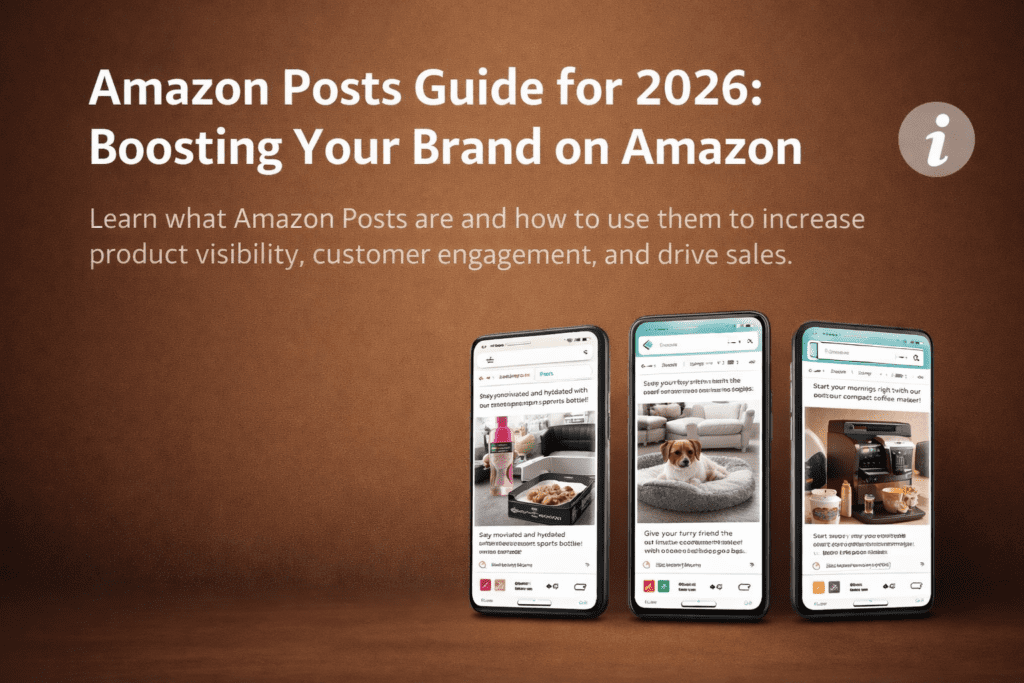
Each Amazon Post typically includes:
- A high-quality lifestyle image
- A short branded caption
- Tagged ASINs/products
- Brand logo/profile identity
Unlike standard listings or ads, Amazon Posts are not designed purely for direct response selling. Instead, they support product discovery, shopper engagement, and brand storytelling.
This makes Amazon Posts particularly valuable for brands with multiple products, strong visual branding, or lifestyle-focused products.
Why Amazon Posts Matter for Amazon Sellers
Amazon Posts matters because it gives brands an additional organic visibility channel within Amazon’s ecosystem—without requiring paid advertising spend.
Many sellers rely heavily on Amazon PPC to generate traffic, but paid ads alone can become expensive and increasingly competitive. Amazon Posts offers a free supplementary traffic source that can improve visibility and reduce overdependence on advertising.
Amazon Posts also strengthens brand-building efforts by repeatedly exposing shoppers to your products and brand identity throughout Amazon’s ecosystem. Repeated exposure increases familiarity, improves trust, and can influence future purchase decisions.
For brands focused on long-term marketplace growth, Amazon Posts provides a way to build awareness and engagement beyond traditional search-based traffic.
Where Amazon Posts Appear
One of the biggest advantages of Amazon Posts is that they can appear in multiple placements across Amazon, creating several opportunities for shoppers to discover your brand and products.
Product Detail Pages
Amazon Posts often appear lower on product detail pages in branded or related content sections. This placement helps capture shopper attention after they have already shown interest in a product category, increasing the likelihood of engagement.
Posts shown here may feature your own products or related branded content, helping drive cross-sells and encourage deeper catalog exploration.
Amazon Brand Store Feed
All of your published Amazon Posts automatically populate within your Amazon Store feed, creating a social-style browsing experience for shoppers visiting your storefront.
This helps transform your Store from a static catalog into a more dynamic branded content hub.
Category Discovery Feeds
Amazon may distribute your Posts into category-specific discovery feeds, allowing shoppers browsing a category to discover your products organically.
This can expose your brand to entirely new shoppers who may not have searched for you directly.
Search Results / Discovery Placements
In some cases, Amazon Posts may surface in experimental or discovery-based search placements, increasing additional visibility opportunities.
Mobile Inspire / Discovery Feeds
Amazon increasingly surfaces visual product content in mobile-first discovery experiences such as Inspire, further increasing the value of high-quality Post content.
How Amazon Posts Support Organic Growth
Although Amazon Posts is not a direct ranking factor in Amazon’s algorithm, it can support organic growth indirectly by improving behavioral and engagement signals.
When shoppers engage with your Posts, click through to listings, browse additional products, or perform branded searches later in their journey, Amazon gains stronger signals that your brand is relevant and engaging.
Amazon Posts can support organic growth by helping increase:
- Product detail page traffic
- Brand store visits
- Cross-product discovery
- Branded search behavior
- Catalog exploration
- Shopper engagement
Over time, this can strengthen your broader Amazon ecosystem and complement your Amazon SEO efforts.
Who Can Use Amazon Posts?
Amazon Posts is available to sellers who meet Amazon’s eligibility requirements.
Typically, brands must have:
- Amazon Brand Registry enrollment
- An active Amazon Brand Store
- Eligible marketplace access
If you are not enrolled in Brand Registry, you will need to complete that process before accessing Posts.
How to Create Amazon Posts
Creating Amazon Posts is simple from a technical perspective, but strategic content creation matters significantly for performance.
Step 1: Access Amazon Posts Dashboard
Visit the Amazon Posts platform and sign in with your Seller Central or Vendor Central account.
Step 2: Select Your Brand
Choose the correct brand if you manage multiple brands under one account.
Step 3: Upload Brand Assets
Ensure your brand logo and identity elements are professional and optimized.
Step 4: Create Post Content
Add:
- Lifestyle image
- Caption
- Tagged ASINs/products
Step 5: Publish or Schedule
Posts can be published immediately or scheduled in advance to maintain consistent cadence.
Amazon Posts Best Practices
Simply publishing random Posts is not enough. High-performing brands follow a structured strategy.
Use High-Quality Lifestyle Images
Lifestyle images consistently outperform plain product photos because they help shoppers visualize real-world product use.
Strong visuals increase engagement and make Posts feel more native to discovery feeds.
Focus on Benefits, Not Features
Captions should emphasize outcomes, use cases, and value rather than dry specifications.
Shoppers respond better to benefit-driven messaging.
Maintain Brand Consistency
Use consistent visual style, tone, and messaging across Posts to strengthen brand recognition.
Post Consistently
Brands that publish regularly typically gain more impressions and stronger cumulative visibility.
A common recommendation is 3–5 Posts per week.
Tag Multiple Relevant Products
Cross-tagging complementary products can improve click-through opportunities and increase average catalog exploration.
Advanced Amazon Posts Strategies
Use Amazon Posts During Product Launches
Publishing Posts during launches can help support discovery and reinforce broader launch campaigns.
Align Posts With PPC Campaigns
Coordinate Posts around promoted products to reinforce awareness and improve conversion likelihood.
Repurpose High-Performing Social Content
Reuse top-performing Instagram, UGC, or influencer content where appropriate.
Create Content Pillars
Develop recurring themes such as:
- Product education
- Lifestyle/inspiration
- Seasonal content
- Product comparisons
- Use-case demonstrations
Amazon Posts vs Amazon PPC
Amazon Posts and PPC serve different roles in your funnel.
| Feature | Amazon Posts | Amazon PPC |
|---|---|---|
| Cost | Free | Paid |
| Purpose | Discovery/Brand Awareness | Immediate Sales |
| Traffic Type | Upper/Mid Funnel | Lower Funnel |
| Placement | Organic Discovery Areas | Sponsored Placements |
Best results typically come from using both together.
Common Amazon Posts Mistakes to Avoid
Posting Inconsistently
Irregular posting limits long-term visibility.
Using Poor Creative
Low-quality or non-lifestyle imagery reduces engagement.
Writing Weak Captions
Uninspiring messaging lowers click-through rates.
Ignoring Performance Data
Optimization requires testing and refinement.
Treating Posts as an Afterthought
Brands that use Posts strategically outperform brands posting randomly.
How to Measure Amazon Posts Performance
Track performance metrics including:
- Impressions
- Clicks
- Product Detail Page Visits
- Store Visits
- Engagement Rate
- Post-to-Click Trends
Analyzing these metrics helps identify winning content themes and optimize future Posts.
Final Thoughts
Amazon Posts is one of the most underutilized free marketing tools available to Amazon sellers.
While it may not replace PPC or SEO, it provides meaningful support for brand building, organic visibility, product discovery, and shopper engagement throughout Amazon’s ecosystem.
Brands that consistently use Amazon Posts as part of a broader Amazon marketing strategy often create stronger brand presence and better long-term marketplace performance.
For sellers serious about maximizing Amazon growth, Amazon Posts should be treated as an ongoing strategic channel—not a secondary feature.
FAQs About Amazon Posts
Are Amazon Posts Free?
Yes, Amazon Posts is completely free for eligible Brand Registered sellers. Unlike Amazon PPC campaigns or Sponsored Brand ads, Amazon does not charge sellers to create or publish Posts. This makes Amazon Posts one of the most cost-effective marketing tools available within Amazon’s ecosystem. Because there is no direct advertising spend required, sellers can use Amazon Posts to increase brand visibility, support product discovery, and drive additional listing traffic without increasing their ad budget.
Do Amazon Posts Help Sales?
Amazon Posts can help sales indirectly by increasing product visibility, improving shopper engagement, and driving additional traffic to your product listings and storefront. While Amazon Posts are primarily designed as a discovery and brand-awareness tool rather than a direct-response sales channel, greater exposure and stronger engagement often lead to higher listing visits, more branded searches, and increased conversions over time. Brands that use Amazon Posts consistently as part of a broader Amazon marketing strategy often see stronger overall marketplace performance.
How Often Should You Post?
Most brands benefit from publishing Amazon Posts consistently at least 3 to 5 times per week. Regular posting helps increase the amount of content Amazon can distribute across its ecosystem and may improve cumulative impressions over time. Consistency is more important than volume alone—brands that post strategically on a recurring schedule typically outperform those that publish sporadically. Many advanced sellers maintain content calendars to ensure a steady publishing cadence.
Can Amazon Posts Improve Organic Rankings?
Amazon Posts do not directly improve organic rankings in the same way as keyword optimization or sales velocity, but they can indirectly support ranking performance by increasing engagement and strengthening your overall Amazon brand ecosystem. When Posts drive additional listing traffic, improve branded searches, encourage product discovery, and increase shopper interaction with your catalog, they may contribute to stronger behavioral signals that support broader organic performance. Amazon Posts should be viewed as a supporting visibility tool rather than a direct ranking lever.
What Type of Images Perform Best for Amazon Posts?
Lifestyle images generally perform best for Amazon Posts because they help shoppers visualize the product in real-world use. Instead of basic product-on-white-background images, brands should use engaging visuals that demonstrate how the product fits into the customer’s lifestyle or solves a specific problem. High-quality, visually appealing images tend to generate more engagement and clicks than static product-only images.
Can You Tag Multiple Products in Amazon Posts?
Yes, Amazon allows sellers to tag multiple ASINs in a single Post. Tagging multiple relevant products can help increase cross-selling opportunities and encourage shoppers to explore more of your catalog. However, the products tagged should be closely related to the image and content of the Post to maintain relevance and improve user experience.
Do Amazon Posts Work for All Product Categories?
Amazon Posts can work for most product categories, but they tend to perform especially well for visually driven categories such as home décor, beauty, fitness, kitchen, fashion, and lifestyle products. Products that benefit from demonstration, aspirational imagery, or lifestyle context often generate stronger engagement through Posts than highly technical or commodity-style products.
How Do You Measure Amazon Posts Performance?
Amazon provides performance data for Amazon Posts through the Posts dashboard, including metrics such as impressions, clicks, product detail page visits, and store visits. Monitoring these metrics helps brands understand which types of content perform best and allows them to refine their content strategy over time. Consistent performance analysis is essential for improving results.
Should Amazon Posts Replace Amazon PPC?
No, Amazon Posts should not replace Amazon PPC. Instead, they should complement your broader Amazon marketing strategy. Amazon PPC is designed for high-intent traffic capture and direct sales generation, while Amazon Posts supports upper-funnel discovery, engagement, and brand awareness. The strongest Amazon strategies combine both paid and organic visibility channels.
Are Amazon Posts Worth Using?
Yes, Amazon Posts are worth using for most Brand Registered sellers because they provide free additional visibility inside Amazon’s ecosystem. While they may not drive immediate sales at the scale of PPC, they can support long-term brand building, improve product discovery, and strengthen your overall marketplace marketing strategy with minimal downside.