

Home » Amazon Agency London
Are you a London-based Amazon seller watching profit margins erode month after month? You’re launching products that deserve category leadership, investing heavily in inventory, and running PPC campaigns that seem to burn money faster than they generate meaningful returns — yet competitors continue capturing page-one rankings, maintaining healthy margins, and building customer loyalty while you’re stuck spinning your wheels.
The uncomfortable truth every London seller eventually faces: Amazon UK has become brutally competitive. What worked three years ago fails today. Generic strategies that produce modest results elsewhere collapse entirely in London’s hyper-competitive marketplace. Most sellers bleed money through three core failures: inefficient advertising built on broad-match waste, poorly optimised listings that convert at half the rate of category leaders, and account management strategies prioritising vanity metrics like clicks and impressions over the only metric that actually matters — profit.
You’ve been approached by agencies before. Some delivered mediocre results that barely justified their retainers. Others burned through your advertising budget with campaigns that attracted plenty of activity but zero profitable conversions. A few simply vanished after collecting fees, leaving campaigns in chaos that took months to untangle. Every bad agency experience costs you not just money but time, momentum, and market share that’s difficult to recapture.
What you actually need is an Amazon agency that genuinely understands London’s unique market dynamics, delivers results you can measure directly in your bank account, and structures their success around yours — not around maximising their fees.
Welcome to EcomRanker. Since 2017, we’ve helped London sellers transform struggling Amazon accounts into category-dominant brands. Founded by Chiraag Bharihok, our agency operates on a single principle: your profit growth drives our compensation. We don’t just manage your account — we become embedded partners in your growth through transparent, performance-based Amazon management that prioritises your margins over our fees at every decision point.
This comprehensive guide reveals exactly how we help London sellers achieve sustainable Amazon growth — from eliminating the wasted ad spend silently destroying profitability to building premium brand positioning that commands higher prices than competitors. Whether you’re a small London business launching your first real marketing push or an enterprise brand defending category leadership, everything you need to understand about choosing the right Amazon partner is here.
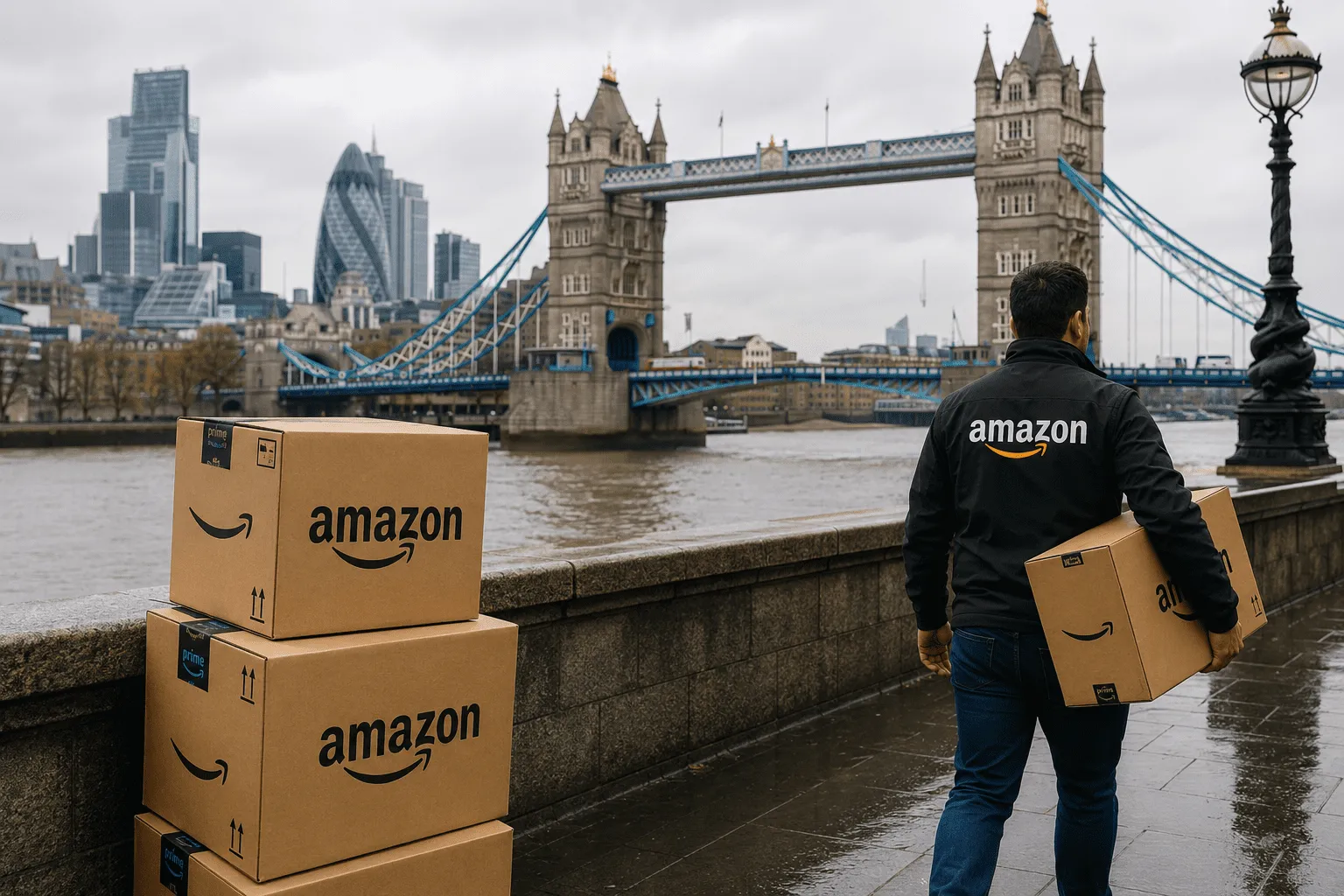
London sellers face a distinct competitive environment that generic, one-size-fits-all agencies fundamentally misunderstand. The competitive landscape extends far beyond your direct product competitors — you’re battling Amazon’s own private labels (Amazon Essentials, Amazon Basics, Solimo), established UK brands with loyal customer bases, European sellers who view UK’s Amazon marketplace as a primary expansion target, and US brands entering through international selling programs.
Consumer behaviour in London creates specific challenges and opportunities that offshore agencies with no local market knowledge consistently miss. London shoppers have among the highest delivery expectations in the UK — next-day isn’t a luxury here, it’s a baseline requirement that directly impacts your seller metrics, review velocity, and Buy Box eligibility. London consumers also demonstrate stronger preferences for sustainable and ethically produced products compared to national averages, creating premium positioning opportunities most sellers never exploit.
Search behaviour itself differs. London shoppers search differently from Manchester or Edinburgh customers, using different terminology, different brand references, and different intent signals. Seasonal demand patterns align with London-specific cultural events — London Fashion Week, Chelsea Flower Show, Wimbledon, the summer music festival season — creating demand spikes that properly timed campaigns can capitalise on while unprepared competitors scramble to respond reactively.
We maintain dedicated London market intelligence including quarterly competitive analysis of top performers in Greater London delivery zones, seasonal forecasting tied to city-specific events and weather patterns, and pricing strategy research accounting for London’s cost-of-living dynamics. This isn’t token localisation — it’s the genuine market understanding that separates effective amazon agency london strategies from generic approaches that happen to mention your city in meta tags.
You’re not short of options. Amazon agency directories list hundreds of providers. LinkedIn messages arrive weekly from sellers promising top-3 rankings and 10x ROAS. So let’s be direct about what actually makes EcomRanker different — not in marketing language, but in the specific ways we’ve structured our business to serve London sellers differently from every other agency competing for your attention.

Traditional Amazon agency pricing creates a fundamental conflict of interest that most sellers never think to examine. Agencies charging percentage-of-ad-spend fees earn more when you spend more — regardless of whether that spend is profitable. An agency collecting 15% of a £20,000 monthly ad budget earns £3,000/month whether your ACoS is 18% or 58%. They have no financial incentive to minimise your spend, eliminate waste, or push back when you want to scale campaigns prematurely.
Retainer-only models are marginally better but still misaligned — agencies collecting £5,000/month whether results improve or deteriorate have limited urgency to drive the difficult optimisations that actually move the needle. The comfortable move is always incremental improvement; the profitable move for you often requires harder strategic decisions.
We built EcomRanker on a different financial foundation because, as former sellers ourselves, we found traditional agency models frustrating and financially damaging. Our compensation structure ties directly to measurable profit outcomes for your business. The specific metrics we track and optimise for are:
When London fashion seller StyleNova engaged us, they faced 47% ACoS across their catalog, declining market share in three primary subcategories, and return rates approaching 28% destroying their net margins. Rather than promising quick fixes, we built a structured 90-day profit optimisation roadmap addressing their wasted ad spend, their conversion-killing listing deficiencies, and the sizing information gaps driving returns. Six months after implementation: ACoS dropped to 19%, revenue grew 240%, return rates fell to 13%, and they secured #1 Best Seller badges in two women’s fashion subcategories. Our fee structure meant we earned our premium compensation only after delivering those outcomes.

Generic Amazon agencies manage electronics accounts on Monday, beauty brands on Tuesday, automotive parts on Wednesday, and fashion labels on Thursday — applying the same listing templates, the same campaign structures, and the same optimisation frameworks across fundamentally different selling environments. The result is consistently mediocre performance: not catastrophically bad, but never genuinely good.
Different product categories on Amazon operate by entirely different rules. Fashion requires understanding complex size variation architectures, seasonal demand cycles, higher-than-average return rates, lifestyle photography standards, and fit-focused copywriting that reduces purchase hesitation. Supplements operate under strict compliance requirements, before-and-after claim restrictions, and ingredient-focused search behaviour. Home and kitchen products sell through use-case demonstration, comparison with alternatives, and installation/assembly clarity. Industrial products require specification-dense listings, compatibility information, and technical buyer language.
Our team develops and maintains genuine category expertise rather than surface-level familiarity. This means understanding the specific factors that drive conversion in your category, the search terms your buyers actually use versus the ones tools suggest, the visual standards that make products look premium versus cheap, and the objections that prevent purchases in your specific niche. We don’t apply fashion listing frameworks to supplement brands or automotive copywriting principles to luxury goods.
For London sellers in high-competition categories, this expertise distinction is the difference between competing effectively and burning budget while treading water. Our full-service Amazon agency approach means your account manager genuinely understands your product category — not just your Amazon dashboard.
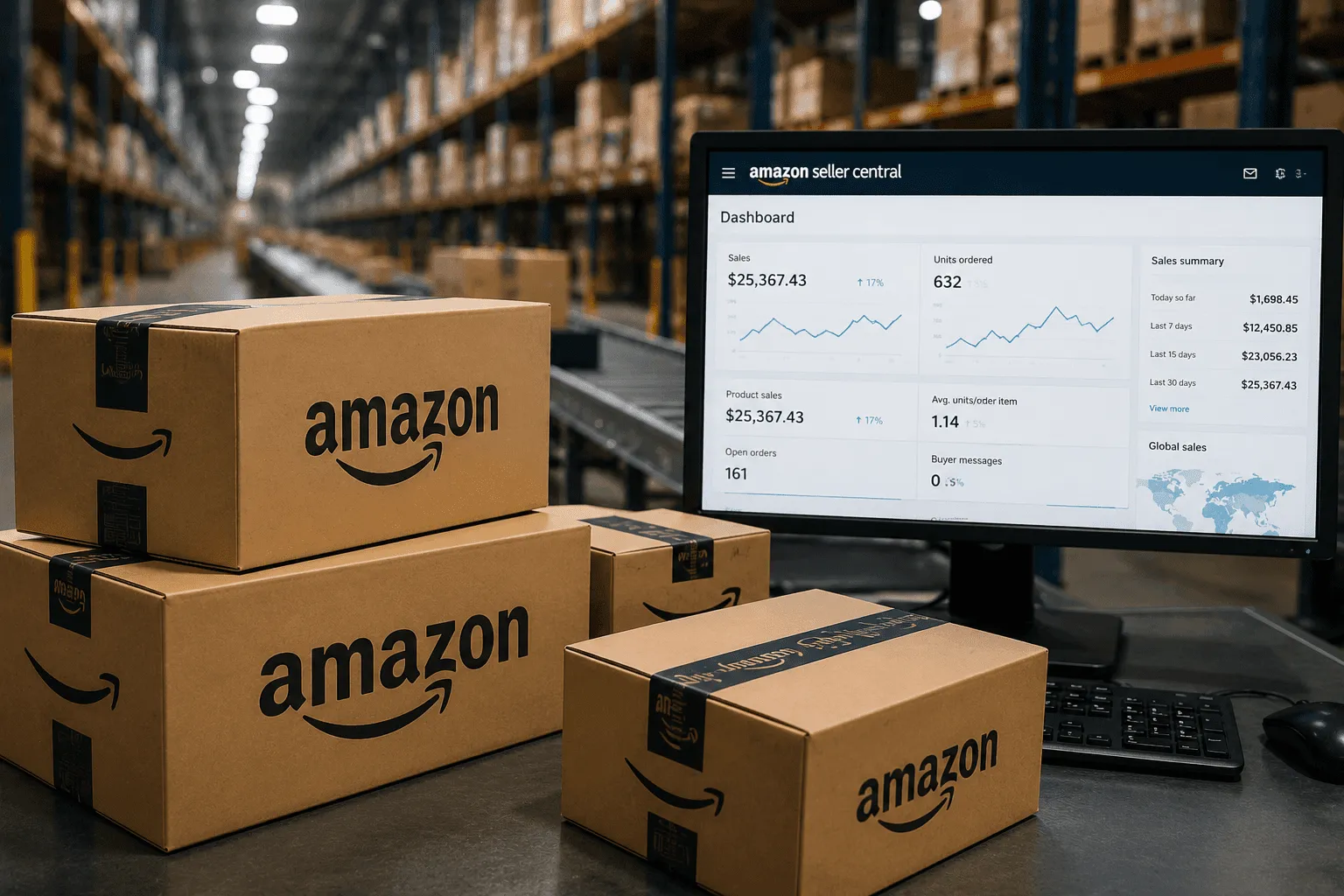
Most agencies’ idea of local market knowledge is adding your city to meta tags and titles. Real local market intelligence means understanding specific consumer behaviour patterns, competitive dynamics, seasonal demand triggers, and logistical advantages that apply uniquely to your target market.
For London sellers specifically, our market intelligence programme covers several dimensions that generic agencies completely ignore. First, seasonal demand mapping: London’s calendar creates unique demand patterns. The Chelsea Flower Show creates sharp demand for garden products and outdoor accessories in late May. London Fashion Week’s September and February showings influence trend-driven fashion demand on Amazon in the following weeks. The summer music festival season drives specific clothing, accessories, and audio equipment demand. The Christmas period, while universal, has London-specific shopping patterns around market visits and premium gift preferences. We build these patterns into your promotional calendars, inventory planning, and campaign scaling strategies.
Second, competitive landscape monitoring: London hosts the UK headquarters of most major retail brands, meaning your Amazon competition often includes brands with substantial brand recognition, offline marketing support, and established customer loyalty. Understanding which competitors are growing, which are declining, which are running promotional strategies, and which have inventory gaps allows us to position your products opportunistically rather than reactively.
Third, logistics optimisation: London customers’ delivery expectations are among the highest in any UK market. Ensuring your FBA inventory is positioned for next-day delivery, monitoring IPI scores that determine your storage allocation, and planning replenishment cycles to avoid stockouts during peak demand periods all contribute to the seller metrics that influence ranking and conversion rates.
Fourth, pricing intelligence: London’s cost-of-living influences purchasing behaviour and willingness to pay for quality. Our pricing strategy research helps London sellers position products at price points that maximise both conversion rates and profit margins — avoiding the race-to-the-bottom pricing wars that destroy amazon profit margins for sellers who benchmark against lowest-cost competitors rather than similar-quality alternatives.

Agency opacity is one of the most common complaints from sellers who’ve worked with multiple providers. They receive monthly reports filled with impressions graphs and click-through rate charts while the metrics that actually matter — profit per unit, true ACoS including agency fees, conversion rate trends, and organic ranking movement — are either absent, buried, or presented without the context needed to evaluate performance objectively.
We operate on a radical transparency model that’s become a core differentiator for EcomRanker. Every week, you receive reports that show exactly where every pound of your advertising budget went, what it returned in attributed and organic revenue, what we changed and why, and what we’re planning to change next. You have real-time dashboard access to your campaign data — not a simplified summary we’ve curated, but the actual data we use to make decisions.
When campaigns underperform, we tell you immediately and present a specific corrective action plan rather than hoping you don’t notice poor metrics buried in impressive-looking charts. When we make mistakes — and every agency occasionally makes mistakes — we acknowledge them, explain what happened, and show you what we’re doing to correct the situation. This approach builds genuine trust rather than the nervous relationship many sellers have with agencies they suspect are hiding underperformance.
Your dedicated account manager maintains direct communication channels — not a ticketing system, not a monthly check-in call, but genuine accessibility when questions arise or market conditions change quickly and require rapid strategic response.
EcomRanker has operated since 2017 — predating many of the agencies currently competing for your business. Over those years, we’ve navigated every major Amazon algorithm change, policy update, and market shift that’s affected UK sellers: the transition to A10 algorithm weighting, the introduction of Amazon’s brand protection programmes, the evolution of Sponsored Display and DSP advertising formats, Brexit’s impact on logistics and VAT treatment for UK sellers, and the post-pandemic shifts in consumer behaviour that permanently changed category dynamics.
This longevity isn’t just about survival — it’s about accumulated knowledge. Every client account we’ve managed has taught us something specific about what works in particular categories, markets, and competitive environments. We apply those learnings systematically to every new client engagement, giving London sellers access to insights developed across hundreds of campaigns rather than starting from theoretical knowledge or generic best practices.
Our portfolio spans small London startups to enterprise brands with multiple category leadership positions, across 20+ product categories including fashion, beauty, supplements, home and kitchen, electronics, automotive, and luxury goods. For apparel brands on Amazon specifically, we’ve developed optimisation frameworks that address the unique challenges of size variations, return rates, and seasonal demand that generic agency approaches consistently fail to handle.
Still comparing? Read our list of the best Amazon agencies in London.
London is one of the world’s most diverse commercial hubs, and that diversity shows clearly in what London sellers list on Amazon. From Brick Lane fashion designers to Canary Wharf tech distributors, from South London supplement brands to East End artisan food producers, London’s Amazon seller community spans virtually every product category on the platform.
Understanding your specific category matters enormously. The strategies that grow a luxury jewellery brand are fundamentally different from those that scale an automotive parts distributor. The keywords a beauty brand targets, the images a furniture seller needs, the compliance requirements a supplement company must meet — every category has its own rules, its own buyer psychology, and its own competitive dynamics.
Below, we cover the 12 most significant product categories for London Amazon sellers, with specific challenges, growth strategies, and the exact approaches we use to build profitable businesses in each niche.
| Category | Avg ACoS Challenge | Biggest Growth Lever | Key Metric to Watch |
|---|---|---|---|
| Fashion & Apparel | 35–55% (High Returns) | Listing + Size Guide Fix | Return Rate + CVR |
| Beauty & Skincare | 28–45% | A+ Content + Reviews | Subscribe & Save Rate |
| Luxury & Premium Goods | 20–35% | Brand Story + DSP | AOV + Repeat Purchase |
| Health & Supplements | 30–50% | Compliance + Trust Signals | Repeat Purchase Rate |
| Home & Kitchen | 25–40% | Use-Case Photography | Basket Size + Bundles |
| Electronics & Tech | 20–38% | Spec-Optimised Listings | CTR + Q&A Section |
| Jewellery & Accessories | 30–55% | Lifestyle Imagery + A+ | Conversion Rate |
| Sports & Outdoor | 22–40% | Seasonal PPC Strategy | TACoS Trend |
| Food & Grocery | 18–30% | Subscribe & Save Enrolment | Reorder Rate |
| Baby & Kids Products | 28–45% | Safety Trust Signals | Review Quality |
| Handmade & Artisan | 25–50% | Brand Registry + Story | Branded Search Volume |
| Gifting & Home Décor | 30–48% | Seasonal Campaign Timing | Q4 Revenue Share |
London seller concentration: Highest in UK — Leicester Road, East End, Shoreditch corridors
Average return rate: 22–34% (highest of any category)
Primary Amazon subcategories: Women’s Clothing, Men’s Clothing, Children’s, Activewear, Accessories
Biggest growth opportunity: Reducing return rates + size guide optimisation
London is the UK’s undisputed fashion capital, and this shows clearly in Amazon seller demographics. From boutique designers in Shoreditch to large-scale apparel importers in East London’s garment districts, fashion represents the single largest category for London Amazon sellers. The opportunity is enormous — and so are the challenges.
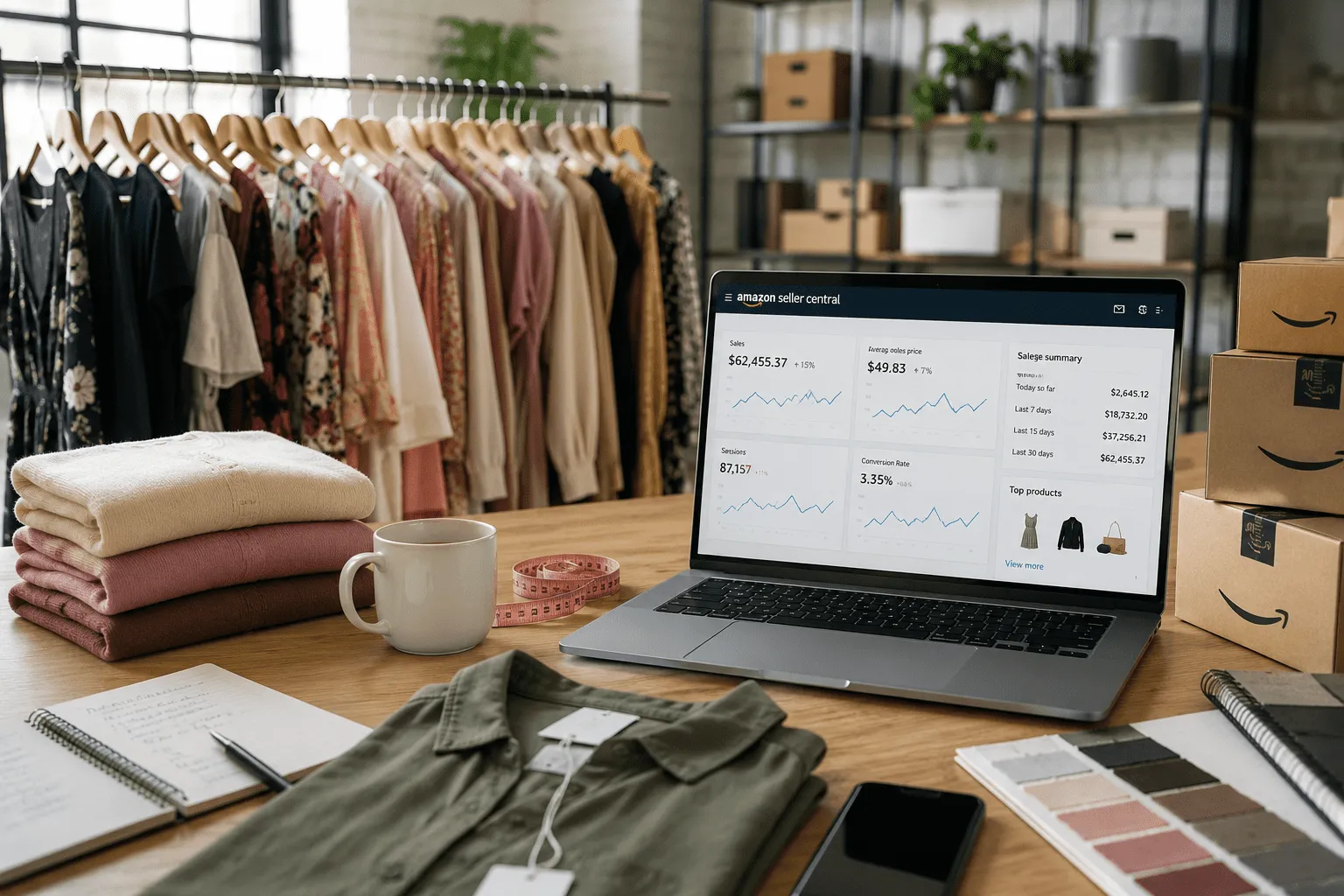
Fashion faces challenges no other category deals with at the same intensity: return rates of 22–34% that destroy margins if unmanaged; size variation complexity requiring sophisticated parent-child listing architecture; visual standards demanding professional lifestyle photography; highly seasonal demand requiring constant inventory and budget reallocation; and intense competition from both Amazon’s own private labels (Amazon Essentials, Amazon Collection) and fast-fashion giants like ASOS and Boohoo who also sell on Amazon.
Most fashion sellers haemorrhage profit through one of three specific failures: return rates left unaddressed because nobody is systematically analysing return reason codes; listings written for algorithms rather than customers, failing to answer the fit and fabric questions that prevent purchase hesitation; and PPC campaigns using broad-match types that attract ‘fashion design software’ searches and similar non-purchase-intent traffic.
Return Rate Elimination Programme: We audit every return reason code across your catalog, identify the root causes (typically: inaccurate sizing, misleading photography, fabric description gaps), and implement specific fixes for each. For most London fashion sellers, addressing return rates alone adds £3,000–£12,000 monthly to net profit without any revenue increase. Our amazon agency for apparel brands page covers this framework in detail.
London fashion brand ‘WestEndStyle’ came to us with 29% return rates and 44% ACoS. Return rate fix (size guides + fit photography) added £9,200/month net profit. PPC restructure reduced ACoS to 21%. Total profit improvement: £14,800/month within 90 days — without changing a single product.
London seller concentration: High — Notting Hill, Chelsea, Hackney indie beauty brands
Average ACoS: 28–45% (competitive bidding environment)
Primary Amazon subcategories: Skincare, Haircare, Makeup, Fragrance, Personal Care, Natural Beauty
Biggest growth opportunity: Subscribe & Save enrolment + A+ Content conversion lift
Beauty and skincare is Amazon UK’s fastest-growing category, and London leads the national seller market. From luxury department store-quality skincare brands to independent natural beauty formulators in East London, the category spans an enormous quality and price spectrum. London’s cosmopolitan consumer base also creates demand for diverse product ranges — ethnic haircare, K-beauty inspired formulations, South Asian skincare traditions, and clean beauty — that London sellers are uniquely positioned to serve.

Beauty faces strict Amazon compliance requirements around claims — ‘reverses ageing,’ ‘eliminates wrinkles,’ and similar absolute claims can trigger listing suppression. Images must comply with specific guidelines for skincare and cosmetic products. Ingredient lists require precise formatting. The category has high advertising competition from major international brands (L’Oréal, Neutrogena, The Ordinary) with advertising budgets that can dominate auction prices for high-volume keywords.
Beauty’s biggest opportunity is repeat purchase behaviour — skincare and haircare customers who find a product they love repurchase consistently. Winning a first-time customer in beauty is worth significantly more in lifetime value than a single transaction, making conversion optimisation and review acquisition particularly high-value investments in this category.
Subscribe & Save Optimisation: Enrolling eligible beauty products in Subscribe & Save and optimising for recurring purchase behaviour is one of the highest-ROI activities for London beauty sellers. A customer enrolled in Subscribe & Save generates 3–5x more lifetime value than a one-time buyer, dramatically improving the economics of your customer acquisition advertising spend. Explore our full amazon agency for skincare brands strategy guide for the complete framework.
London indie skincare brand ‘PureLondon’ scaled from £18,000 to £94,000/month in 9 months through our beauty growth programme — 34% of revenue now comes from Subscribe & Save subscribers generating predictable monthly income.
London seller concentration: Unique to London — Mayfair, Knightsbridge, Chelsea brands
Average ACoS: 18–32% (lower competition for specific terms)
Primary subcategories: Premium Homeware, Luxury Jewellery, Designer Accessories, Premium Food & Drink, Fine Stationery
Biggest growth opportunity: Brand story positioning + DSP retargeting affluent audiences
London has a globally unique concentration of luxury and premium brands, many of which have been slow to embrace Amazon as a sales channel due to concerns about brand perception and marketplace positioning. That hesitation creates enormous opportunity for London premium sellers who do Amazon correctly — the competitive set is thinner, the price compression less extreme, and premium-positioned brands willing to invest in proper brand presence consistently outperform on conversion rates and customer lifetime value.

The core challenge for luxury and premium sellers on Amazon is maintaining brand perception in a marketplace that often feels discount-oriented. The solution isn’t avoiding Amazon — it’s using Amazon’s brand tools to create premium presentation that reinforces rather than undermines your positioning. Premium A+ Content, Amazon Storefront, brand-controlled advertising, and careful price positioning all contribute to luxury brand experiences that feel appropriate for premium products.
Amazon DSP is particularly valuable for luxury brands because it allows you to reach high-income audiences across the web using Amazon’s purchase behaviour data — targeting people who have previously purchased premium products in your category — without competing in the price-sensitive search advertising environment where your ads appear alongside budget alternatives. Our amazon agency for luxury brands framework covers the complete premium positioning approach.
London seller concentration: High — Camden, Brixton health-focused brands; Holland Park wellness
Average ACoS: 30–50% (stringent compliance reduces competitor field)
Primary subcategories: Vitamins, Sports Nutrition, Weight Management, Immune Health, Nootropics, Herbal Supplements
Biggest growth opportunity: Compliance-based trust building + Subscribe & Save
London’s health-conscious consumer culture — shaped by its diverse international population, strong fitness culture, and health-aware demographic profile — makes it one of the strongest supplement markets in the UK. London sellers in the supplement space range from large sports nutrition brands to niche specialist formulators targeting specific health concerns.
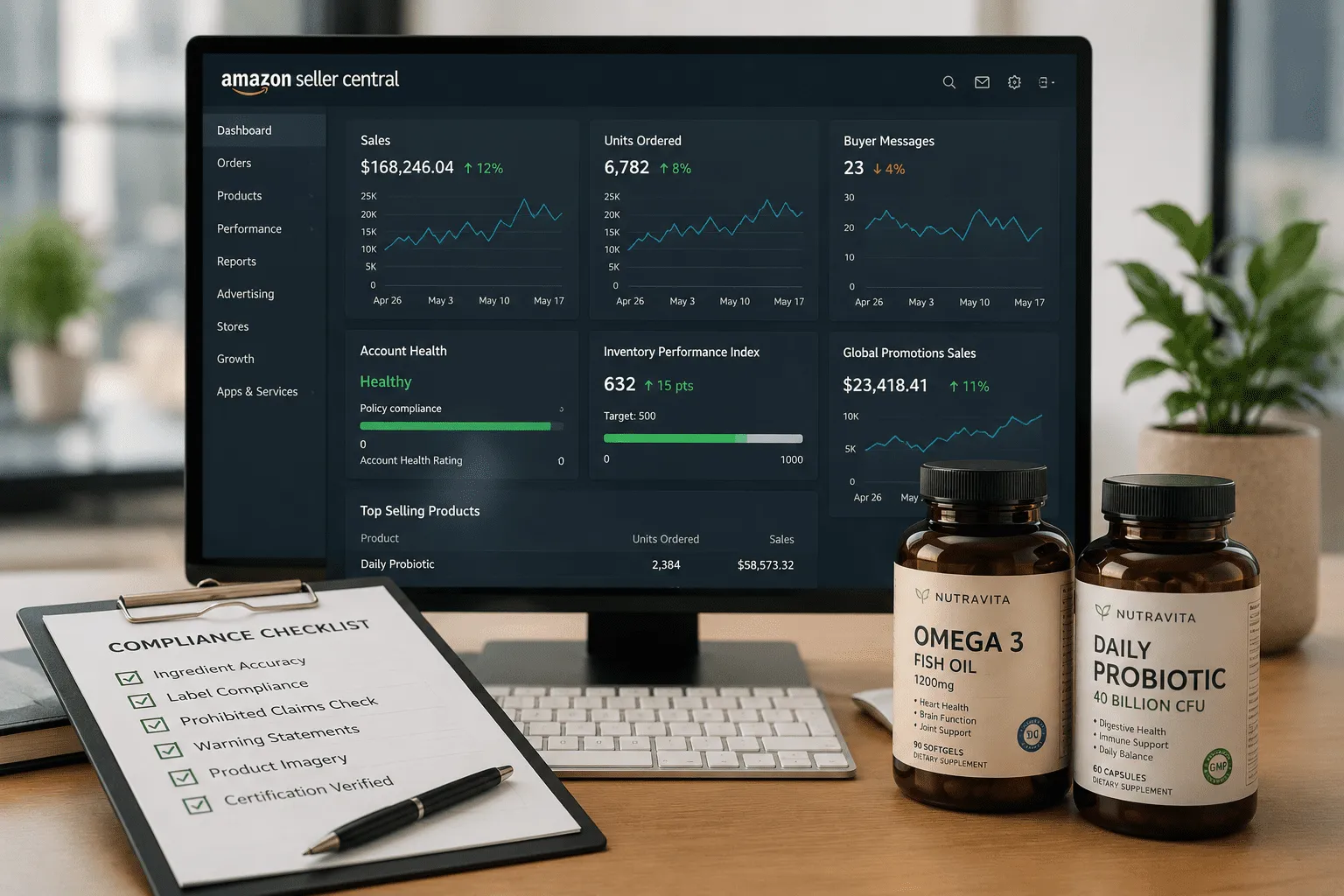
Health and supplement listings are among Amazon’s most heavily monitored for compliance. Prohibited claims, missing required warnings, incorrect ingredient labelling, and unauthorised health claims all trigger listing suppressions that can devastate sales overnight. Most small supplement sellers experience compliance crises reactively — their listings get suppressed and they scramble to fix problems after the damage is done.
Counterintuitively, Amazon’s strict compliance environment creates competitive advantage for sellers who build compliance into their processes from the start. When Amazon suppresses non-compliant competitors’ listings, your compliant listing captures their traffic. When consumers see detailed, accurate ingredient information and required certification disclosures, trust — and conversion — increases.
Our amazon agency for supplement brands team includes compliance specialists who pre-screen all listing content, imagery, and claims against Amazon’s Health & Personal Care category requirements before any content goes live. We’ve never had a client supplement listing suppressed due to compliance failure.
London seller concentration: Very high — North London import specialists, design-led brands
Average ACoS: 22–38% (wide range by subcategory)
Primary subcategories: Cookware, Storage & Organisation, Bedding, Lighting, Home Décor, Small Appliances, Garden
Biggest growth opportunity: Use-case video content + product bundling
Home and kitchen is Amazon UK’s largest category by unit volume, and London sellers are among the most active participants nationally. From premium cookware designers to budget storage solution importers, the category spans an enormous price range with correspondingly diverse consumer motivations and buying journeys.
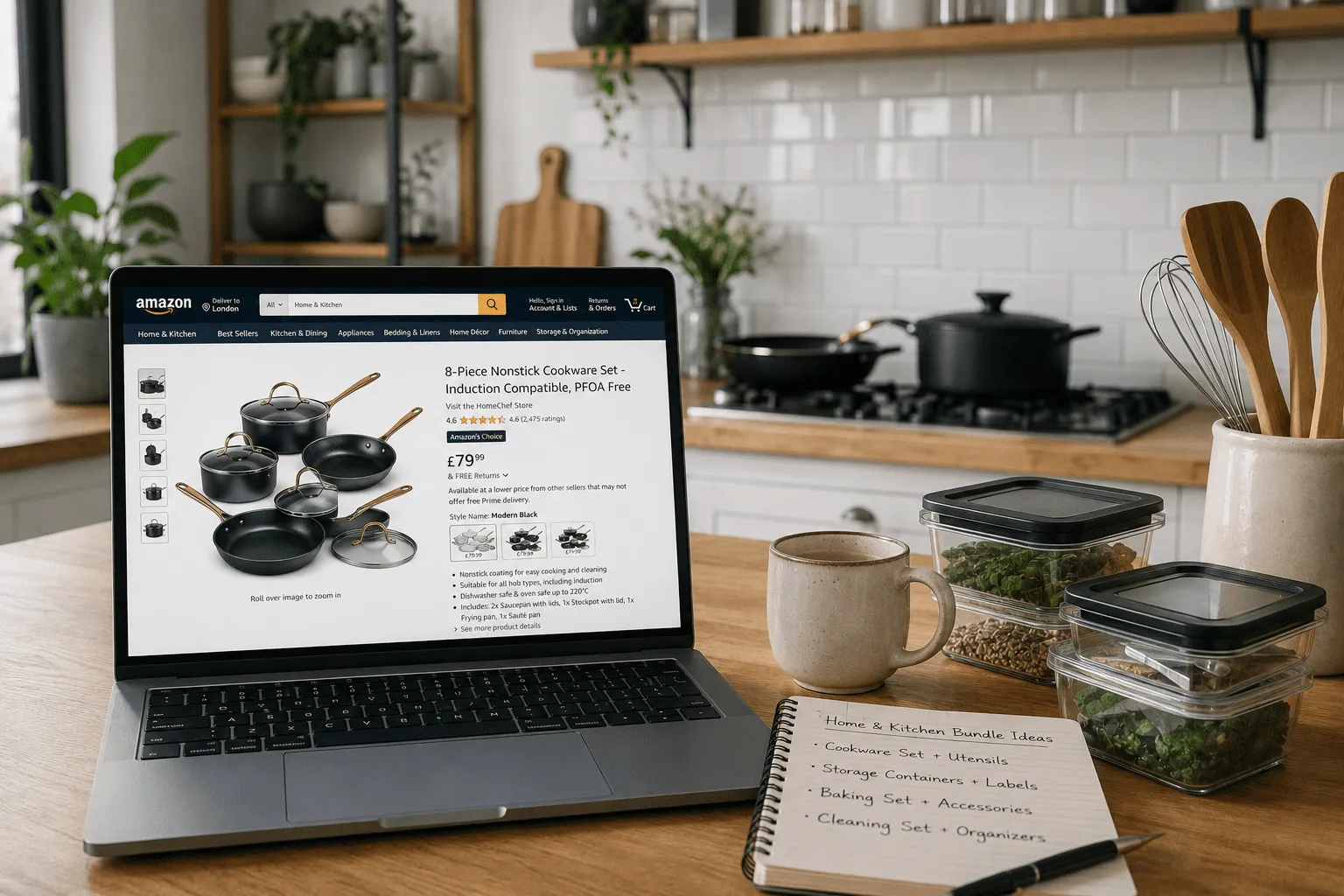
Home and kitchen buyers need to visualise products in their own spaces before purchasing — a challenge that text and static product photography addresses poorly. The category has high return rates specifically from buyers who purchased based on size or colour expectations that product photography failed to set accurately. Use-case demonstration — showing a pan on a specific hob type, a storage solution in a specific cabinet configuration, a light fitting in a specific room context — dramatically reduces return rates and increases conversion.
Product bundling is particularly effective for home and kitchen sellers — London consumers making home improvement purchases respond well to curated sets that solve complete problems rather than requiring individual purchases. Our amazon agency for home and kitchen brands specialists build bundle strategies that increase average order values by 35–65% while simultaneously improving organic ranking for high-value set-related keywords.
London seller concentration: High — Canary Wharf area distributors, Tottenham Court Road legacy
Average ACoS: 18–35% (price competition but lower return rates)
Primary subcategories: Audio, Cables & Accessories, Smart Home, Cameras, Computer Peripherals, Phone Accessories
Biggest growth opportunity: Specification optimisation + compatibility Q&A
Electronics is one of Amazon UK’s most searched categories, and London has a significant electronics seller community spanning large distributors through to niche gadget importers. The category’s strength is lower return rates than fashion or home goods (when products are accurately described); the challenge is intense price competition in commoditised subcategories and the technical listing standards required for proper indexing.
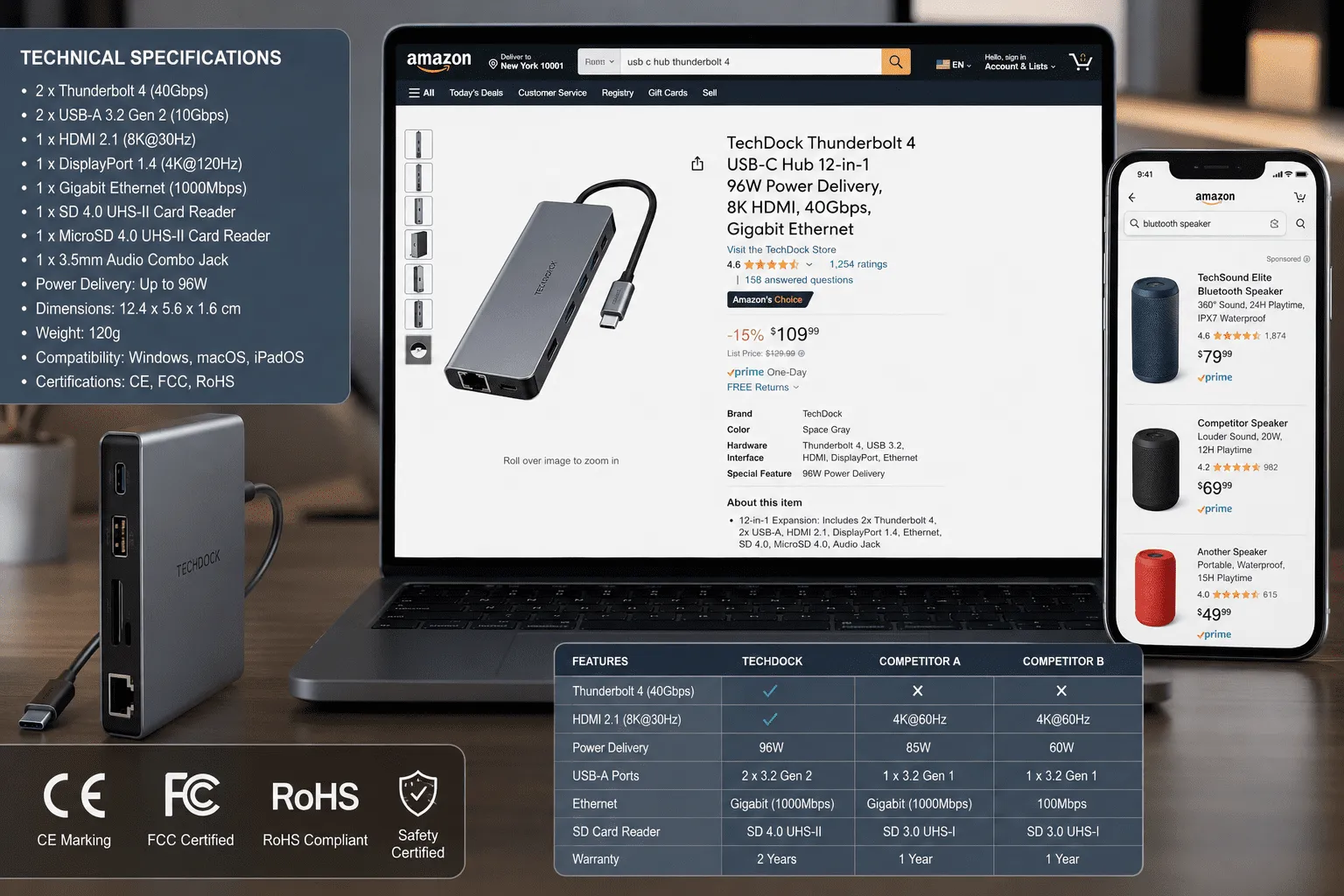
Electronics buyers are specification-driven — they search for exact technical parameters and make purchase decisions based on compatibility, specifications, and feature sets rather than lifestyle imagery. A buyer searching for ‘USB-C hub Thunderbolt 4 compatible MacBook Pro’ knows exactly what they need and will purchase based on whether your listing clearly confirms compatibility. Vague or incomplete specifications lose sales to competitors who provide comprehensive technical detail.
Electronics also benefits strongly from Sponsored Display advertising targeting shoppers viewing competitor listings. If a shopper is viewing a competing Bluetooth speaker, your ad appearing on that page with your price and rating comparison drives high-quality traffic with proven category intent. Our amazon agency for electronics brands team specialises in these competitive placement strategies.
London seller concentration: High — Hatton Garden, independent designers, fashion accessory importers
Average ACoS: 30–52% (gift purchase patterns create seasonality spikes)
Primary subcategories: Fine Jewellery, Fashion Jewellery, Watches, Handbags, Scarves, Belts, Sunglasses
Biggest growth opportunity: Gift season PPC scaling + lifestyle imagery investment
London’s Hatton Garden district houses the highest concentration of jewellery businesses in the UK, and a significant portion of that trade now flows through Amazon. From fine jewellery with hallmarking requirements to fashion accessories with seasonal trend dependency, the category requires different strategic approaches based on price point and buyer motivation.

Jewellery purchases are among the most emotionally driven on Amazon — buyers are often purchasing gifts or treating themselves, making emotional resonance in imagery and copy particularly important. Close-up photography showing craftsmanship, material quality, and wearability on different skin tones is essential. Size and scale context (worn on hand/wrist/neck by model) reduces uncertainty that otherwise prevents purchase.
Gift season planning is critical for jewellery sellers. Valentine’s Day, Mother’s Day, Christmas, and to a lesser extent anniversaries create predictable demand spikes requiring advance campaign preparation and inventory planning. Our amazon agency for jewellery brands team builds jewellery-specific seasonal calendars that capture peak demand with precision rather than reacting to it after the spike has already begun.
London seller concentration: Growing — fitness brands, outdoor gear, cycling accessories
Average ACoS: 20–38% (loyal, repeat-purchase customer base)
Primary subcategories: Fitness Equipment, Cycling, Running, Swimming, Team Sports, Outdoor Gear, Yoga
Biggest growth opportunity: Community-building through review velocity + Subscribe & Save for consumables
London’s active population — driven by its parks, cycling infrastructure, gym culture, and sporting events calendar — makes it one of the UK’s strongest markets for sports and outdoor products. London runners preparing for the London Marathon, cyclists navigating the city’s growing cycling network, and home fitness enthusiasts (particularly post-pandemic) represent large, identifiable audiences with specific product needs.
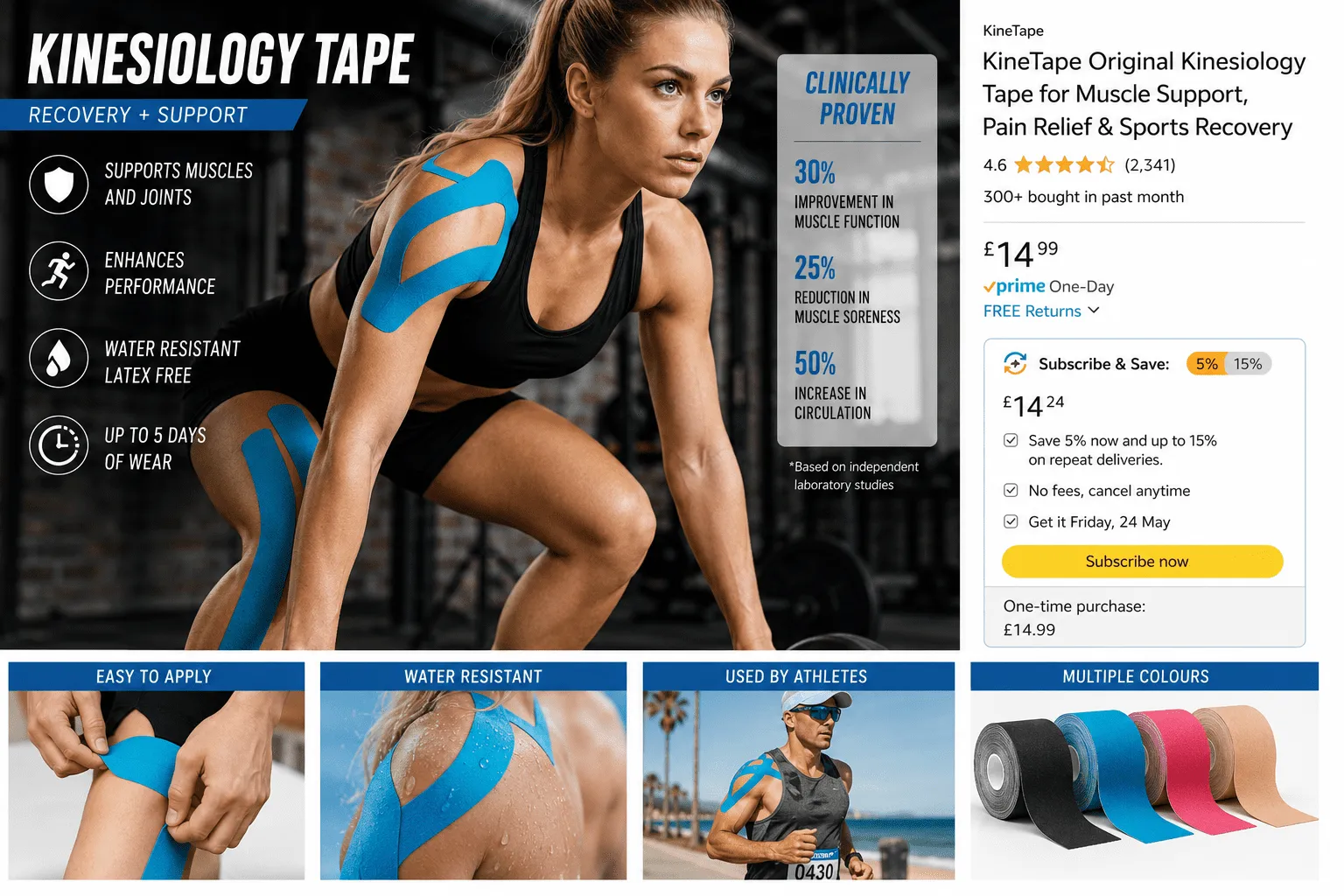
London’s sporting events calendar — London Marathon (April), Ride London (June), triathlon season (July–September) — creates demand spikes for specific product types that prepared sellers can capitalise on through advance inventory planning and campaign scaling. Our amazon agency for sports brands team builds event-aligned promotional calendars for London sports sellers.
London seller concentration: Very high — Borough Market vendors, international food importers, artisan producers
Average ACoS: 15–28% (lower competition than most categories)
Primary subcategories: Artisan Foods, International Foods, Health Foods, Snacks, Beverages, Condiments, Speciality Ingredients
Biggest growth opportunity: Subscribe & Save enrolment + international cuisine positioning
London’s extraordinary cultural diversity creates a food and grocery market unlike any other UK city. International communities seeking authentic ingredients from their home cuisines, health-conscious consumers seeking specialist health foods, and London’s strong ‘foodie’ culture create diverse demand that London sellers are uniquely positioned to supply. Amazon’s grocery category, while less established than its US counterpart, is growing rapidly and represents an opportunity that many London food businesses are just beginning to explore.
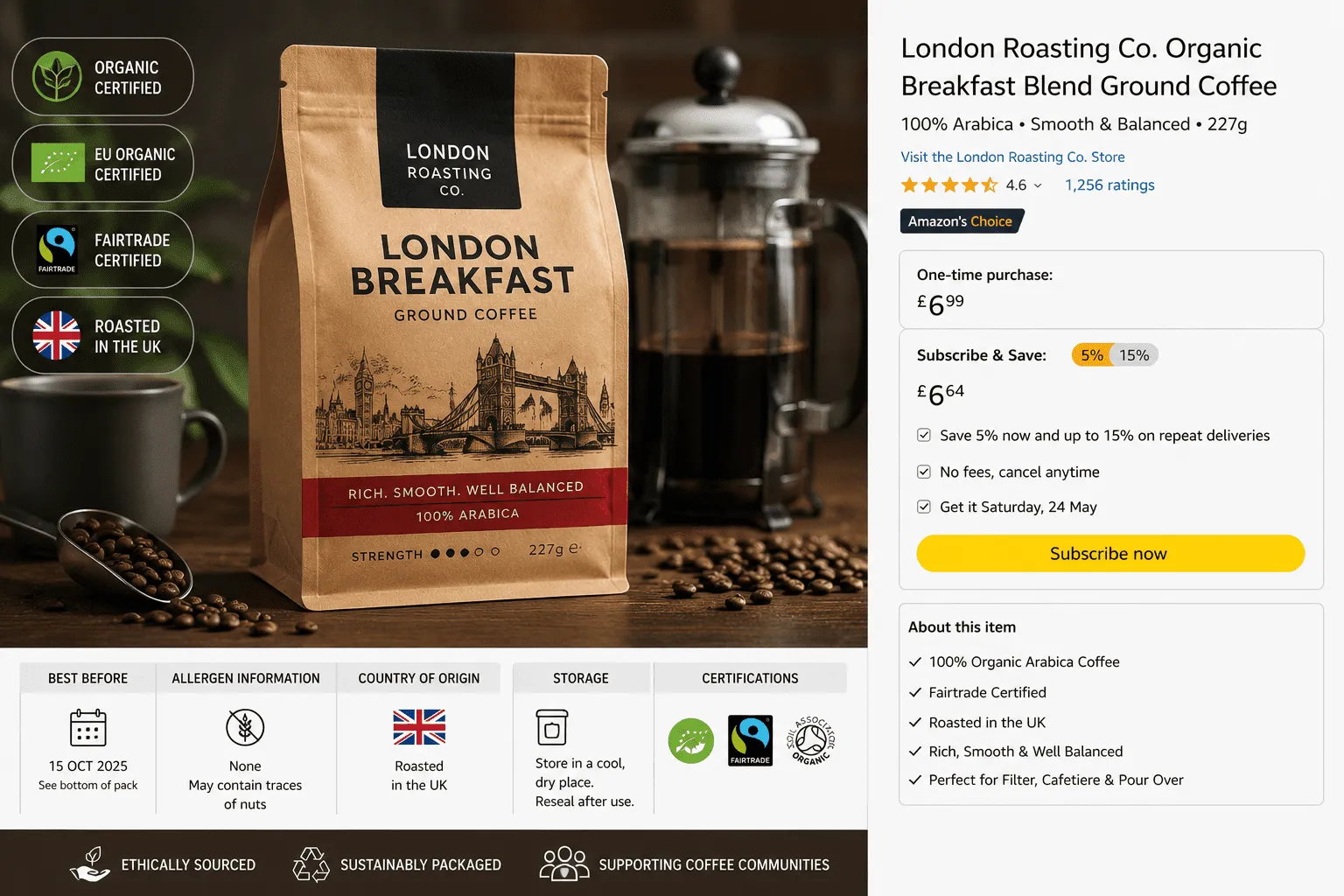
Food listings require specific compliance: best-before date management, allergen information displayed correctly, country of origin labelling, and for certain products organic and health certification documentation. The positive flip side: compliance barriers that slow down less organised competitors create moats for sellers who manage them correctly.
Subscribe & Save is transformative for food and grocery businesses because food is consumed regularly and reordered predictably. A London specialty coffee importer enrolled in Subscribe & Save converts one-time buyers into monthly subscribers with dramatically higher lifetime value. Our amazon agency for grocery brands team focuses heavily on building subscription revenue models for food sellers.
London seller concentration: Growing — safety-focused brands, educational toy makers
Average ACoS: 28–45% (safety-conscious buyers research extensively before purchase)
Primary subcategories: Baby Feeding, Baby Clothing, Nursery, Educational Toys, Children’s Clothing, Baby Safety
Biggest growth opportunity: Safety certification display + parenting community reviews
Baby and children’s products are among Amazon’s most trust-sensitive categories — parents will not purchase for their children without strong evidence of safety, quality, and reliability. This makes the category challenging for new entrants but extremely valuable for sellers who invest in building trust infrastructure: certifications, review volume, responsive customer service, and transparent safety documentation.
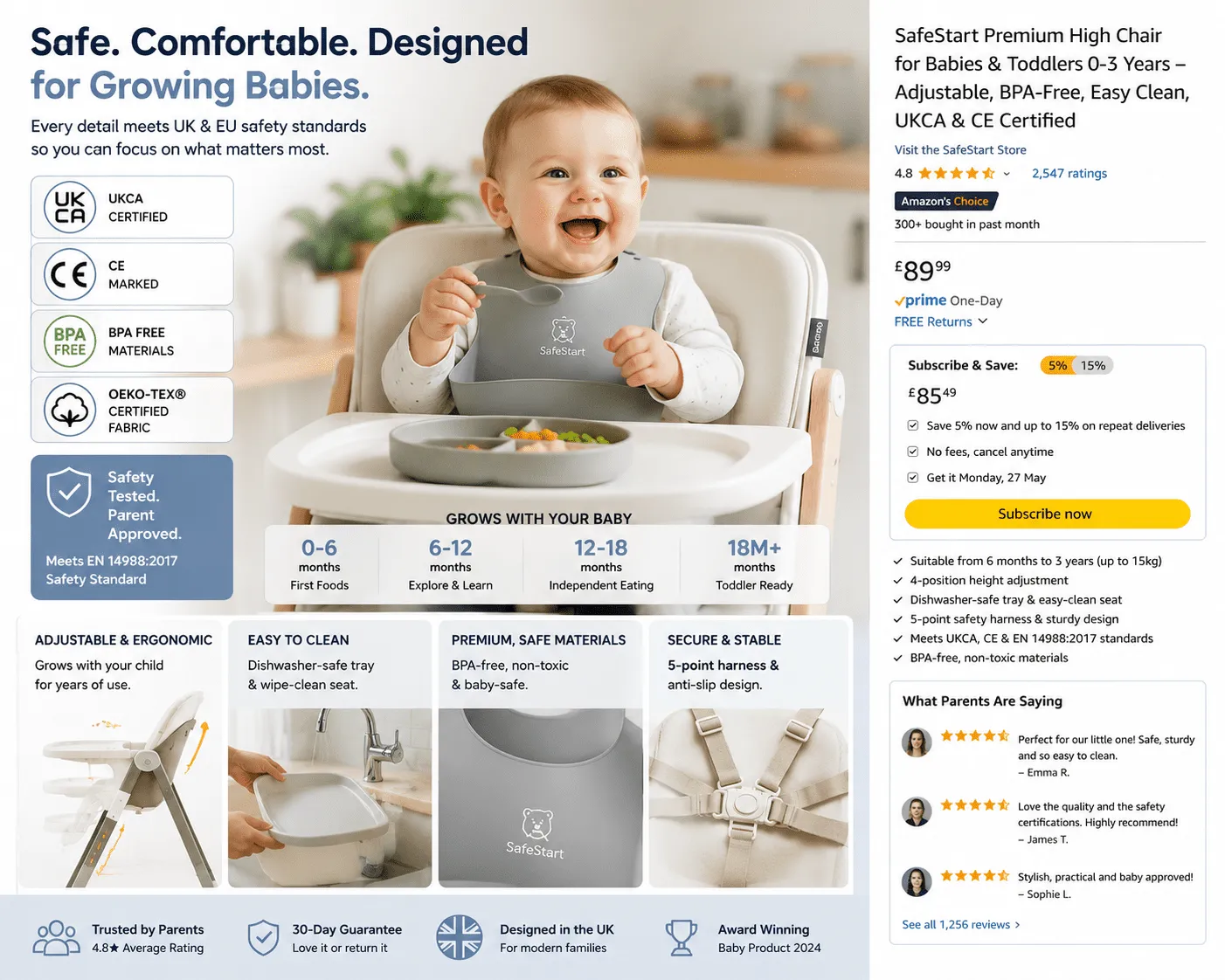
CE marking, UKCA certification, BPA-free certification, organic fabric certifications — every relevant safety credential must be prominently displayed in listing content and A+ Content. London parents in particular are research-intensive buyers who read reviews carefully and seek certification confirmation before purchasing. Our amazon agency for baby brands team builds the complete trust infrastructure that converts safety-conscious parents into loyal repeat customers.
London seller concentration: Unique to London — Hackney, Shoreditch, Brixton maker community
Average ACoS: 25–50% (handmade premiums possible with right positioning)
Primary subcategories: Handmade Jewellery, Artisan Homeware, Handcrafted Gifts, Custom Stationery, Artisan Food, Handmade Clothing
Biggest growth opportunity: Amazon Handmade programme + brand story positioning
London’s creative economy is extraordinary — from Hackney’s maker spaces to Portobello Road’s artisan market tradition, the city has a deep culture of craft and independent creation that translates increasingly to Amazon selling. Handmade and artisan sellers face unique challenges on Amazon: competing against mass-produced alternatives on a marketplace often perceived as price-driven requires strong positioning around craft, story, and uniqueness.

Amazon Handmade is a specialist programme with lower referral fees for qualifying artisan sellers, brand differentiation through a distinct ‘Handmade’ badge, and access to a customer segment actively seeking handcrafted alternatives to mass production. Our amazon agency for handmade brands team helps London artisans navigate programme qualification, optimise for handmade-specific search behaviour, and build brand presence that commands premium pricing justified by genuine craft.
Gift positioning: handmade items are sought specifically for their gift differentiation vs mass-market alternatives
London seller concentration: High — decorative arts brands, gift specialists, seasonal importers
Average ACoS: 28–48% (extreme Q4 spike requires advance preparation)
Primary subcategories: Wall Art, Decorative Accessories, Candles & Diffusers, Photo Frames, Cushions, Gift Sets, Seasonal Décor
Biggest growth opportunity: Q4 preparation (inventory + campaigns) starting in July/August
Gifting and home décor is one of Amazon’s most seasonal categories — Q4 (October–December) can represent 45–65% of annual revenue for décor and gift brands. London sellers in this space face a specific planning challenge: the difference between capturing your share of Q4 demand and missing it almost entirely comes down to decisions made in July and August, months before the peak season begins.

London gifting and décor sellers who win Q4 share specific characteristics: they have inventory positioned in FBA warehouses by late September (before peak inbound shipping delays); they’ve launched and refined their campaigns throughout September and early October so the algorithm has established their ads’ relevance before bidding costs peak in November; they’ve built review volume through autumn months so their listings have credibility when millions of gift shoppers arrive.
Sellers who begin Q4 preparation in November — reactive rather than proactive — pay 40–80% higher CPCs for campaigns with poor conversion history, compete against listings with 10x their review count, and frequently run out of inventory during the highest-demand weeks. Our amazon agency for gifting brands team runs Q4 preparation as a dedicated programme starting each July.
After managing hundreds of London accounts across every major product category, we’ve identified the recurring patterns that destroy profitability for otherwise excellent products. Understanding these mistakes — and having specific strategies to address them — is the difference between an Amazon business that grows profitably and one that generates impressive revenue while constantly wondering where the profit went.
You launch Sponsored Products campaigns using Amazon's default settings. Broad match types are pre-selected. Within days, your campaigns are generating clicks — thousands of them. Your dashboard shows impressive impression numbers and reasonable click-through rates. Then you check your ACoS: 52%. Then you examine the search terms report and find you're paying £2.80 per click for 'fashion design software', £3.10 for 'wholesale clothing suppliers London', £2.50 for 'fashion illustration courses', and £1.90 for 'Amazon Prime fashion magazine subscription'. None of these searches represent purchase intent for your products. Every click is pure waste.
For a London seller spending £10,000/month on advertising, broad-match waste of this nature typically accounts for 30-50% of total ad spend — £3,000-£5,000 monthly burning with zero return. Over a year, that's £36,000-£60,000 that should have been profit, or growth investment, or product development funding.
Amazon's campaign setup is deliberately designed to default to broad match because Amazon earns more from broader targeting — more clicks means more revenue for Amazon regardless of whether those clicks convert. The 'recommended' settings in Seller Central consistently push toward higher spend, broader targeting, and automated bidding that prioritises Amazon's revenue model over your profit model. Sellers new to PPC trust these recommendations. Even experienced sellers often lack the time to audit search terms weekly and implement the granular negative keyword lists that efficient campaigns require.
The problem compounds over time: unchecked broad-match campaigns accumulate thousands of irrelevant search terms, each consuming budget that could fund profitable exact-match campaigns. By the time sellers realise their wasted Amazon ad spend is unsustainable, they've typically lost tens of thousands of pounds and established poor campaign history that takes weeks of restructuring to repair.
We restructure every client's campaign architecture using a three-tier system designed to balance efficient conversion with strategic discovery, eliminating waste while maintaining the competitive visibility necessary for growth.
Tier 1 — Exact Match Conversion Campaigns: These campaigns target only verified high-intent keywords using exact match types — search terms we know from data generate sales at acceptable ACoS levels. Bids are optimised for profitability at top-of-search placement for your strongest converters. These campaigns typically run at 12-22% ACoS and represent your most efficient advertising investment.
Tier 2 — Phrase Match Discovery Campaigns: These campaigns expand reach through phrase match targeting with aggressive negative keyword filtering. We use our proprietary negative keyword database — built from 50,000+ categorised bad searches across client accounts — to filter irrelevant traffic before campaigns launch rather than after they've wasted budget. Discovery at controlled cost with waste prevention built in.
Tier 3 — Broad Match Research Campaigns: These receive 8-12% of total advertising budget with the explicit purpose of keyword discovery, not conversion. Every Friday we mine search terms from these campaigns, graduating strong performers to Tier 1, adding underperformers to shared negative keyword lists, and pausing systematic money-losers. This tier intentionally loses money to fund intelligence that improves Tier 1 and Tier 2 profitability.
Weekly search term audits catch and eliminate new waste within seven days rather than allowing months of inefficient spend. We categorise every search term that triggers your ads: graduate to exact match, monitor in phrase match, add to negatives, or pause the triggering keyword entirely.
London electronics seller 'TechDirect UK' came to us spending £18,000/month with 49% ACoS and genuinely couldn't understand where the money was going. Within six weeks of restructuring, we identified £7,200/month in pure broad-match waste and reallocated it to profitable exact-match campaigns. ACoS dropped to 24% while revenue increased 65% — same budget, completely different architecture. Their full story is part of our amazon ppc management case studies.
Your product title reads: 'Women's Dress Fashion Summer Spring Casual Elegant Trendy Stylish Premium Quality Comfortable Breathable Fabric Party Evening Cocktail Wedding Guest Best Seller Top Rated Sale 2024.' Your bullet points mention 'premium quality' four times but provide zero information about fabric composition, size accuracy, or what occasions the dress actually suits. Your description is a block of keyword-stuffed text that no human would voluntarily read.
Traffic arrives from your campaigns at £2.50/click. Your conversion rate sits at 6.2%. Category leaders in the same niche convert at 16-22%. You're paying to send buyers — genuinely interested buyers — directly to competitors who communicate value, answer real questions, and give shoppers confidence to purchase.
The SEO-first approach to Amazon listings came from legitimate early-Amazon wisdom: keyword density mattered enormously when Amazon's algorithm was simpler. That wisdom calcified into dogma. Sellers read five-year-old guides recommending keyword stuffing, copy competitors' listings without understanding why certain products actually convert, and optimise for algorithm signals while inadvertently destroying the human communication that drives purchase decisions.
The real issue: Amazon's A10 algorithm now heavily weights conversion rate as a ranking signal. A listing that ranks but doesn't convert actually damages your long-term organic position. Low Amazon conversion rate isn't just a sales problem — it's an SEO problem that compounds over time as Amazon reduces organic visibility for listings that fail to convert the traffic they receive.
We apply a proprietary listing optimisation framework that serves both Amazon's algorithm and the human buyer simultaneously — treating these as complementary rather than competing objectives.
Title Optimisation: We restructure titles to lead with the most important customer-clarity information (style, fit, primary use case) while naturally incorporating primary and secondary keywords. Before: 'Women's Dress Fashion Summer Casual Elegant Premium Comfortable.' After: 'Women's Floral Midi Dress — A-Line Summer Wedding Guest | Breathable Cotton-Blend with Pockets.' The second version contains the same keywords but answers the shopper's immediate questions: What style? What occasion? What fabric? What features?
Bullet Point Transformation: We replace feature lists with the feature → benefit → proof framework, addressing the specific objections that prevent purchase in your category. Rather than 'premium quality fabric' we write: 'Breathable 95% Cotton, 5% Spandex blend — keeps you cool during all-day summer events while the 5% spandex provides comfortable movement (customers consistently note 'wore it for 8 hours at a garden party, completely comfortable throughout'.'
A+ Content Strategy: We design A+ Content modules that systematically address purchase hesitation. Module 1: Size and fit guide with models at multiple heights. Module 2: Fabric close-ups revealing texture and quality construction. Module 3: Styling guidance showing the product in 4+ contexts. Module 4: Customer photo gallery with real buyers across different body types. Module 5: Brand story addressing quality, sustainability, or unique manufacturing approach.
London home and kitchen brand 'PremierKitchen London' had strong organic rankings but 7.1% conversion against a category average of 15.3%. Through our amazon listing optimisation process, we redesigned their entire catalog's titles, bullets, and A+ Content over six weeks. Conversion improved to 16.8% — tripling revenue from the same organic traffic without any increase in advertising spend.
You notice a competitor drop their price. Your sales dip slightly. Panic sets in. You reduce your price by £5. Sales recover. Then another competitor drops further. You follow. Six months later you're selling a product that cost £12 to manufacture at £22.99, paying 15% referral fees, £3.80 FBA fulfilment, £8 PPC spend per unit sold — and making approximately 80p gross profit per sale before your own overhead costs. You have revenue. You have velocity. You have a business that's working extremely hard to generate almost nothing.
Price competition feels safe because it's logical: lower prices should mean more sales. The problem is it treats Amazon as a commodity marketplace where only price matters — and for undifferentiated products, that's partially true. But most London sellers have products with genuine quality advantages, unique features, or brand stories that justify premium pricing. They just haven't communicated those advantages effectively enough to command the prices their products deserve. Poor profit margins on Amazon almost never result from genuinely having nothing to offer beyond price — they result from failing to communicate value effectively.
Brand Story Development: We identify and articulate the genuine reasons your products are worth more than cheap alternatives. For a London sustainable homewares brand, this meant building their entire Amazon presence around verified B-Corp certification, carbon-neutral manufacturing, and partnership with UK-based craftspeople. For a London supplement brand, it meant third-party testing certifications, pharmaceutical-grade manufacturing, and specific bioavailability advantages their formulation offered. These aren't invented differentiators — they're real advantages that were being communicated nowhere in their Amazon presence.
Visual Quality Communication: Professional lifestyle photography and A+ Content that makes quality self-evident before the shopper reads a single word. Detail shots revealing construction quality. Comparison imagery demonstrating what makes your product superior to budget alternatives. Behind-the-scenes manufacturing content building transparency and trust. Lifestyle photography in aspirational London contexts that resonates with target customers.
Social Proof Architecture: Systematically building review portfolios that specifically address value questions. We structure review request sequences to encourage customers who are most satisfied — those most likely to write reviews emphasising quality, longevity, and value for money — to share their experience. We use Amazon Vine for new product launches, product insert strategies that generate authentic reviews, and influencer seeding programmes generating user-generated content.
London premium skincare brand 'NatureLux London' was competing at £24.99 in a category dominated by products at £14.99-£19.99. After repositioning around their certified organic formulations, clinical testing results, and sustainable packaging programme, we increased their price to £34.99. Sales increased 95% because we attracted buyers who specifically valued these characteristics and were actively searching for premium alternatives to mass-market options.
You pause advertising for a weekend. Sales drop 90%. You realise your entire business depends on paid traffic — you have no organic ranking, no review velocity, no brand recognition that would sustain sales without constant advertising investment. This is the most dangerous long-term position for any Amazon seller, and it's created by focusing entirely on PPC while neglecting Amazon SEO. Low Amazon organic ranking means every sale requires a paid click — making your profit model permanently fragile and leaving you vulnerable to advertising costs increases, competitor bidding wars, or Amazon policy changes affecting advertising formats.
We treat Amazon PPC and Amazon SEO as complementary systems rather than alternative strategies. PPC provides immediate visibility and revenue while SEO builds the organic momentum that eventually reduces advertising dependency and improves overall profitability.
Keyword Indexing Optimisation: Ensuring your listings are properly indexed for every relevant search term through title, bullet point, description, and backend keyword field optimisation. Many London sellers have significant indexing gaps — products that should rank for important keywords but don't appear in search results at all because of structural listing issues.
Conversion Rate as SEO Signal: Amazon's algorithm weights conversion rate heavily in organic ranking decisions. A listing converting at 18% ranks significantly higher than an identical listing converting at 8% for the same keyword, because Amazon's goal is showing buyers products they'll actually purchase. Our listing optimisation work serves organic ranking improvement simultaneously with conversion improvement.
Review Velocity Management: Review count and rating quality are major organic ranking factors. We implement systematic review acquisition programmes including compliant follow-up sequences, product insert strategies, Vine programme enrollment for new launches, and customer service approaches that convert neutral experiences into positive reviews.
London beauty brand 'GlowLondon' had 85% of sales coming from paid advertising. After implementing our 12-month organic growth strategy, organic sales reached 55% of total revenue — reducing their effective advertising cost-per-sale by 38% while growing total revenue 145%.
Sellers often discover Amazon account health issues only when they receive a suspension notice or see their listings removed. By that point, the problem is urgent and expensive rather than routine and preventable. Account health metrics — Order Defect Rate, Late Shipment Rate, Policy Violation warnings, intellectual property complaints — accumulate quietly until they trigger serious consequences that can cost weeks of suspended sales and complex appeals processes.
We monitor your account health metrics continuously, not reactively. Weekly account health reviews identify emerging issues before they reach threshold levels that trigger consequences. Policy compliance monitoring ensures new listings meet category requirements before launch. Intellectual property monitoring protects your brand while ensuring your listings don't inadvertently use protected content from other brands.
For London sellers managing their own accounts alongside product development, customer service, and logistics, account health monitoring is typically the first task deprioritised when time is limited. We handle it comprehensively so you can focus on the parts of your business that benefit most from your direct attention.
Transparency matters. Here’s the specific deliverable-level breakdown of every service we provide, with the exact outcomes you should expect and the measurement frameworks we use to track performance.
Most agencies manage PPC to maximise ad spend because their fees are tied to your budget size. We manage PPC to maximise your profit — a distinction that reshapes every decision from campaign architecture to bid strategy to budget allocation.
We build custom campaign structures for every client account based on your specific catalog, category dynamics, and profit targets. For most London sellers, this means: Sponsored Products campaigns segmented by product tier (heroes, growth products, long-tail), match type, and targeting approach; Sponsored Brands campaigns building category-level brand visibility; Sponsored Display campaigns for product-level and audience retargeting; and Amazon DSP for enterprise accounts requiring programmatic advertising reach beyond Amazon’s owned properties. Our amazon ppc agency team ensures campaigns are architectured for profitability from day one rather than requiring months of reactive optimisation.
We conduct category-specific keyword research identifying the high-intent search terms your competitors are missing. For London sellers, this includes UK-specific terminology, London market-specific search behaviour, and emerging keyword opportunities in your category that keyword tools underindex because they’re too new to show strong historical data. Our keyword discovery process combines tool-based research with manual competitor analysis, search term report mining from existing campaigns, and category-specific intent modelling.
Bid management is where most agencies either spend too much time on manual adjustments providing marginal returns or over-rely on Amazon’s automated bidding in ways that consistently overspend for average positions. We use a hybrid approach: Amazon’s automated bidding for mid-funnel keywords where it performs well, manual bidding for your highest-value exact-match terms where precise control matters most, and dayparting strategies that concentrate budget during the hours London shoppers show highest purchase intent in your specific category.
Weekly search term audits reviewing every triggered search term across all campaigns. Immediate addition to negative keyword lists at campaign and account levels. Shared negative keyword lists ensuring waste identified in one campaign benefits all campaigns. Our London-specific negative keyword database includes 50,000+ categorised irrelevant terms across 20+ product categories — giving new client accounts immediate waste protection rather than requiring months of data collection to build effective exclusion lists.
Every Monday morning: the previous week’s complete PPC performance report including spend by campaign, revenue attributed, ACoS and TACoS trends, top-performing and underperforming keywords, search terms graduated to exact match, search terms added to negatives, bid adjustments made, and the specific strategy rationale for any significant changes. You understand not just what happened but exactly why we made every decision.
London home goods brand ‘PremierLiving UK’ came to us with £22,000/month advertising spend and 51% ACoS. After 60 days of restructuring: spend reduced to £16,000/month maintaining equivalent sales (waste elimination), ACoS dropped to 27%. After 120 days: scaled profitable campaigns to £25,000/month at 23% ACoS with 180% revenue growth. If you want to understand more about how we approach PPC decisions, our Amazon PPC vs Amazon SEO guide explains the strategic balance between paid and organic growth.
Your listing is your 24/7 sales person — it works whether you’re sleeping, on holiday, or focused on other parts of your business. A poorly optimised listing leaks revenue at every stage of the customer journey. A properly optimised listing compounds returns over time as improved conversion sends stronger ranking signals to Amazon’s algorithm, driving more organic traffic that converts at high rates, creating a self-reinforcing growth flywheel.
Titles must serve three audiences simultaneously: the human shopper who reads the title to decide whether to click, Amazon’s algorithm that uses the title for keyword indexing, and the mobile shopper who sees only the first 70-80 characters before the display truncates. We structure titles with the most critical decision-making information in the first 70 characters — typically brand name, primary style/type, key feature, and primary occasion or use case — while ensuring secondary keywords appear within the full title for indexing.
Five bullet points. Each one has one job: overcome a specific objection or confirm a specific decision-making criterion. We research the most common questions, concerns, and hesitations in your specific product category by analysing your competitor reviews, mining your own customer service contacts, and studying what questions appear in the Amazon Q&A section for your product type. Every bullet is structured: Feature (what it is) → Benefit (what it does for the customer) → Proof (evidence it delivers that benefit). No filler language. No repetition across bullets. Direct, specific, useful.
Premium A+ Content receives significantly higher weighting in Amazon’s algorithm than text-only listings and directly improves conversion rates by providing the visual context and additional information that reduces purchase hesitation. We design A+ Content modules specifically for your product category and target audience, including comparison charts, lifestyle imagery, technical specification tables, and brand story content that builds trust and premium perception.
The 250 bytes of backend search terms are often completely wasted by sellers who either leave them empty, duplicate their title keywords, or fill them with irrelevant terms they hope might somehow generate traffic. We fill all available backend fields with semantically relevant terms that expand your indexing footprint: style synonyms, occasion alternatives, complementary product searches, UK-specific terminology, and long-tail variations that your main listing content can’t accommodate naturally.
London beauty brand ‘SkinLux London’ had strong traffic but 8.4% conversion against a category average of 17.2%. After our complete listing redesign, conversion improved to 19.1% — more than doubling revenue from existing traffic with zero additional advertising investment. They tell the full story in our beauty brands on Amazon case study section.
For London sellers who want to focus on product development, supplier relationships, and business growth rather than daily Amazon operations, our full account management service provides comprehensive coverage of every operational aspect of your Amazon business.
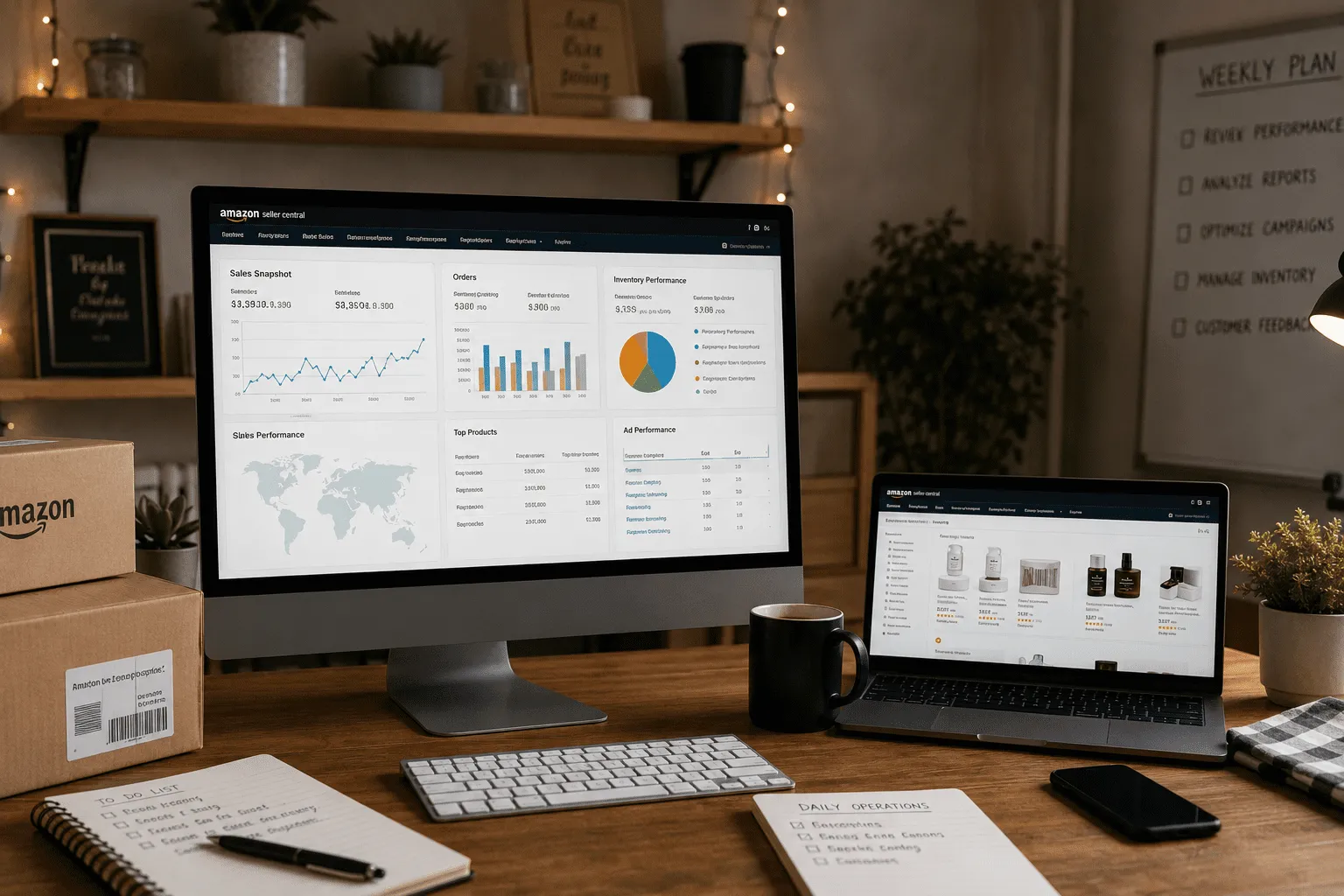
Our full account management service is distinct from basic account monitoring — we make decisions, implement optimisations, and manage the daily complexity of Amazon operations so you can focus on strategic growth. Compare this to the alternative in our amazon agency vs in-house team guide which helps you evaluate whether agency management or building internal capability makes more sense for your business stage.
Amazon SEO is distinct from Google SEO in fundamental ways that matter for your strategy and investment decisions. Understanding these differences is essential for London sellers trying to allocate their growth investment intelligently.
Amazon’s A10 algorithm weights conversion rate, sales velocity, review quality, keyword relevance, and fulfilment performance — in that priority order. Unlike Google, which weighs hundreds of signals including backlinks, domain authority, and content depth, Amazon optimisation is tightly focused on the signals that predict whether a shopper will purchase. Our Amazon SEO agency approach targets all five primary ranking signals systematically rather than focusing on the keyword stuffing strategies that dominated early Amazon SEO advice and now actively harm rather than help.
We identify the specific keyword gaps between your current organic rankings and the top-10 positions that would deliver meaningful sales volume. For each gap keyword, we build a specific strategy: listing content updates that improve relevance, PPC investment that builds sales velocity history, or review acquisition that improves the social proof signals Amazon uses as quality indicators.
Amazon rewards consistent sales velocity with improved organic rankings. We design promotional strategies — Lightning Deals, Coupons, Subscribe and Save enrollment for eligible products — that build velocity history without destroying margin through permanent price reductions. The goal is creating organic ranking momentum that sustains itself rather than requiring constant promotional investment to maintain.

Brand equity on Amazon is the difference between a commodity seller competing on price and a recognised brand commanding premium pricing, generating repeat purchases, and building customer loyalty that survives competitor attempts to undercut.
Our amazon brand building agency services cover the complete brand presence ecosystem: Amazon Storefront design creating a branded destination rather than just individual product listings; Premium A+ Content with brand story modules; Amazon Posts strategy building brand presence in social-feed contexts; Brand Registry optimisation maximising the intellectual property protections and enhanced content tools available to registered brands; and Amazon DSP advertising reaching target audiences beyond Amazon’s organic search environment.
London luxury candle brand ‘WickLondon’ had 12 products, strong Etsy presence, and an established customer base — but zero brand presence on Amazon. Within six months of implementing our brand building strategy, they had a professionally designed Storefront, Premium A+ Content across all 12 products, 340 verified reviews, and a loyal Amazon customer base that generated 35% repeat purchase rates — exceptional for the candle category.
Your Amazon business’s growth stage determines which strategies deliver the highest return on investment. A small seller investing in DSP advertising before establishing conversion-optimised listings is burning money on visibility that doesn’t convert. An enterprise brand still running single-tier campaign structures is leaving significant scaling opportunity on the table. We tailor our approach to your current reality and your specific growth trajectory.

Every pound wasted has direct impact when budgets are tight — you can’t afford the expensive learning curves that larger businesses absorb. Time poverty means Amazon optimisation constantly competes with product development, customer service, supplier management, and logistics. Achieving initial traction in competitive categories requires early momentum that’s hard to generate without either deep discount strategies (margin-destroying) or perfectly executed launch campaigns (requiring expertise many small sellers lack).
Month 1 — Foundation: Complete account audit identifying the highest-impact quick wins. Listing optimisation for your top 3 hero products. Basic three-tier PPC structure with £500-£1,500 starting budget. Account health review and issue resolution. Baseline metric establishment for measuring progress.
Months 2-3 — Optimisation: Review acquisition programme launch. Image enhancement and A+ Content for hero products. PPC refinement based on initial data — graduating winning search terms, eliminating waste, testing new keyword opportunities. Secondary product listing improvements.
Months 4-6 — Scaling: Expand successful campaigns with increased budgets based on proven profitability. Launch new SKU optimisation using frameworks proven on hero products. Build brand presence with Storefront and Posts strategy. Begin targeting secondary keyword opportunities now that primary keywords are established.
Most small London businesses achieve positive ROI within 60-90 days and meaningful growth momentum by month 4-6. The key is foundation-first sequencing: optimise before you scale, prove profitability before you increase budgets, establish organic momentum before reducing advertising dependency.
London kitchenware startup ‘TasteLondon’ launched with 6 SKUs and £800/month advertising budget. We focused entirely on two hero products in month 1, optimising every element of those listings before touching anything else. By month 4 they had Best Seller badges in 2 subcategories. Revenue grew from £6,500 to £38,000/month in 8 months. If you’re concerned about whether agency fees make sense at a small scale, our amazon agency vs freelancer comparison helps you evaluate the right option for your specific situation and budget.

Breaking into the next revenue tier requires sophisticated strategies that your team may lack bandwidth to implement without external specialist support. Managing catalog complexity across 20-80+ SKUs while maintaining quality optimisation across all products stretches internal resources. Defending market share against both emerging competitors and established category leaders simultaneously requires different strategic approaches. Scaling operations without proportionally increasing overhead requires systems and expertise your team may not yet have developed.
Month 1 — Deep Diagnosis: Comprehensive audit of your entire catalog performance, PPC efficiency across all campaigns, listing quality scores for every SKU, inventory performance metrics, and competitive positioning analysis. We identify your portfolio segments: hero products to protect and scale, rising stars to accelerate, cash cows to optimise for margin, and underperformers to either revitalise or strategically wind down.
Months 2-4 — Strategic Restructuring: Advanced PPC architecture including Sponsored Brands video campaigns, Sponsored Display retargeting, and initial DSP exploration for proven best-sellers. Complete listing overhaul for top 20% of catalog by revenue. Brand building initiatives including Storefront redesign and Premium A+ Content rollout. Defensive campaign structure protecting your branded terms from competitor conquest.
Months 5+ — Category Expansion: Identify and execute expansion into adjacent categories or subcategories where your existing products have untapped relevance. International marketplace exploration — Amazon Germany, France, and other EU marketplaces where UK brands have competitive advantages. Advanced audience targeting using DSP to reach shoppers beyond Amazon search intent alone.
Mid-level London businesses typically achieve 70-130% revenue growth within 12 months of implementing our growth programme, with margin improvements of 12-20% from advertising efficiency gains and premium positioning strategies.
London pet supplies brand ‘PetCare London’ plateaued at £175,000/month despite investing heavily in new product launches. After our portfolio analysis, we identified they were spreading resources across 65 SKUs when 12 products drove 78% of revenue. Concentrating optimisation and advertising investment on those 12 heroes, restructuring underperformer strategy, and launching a brand-building programme, they grew to £360,000/month in 10 months. Their experience navigating expansion is captured in our amazon brand building strategy resource.

Maintaining category dominance as new competitors continuously enter and established competitors increase their Amazon investment requires sophisticated defensive and offensive strategies simultaneously. Managing Amazon within a complex multi-channel structure requires ensuring Amazon strategy complements rather than conflicts with DTC, wholesale, and retail channels. Extracting incremental growth from already-optimised operations requires access to more advanced tactics and tools than earlier-stage strategies. Protecting brand equity on a marketplace where counterfeiters, unauthorised sellers, and brand registry violations require constant vigilance.
Dedicated Account Team: A senior Amazon strategist serving as your strategic lead, a dedicated PPC specialist managing your advertising portfolio, a content manager overseeing listing and brand content quality, and a data analyst providing custom reporting and performance insight. This team functions as an embedded extension of your business with deep familiarity with your products, market position, and strategic priorities.
Advanced Technology Stack: Custom reporting dashboards integrating Amazon data with your wider business metrics. API connections with your ERP or inventory management systems for seamless operational coordination. Predictive analytics models for seasonal demand forecasting and inventory planning. Competitive intelligence monitoring tracking competitor positioning changes in real time.
Strategic Partnership: Quarterly business reviews with C-level participation. Annual strategic planning incorporating Amazon roadmap alongside your wider business objectives. Competitive intelligence briefings on material changes in your category landscape. Proactive identification of emerging opportunities before competitors capitalise on them.
London enterprise furniture brand ‘LivingSpace London’ at £1.8M/month wanted to defend category leadership while exploring EU marketplace expansion. We implemented sophisticated defensive strategies protecting their top-10 keyword positions, optimised their 95-SKU catalog comprehensively, and coordinated entry into Amazon Germany and France. Revenue grew to £2.7M/month UK while generating an additional £380,000/month from EU. If you’re evaluating selling internationally, our amazon usa vs uk marketplace comparison provides strategic context for your expansion decisions.
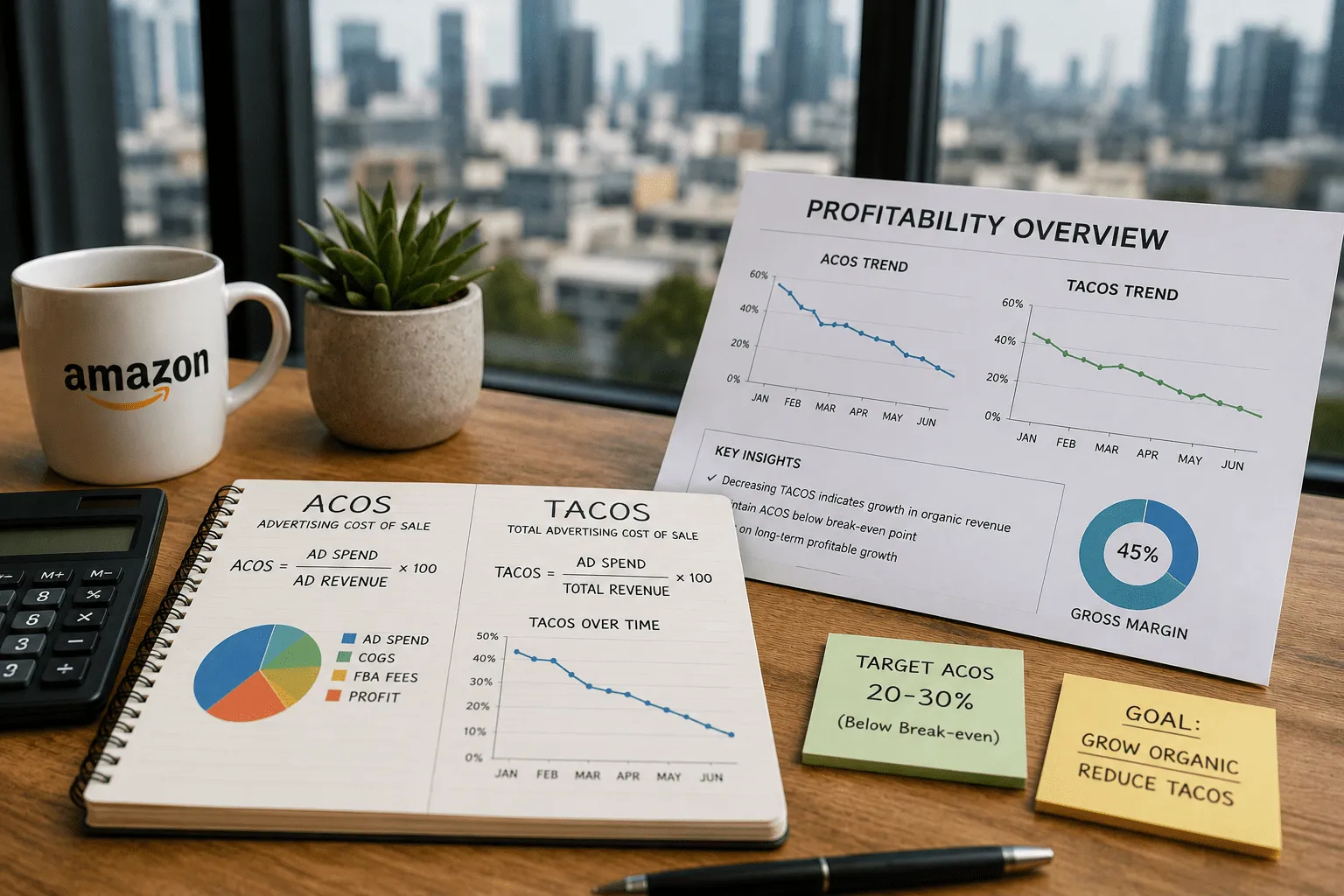
ACoS (Advertising Cost of Sale) measures advertising spend as a percentage of advertising-attributed revenue. TACoS (Total Advertising Cost of Sale) measures advertising spend as a percentage of total revenue including organic sales. Understanding the strategic relationship between these metrics determines whether your advertising investment is building long-term value or creating short-term volume at unsustainable cost. Our how to reduce high ACoS on Amazon guide provides the complete framework — here’s how we implement it for London clients.
We set ACoS targets based on your specific gross margin — your ‘break-even ACoS’ is the maximum you can spend on advertising before a sale becomes unprofitable. For a product with 45% gross margin after COGS and FBA fees, the break-even ACoS is 45%. We target 15-25 percentage points below break-even, creating profit headroom while maintaining competitive visibility.
TACoS reduction over time demonstrates that advertising is building organic ranking rather than just buying sales. A declining TACoS trend — even if absolute advertising spend is growing — indicates that organic sales are growing faster than advertising spend, confirming that your investment is creating lasting value rather than short-term volume. If you want to understand this distinction in depth, our how to lower TACoS on Amazon resource explains the full strategic framework.

Return rates devastate profitability through multiple channels simultaneously: direct return processing costs, restocking fees, inventory damage, potential listing suppression if rates exceed Amazon thresholds, and the negative review risk from return-related customer experiences. High Amazon return rates are rarely random — they have specific, addressable root causes that systematic analysis can identify and resolve.
We conduct root cause analysis of your return reasons using Amazon’s return analysis tools and customer feedback. Common causes for London sellers: sizing inaccuracy (particularly in fashion and footwear), expectation gaps created by marketing language that oversells product capabilities, image quality issues that misrepresent colour or size, and quality control inconsistencies in manufacturing batches. Each cause has a specific remedy: improved size guides, more accurate marketing copy, better photography, or supplier quality control protocols.
London fashion seller ‘ModaLondon’ had 31% return rates destroying their profitability despite strong conversion rates and review scores. Root cause analysis identified that 68% of returns cited ‘not as described — sizing runs smaller than expected.’ We redesigned their size guide, added measurement charts to all images, and included specific fit notes in bullet points. Return rates dropped to 14% within 60 days — adding approximately £8,400 monthly to their net profit without any other changes.
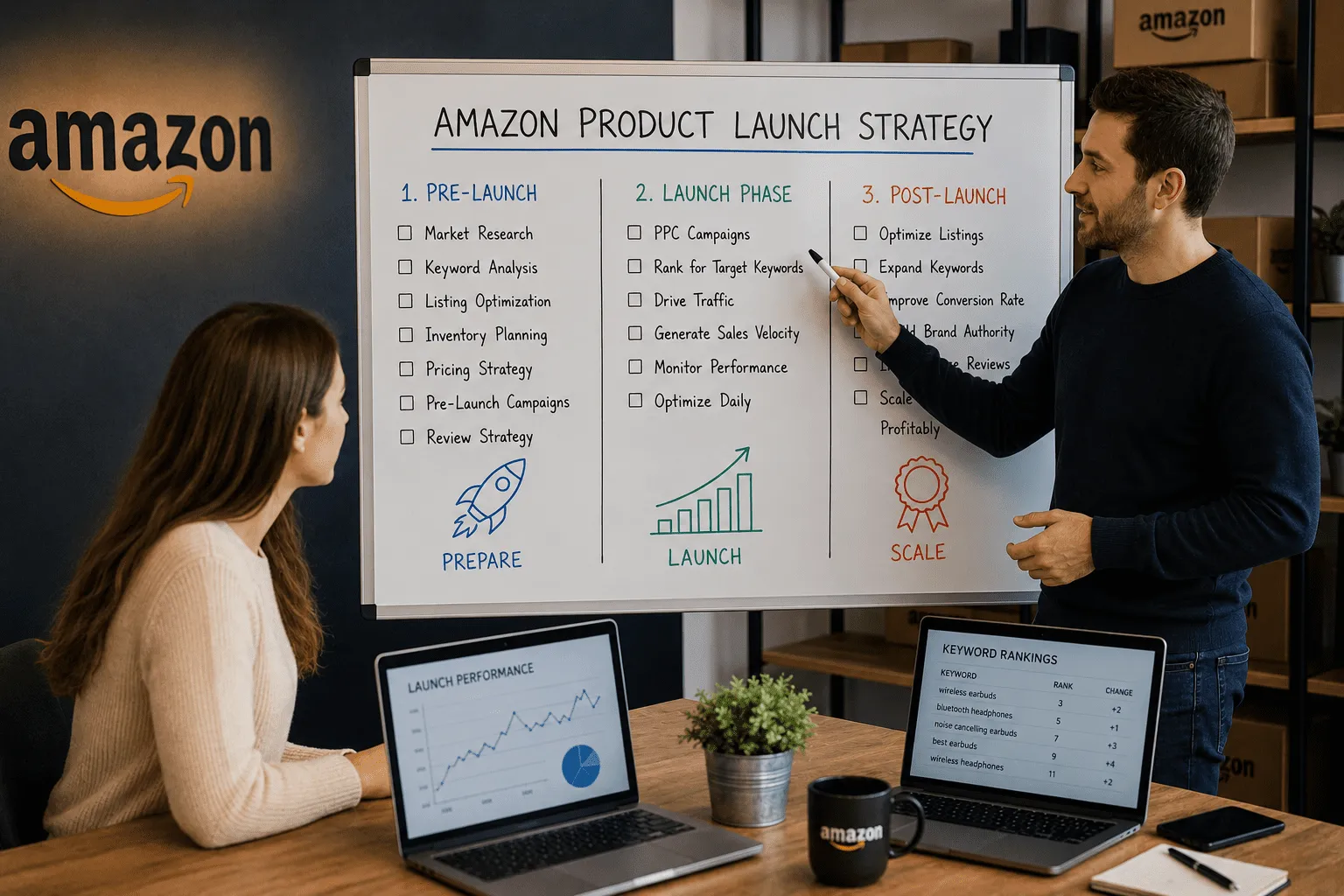
The majority of Amazon product launches fail not because the product is poor but because the launch strategy is inadequate. Amazon product launch failure almost always stems from one of five predictable causes: launching into a keyword position with insufficient advertising budget to achieve competitive visibility; launching with an unoptimised listing that fails to convert the traffic advertising generates; launching without an effective review acquisition strategy and therefore never building the social proof needed for organic ranking; launching into an incorrectly identified niche without sufficient demand; or launching with insufficient inventory and stocking out before ranking is established.
Our launch programme addresses all five failure modes before launch day. Pre-launch: complete listing optimisation, launch keyword strategy, inventory planning ensuring 90-day coverage, pre-seeding review programme using Vine or compliant early reviewer strategies. Launch month: aggressive exact-match PPC investment targeted at the top 20 launch keywords, bid-to-top-of-search strategy building initial velocity history, daily performance monitoring with immediate pivots. Post-launch: transition from launch-mode spending to efficiency optimisation as rankings establish, organic keyword expansion as authority builds, review programme maintaining velocity.
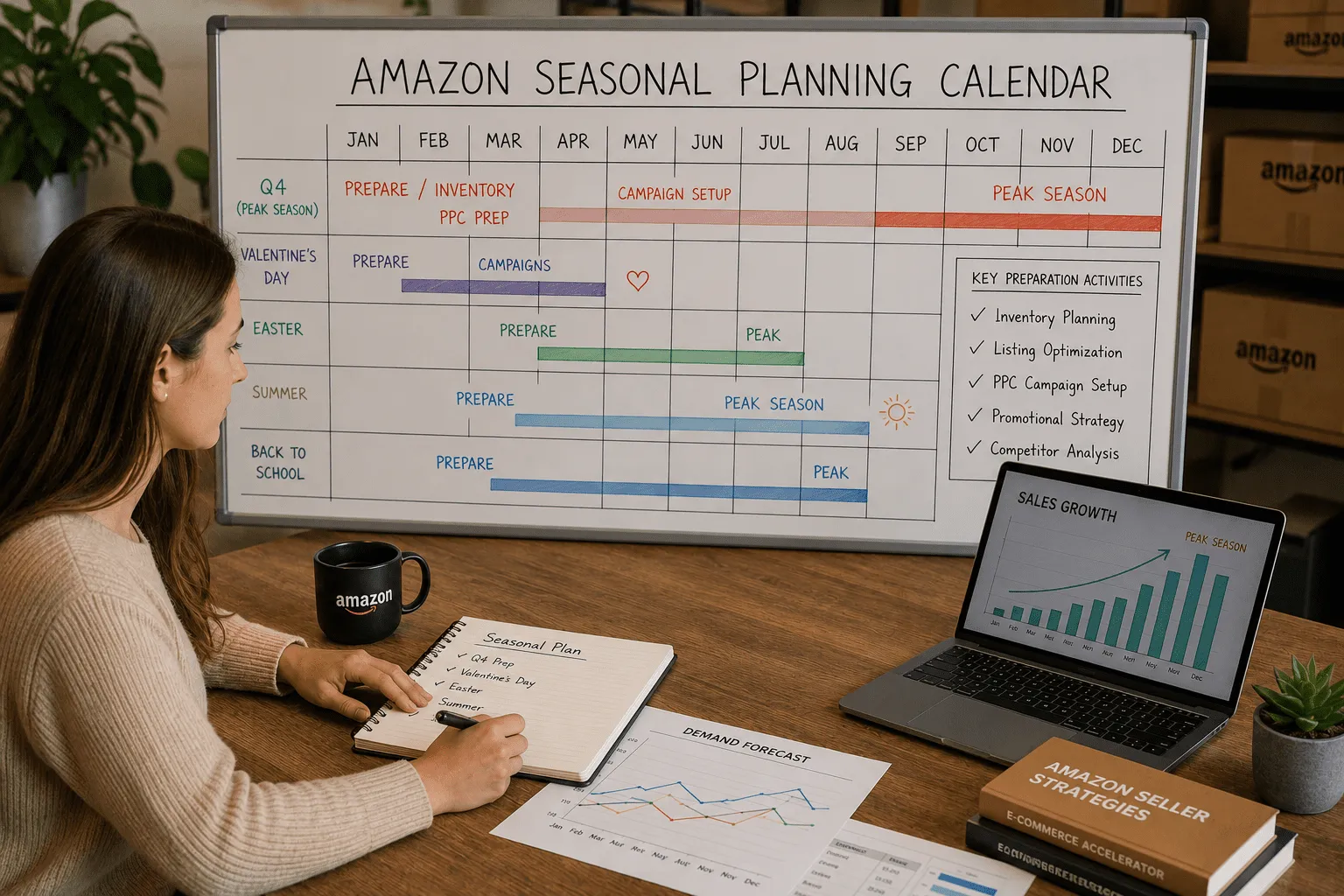
London’s retail calendar creates predictable demand peaks that reward advance preparation and punish reactive strategy. Q4 (October-December) is universally understood as peak season — but the sellers who win Q4 begin inventory positioning in July, start campaign preparation in August, and launch promotional strategies in late September. By the time unprepared competitors start thinking about Christmas in November, well-prepared sellers have already captured the early-season demand and built the sales velocity that boosts organic rankings going into the highest-volume weeks.
Beyond Q4, category-specific peaks require their own preparation cycles: Valentine’s Day gifts require January preparation; Easter seasonal products need February preparation; summer categories peak April-July and require Q1 inventory planning. We build annual seasonal calendars for every client account mapping the specific demand peaks in their product categories against the preparation activities required to capitalise on them.

Amazon DSP (Demand-Side Platform) allows advertisers to reach Amazon’s audience data outside Amazon’s own properties — on third-party websites, apps, and streaming platforms — using Amazon’s unparalleled purchase intent and behaviour data. Understanding when DSP makes sense versus Amazon Sponsored Display vs DSP is an important strategic decision for scaling brands.
DSP makes sense for London sellers with established sales history and reviews (typically 50+ reviews, £20,000+ monthly revenue), clear brand positioning with visual assets strong enough to perform in display advertising contexts, and category economics that support the higher minimum investment DSP requires. For qualifying clients, DSP provides access to audiences that cannot be reached through Sponsored Ads alone, creating remarketing opportunities for shoppers who viewed your products without purchasing and prospecting opportunities reaching buyers of complementary products.
Your listing is your 24/7 sales person — it works whether you’re sleeping, on holiday, or focused on other parts of your business. A poorly optimised listing leaks revenue at every stage of the customer journey. A properly optimised listing compounds returns over time as improved conversion sends stronger ranking signals to Amazon’s algorithm, driving more organic traffic that converts at high rates, creating a self-reinforcing growth flywheel.
Client: London health and wellness brand (anonymised at client request)
Starting position: £85,000/month revenue, 49% ACoS, 15th-ranked in primary category, zero organic sales from branded keywords
Core challenges: Broad-match campaign waste consuming 40% of ad budget; listings converting at 7.2% vs category average of 15%; no brand presence; 100% advertising-dependent sales
Our approach: Month 1: Complete PPC restructure eliminating £8,500/month waste, identified from search term analysis. Months 2-3: Full listing optimisation for top 12 SKUs, A+ Content deployment, review acquisition programme launch. Months 4-8: Progressive campaign scaling as organic rankings established, brand building programme, category expansion into 3 adjacent subcategories.
Results at 8 months: Revenue £285,000/month (235% growth), ACoS 22%, organic sales 42% of total revenue, #2 ranked in primary category, 1 Best Seller badge, review count from 47 to 312.
The key insight from this engagement: the fastest path to growth wasn’t more advertising spend — it was fixing the conversion problems that were wasting 60% of existing traffic. By improving conversion first, every pound of advertising spend became more valuable, and organic ranking improvements generated the compounding returns that drove long-term growth. See how this approach applies to supplement brands on Amazon specifically in our category guides.
Client: Independent London kitchenware brand
Starting position: £4,200/month revenue, 5 SKUs, 38% ACoS, no Brand Registry, basic listings with stock photography
Core challenges: Limited budget requiring careful prioritisation; competing against established brands with thousands of reviews; generic product positioning with no differentiation
Our approach: Concentrated entire Month 1 effort on one hero product: complete listing redesign, professional photography investment, Brand Registry completion. Launched tight exact-match PPC campaign targeting 15 specific high-intent keywords. Month 2-3: Review acquisition programme building from 3 to 47 reviews. Month 4-5: Secondary product launches using frameworks proven on hero product.
Results at 5 months: Revenue £31,000/month (638% growth), hero product Best Seller badge in primary subcategory, ACoS 26% (profitable), 4.7-star average rating, Brand Registry protection active.
This case demonstrates the power of concentration over diversification at early stages. Five mediocre products don’t outperform one excellent product — the better strategy is making one product genuinely excellent before expanding, using the organic ranking, review credibility, and brand equity built on the first success to accelerate all subsequent launches.
Client: London premium sports nutrition brand
Starting position: £1.4M/month Amazon UK revenue, market leader in 3 subcategories, considering EU expansion
Core challenges: New entrants with significant venture funding entering their categories; margin compression from rising PPC costs; EU expansion complexity
Our approach: Implemented defensive keyword architecture protecting top 20 branded and category terms. Advanced DSP retargeting recovering abandoned cart shoppers. Premium A+ Content redesign across entire 78-SKU catalog. Coordinated Amazon Germany and France launch with translated content and EU-specific compliance.
Results at 12 months: UK revenue maintained at £1.6M/month despite new competitor pressure, EU markets generating £290,000/month combined, overall revenue growth 36%, market leadership maintained in all 3 primary subcategories.
Every client engagement follows a structured process designed to eliminate risk, maximise early wins, and build compounding momentum rather than delivering short-term spikes followed by plateaus.
Before recommending any strategy, we need to understand your specific situation with depth that most agencies skip. Our discovery process covers every relevant dimension of your Amazon business and market position.
We audit every campaign in your advertising account, identifying structural inefficiencies, waste patterns, and untapped opportunities. We analyse your organic ranking position for 50+ relevant keywords in your primary category. We review your listing quality scores against category benchmarks. We examine your review portfolio for quality, recency, and competitive gaps.
We research your top 10-15 competitors in your primary category and subcategories, examining their pricing strategies, listing quality, advertising approaches, review profiles, and promotional calendars. We identify the specific advantages you can exploit and the competitive threats requiring defensive preparation.
We identify keyword opportunities your competitors are underserving, adjacent category opportunities where your products have untapped relevance, and seasonal demand patterns in your specific category that your current strategy may be missing.
Deliverable from Phase 1: A comprehensive account audit document with prioritised recommendations, baseline metrics for measuring progress, and the strategic framework for your growth plan.
Using Phase 1 findings, we build a custom growth roadmap that prioritises activities by expected impact and implementation complexity. Not everything can happen simultaneously — sequencing matters enormously for Amazon growth.
Specific actions delivering measurable results within 30-90 days: campaign restructuring eliminating immediate waste, listing optimisations addressing the highest-impact conversion gaps, pricing adjustments capturing margin improvements, and account health resolutions preventing potential penalties.
Longer-horizon programmes including brand building, organic ranking development, review acquisition, and product launch strategies that require consistent investment to generate compounding returns.
Category leadership objectives, international expansion assessment, and advanced advertising format integration that build the long-term competitive advantages that separate category leaders from permanent followers.
This is where strategy becomes reality. Our implementation approach prioritises quick wins that demonstrate value and build momentum, followed by the strategic initiatives that drive compounding long-term returns.
Campaign restructuring (immediate waste elimination), listing audit completion for priority SKUs, account health issue resolution, baseline tracking setup.
Listing optimisation deployment for top 20% of catalog by revenue, A+ Content for hero products, review acquisition programme launch, new campaign structures performing and generating initial data.
Data-driven campaign scaling, secondary catalog optimisation, brand building initiatives, and preliminary seasonal planning for upcoming demand peaks.
Weekly progress reporting begins from Day 1 — you see results from the first week, not after a three-month ‘setup period.’
If your Amazon PPC is currently underperforming and you’re not sure why, our why your Amazon PPC is not working diagnostic guide helps identify the most common structural issues before we begin any restructuring process.
Amazon is not a set-and-forget platform. Category dynamics shift, competitor strategies evolve, algorithm changes affect ranking factors, and seasonal patterns require continuous adaptation. Our ongoing optimisation programme provides:
EcomRanker is widely regarded as a leading performance-based Amazon agency for London sellers, operating since 2017 with a portfolio spanning 20+ product categories. Our distinction is our performance-based compensation model — fees tied to your profit growth rather than fixed retainers regardless of results. For London sellers specifically, we maintain dedicated market intelligence covering competitive dynamics, seasonal demand patterns, and consumer behaviour specific to London's marketplace. However, the 'best' agency for any seller depends on their specific category, growth stage, and budget — our free audit process helps determine whether we're the right fit for your situation.
Amazon agency fees in London vary significantly by service scope and pricing model. Percentage-of-ad-spend agencies typically charge 10-20% of monthly advertising budget — on a £15,000 ad budget, that's £1,500-£3,000/month regardless of results. Retainer-based agencies charge £2,000-£10,000+/month depending on account complexity. EcomRanker uses a performance-based hybrid model: a base management fee tied to your account size combined with performance bonuses linked to profit improvements. This aligns our incentives with your outcomes — we earn more when your profitability genuinely improves.
Timelines vary by starting position and growth objectives. Most London sellers see quick wins within 30 days: wasted ad spend eliminated, conversion improvements from listing optimisation, and account health issues resolved. Meaningful revenue growth — 30-60% increases — typically materialises within 90-120 days as campaign restructuring matures and listing optimisations compound. Significant category position improvements (top-10 organic rankings, Best Seller badge attainment) generally require 4-8 months of consistent execution. We provide weekly reporting from Day 1 so you can see progress trajectory continuously rather than waiting for quarterly reviews.
We've developed deep expertise in 20+ Amazon product categories through years of client account management. Our strongest category knowledge includes fashion and apparel, beauty and skincare, health and supplements, home and kitchen, electronics and tech, sports and outdoor, and luxury goods. For each category, we maintain specific frameworks for listing optimisation, PPC architecture, competitive positioning, and seasonal strategy. You can explore category-specific approaches in guides like our amazon agency for health brands resource. The key question isn't whether we serve your category generally — it's whether we have specific frameworks developed from real client results in your specific subcategory.
We serve London sellers at every growth stage, from sellers at £3,000-£5,000/month looking to break through initial plateaus to enterprise brands at £1M+/month defending category leadership. Our engagement structure scales appropriately — small sellers receive focused support on the highest-impact activities within their budget, mid-level sellers receive comprehensive account management, and enterprise brands receive dedicated account teams with specialist resources. The minimum engagement threshold is £800/month advertising budget for PPC management services.
Three specific distinctions: First, performance-based compensation — our fees tie to your profit outcomes, creating financial alignment most agencies avoid because fixed retainers are safer for agencies regardless of results. Second, London market intelligence — we maintain dedicated research on London-specific consumer behaviour, competitive dynamics, and seasonal patterns that generalist agencies miss. Third, category depth — rather than applying generic Amazon best practices across all categories, we maintain specific optimisation frameworks developed from real client results in each product category we serve.
Yes — diagnosing and recovering from unexpected sales drops is one of our most common initial engagements. Amazon sales dropped for identifiable reasons: algorithm updates affecting ranking factors, competitor activity capturing market share, listing quality degradation from suppressed content, inventory issues creating stockout penalties, or advertising campaign deterioration from budget constraints or structural problems. Our diagnostic process identifies root causes within 5-7 business days and provides a specific recovery plan with priority-sequenced actions.
Yes, for qualifying accounts. Amazon DSP is appropriate for established brands (typically £20,000+/month revenue, 50+ reviews, strong creative assets) that want to reach Amazon's audience data outside Amazon's own properties. Understanding the strategic distinction between Amazon Sponsored Display vs DSP helps determine which format is appropriate for your current business stage. We assess DSP suitability during our discovery audit and recommend it only when the investment economics make clear sense for your specific situation.
Weekly PPC performance report every Monday: spend by campaign, attributed revenue, ACoS and TACoS trends, keyword performance highlights, search terms actioned (graduated or negated), bid adjustments made, and upcoming strategy for the following week. Monthly comprehensive account review: organic ranking movements, conversion rate trends, review portfolio health, competitive position update, and 90-day forward strategy. Real-time dashboard access allowing you to check performance data at any time without waiting for scheduled reports. Quarterly strategic review aligning account performance against long-term objectives.
Transitions from other agencies are straightforward. We conduct a complete account audit during the transition period, identifying what's working and worth preserving alongside what needs immediate correction. Most transitions are completed within 2 weeks without interruption to ongoing campaigns. We've managed transitions from over 30 different agencies and recognise the common structural patterns from different management styles. The audit typically uncovers significant opportunities to improve on the previous agency's work — campaigns that could be more efficient, listings that could convert better, and strategic opportunities that weren't being pursued.
We require a 3-month initial engagement for all services because meaningful Amazon optimisation requires time to implement, test, and demonstrate results. Immediate cancellation options would create incentives to pursue only quick fixes rather than the structural improvements that drive lasting growth. After the initial 3 months, engagements continue on a monthly basis with 30-day notice — we don't believe in locking clients into long contracts as the relationship should be maintained through results, not contractual obligation.
Yes. We have extensive experience managing Amazon account health monitoring, policy compliance, and suspension appeals. Prevention is always better than cure — our ongoing account health monitoring identifies emerging issues before they reach crisis level. When suspensions occur, our appeal process combines meticulous root cause analysis, detailed corrective action plans, and persistently professional communication with Amazon's performance team to achieve reinstatement as quickly as possible.
You've reached the end of a comprehensive guide to Amazon growth for London sellers — which means you're serious about improving your results. The next step is simple: book a free, no-obligation strategy call where we'll assess your specific situation and tell you honestly whether and how we can help.
We don't do hard-sell consultations. Our discovery calls are genuine diagnostic conversations where our goal is understanding your situation completely enough to give you useful, actionable advice — whether or not you ultimately work with us. If we're not the right fit for your goals or budget, we'll tell you, and we'll try to point you toward the resources or providers who are.
No obligation to proceed. No follow-up pressure if you decide we’re not the right fit. Just the most useful 45 minutes you’ve spent thinking about your Amazon business.
Option 1 — Book a Free Audit Call: Best if you want to understand your growth opportunities before committing to any specific service. We’ll audit your account and provide a custom roadmap at no charge.
Option 2 — Request a Proposal: Best if you have a clear sense of what you need and want to see a specific service proposal with pricing and projected outcomes for your account.
Option 3 — Ask a Question: Best if you have a specific Amazon question or challenge and want expert input before making any decisions. Email us directly — we respond to every substantive question, usually within 24 hours.
Website: https://www.ecomranker.com
Email: chirag@ecomranker.com
UK Contact: UK-focused services team available Mon-Fri 9am-6pm GMT
Founded: 2017 by Chiraag Bharihok
Serving: UK, USA, UAE, and India Amazon marketplaces
Clients helped: 500+ sellers across 20+ product categories