

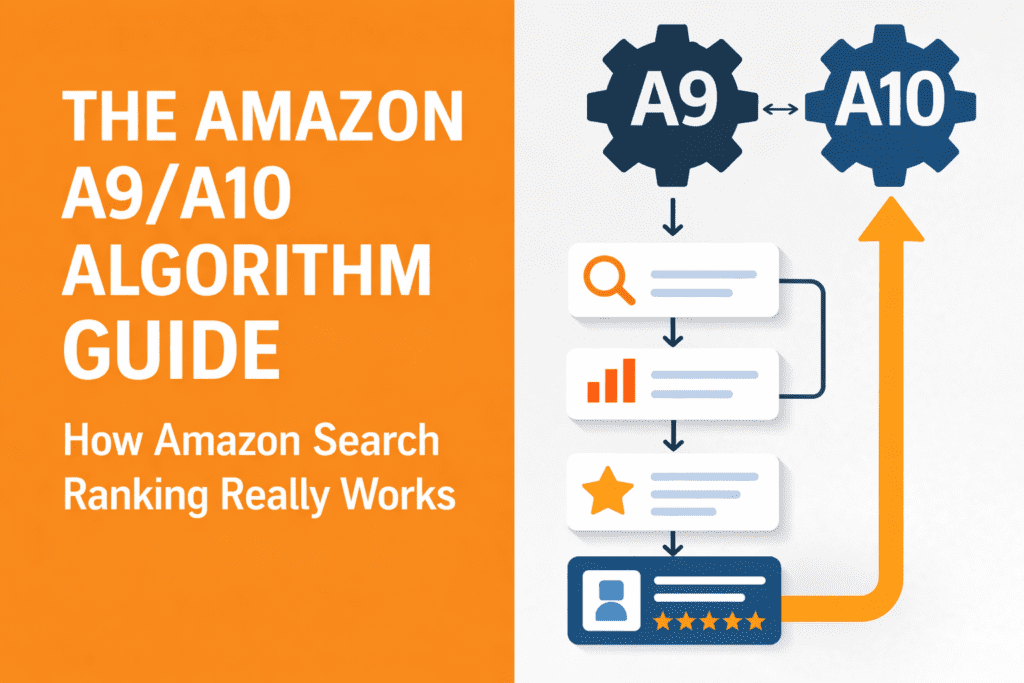
Understanding the Amazon algorithm is one of the most important skills every Amazon seller must develop.
If you’ve ever wondered why some products rank at the top of Amazon search results while others remain buried on page five, the answer lies in Amazon’s search algorithm.
Amazon is not just an eCommerce platform — it is a product search engine. Just like Google ranks websites, Amazon ranks product listings.
Over the past decade working with Amazon brands and sellers, one thing has become clear:
The sellers who understand Amazon’s ranking algorithm dominate the marketplace.
In this complete guide, we will explain:
- What the Amazon A9 algorithm is
- How the Amazon A10 algorithm works
- The most important Amazon ranking factors
- How to optimize your listings for higher rankings
- Strategies top sellers use to rank products faster
By the end of this guide, you’ll understand exactly how to improve Amazon rankings and increase organic sales.
What is the Amazon Algorithm?
The Amazon algorithm is the system Amazon uses to determine which products appear in search results.
When a shopper searches for a product, Amazon analyzes thousands of listings and chooses the ones most likely to generate sales.
Unlike Google, which prioritizes information relevance, Amazon prioritizes sales performance.
Amazon’s goal is simple:
Show products that customers are most likely to purchase.
This means listings that convert well and generate consistent sales will naturally rank higher.
Amazon A9 Algorithm Explained
The original Amazon search algorithm was known as A9.
A9 focuses on two primary components:
- Relevance
- Performance
Relevance Factors
Relevance determines whether your product matches the customer’s search query.
Amazon analyzes:
- Product title
- Bullet points
- Description
- Backend search terms
These elements help Amazon understand what your product is.
Proper Amazon keyword research is essential to ensure your listing contains the keywords customers are searching for.
Performance Factors
Performance factors measure how well your product sells.
Amazon tracks metrics such as:
- Conversion rate
- Sales velocity
- Click-through rate
- Customer reviews
If your product converts well, Amazon considers it valuable to shoppers.
What is the Amazon A10 Algorithm?
Amazon gradually evolved the A9 algorithm into what sellers now refer to as A10.
The A10 algorithm focuses more on organic performance and customer behavior.
While A9 relied heavily on advertising influence, A10 places greater emphasis on:
- Organic sales
- Customer satisfaction
- Brand authority
This shift means sellers must focus on long-term strategies rather than short-term advertising tricks.
Major Differences Between A9 and A10
The transition from A9 to A10 introduced several important changes.
| Ranking Factor | A9 Importance | A10 Importance |
|---|---|---|
| PPC Sales | High | Moderate |
| Organic Sales | Moderate | High |
| Conversion Rate | High | Very High |
| Brand Authority | Low | High |
| Customer Engagement | Low | High |
This evolution means Amazon increasingly rewards high-quality listings and strong customer experiences.
Amazon Ranking Factors Explained
Let’s explore the most important factors that influence Amazon rankings.
1. Keyword Relevance
Keywords help Amazon understand what your product is.
Your listing should include relevant keywords in:
- Title
- Bullet points
- Description
- Backend search terms
Without proper keyword optimization, Amazon cannot match your product to customer searches.
You can learn the full process in the Amazon keyword research guide.
2. Conversion Rate
Conversion rate is one of the strongest ranking signals.
If customers click your listing but do not purchase, Amazon assumes the product is not relevant.
Improving conversion rate requires optimizing:
- Product images
- Listing content
- Pricing
- Reviews
To improve listing performance, you should also understand Amazon conversion rate optimization strategies.
3. Sales Velocity
Sales velocity measures how quickly your product sells.
Products that generate frequent sales rank higher.
This is why product launches often include promotional campaigns and advertising.
If you’re launching a new product, review the Amazon product launch strategy to build early sales momentum.
4. Click-Through Rate (CTR)
CTR measures how often shoppers click your product when it appears in search results.
CTR is influenced by:
- Main product image
- Price
- Product title
- Ratings
Optimizing Amazon product images can significantly increase CTR.
5. Customer Reviews
Reviews build trust and influence purchase decisions.
Products with higher ratings generally convert better.
Amazon considers both:
- Review quantity
- Review quality
Listings with strong reviews often rank higher.
6. Pricing Strategy
Price competitiveness affects conversions.
If your product is significantly more expensive than competitors, customers may choose other options.
Competitive pricing improves sales velocity.
7. Product Listing Quality
Listing quality directly impacts conversion rates.
An optimized listing includes:
- High-quality images
- Keyword-rich titles
- Clear bullet points
- A+ content
Enhanced content improves customer experience.
Learn more in the Amazon A+ content guide.
8. Advertising Performance
Amazon PPC can boost early visibility.
While advertising alone does not guarantee rankings, it helps generate sales and data.
Effective advertising strategies are explained in the Amazon PPC strategy guide.
How Amazon SEO Works
Amazon SEO focuses on optimizing listings to improve search rankings.
Key SEO elements include:
Keyword Placement
Keywords should appear naturally in titles and bullet points.
Content Quality
Clear descriptions improve conversions.
Image Optimization
Visual content influences buyer decisions.
How to Rank Products on Amazon
Ranking on Amazon requires a combination of strategies.
Step 1: Keyword Research
Identify keywords customers search for.
Focus on:
- High search volume
- Moderate competition
- Buyer intent
Step 2: Listing Optimization
Ensure your listing clearly communicates product value.
Include:
- Clear titles
- Benefit-driven bullet points
- High-quality visuals
Step 3: Sales Momentum
Generating consistent sales helps improve ranking.
Common strategies include:
- Advertising campaigns
- Promotional discounts
- External traffic
Step 4: Improve Conversion Rate
Higher conversions increase rankings.
Focus on improving:
- Product images
- Listing copy
- A+ content
Step 5: Customer Satisfaction
Amazon tracks customer feedback closely.
Maintain strong performance by:
- Delivering quality products
- Providing excellent customer service
Common Amazon SEO Mistakes
Avoid these common mistakes.
Keyword Stuffing
Overusing keywords makes listings unreadable.
Poor Images
Low-quality images reduce trust.
Weak Product Differentiation
Your listing must clearly explain why your product is better.
Ignoring Customer Feedback
Reviews provide valuable insights for improvement.
Amazon Algorithm FAQs
How often does Amazon update its algorithm?
Amazon constantly updates its algorithm, though major changes are not always publicly announced.
Does PPC improve rankings?
Indirectly yes. PPC generates sales which help improve organic ranking.
What is the most important ranking factor?
Sales velocity and conversion rate are among the most important factors.
Final Thoughts
Understanding the Amazon algorithm is essential for long-term success on the platform.
Instead of relying solely on advertising, sellers must focus on building listings that:
- Attract clicks
- Convert visitors into buyers
- Deliver strong customer experiences
When you combine keyword optimization, conversion rate improvement, and strong product positioning, your listings become far more likely to rank at the top of Amazon search results.