

Home » Amazon SEO + PPC + Growth System
Amazon is no longer a simple marketplace where listing a product guarantees visibility. Today, success depends on building a complete Amazon growth system that integrates Amazon SEO, Amazon PPC strategy, TACoS optimization, CTR improvement, and CVR optimization into one scalable engine. Sellers who treat these elements separately often struggle, but those who combine them into a unified system create predictable growth and long-term profitability.
At its core, Amazon’s algorithm rewards relevance, performance, and customer satisfaction. That means your ability to rank organically is directly tied to how well your listing converts and how efficiently your advertising supports that growth. This is why understanding the relationship between Amazon SEO vs PPC strategy is critical, especially for brands and private label sellers aiming to dominate their category.
A real Amazon growth system integrates:
When these elements work together, you create a self-reinforcing flywheel where traffic → conversions → ranking → more traffic → lower TACoS → higher profits.
Amazon SEO is the foundation of organic growth. It involves optimizing every element of your product listing so that Amazon’s algorithm can clearly understand what your product is and when to show it to customers. A strong Amazon SEO strategy for brands focuses not only on keyword placement but also on brand authority, customer trust, and long-term ranking stability.
When brands optimize listings, they must think beyond basic keyword stuffing. The title, bullet points, backend search terms, and product descriptions should work together to create a highly relevant and conversion-focused listing. Amazon’s A10 algorithm prioritizes listings that generate consistent sales, which means SEO is deeply connected to performance metrics like CTR and CVR.
For brands, SEO also includes optimizing brand stores, using A+ content effectively, and building external traffic signals from platforms like Google and social media. This creates a compounding effect where brand recognition improves click-through rates and conversion rates, further boosting rankings.
Amazon SEO is not just keyword placement—it is behavior-driven ranking optimization. Amazon’s A10 algorithm prioritizes listings that:
This means your SEO strategy must combine keywords + performance + branding.
Amazon first checks if your product is relevant for a keyword.
Key elements:
Without indexing, ranking is impossible
Once indexed, Amazon evaluates:
Higher performance = higher rankings.
This includes:
Strong authority reduces ranking volatility.
A strong Amazon SEO strategy for brands is not limited to optimizing product titles and bullet points. Today, brands must build a complete system that combines Amazon SEO, conversion optimization, and external traffic to achieve consistent growth. Instead of focusing only on ranking, successful brands focus on visibility, trust, and performance, which together drive long-term organic sales.
To achieve this, brands follow a structured approach known as the Brand Flywheel Model, where each element supports and strengthens the other. This creates a continuous loop of traffic, conversions, and improved rankings, helping brands dominate their category.
The Brand Flywheel Model is a compounding growth system where every action contributes to stronger rankings, better customer trust, and higher profitability over time. Each element of this flywheel plays a critical role in driving Amazon SEO performance.
The foundation of any Amazon SEO strategy for brands is targeting the most important keywords in your niche. Instead of using too many random keywords, brands focus on 10–20 high-converting keywords with strong search volume and buyer intent.
These keywords should be naturally included in the title, bullet points, backend search terms, and product description. Ranking on page one for these keywords helps increase organic traffic and reduces dependency on ads. This is a key part of Amazon SEO optimization and directly impacts visibility and sales.
An optimized Amazon Brand Store helps guide customers through a clear buying journey. Instead of acting as a simple product catalog, it should function like a funnel where customers can explore categories, understand the brand, and discover related products.
A well-structured store improves user experience, increases session time, and boosts conversion rates. It also strengthens your overall Amazon SEO strategy for brands by building brand authority and encouraging repeat purchases.
A+ Content plays a major role in improving Amazon conversion rate optimization (CVR). It allows brands to present their products in a more engaging and professional way through visuals, comparisons, and storytelling.
Instead of only listing features, A+ content should focus on benefits, product usage, and brand value. This helps customers understand the product better, reduces confusion, and increases trust. Higher conversion rates signal to Amazon that your listing is relevant, which improves rankings and supports your Amazon SEO performance.
Social proof is one of the most important factors in both Amazon SEO and conversion optimization. Positive reviews, high ratings, and user-generated content (UGC) help build trust and influence buying decisions.
Products with strong reviews tend to have higher conversion rates, which leads to better rankings. Encouraging customer feedback and maintaining product quality are essential for building long-term trust and improving Amazon organic ranking.
Driving external traffic to Amazon listings is a powerful way to boost visibility and sales. Traffic from sources like Google SEO, social media, and influencers sends positive signals to Amazon’s algorithm.
When external visitors click and convert, it improves both sales velocity and conversion rate, which helps increase rankings. This strategy also reduces reliance on Amazon PPC and supports long-term growth through diversified traffic sources.
The Brand Flywheel Model works because each element supports the others. Strong keyword targeting improves visibility, better content increases conversions, and higher conversions improve rankings. As rankings improve, organic traffic increases, which reduces advertising costs and improves profitability.
This is why a complete Amazon SEO strategy for brands is essential for achieving long-term success. It is not just about ranking once, but about maintaining strong performance and consistent growth over time.
For private label sellers, Amazon SEO plays an even more critical role because there is no existing brand recognition. A strong Amazon SEO for private label strategy begins with aggressive keyword research and rapid indexing. The goal is to ensure your product appears for as many relevant search terms as possible during the launch phase.
Private label listings must be structured strategically. The title should include the main keyword along with key features and benefits, while the bullet points should focus on solving customer problems and triggering emotional buying decisions. Every word must serve both SEO and conversion purposes.
In addition, images play a major role in SEO performance because they directly influence CTR and CVR. High-quality images, infographics, and lifestyle visuals improve engagement, which signals to Amazon that your listing deserves higher rankings. For private label sellers, combining SEO with PPC from day one is essential to accelerate ranking and build sales velocity quickly.
Understanding the difference between Amazon SEO vs PPC strategy is essential for building a profitable and scalable Amazon business. While Amazon SEO focuses on organic ranking and long-term growth, Amazon PPC provides immediate visibility and data-driven optimization. A successful strategy combines both to improve rankings, increase sales, and reduce TACoS over time.
| Factor | Amazon SEO | Amazon PPC |
|---|---|---|
| Definition | Organic optimization of listings using keywords, content, and performance signals | Paid advertising strategy to drive traffic and sales through sponsored ads |
| Cost | No direct cost (long-term investment) | Requires ad spend and budget management |
| Speed | Slow and steady growth | Instant traffic and visibility |
| Impact on Ranking | Direct impact on organic ranking | Indirect impact through increased sales velocity |
| CTR (Click-Through Rate) | Improved through listing optimization | Improved through ad creatives and targeting |
| CVR (Conversion Rate) | Driven by content, reviews, and trust signals | Driven by targeting relevant audiences |
| TACoS | Helps reduce TACoS over time | Initially increases TACoS during scaling |
| Best Use Case | Long-term organic growth and brand building | Product launch, scaling, and keyword testing |
| Sustainability | High sustainability | Depends on budget |
A strong Amazon SEO strategy for brands ensures that your product ranks organically for high-value keywords, bringing consistent and free traffic over time. On the other hand, Amazon PPC strategy allows sellers to quickly gain visibility, test keywords, and generate initial sales data. This makes PPC an essential tool for improving SEO performance.
The most effective approach is to combine both strategies. PPC campaigns help identify high-performing keywords and drive traffic, while SEO ensures that your listing converts and ranks organically. This combination creates a growth loop where increased sales improve rankings, leading to higher organic traffic and reduced advertising costs.
By aligning Amazon SEO, PPC optimization, CTR improvement, CVR optimization, and TACoS optimization, sellers can build a scalable system that drives long-term profitability. Instead of choosing between SEO and PPC, the goal should be to integrate both into a single growth strategy.
TACoS (Total Advertising Cost of Sales) is one of the most important metrics in any Amazon PPC and SEO strategy. It measures how much you are spending on ads compared to your total revenue (both organic and paid).
Formula:
TACoS = Total Ad Spend ÷ Total Revenue
Unlike ACoS, which only tracks ad performance, Amazon TACoS optimization gives a complete view of your business performance. It shows how effectively your ads are contributing to organic growth, keyword ranking, and long-term profitability.
A well-managed TACoS indicates that your Amazon SEO strategy for brands and Amazon PPC strategy are working together efficiently
Many sellers focus only on ACoS, but this can be misleading. A low ACoS does not always mean high profitability if your organic sales are weak. On the other hand, TACoS includes both paid and organic sales, making it a better indicator of real growth.
When your Amazon SEO and PPC strategy is aligned, TACoS gradually decreases over time because organic sales start contributing more to total revenue. This is why TACoS is directly linked to Amazon organic ranking and keyword performance.
Understanding TACoS stages helps you set realistic expectations and optimize your campaigns correctly.
| Stage | TACoS Level | Meaning |
|---|---|---|
| Launch | High | Heavy investment in PPC to gain visibility and initial sales |
| Growth | Medium | Organic rankings improving, better keyword performance |
| Scale | Low | Strong organic sales, reduced dependency on ads |
During the launch phase, a high TACoS is normal because you are investing in data, traffic, and ranking. As your listing starts ranking for target keywords, your organic sales increase, and TACoS naturally decreases. In the scaling phase, your product becomes less dependent on ads and more driven by organic traffic.
A successful Amazon TACoS optimization strategy focuses on increasing organic sales while improving ad efficiency. The goal is not just to reduce ad spend but to build a system where ads support SEO growth.
Ranking on page one for high-value keywords is the most effective way to reduce TACoS. When your product ranks organically, you receive free traffic, which increases total revenue without increasing ad spend.
To achieve this, combine Amazon SEO for private label with PPC campaigns to push targeted keywords. Over time, strong CTR and CVR signals help maintain rankings.
A higher Amazon conversion rate (CVR) means you generate more sales from the same traffic. This reduces the need for excessive ad spend and improves overall efficiency.
You can improve CVR by:
Better conversion rates directly support Amazon SEO performance and help reduce TACoS.
Not all keywords are equal. Focus on keywords that:
By scaling these keywords in your Amazon PPC campaigns, you can increase revenue without significantly increasing TACoS. This is a key part of balancing Amazon SEO vs PPC strategy.
Reducing wasted spend is critical for improving TACoS. This involves:
Efficient ad spend ensures that your budget is used only on high-performing keywords, improving overall profitability.
The ultimate goal of Amazon TACoS optimization is not just to lower the percentage but to build a system where:
As your SEO improves, your reliance on ads decreases, and your business becomes more profitable and sustainable.
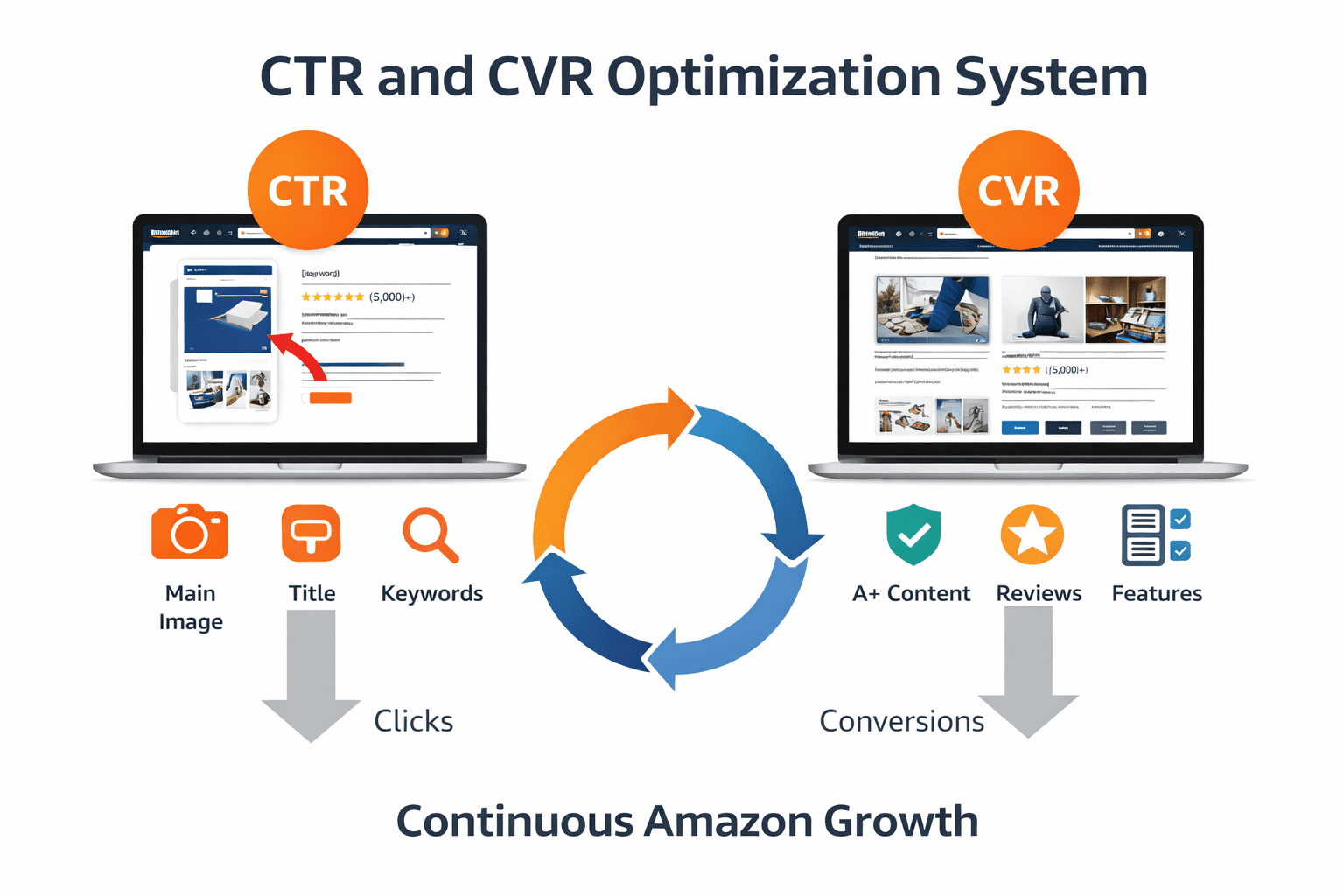
CTR (Click-Through Rate) and CVR (Conversion Rate) are two of the most powerful drivers of Amazon success. CTR determines how many people click on your listing, while CVR determines how many of those clicks turn into sales. Together, they directly impact your ranking and profitability.
Improving CTR starts with optimizing your main image, title, and pricing strategy. Your main image should stand out in search results, clearly communicate the product, and create curiosity. A well-optimized title with relevant keywords also helps attract clicks.
On the other hand, CVR optimization focuses on what happens after the customer clicks. Your listing must build trust, answer questions, and remove doubts. This includes high-quality images, persuasive bullet points, strong A+ content, and positive reviews. The better your conversion rate, the more Amazon rewards your listing with higher rankings.
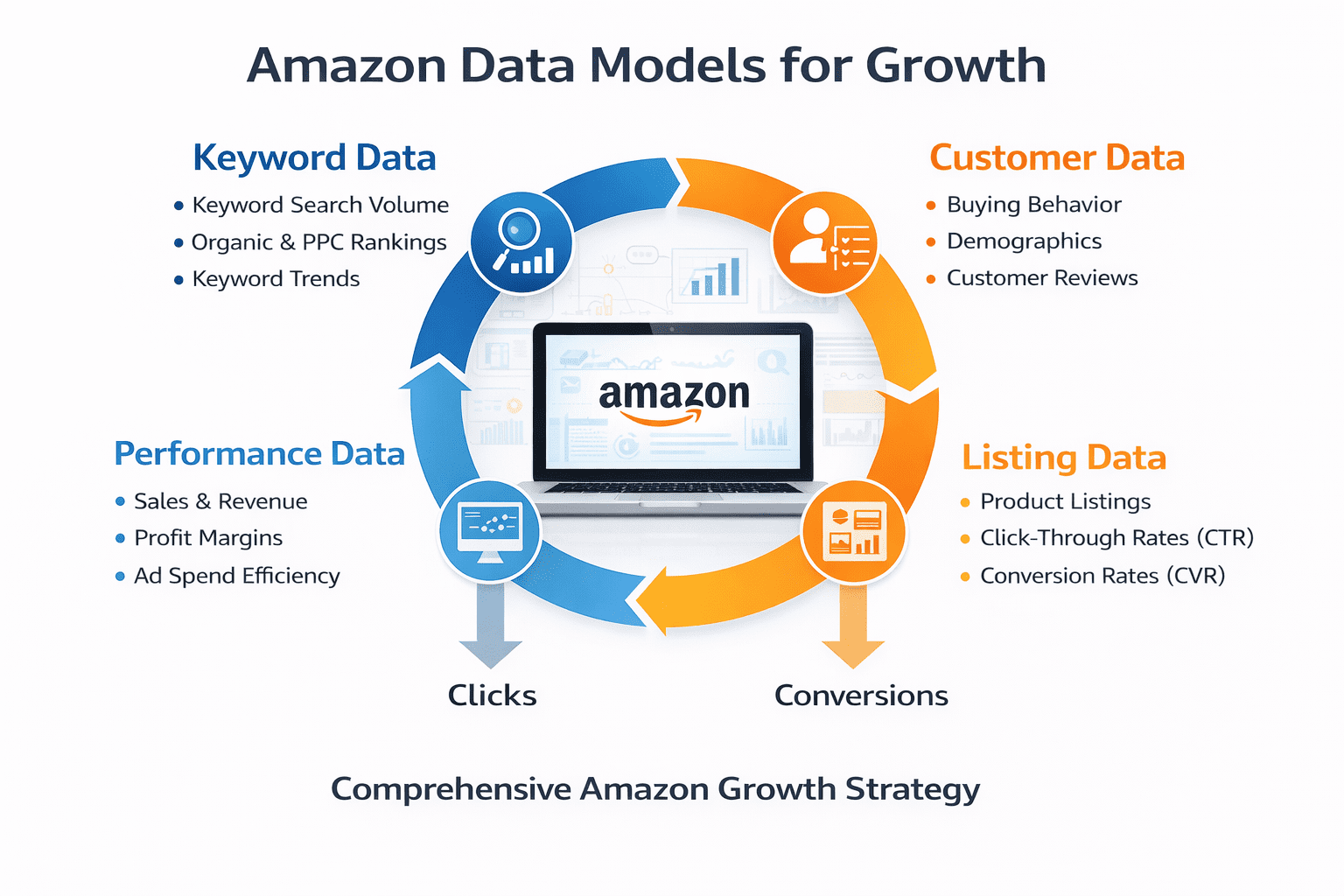
To scale effectively, you must think in terms of data models rather than guesswork. One of the most important models is the revenue equation, where revenue is driven by traffic, CTR, CVR, and average order value. Each of these components can be optimized independently, but together they create exponential growth.
Another critical model is the PPC efficiency model, which focuses on profitability. By analyzing ad spend, revenue, and margins, you can determine whether your campaigns are truly contributing to growth or just consuming budget.
Keyword value modeling is also essential. Not all keywords are equal, and understanding which keywords generate the highest return allows you to allocate resources more effectively. This is especially important when scaling PPC campaigns and optimizing SEO.
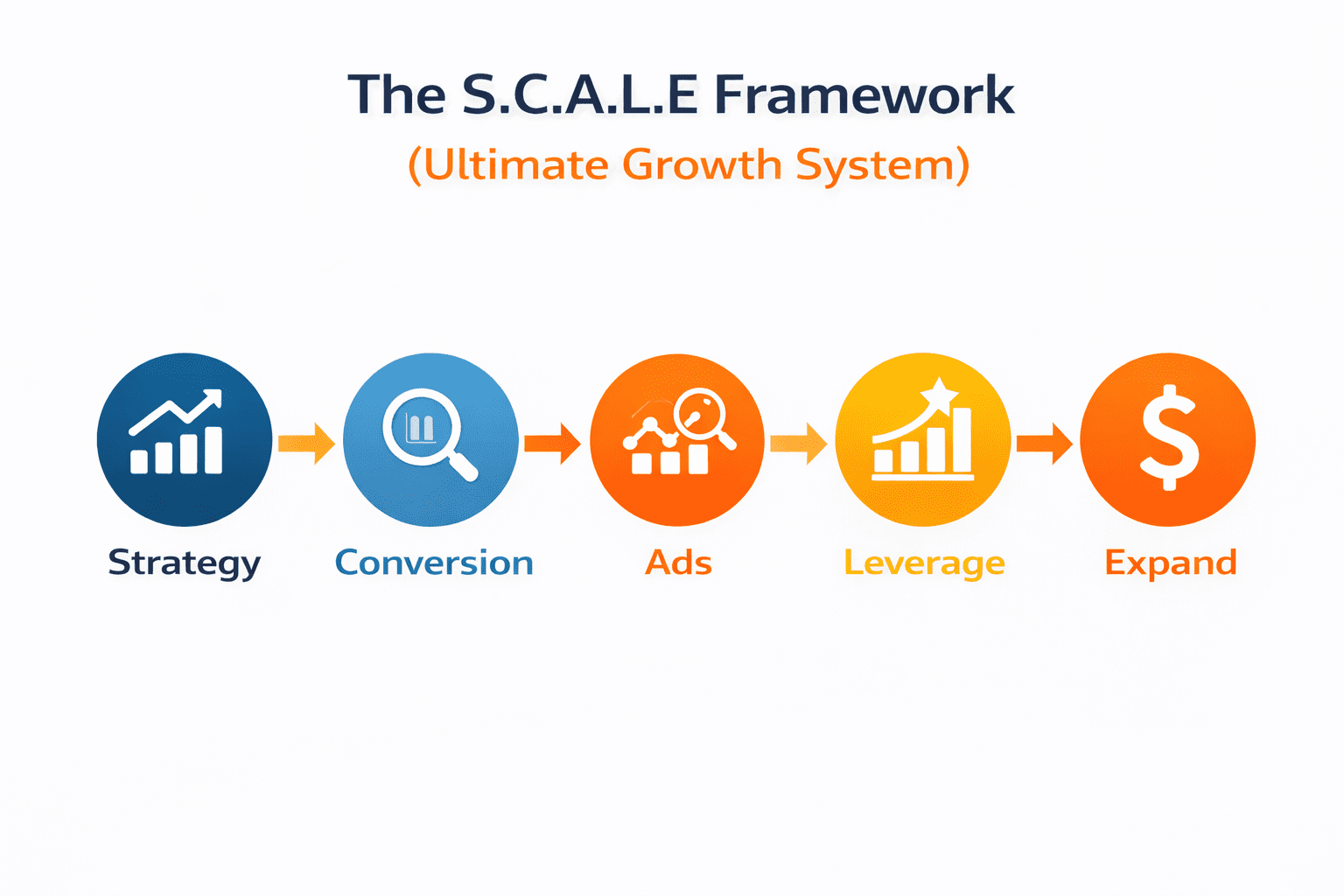
The S.C.A.L.E framework is a comprehensive system designed to integrate all aspects of Amazon growth into one cohesive strategy. It begins with Search, where you focus on SEO and keyword optimization to ensure your product is discoverable. This is followed by Click, where you optimize CTR through images, titles, and pricing.
The next stage is Acquire, which involves PPC campaigns to drive traffic and collect data. Once traffic is coming in, the focus shifts to Leverage, where you optimize conversion rates using content, reviews, and trust signals. Finally, Expand focuses on scaling the business through TACoS optimization, external traffic, and brand building.
This framework ensures that every part of your Amazon business is aligned and working toward the same goal: sustainable growth.
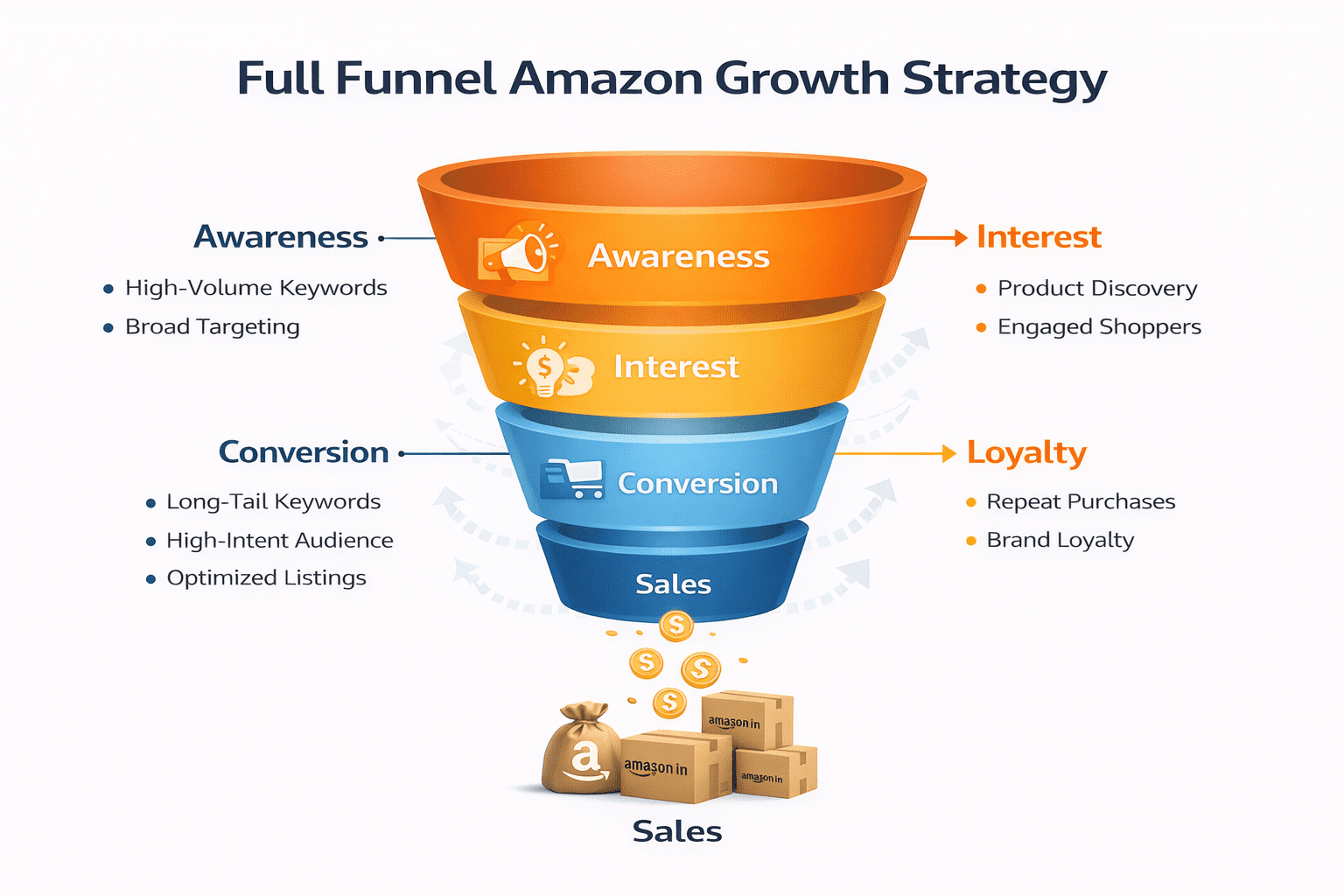
A successful Amazon business operates like a full funnel system. At the top of the funnel, you generate awareness through SEO and PPC. In the middle, you capture interest with a well-optimized listing. At the bottom, you drive conversions through trust-building elements like reviews and guarantees.
External traffic sources such as Google Ads and social media can further strengthen this funnel by bringing in additional customers. These external signals also help improve your Amazon ranking, creating another layer of growth.
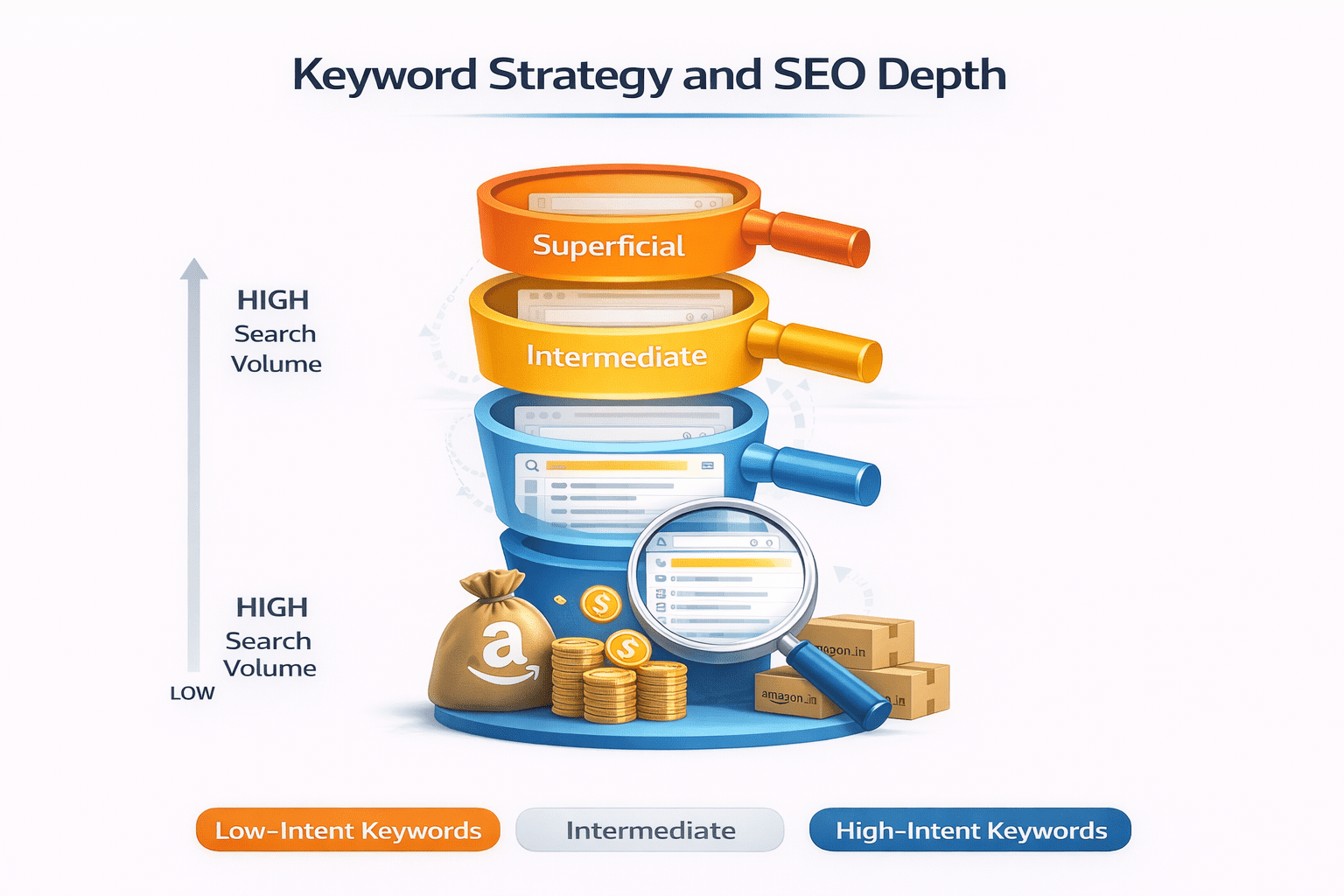
To rank this pillar page and your listings, it is essential to naturally integrate high-value keywords such as amazon seo strategy for brands, amazon seo for private label, amazon seo vs ppc strategy, and amazon tacos optimization throughout your content.
In addition, supporting keywords like amazon listing optimization, amazon keyword research, amazon ranking strategy, and amazon ppc optimization should be distributed across headings and paragraphs. Long-tail keywords further enhance SEO by capturing specific search intent and improving conversion rates.
Take your business to the next level with a proven Amazon SEO + PPC strategy designed to improve rankings, increase conversion rates (CVR), boost click-through rates (CTR), and reduce your TACoS. Build a scalable system that drives consistent organic sales and long-term profitability.
TACoS (Total Advertising Cost of Sales) is a key metric that measures the percentage of your total revenue spent on ads. It includes both organic and paid sales, making it a better indicator of overall business performance compared to ACoS. A strong Amazon TACoS optimization strategy focuses on reducing this percentage over time by increasing organic sales.
ACoS measures ad spend relative to ad-generated sales only, while TACoS measures ad spend against total sales (organic + paid). This makes TACoS more useful for evaluating Amazon SEO vs PPC strategy and long-term profitability.
A good TACoS depends on your product stage. During launch, TACoS can be high (20–40%) due to aggressive PPC campaigns. As your product grows, a healthy TACoS typically drops to 5–15%, indicating strong Amazon organic ranking and SEO performance.
TACoS helps sellers understand how effectively their ads contribute to organic growth. It reflects business health, profitability, and the success of your Amazon SEO strategy for brands. Lower TACoS usually means stronger organic sales and reduced reliance on ads.
You can reduce TACoS by improving organic rankings, optimizing your listing for higher conversion rates (CVR), scaling profitable keywords, and eliminating wasted ad spend. A balanced Amazon SEO and PPC strategy is essential for long-term TACoS optimization.
Not always. While lower TACoS generally indicates better efficiency, extremely low TACoS may mean you are under-investing in ads and missing growth opportunities. The goal of Amazon TACoS optimization is to balance growth and profitability.
A strong Amazon SEO strategy increases organic sales, which raises total revenue without increasing ad spend. This naturally reduces TACoS over time and improves overall profitability.
Amazon PPC initially increases TACoS during the launch and growth phases because you are investing in traffic and keyword ranking. However, as your SEO improves and organic sales grow, TACoS decreases, making PPC a key driver in the growth cycle.
Conversion rate directly impacts TACoS. A higher CVR means more sales from the same traffic, which improves revenue without increasing ad spend. This helps lower TACoS and strengthens your Amazon listing optimization strategy.
Yes, TACoS is one of the best metrics for understanding profitability because it reflects total business performance. When combined with margins and costs, it provides a clear picture of your Amazon PPC efficiency and SEO success.
TACoS reduction depends on your product lifecycle and strategy. Typically, it takes a few weeks to months as your product gains organic ranking and sales momentum. Consistent optimization of SEO, PPC, CTR, and CVR is required.
The best approach is to combine Amazon SEO for private label, PPC optimization, and conversion rate improvement. By building strong organic rankings and scaling high-performing keywords, you can create a sustainable system with low TACoS and high profitability.