
Amazon selling in 2026 is more competitive, data-driven, and automation-heavy than ever before. Brands are no longer competing only on product quality or pricing. They are competing on listing optimization, PPC execution, creative assets, AI-driven advertising, inventory forecasting, international expansion, conversion optimization, and omnichannel strategy. Because of this shift, one major question continues to dominate the eCommerce industry:
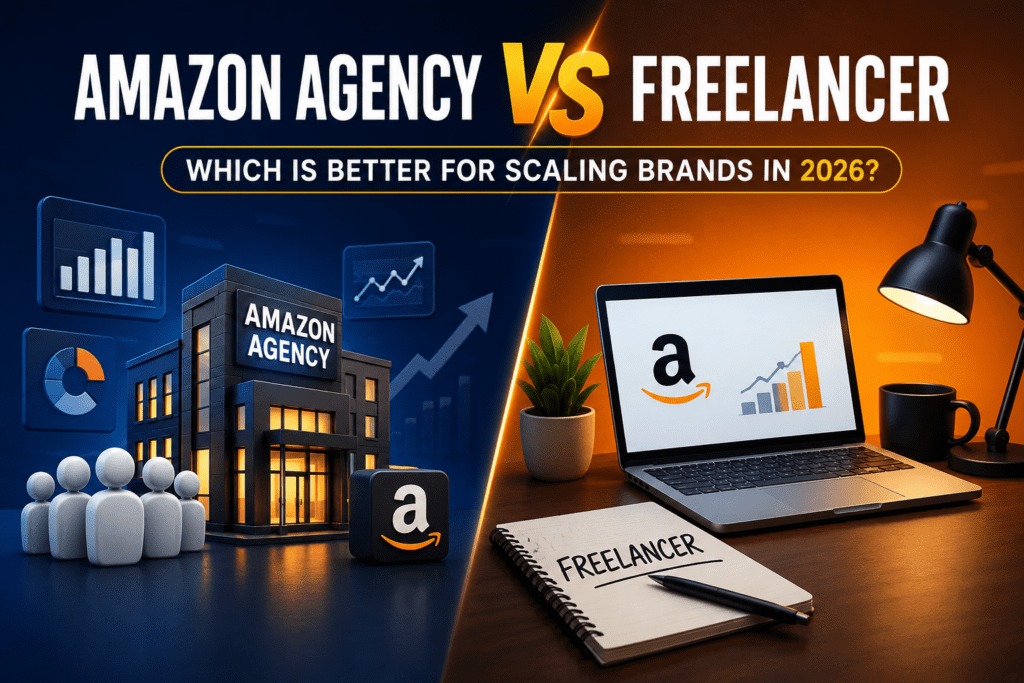
Should you hire an Amazon agency or work with freelancers to scale your brand?
The answer depends on your business stage, revenue goals, operational complexity, and scaling strategy. Some brands grow successfully with freelancers, while others require a full-service Amazon agency to handle growth systematically.
In this detailed guide, we will break down everything you need to know about Amazon agencies vs freelancers in 2026, including costs, scalability, pros and cons, performance differences, team structure, automation trends, and which model is best for your business.
Recent industry discussions highlight that Amazon growth now depends on multiple connected systems including SEO, PPC, creative production, analytics, and operational execution rather than a single skill set.
Why This Debate Matters More in 2026
Amazon has evolved dramatically over the last few years. Earlier, sellers could rank products with simple keyword optimization and basic PPC campaigns. Today, the marketplace rewards brands that execute across multiple areas simultaneously.
Modern Amazon growth now includes:
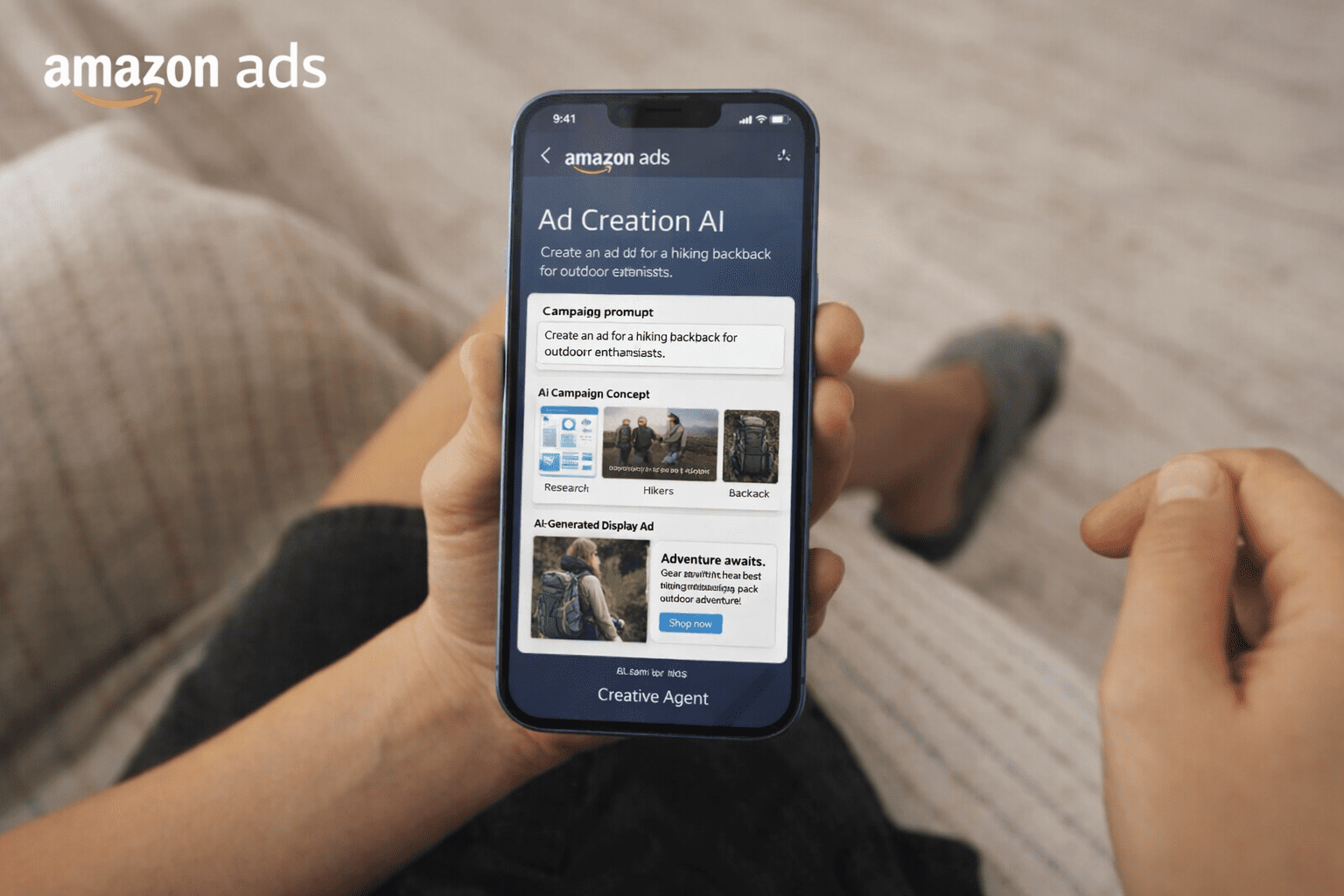
- AI-powered advertising optimization
- Video ads and rich creative assets
- Advanced keyword and catalog management
- Brand Store optimization
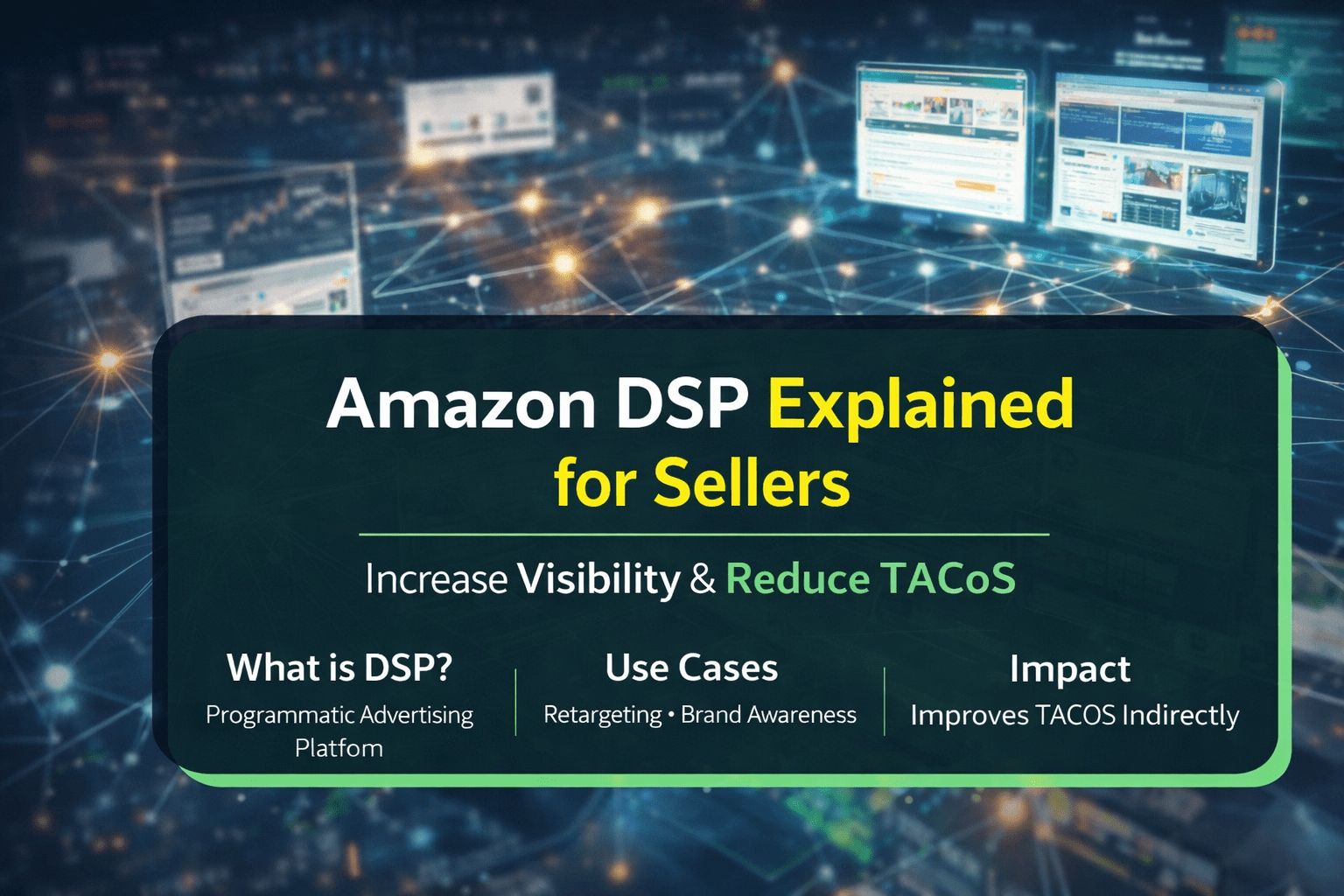
- DSP advertising
- International marketplace expansion
- Conversion-focused listing design
- Inventory and profitability forecasting
- Cross-channel integration with Shopify, TikTok Shop, and DTC
Industry experts note that traditional manual optimization methods are struggling to compete with automation-based systems and integrated growth strategies.
That is why choosing between a freelancer and an agency has become a strategic decision instead of simply a budget decision.
What Is an Amazon Freelancer?
An Amazon freelancer is an independent professional who offers specific Amazon-related services to sellers and brands. Freelancers usually specialize in one or two areas instead of managing an entire Amazon business operation. Many Amazon sellers hire freelancers for tasks such as PPC campaign management, listing optimization, keyword research, A+ Content design, storefront creation, product photography, copywriting, and account management support. Freelancers typically work independently and communicate directly with clients, making the workflow simple and flexible for smaller businesses.
In 2026, freelancers remain popular among startups and small Amazon sellers because they provide affordable access to specialized expertise without requiring long-term contracts or high monthly retainers. Businesses can hire freelancers on platforms like Upwork, Fiverr, LinkedIn, and Freelancer.com or through direct referrals from other sellers.
Freelancers usually focus on specific areas such as:
- Amazon PPC management
- Listing optimization
- Product photography
- Graphic design
- A+ Content creation
- SEO keyword research
- Account reinstatement
- Amazon storefront design
- Product launch services
What Is an Amazon Agency?
An Amazon agency is a full-service company that helps brands grow and manage their Amazon business through a team-based approach. Unlike freelancers who usually work alone, agencies include multiple specialists working together across different areas of Amazon growth. A typical Amazon agency may include PPC experts, SEO specialists, graphic designers, content writers, catalog managers, creative strategists, analytics professionals, and account managers.
Amazon agencies focus on creating complete growth systems instead of only completing isolated tasks. Their services often include advertising management, listing optimization, conversion rate optimization, inventory planning, international expansion, DSP advertising, creative production, and marketplace strategy. In 2026, agencies are increasingly using AI tools, automation software, and advanced analytics systems to help brands scale faster and compete more effectively in crowded marketplaces.
A proper Amazon agency may include:
- PPC specialists
- SEO experts
- Graphic designers
- Video editors
- Catalog managers
- Data analysts
- Account managers
- Inventory strategists
- Marketplace expansion specialists
- Creative teams
Modern agencies often provide integrated services that combine Amazon strategy with DTC, TikTok Shop, Walmart Marketplace, and omnichannel growth.
According to recent industry reports, many growing Amazon brands eventually move toward agencies or internal teams once scaling complexity increases.
The Main Difference Between Amazon Agencies and Freelancers
The biggest difference between an Amazon agency and a freelancer is the scale of support they provide. Freelancers usually focus on execution within a specific area, while agencies focus on managing and optimizing the entire growth ecosystem of a brand. A freelancer may help improve your PPC campaigns or rewrite your listings, but an agency typically handles advertising, creative production, SEO, conversion optimization, reporting, and strategic growth planning together.
This difference becomes more important as brands scale. Small businesses may only need specialized task support, but larger brands usually require coordinated systems and multiple experts working simultaneously. Agencies provide structure, collaboration, and scalability, while freelancers offer flexibility and lower costs.
Amazon Agency vs Freelancer Comparison Table
| Factor | Amazon Freelancer | Amazon Agency |
|---|---|---|
| Team Size | Usually 1 person | Multiple specialists |
| Cost | Lower upfront cost | Higher monthly investment |
| Scalability | Limited | High scalability |
| Skill Coverage | Usually specialized | Full-service expertise |
| Communication | Direct and simple | Structured reporting |
| Creative Resources | Often outsourced | In-house or dedicated teams |
| Automation Tools | Limited access | Advanced enterprise tools |
| Strategic Planning | Basic to moderate | Advanced growth planning |
| International Expansion | Difficult alone | Easier with team support |
| Risk Factor | High dependency on one person | Distributed team reliability |
| Reporting | Basic reports | Advanced analytics dashboards |
| Execution Speed | Slower for large tasks | Faster due to dedicated teams |
| Suitable For | Small sellers/startups | Scaling and established brands |
Advantages of Hiring Amazon Freelancers
1. Lower Cost
One of the biggest reasons businesses hire freelancers is affordability.
Freelancers generally charge:
- Hourly rates
- Project-based fees
- Small retainers
This makes them attractive for startups and small brands with limited budgets.
For new sellers generating low monthly revenue, hiring an expensive agency may reduce profitability.
2. Specialized Expertise
Many freelancers are highly specialized.
For example:
- One freelancer may excel in Amazon PPC
- Another may specialize in listing copywriting
- Another may focus only on product photography
This allows brands to hire experts for very specific tasks.
3. Flexible Hiring
Freelancers offer flexibility.
You can:
- Hire temporarily
- Pause contracts easily
- Scale tasks up or down
- Work project-by-project
This flexibility is useful for brands testing new products or operating seasonally.
4. Direct Communication
With freelancers, communication is often simpler.
You work directly with the person doing the work instead of going through multiple layers of account managers.
This can improve speed for small projects.
Disadvantages of Hiring Freelancers
1. Limited Scalability
Scaling an Amazon brand requires multiple connected systems working together.
A single freelancer often cannot manage:
- PPC
- SEO
- Design
- Inventory
- International marketplaces
- Analytics
- Creative production
simultaneously at a high level.
This creates operational bottlenecks.
2. Dependency on One Person
If your freelancer disappears, becomes unavailable, or underperforms, your entire operation may suffer.
This is one of the biggest risks with freelancer-based scaling.
3. Lack of Structured Growth Strategy
Many freelancers focus only on execution.
They complete assigned tasks but may not provide strategic guidance for:
- Long-term scaling
- Market expansion
- Profitability optimization
- Brand positioning
- Omnichannel growth
4. Tool Limitations
Enterprise-level Amazon tools are expensive.
Many freelancers lack access to:
- Advanced analytics platforms
- AI optimization tools
- Enterprise reporting systems
- Cross-channel attribution software
Agencies usually have better infrastructure.
Advantages of Hiring an Amazon Agency
1. Full-Service Growth Support
Agencies provide complete growth ecosystems.
Instead of managing multiple freelancers, brands get:
- Unified strategy
- Coordinated execution
- Centralized reporting
- Cross-functional expertise
This improves operational efficiency significantly.
2. Faster Scaling
Agencies scale faster because they have teams.
While one specialist handles PPC, another improves listings, while another manages creative production.
This parallel execution accelerates growth.
3. Access to Advanced Technology
Modern agencies use:
- AI bidding systems
- Automation software
- Advanced analytics dashboards
- Conversion tracking tools
- Enterprise keyword systems
Industry trends show automation and AI are becoming central to Amazon growth in 2026.
4. Strategic Decision-Making
Good agencies do more than manage ads.
They help answer important business questions like:
- Which products should scale first?
- Which marketplace should expand next?
- Where is ad spend wasted?
- Why are conversions dropping?
- Which creative assets improve ROI?
This strategic layer is often missing with freelancers.
5. Better Creative Infrastructure
Amazon is increasingly visual.
High-converting brands now depend heavily on:
- Video ads
- A+ Content
- Premium images
- Storefront design
- UGC-style creatives
Some industry experts note that weak creative execution is now one of the biggest reasons Amazon brands struggle to scale.
Disadvantages of Hiring an Amazon Agency
1. Higher Cost
Agencies are more expensive.
Typical 2026 agency pricing includes:
- $1,500–$3,000/month for small brands
- $3,000–$7,500/month for mid-size brands
- $7,500–$25,000+/month for enterprise brands
This may not be practical for early-stage sellers.
2. Some Agencies Overpromise
Not all agencies deliver real value.
Some common red flags include:
- Guaranteed rankings
- Guaranteed revenue promises
- Long-term lock-in contracts
- Poor reporting transparency
- Generic strategies
Industry reports strongly warn against agencies using unrealistic promises or vague reporting.
3. Communication Layers
Some large agencies create communication delays because of account managers and internal approval structures.
This can frustrate smaller brands wanting faster updates.
Which Is Better for Scaling Brands in 2026?
For established and rapidly growing brands, Amazon agencies are usually the stronger option. As businesses scale, operations become more complex and interconnected. Advertising, SEO, inventory forecasting, analytics, and creative production must work together efficiently to maintain profitability and growth.
Agencies help scaling brands build structured systems that support long-term expansion. They provide strategic guidance, advanced tools, coordinated teams, and faster execution across multiple business areas. Brands generating high monthly revenue often benefit significantly from the operational efficiency and expertise agencies provide.
Freelancers Are Better If:
- You are just starting
- Revenue is under $250K annually
- You need help with one specific task
- Your budget is limited
- You want flexibility
- You already understand Amazon operations
Many experts suggest DIY learning and freelancers make more sense during the early growth phase.
Agencies Are Better If:
- Your brand is scaling aggressively
- Revenue exceeds $1M+
- You need full operational support
- You want faster execution
- You are expanding internationally
- You need creative and strategic coordination
- You lack internal Amazon expertise
Industry experts increasingly recommend agencies for brands where operational complexity becomes the primary growth bottleneck.
The Hybrid Model: Best of Both Worlds
In 2026, many brands are adopting a hybrid model.
This means:
- Using an agency for strategy and scaling
- Hiring freelancers for niche creative tasks
For example:
- Agency manages PPC and growth strategy
- Freelancers handle video editing or photography
This approach balances scalability with cost efficiency.
Key Questions to Ask Before Hiring Anyone
Before hiring either an agency or a freelancer, brands should carefully evaluate experience, transparency, communication quality, and proven results. It is important to ask for case studies, client references, reporting examples, and performance metrics related to your specific niche.
Businesses should also ask how success is measured, what tools are used, who performs the actual work, and how communication is handled. Understanding these details helps avoid poor partnerships and ensures alignment between business goals and service expectations.
1. Do they understand my niche?
Industry experience matters.
2. Can they show real case studies?
Avoid vague claims.
3. How do they measure success?
Look beyond ACOS.
4. What tools do they use?
Technology matters in 2026.
5. How often do they report?
Transparency is essential.
6. Who actually does the work?
Some agencies outsource heavily.
7. Do they focus on profitability or only traffic?
More traffic without conversions is useless.
Biggest Amazon Growth Trends in 2026
Brands must adapt to:
AI-Powered PPC Optimization
Automation is becoming standard for bid management and campaign optimization.
Video-First Advertising
Video ads now play a major role in conversion growth.
Omnichannel Integration
Winning brands connect Amazon with:
- Shopify
- TikTok Shop
- Meta Ads
- Google Shopping
Data-Driven Scaling
Advanced analytics now guide:
- Product expansion
- Market targeting
- Customer acquisition
- Profit optimization
Final Verdict
There is no universal answer to the Amazon agency vs freelancer debate because the best choice depends on your business goals and growth stage. Freelancers are excellent for startups, budget-conscious sellers, and businesses needing specialized support in one area. They provide flexibility, affordability, and direct communication that can work extremely well during the early stages of Amazon selling.
Amazon agencies are better suited for scaling brands that require coordinated systems, strategic planning, advanced technology, and multi-department expertise. As Amazon becomes increasingly competitive in 2026, many growing brands find that agencies provide the infrastructure needed to manage complexity and scale efficiently.
Ultimately, the right decision depends on your budget, operational needs, growth ambitions, and internal resources. Some businesses succeed with freelancers, others thrive with agencies, and many use a combination of both to build scalable Amazon growth systems.
Choose Freelancers If:
- You are early-stage
- Budget-sensitive
- Testing products
- Need specialized help
Choose Agencies If:
- You want long-term scalable growth
- Need multiple services coordinated together
- Are managing complex operations
- Want faster execution and advanced strategy
Frequently Asked Questions (FAQs)
Is an Amazon agency better than a freelancer?
An Amazon agency is generally better for larger and scaling brands because agencies provide full-service support, strategic planning, and team-based expertise. Freelancers are often better for startups or businesses needing help with specific tasks at a lower cost.
Are Amazon freelancers cheaper than agencies?
Yes, freelancers are usually more affordable because they work independently and have lower operational costs. Agencies charge higher fees because they provide access to multiple specialists and advanced systems.
Can a freelancer manage Amazon PPC successfully?
Yes, many freelancers are highly skilled in Amazon PPC management. However, scaling a large brand often requires broader support beyond advertising alone, including SEO, creative optimization, analytics, and inventory planning.
Why do scaling brands choose agencies?
Scaling brands often choose agencies because agencies provide coordinated teams, faster execution, advanced reporting, strategic planning, and operational systems designed for long-term growth.
What are the risks of hiring freelancers?
The biggest risks include limited scalability, dependency on one person, inconsistent availability, and lack of broader strategic support across multiple business areas.
What are the disadvantages of Amazon agencies?
Amazon agencies can be expensive, and some agencies overpromise results. Businesses should carefully evaluate case studies, reporting transparency, and communication quality before signing contracts.
Can I use both freelancers and agencies together?
Yes, many successful brands use hybrid models where agencies manage large-scale operations while freelancers handle specialized tasks like photography, video editing, or creative design.
Which option is best for international Amazon expansion?
Agencies are usually better for international expansion because they have the resources and expertise to manage localization, marketplace compliance, advertising, logistics coordination, and catalog management across multiple countries.
Do Amazon agencies use better tools than freelancers?
In most cases, yes. Agencies often invest in enterprise-level analytics, automation software, AI advertising systems, and premium reporting tools that may be too expensive for many freelancers.
Is hiring an Amazon agency worth it in 2026?
For scaling brands looking for long-term growth, structured systems, and advanced operational support, hiring a quality Amazon agency can provide significant value and improve overall business performance.