
If you have spent any real time running Amazon ads, you already know the pattern. Sponsored Products captures shoppers who are searching right now. Sponsored Brands builds a bit of shelf presence. And then your growth flattens, because you are only fishing in the pond of people who already know what they want.
Amazon DSP is how serious sellers break out of that pond.
This guide explains Amazon DSP in plain language: what it is, how it works, what it costs, who it suits, how it differs from Sponsored Display, and exactly how to launch your first campaigns without burning budget. It is written from the perspective of an agency that manages Amazon advertising across the UK, USA, UAE and India, so you will also find notes on how the platform behaves differently in each region.
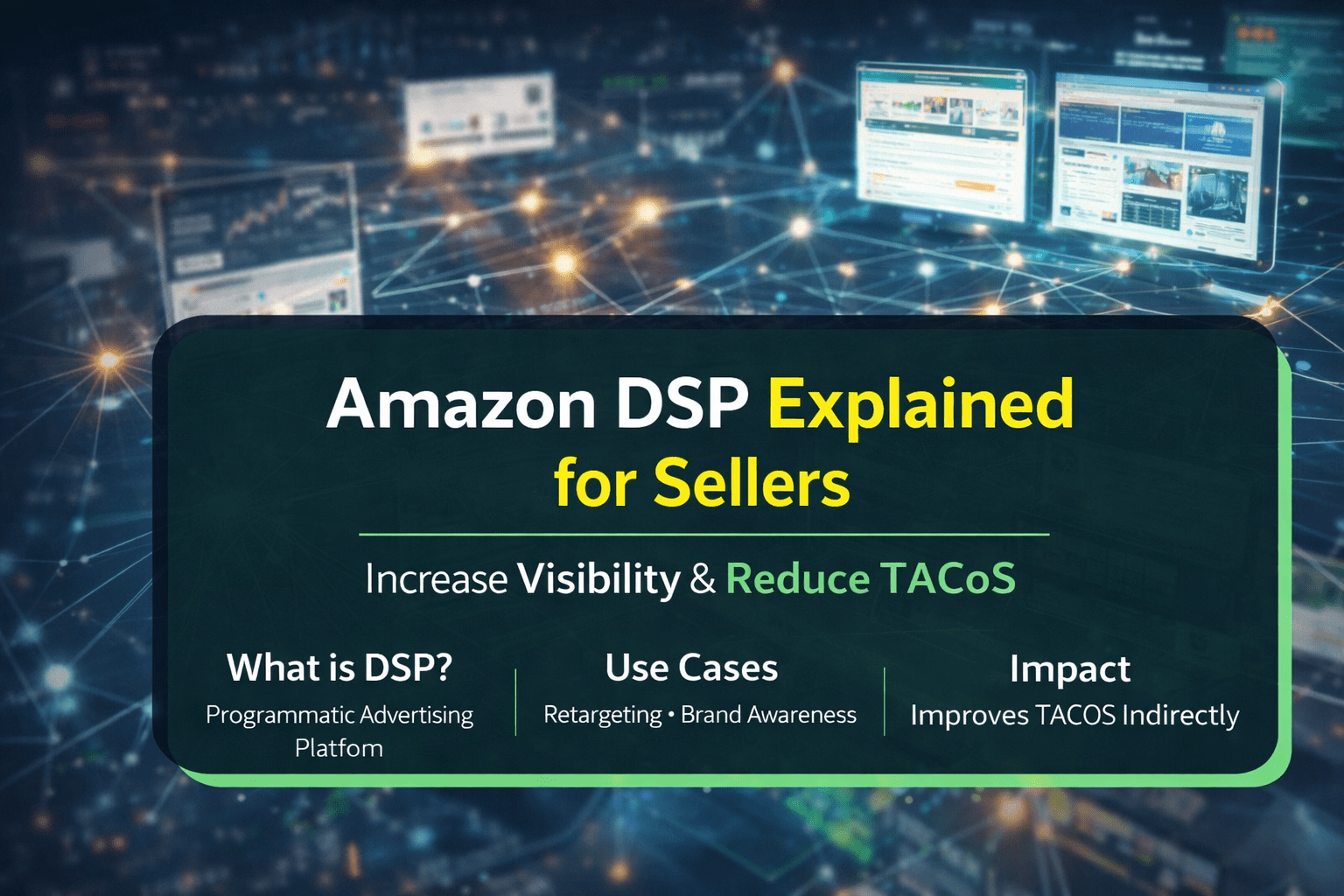
Quick answer: Amazon DSP (demand-side platform) is Amazon’s programmatic advertising tool. It lets you buy display, video, audio and streaming TV ads on Amazon-owned properties and across thousands of third-party sites and apps, using Amazon’s first-party shopper data. You do not need to sell on Amazon to use it.
What Is Amazon DSP?
Amazon DSP is Amazon’s demand-side platform. A demand-side platform is software that automates the buying of digital ad space across many publishers and ad exchanges, in real time, so advertisers can reach specific audiences without negotiating with each website one by one.
On the other side of the transaction sits the supply-side platform (SSP), which publishers use to sell their ad space. The DSP represents the buyer; the SSP represents the seller. When a shopper loads a page, an auction happens in milliseconds and the winning ad is shown.
What makes Amazon DSP different from generic programmatic tools is the data. Amazon can build audiences from real shopping behaviour: what people searched, viewed, added to cart and bought. Amazon says its approach relies on deterministic and modeled audiences rather than depending on traditional ad identifiers, which matters as third-party cookies and mobile identifiers lose reach.
Amazon DSP is available to brand advertisers, agencies and tool providers, and Amazon states that you can use it even if you do not sell on Amazon.
Why Amazon DSP Matters for Sellers
Most sellers treat Amazon advertising as a search channel. That works until you hit the ceiling of search demand. Amazon DSP matters because it does three jobs that sponsored ads cannot do well:
- It creates demand instead of only capturing it. You can reach shoppers before they search for your category.
- It follows shoppers off Amazon. Someone views your product, leaves, and later sees your ad on a news site, a streaming service or an app.
- It lets you target by behaviour at scale. You can build audiences from what shoppers actually did on Amazon, not just keywords they typed.
For brands with a decent catalogue, a Brand Registry account and a healthy listing foundation, DSP is usually the next step after a mature Sponsored Ads programme. For brands still fixing basics like listing quality or pricing, it is usually too early. We cover that decision properly later in this guide.
How Does Amazon DSP Work?
Here is the process in simple terms:
- You define a goal. Awareness, consideration or purchase.
- You choose or build an audience. Amazon’s audiences, your own audiences, or a mix.
- You pick a format and placement. Display, video, audio or streaming TV.
- You set a budget and bid. DSP is typically bought on a CPM basis (cost per thousand impressions), though optimisation can be tuned toward outcomes like reach, page views or purchases.
- Amazon DSP bids in real time. Every time a matching shopper is available in supply, the platform decides whether to bid and how much.
- You measure and refine. Reporting shows impressions, reach, detail page views, add to cart, purchases, new-to-brand and more.
Behind the scenes, Amazon DSP connects to Amazon-owned inventory and to external exchanges. That is why one campaign can appear on an Amazon page in the morning and on a third-party publisher in the afternoon.

Where Can Amazon DSP Ads Appear?
Amazon describes its supply as first-party and third-party.
First-party (Amazon-owned) supply includes Amazon.com and other Amazon sites, Prime Video, Twitch livestreams, IMDb, Fire TV and live sports such as Thursday Night Football in the US. Availability varies by country, so always confirm what is open in your marketplace.
Third-party supply comes through Amazon Publisher Direct and leading third-party exchanges, covering thousands of premium sites and apps.
This breadth is a major reason DSP is considered a full-funnel tool, while Sponsored Display is limited to a narrower set of placements.
Amazon DSP Ad Formats
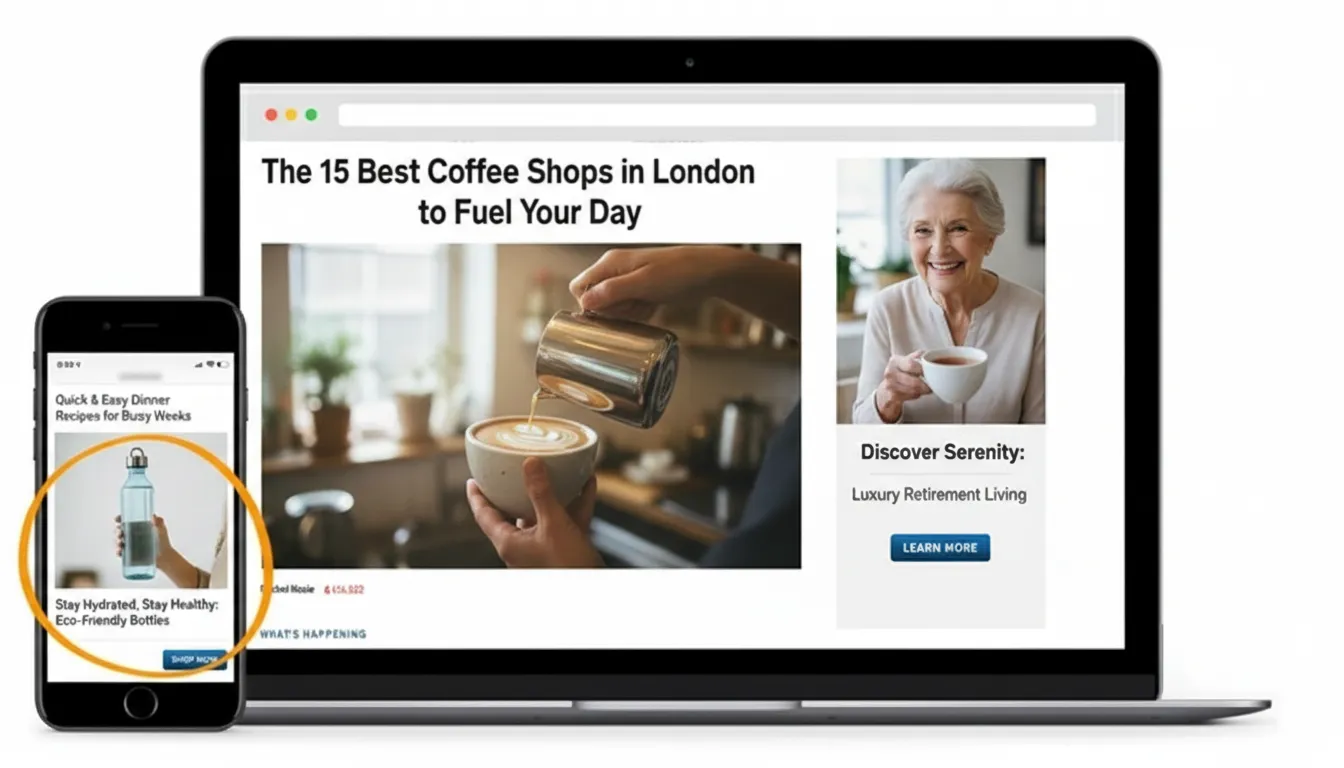
- Display ads: Banner and responsive creatives across Amazon and the open web. Good for retargeting and cross-sell.
- Online video ads: In-stream and out-stream video. Good for storytelling and product demonstration.
- Audio ads: Reach listeners on streaming audio. Useful for awareness and brand recall.
- Streaming TV ads: Ads on connected TV and streaming services, including Amazon-owned streaming properties. Useful for brand building at scale.
Creative matters more than most sellers expect. DSP without strong creative spends quickly and reports vaguely. Plan for lifestyle imagery, benefit-led copy and short video before you launch. [ADD: screenshot of a high-performing EcomRanker DSP creative]
Amazon DSP Targeting Options
Targeting is where Amazon DSP earns its reputation. The main audience families are:
1. Remarketing audiences
Shoppers who viewed your product detail pages, added to cart, or bought. You can also target people who viewed similar products, which brings competitor shoppers into your funnel.
2. In-market audiences
Shoppers whose recent activity suggests they are actively considering a category, such as running shoes or coffee machines.
3. Lifestyle and interest audiences
Broader groups based on long-term behaviour and affinities, such as fitness enthusiasts or home cooks.
4. Lookalike audiences
Amazon models new shoppers who resemble your existing customers or high-value segments.
5. Contextual targeting
Show ads next to relevant content, which is increasingly valuable in a privacy-first environment.
6. Your own first-party audiences
With the right setup, you can bring in your own customer lists. Amazon Marketing Cloud, a clean-room environment, lets advertisers build custom audiences and run deeper analysis across DSP campaigns.
Practical tip: Always build suppression audiences. Without them, DSP will happily show ads to people who already bought, wasting budget. Exclude recent purchasers for a sensible window based on your repurchase cycle.
Amazon DSP vs Sponsored Display vs Sponsored Products
This is the question sellers ask most often, so here is a clear comparison.
| Feature | Sponsored Products | Sponsored Display | Amazon DSP |
| Main purpose | Capture search demand | Retarget and cross-sell | Full-funnel programmatic reach |
| Where ads appear | Search results and product pages | Amazon and select off-Amazon placements | Amazon-owned inventory plus thousands of third-party sites and apps |
| Formats | Product ads | Display (and video options) | Display, video, audio, streaming TV |
| Audience depth | Keyword and product targeting | Behaviour-based audiences | Deep Amazon audiences plus custom audiences and AMC |
| Billing | Cost per click | Cost per click (or CPM options) | Mainly CPM |
| Access | Self-service | Self-service | Self-service via approved partners, or managed service |
| Best for | Immediate sales | Lower-funnel and mid-funnel | Upper, mid and lower funnel at scale |
The short version: Sponsored Ads fish where the fish already are. DSP helps you find new ponds. Streaming TV and several premium placements are only available through DSP, and retargeting through DSP can follow shoppers well beyond Amazon’s own pages.
Should you test Sponsored Display first?
Often yes. If you have limited budget, Sponsored Display is a sensible way to learn how retargeting performs for your products before committing to DSP. Once your Sponsored Ads are profitable and you are hitting a growth ceiling, DSP becomes the logical next layer.
How Much Does Amazon DSP Cost?
Cost is the biggest barrier in sellers’ minds, so let us be direct.
- Managed service through Amazon Ads: Amazon states that managed service typically requires a minimum of around $50,000 USD, and this varies by country.
- Self-service through agencies and approved partners: Minimums are set by the agency and are commonly much lower, which is why many sellers start with an agency rather than direct managed service.
- Pricing model: CPM-based bidding, plus platform or agency fees depending on the arrangement.
Because fees and minimums differ by region and partner, ask for a written breakdown covering platform fee, management fee, minimum spend, contract length and reporting access before you sign anything.
What should you realistically budget?
DSP needs enough volume to learn. A tiny budget spread across many audiences produces noise, not insight. A better approach is to start with two or three focused campaigns, give them time to gather data, and only then expand.
Is Amazon DSP Worth It for Sellers?
It depends on your stage. Here is the framework we use with clients.
DSP is usually a good fit when:
- Sponsored Products and Sponsored Brands are profitable and scaled.
- You have strong listings, reviews and imagery.
- You have a catalogue large enough to build audiences and test creative.
- You want new-to-brand customers or off-Amazon reach.
- You have the budget to test for several weeks.
DSP is usually the wrong move when:
- Your listing conversion rate is weak. Ads will only amplify the leak.
- You are buying it because an agency upsold it, with no defined audience strategy.
- You expect DSP ROAS to match Sponsored Products ROAS. They do different jobs.
- You cannot produce decent creative.
Judge DSP by the right metrics. Upper-funnel DSP campaigns should be measured on reach, detail page views, new-to-brand customers and long-term halo effect on organic rank and branded search, not only on last-click ROAS.
The Full-Funnel Amazon DSP Strategy
The most effective way to use DSP is to match campaigns to funnel stages.
Upper funnel: awareness
- Audiences: lifestyle, interest, broad in-market, contextual
- Formats: streaming TV, online video, audio
- Goal metrics: reach, impressions, video completion, new-to-brand
Mid funnel: consideration
- Audiences: in-market, lookalike, category browsers, competitor ASIN viewers
- Formats: display and video
- Goal metrics: detail page views, add to cart rate, branded searches
Lower funnel: conversion
- Audiences: product viewers, cart abandoners, past purchasers for repeat purchase
- Formats: dynamic e-commerce display
- Goal metrics: purchases, ROAS, return on ad spend by cohort
Retention and cross-sell
- Audiences: existing customers with suppression for recent buyers
- Formats: display
- Goal metrics: repeat purchase rate, lifetime value
Step-by-Step: How to Launch Amazon DSP
- Audit your foundation. Check listing quality, A+ Content, reviews, pricing and inventory. DSP will expose weak listings fast. If you need help, our Amazon agency team can run a pre-launch audit.
- Define the business goal. New customer acquisition, brand awareness, defending against competitors, or repeat purchase.
- Choose your access route. Managed service, self-service through an agency, or a partner platform.
- Build your audience strategy. Start with remarketing and in-market audiences, add lookalikes next, and layer lifestyle audiences once you have data.
- Prepare creative. Produce lifestyle images, short video and clear calls to action.
- Structure campaigns by funnel stage. Separate campaigns for awareness, consideration and conversion so you can read results cleanly.
- Set frequency caps and suppression. Protect budget and shopper experience.
- Launch and wait. DSP needs time. Judging results in the first few days is a classic mistake.
- Review weekly, optimise monthly. Trim weak placements and audiences, shift budget to winners, refresh creative.
- Connect insights to the rest of your ads. Use DSP learnings to improve Sponsored Ads strategy and listing messaging.
Key Amazon DSP Metrics to Track
- Impressions and reach: How many people saw your ads.
- Viewability: Whether ads were actually in view.
- Click-through rate: Useful for display, but not the whole story.
- Detail page views (DPV) and DPV rate: Shows how well ads drive interest.
- Add to cart rate: A strong mid-funnel signal.
- Purchases and ROAS: Conversion outcomes, best read over longer windows.
- New-to-brand (NTB) customers: Shoppers who had not bought from your brand in the previous 12 months.
- Halo effects: Lift in organic sales, branded search and sales of other products in your catalogue.
For deeper insight, Amazon Marketing Cloud lets you analyse paths to purchase and overlap between ad types.
Common Amazon DSP Mistakes (and How to Avoid Them)
- Launching with weak creative. Fix imagery and messaging first.
- No suppression audiences. You end up paying to advertise to existing customers.
- Judging DSP like Sponsored Products. Different goals, different metrics.
- Too many campaigns, too little budget. Learning never completes.
- No frequency control. Shoppers see the same ad too often.
- Ignoring attribution windows. DSP influence often shows up days after exposure.
- Switching strategy every week. Give tests enough time to produce signal.
- Treating it as a set-and-forget channel. DSP rewards active management.
Amazon DSP in the UK, USA, UAE and India
Because DSP availability, inventory and fees differ by marketplace, here is how we think about each region:
- USA: The most mature market, with the widest first-party inventory including streaming and live sports. Best for sellers wanting scale and advanced audience work.
- UK: Strong for retargeting and brand building. Inventory and audiences are solid, but streaming options differ from the US, so confirm what your account can access.
- UAE: A growing market where DSP can help brands build awareness quickly, especially for categories with high consideration. Check regional availability before planning.
- India: Programmatic access and inventory are more limited than in the US, so many brands start with Sponsored Ads and add DSP selectively. Check current availability with your partner.
Always verify current availability with Amazon Ads or your agency, because regional access changes over time.
Amazon DSP Management: In-House, Agency or Managed Service?
| Option | Best for | Watch out for |
| In-house | Large brands with a dedicated programmatic team | Learning curve, hiring cost, tool access |
| Agency (self-service) | Most growing brands | Transparency on fees, reporting and who actually runs the account |
| Amazon managed service | Large advertisers with big budgets | High minimums, less flexibility |
When choosing an agency, ask who will actually manage your account, how audiences are structured, how they report on halo effects, and what happens to your data if you leave. At EcomRanker we run a senior-only model, so the people who plan your strategy are the people who optimise it.
Amazon DSP Checklist Before You Spend a Pound, Dollar or Dirham
- Listings are optimised and conversion rate is healthy
- Inventory is stable and Buy Box ownership is strong
- Creative assets are ready in the right sizes
- Clear goal and funnel structure agreed
- Suppression audiences planned
- Budget large enough to learn
- Measurement plan agreed, including NTB and halo
- Review cadence set
Frequently Asked Questions About Amazon DSP
What is Amazon DSP in simple words?
Do I need to sell on Amazon to use Amazon DSP?
How is Amazon DSP different from Sponsored Display?
How much does Amazon DSP cost?
What is the minimum budget for Amazon DSP?
Is Amazon DSP only for big brands?
What ad formats does Amazon DSP offer?
Can Amazon DSP help my organic ranking?
What is Amazon Marketing Cloud and how does it relate to DSP?
How long does Amazon DSP take to show results?
What are suppression audiences in Amazon DSP?
Should I hire an Amazon DSP agency?
Final Thoughts: Is Amazon DSP Right for Your Brand?
Amazon DSP is not a magic switch. It is a powerful extension of an already healthy Amazon advertising programme. Used well, it expands your reach beyond search, brings back shoppers who left, and builds the kind of brand demand that makes every other channel work harder. Used badly, it is an expensive way to show ads to the wrong people.
The winning approach is simple: fix your foundation, define your funnel, invest in creative, protect budget with suppression and frequency control, and measure with patience.
If you want a second opinion on whether DSP makes sense for your brand right now, talk to our team. We manage Amazon advertising across the UK, USA, UAE and India and will tell you honestly if you are ready. Book a free Amazon advertising audit.