
If you sell products online in the UK, sooner or later someone asks the question: is selling on eBay worth it? Maybe you already run a profitable Amazon store and wonder whether eBay is a second revenue stream or a distraction. Maybe you have a stockroom of excess inventory. Maybe you are starting from zero and eBay looks like the cheapest door into ecommerce.
The honest answer is that it depends on what you sell, how much margin you carry, and what you expect eBay to do for your business. That answer is unsatisfying, so this guide replaces it with something more useful: real UK fee numbers, a worked profit example, a candid list of pros and cons, a comparison against Amazon, Etsy and Shopify, and a clear framework for deciding whether eBay deserves a place in your channel mix.
At EcomRanker, we are an Amazon-first agency working with brands across the UK, USA, UAE and India. We have no reason to oversell eBay, and no reason to bury it either. Our job is to help sellers put time and ad spend where it earns the best return. So read this as marketplace strategy, not a sales pitch.
Is selling on eBay worth it?
Yes, selling on eBay is worth it for many UK sellers, but not for all of them. It works best for sellers with unique, second-hand, collectible, refurbished, spare-part or good-value products, for sellers who want a low-risk way to test demand, and for established brands that want an extra sales channel without giving up Amazon. It works less well for commodity products with razor-thin margins, for sellers who need a fully branded customer experience, and for anyone who expects eBay to deliver the same scale as Amazon without effort.
Here is the short version:
| Question | Short answer |
| Is it easy to start? | Yes. You can list your first item within an hour. |
| Is it cheap? | Free for most private sellers in the UK; business sellers pay percentage fees. |
| Is it profitable? | Yes, when your margin comfortably covers fees, postage and returns. |
| Is it competitive? | Very, especially for new, popular, branded goods. |
| Is it scalable? | Moderately. Amazon usually scales faster for branded, repeat-purchase products. |
| Who should do it? | Resellers, collectors, refurbishers, niche brands and multichannel sellers. |
| Who should skip it? | Sellers with under 10 to 15 percent net margin and no pricing power. |
The rest of this article shows you how to work out which camp you are in.
Is it easy to sell on eBay?
One of eBay’s biggest strengths is how quickly a new seller can go live. You register an account, verify your identity, link a payout bank account, and list an item. Nothing about that process requires a website, a brand registry application, or a warehouse agreement.
The eBay app is a big part of this. You can photograph an item, let the app suggest a category and description, set a price, and publish in a couple of minutes. Order notifications, buyer messages, postage labels and payout tracking all live in the same place. For a part-time seller, that convenience matters.
For business sellers, the tooling goes deeper: bulk listing through spreadsheets, integrations with inventory and order management software, seller analytics, campaign management, and an API that third-party tools connect to. That is why many established brands treat eBay as a data feed problem rather than a manual listing problem.
However, easy to start is not the same as easy to win. The first listing takes an hour. Building a store that ranks, converts and stays inside eBay’s performance standards takes months. The sellers who struggle are usually the ones who confuse the two.
eBay seller requirements in the UK
eBay’s seller requirements are straightforward, but they exist for a reason. They help protect buyers, and they protect you from account problems later.
What you need to start:
- A verified eBay account with confirmed identity details.
- A payout bank account verified through eBay’s payments system, so that sale proceeds can reach you.
- Agreement to eBay’s user agreement, selling policies and prohibited items rules.
- Accurate contact and address details.
- For business sellers, accurate business information and compliance with consumer law, including the obligation to show your business details to buyers.
Private seller or business seller? This distinction matters a great deal in the UK. Private sellers are individuals selling their own unwanted items occasionally. If you buy goods to resell, make items to sell, or sell regularly with the aim of making a profit, you are generally expected to register as a business seller. Business sellers have extra consumer-law responsibilities, such as offering a 14-day cancellation right for distance sales and providing proper returns handling.
Tax: UK platforms now report seller income to HMRC under digital platform reporting rules, so eBay shares information about sellers’ earnings with the tax authority. Occasional decluttering is typically fine, but regular trading income is taxable, and the VAT registration threshold applies to business turnover. This article is general information, not tax advice, so speak to an accountant if you trade regularly.
Category approval: Some categories are gated or restricted. They need extra checks, authentication or proof of authenticity. Check eBay’s selling policies before sourcing stock for a restricted category.
How much does it cost to sell on eBay?
This is where most competitor articles go vague, and where most sellers make their biggest mistakes. Let us be specific. Fees change, so always confirm the current rate card on eBay’s own UK fees page before you set prices. The structure below reflects eBay UK’s published rates as of autumn 2026.
Private sellers. Since October 2024, private sellers on eBay UK generally pay no final value fee, and typically no per-order or regulatory fee, on normal items. There is a monthly allowance of free listings, and small fees can still apply to optional listing upgrades, vehicles and some international sales. Buyers, rather than sellers, now pay a Buyer Protection fee on many private sales.
Business sellers. Business sellers pay for transactions in several parts:
- Final value fee: a percentage of the total sale amount, which includes the item price and postage. The rate depends on the category. Published UK category rates for business sellers broadly range from the mid single digits to the low teens, with some categories such as parts and accessories or business and industrial changing in early 2026.
- Per-order fee: £0.30 on orders of £10 or less, and £0.40 on orders over £10. eBay raised the higher figure for UK business sellers in February 2026.
- Regulatory operating fee: a small percentage of the sale total, charged per order.
- International fee: an extra percentage when the buyer is outside the UK.
- Promoted Listings fees: optional advertising fees, charged only when an advertised item sells.
- VAT: if you are VAT-registered, fees are shown excluding VAT, and VAT is added on top.
- Shop subscription: an optional monthly fee that unlocks more free listings, storefront tools and extra features. In the UK, a Shop subscription does not reduce your final value fee the way it does on eBay US.
eBay also applies performance-based charges. Sellers who miss performance expectations for several consecutive months can be charged a higher additional final value fee, so service quality directly affects profit.
The key lesson: eBay fees are charged on the whole order value, including postage. If you charge £5 postage on a £20 item, your fee base is £25, not £20. Many new sellers forget this when they price.
A worked profit example
Numbers beat opinions. Here is a simple example for a UK business seller. We have used illustrative rates to show the method, so replace them with the current figures for your own category.
Product: a wireless phone charger Selling price: £24.99 plus £3.00 postage charged to the buyer = £27.99 order total Your cost of goods: £9.50 Your actual postage cost: £2.60 Packaging: £0.40
Illustrative eBay fees (ex VAT):
- Final value fee at an assumed 11% of £27.99 = £3.08
- Per-order fee (order over £10) = £0.40
- Regulatory operating fee at an assumed 0.35% of £27.99 = £0.10
- Total eBay fees = £3.58
Profit calculation:
| Line | Amount |
| Order total received | £27.99 |
| Minus eBay fees | £3.58 |
| Minus cost of goods | £9.50 |
| Minus postage cost | £2.60 |
| Minus packaging | £0.40 |
| Gross profit before ads, returns and overhead | £11.91 |
That is roughly a 42 percent gross margin on the order total. Now add reality:
- A Promoted Listings campaign at, say, a 5 percent ad rate costs about £1.40.
- A 4 percent return rate, with some returns not resaleable, can cost another 50p to £1 per order on average.
- Your time, software and storage also cost money.
After those, a realistic profit might be around £9.50 per order, or roughly a third of the order value. That is a healthy business. Change the cost of goods to £17 and the same listing earns about £4 before ads and returns. That is a thin business where one bad week wipes out a month of profit.
The rule of thumb we give clients: if your landed cost, postage and packaging already consume more than 65 to 70 percent of the selling price, eBay will be painful. If they consume less than 50 percent, eBay is usually workable.
When we model marketplace profit for clients, we do the same exercise for Amazon, including referral fees, FBA fees and advertising cost. If you sell in India as well, our Amazon India profit calculator shows the same discipline applied to another marketplace.
Is selling on eBay profitable?
Yes, selling on eBay can be highly profitable when approached strategically. The word that matters is strategically. eBay does not guarantee profit. It gives you access to a large audience and a mature payments and dispute system, and then it leaves the economics to you.
eBay reports well over 130 million active buyers worldwide, and UK shoppers use the platform for everything from phone accessories and car parts to trading cards, vintage clothing, homeware and refurbished electronics. That depth of demand creates opportunity, but it also means plenty of competing sellers.
Where eBay profit tends to come from:
- Sourcing advantage. If you can buy stock cheaply, through wholesale deals, liquidation, trade-ins, clearance lots or your own manufacturing, your margin is protected.
- Product knowledge. Collectors, repairers and enthusiasts pay more to sellers who describe items accurately and answer questions well.
- Long-tail products. Spare parts, discontinued items and niche accessories face less competition than mainstream bestsellers.
- Pricing flexibility. Best Offer, auctions and markdown tools help you move aged stock without destroying your brand price elsewhere.
- Low channel cost for private sellers. Zero selling fees for private sales mean a very different profit equation than for business sellers.
Where eBay profit gets destroyed:
- Selling the same branded commodity as 40 other sellers.
- Ignoring postage costs, especially for heavy or bulky items.
- Underestimating returns, damage and fraudulent claims.
- Racing to the bottom on price.
- Running ads without tracking profit per order.
The pattern is the same on every marketplace. We see it every day in Amazon accounts, where a seller can have strong revenue and very weak profit because costs are not tracked at SKU level. If that sounds familiar, our guide to Amazon PPC management explains how we think about profit-first advertising, and the principles carry over to eBay.

The pros of selling on eBay
Let us look at the genuine advantages one at a time.
A very large, high-intent audience
People come to eBay to buy. Many arrive from Google or from the app with a specific item in mind. For used, rare, discontinued and hard-to-find products, eBay is often the first place buyers look. That intent is valuable, particularly for products that are not stocked in high-street shops.
Low barrier to entry
You do not need a brand, barcode registration, a website or an inventory contract to start. For beginners, this makes eBay one of the lowest-risk ways to learn ecommerce fundamentals: sourcing, photography, listing, customer service and fulfilment.
Flexible selling formats
Auctions, Buy It Now fixed-price listings and Best Offer let you match the format to the product. An auction can push a rare item above its expected price. A fixed-price listing suits stable products. Best Offer lets buyers negotiate, which can raise conversion on higher-priced goods and helps you shift slow stock without publicly cutting the price. Amazon offers nothing comparable.
Strong fit for second-hand, refurbished and collectible goods
eBay is one of the few mainstream marketplaces where used items genuinely thrive. Circular-economy products, such as refurbished phones, pre-owned designer goods, vintage items and spare parts, have a natural home here, supported by a buyer culture that expects pre-loved stock.
Good search visibility beyond eBay
Well-written eBay listings can also appear in Google results, which means some buyers find you without ever opening the eBay app. Accurate titles, item specifics and clear photography help in both places.
Payments, protection and dispute handling are built in
With eBay’s managed payments system, buyers pay through eBay, and sellers receive payouts directly to their bank account. The Money Back Guarantee and returns tools give buyers confidence to purchase from individual sellers they have never heard of. That trust lifts conversion for small sellers who would struggle to build the same credibility on their own website.
Useful for testing products and clearing stock
Because listing is quick, eBay is a practical test lab. You can check price sensitivity, photo performance and keyword demand with a small batch before committing to bulk inventory or to a larger Amazon launch. It is also a clean outlet for overstock, returns and end-of-line products.
Brand tools for serious sellers
Ebay Shops, Buyer Groups, clickable banners in listings and the Verified Rights Owner programme give established brands real options for presentation, retargeting and protection. We cover these in detail below.
Diversification away from a single marketplace
This is the pro we care about most as an Amazon agency. If a single Amazon listing suspension, a Buy Box loss or a policy change can wipe out 90 percent of your revenue, you do not have a business, you have a dependency. A second channel changes your risk profile, even if it only delivers 10 to 20 percent of revenue.
The cons of selling on eBay
A balanced guide has to include the downsides, and many competitor articles skip this section entirely. Here is what sellers tell us, and what the data supports.
Fees reduce margin, especially for business sellers
Percentage fees on the full order value, the per-order fee, the regulatory fee, optional advertising and VAT on top mean a business seller can easily lose a double-digit percentage of every order before cost of goods is considered. On low-priced items, the fixed per-order fee bites harder. eBay also raised the per-order fee for UK business items over £10 in 2026, and category rates moved in some areas. Fee creep is real.
Intense price competition
Buyers on eBay are often bargain hunters. If you sell a popular branded product that many sellers stock, you will compete on price, and the lowest price often wins. That can make eBay feel like a flea market for commodity goods, which is the main complaint in many seller forums.
You do not own the customer relationship
The sale happens on eBay’s site, under eBay’s rules. You can collect feedback, send order-related messages and use Buyer Groups, but you cannot build a mailing list the way you can with Shopify. This limits lifetime value unless you work harder on loyalty and repeat purchase inside the platform.
Returns, disputes and buyer-friendly policies
eBay leans towards protecting the buyer. Item not as described claims, returns and chargebacks can go against sellers, even where the seller has acted fairly. Strong photos, accurate descriptions, tracked postage and quick communication are the best defence. Fraudulent claims do happen, particularly in electronics and high-value goods.
Performance standards are strict
Late dispatch, high defect rates and low seller ratings can restrict your selling limits, reduce search visibility and trigger extra fees. A single operational problem, such as a courier failure over a busy Christmas week, can affect your metrics for months.
Listing management takes real time
Without automation, running hundreds of unique listings, answering questions, handling returns and tracking stock across channels is a lot of manual work. Selling on eBay is not passive income, and it rarely becomes passive without systems.
Scalability is more limited than Amazon for many brands
Ebay is a mature marketplace. For branded, repeat-purchase, consumable products, Amazon’s logistics network, Prime eligibility and advertising ecosystem usually scale faster. eBay can be a very good second channel, but few brands build their entire business on it.
Restricted items and policy risk
Prohibited, restricted and authenticity-checked categories carry risk. Listing an item that breaches policy can lead to removed listings, selling limits or account restrictions. Read the rules before you source.
Postage and fulfilment costs are on you
Courier prices, packaging and damage rates directly affect margin. Heavy and bulky products can look attractive until you calculate the postage. Selling internationally multiplies this complexity.
Margin pressure from hidden costs
Returns, packaging, storage, software subscriptions, photography and your own time are all real costs. A listing that looks profitable on paper may not be once you include them.
A balanced summary: the pros are about reach, flexibility and low entry cost. The cons are about margin, competition and operational discipline. If you are the sort of seller who tracks costs carefully and picks products intelligently, the pros usually win. If you are guessing at costs and chasing volume, the cons usually win.
Key features of eBay that actually matter
Most “key features” lists read like a brochure. Here is what each feature does for your profit, so you can decide which ones are worth your time.
| Feature | What it does | Why it matters to you |
| eBay app and seller hub | Listing, order management, messages and analytics on desktop and mobile | Faster listing and faster response times, which protect seller metrics |
| eBay Shops | A branded storefront with subscription tiers and extra selling tools | Presentation, category navigation and more included listings |
| Seller analytics | Traffic, conversion, impressions and sales data | Shows which listings deserve more ad spend or a rewrite |
| Global Shipping Program and international options | Helps with cross-border delivery and customs paperwork | Opens overseas demand without building your own export process |
| Buyer and seller protection | Money Back Guarantee, returns tools and a resolution centre | Builds buyer trust, but also exposes you to disputes |
| Auction, Buy It Now and Best Offer | Three ways to sell the same stock | Match the format to the product and the buyer |
| Promotional tools | Markdowns, order discounts, volume pricing and coupons | Lifts basket size without permanent price cuts |
| Managed payments | One checkout, multiple payment methods, payouts to your bank | Fewer payment headaches and higher buyer confidence |
| Integrations and API | Connects to inventory, shipping and listing software | The only realistic way to scale beyond a few dozen SKUs |
| Buyer Groups | Segmented audiences for targeted offers | Repeat purchase without a mailing list |
For most small sellers, the first four features cover 80 percent of the value. For brands and larger catalogues, the integrations, promotional tools and Buyer Groups are where growth is made.
Buyer Groups and retargeting: personalised selling on eBay
Repeat customers are the cheapest customers you will ever win, and this is one area where eBay gives sellers real tools. Buyer Groups let you segment shoppers by behaviour, for example people who bought from a particular category, people who bought a certain number of times, or people who have not purchased for a set period. You can then send targeted offers, coupons and newsletters to those groups.
Practical ways to use this:
- Replenishment timing. If you sell consumables, such as pet treats, coffee, cleaning products or printer ink, you can offer a small discount at roughly the point customers run low.
- Cross-sell bundles. Someone who bought a phone case may respond well to a screen protector or charging cable offer.
- Win-back offers. A modest coupon aimed at buyers who have not purchased in six months often costs less than a new customer acquired through ads.
- VIP treatment. Frequent buyers can receive early access to new stock or exclusive bundles, which builds loyalty inside the platform.
A word of caution. Treat coupons as a targeted tool, not a habit. If every customer expects a discount every time, you are quietly training your buyers to wait for it. Use the segmentation to protect margin, not just to cut prices.
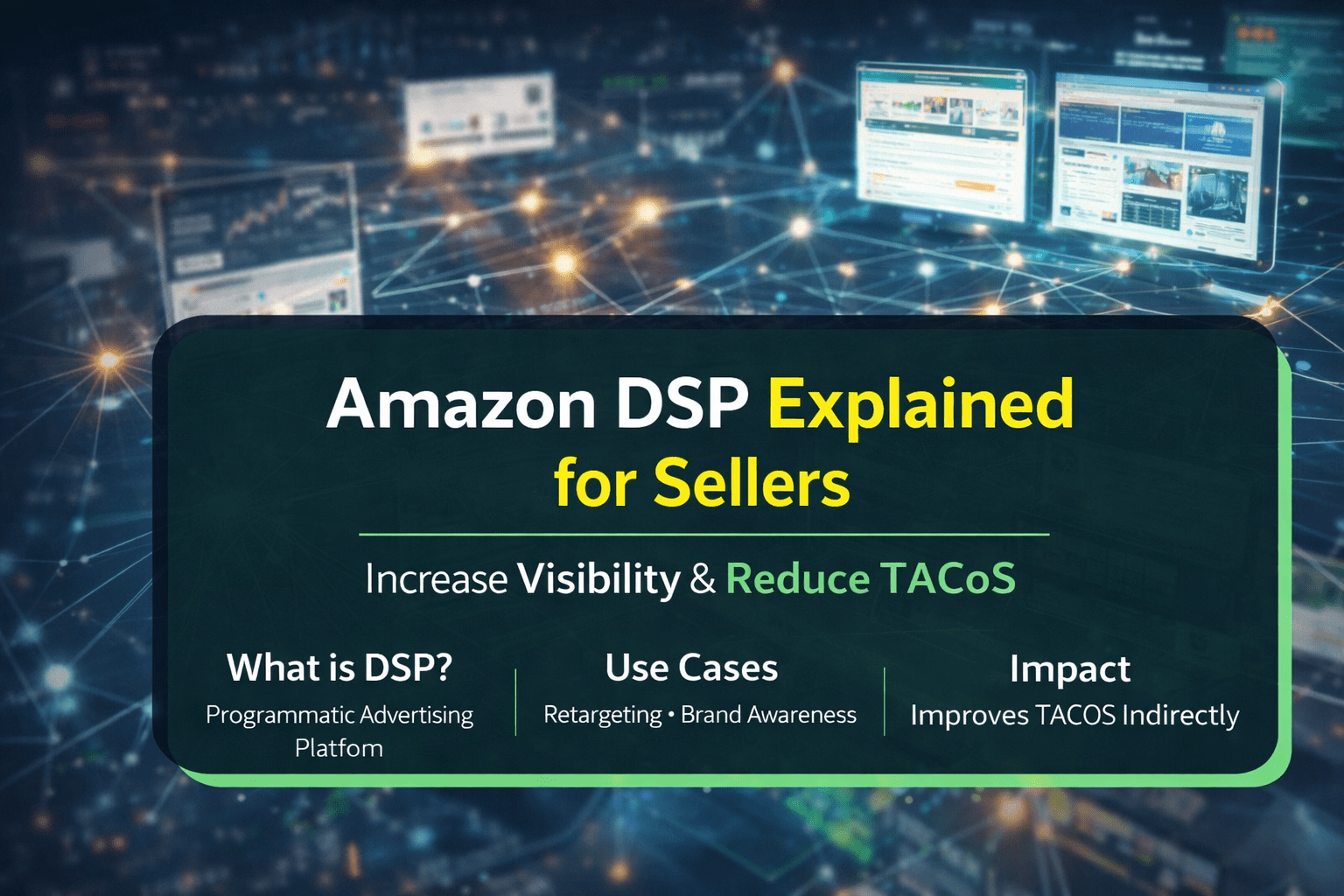
The broader principle applies on Amazon too. Brand Analytics, Sponsored Brands and audience-based advertising all rely on the same idea: reach the people most likely to buy again, rather than paying to find strangers. Our explainer on Amazon DSP for sellers shows how audience retargeting works on that side of the fence.
eBay Shops, storefronts and clickable banners
An eBay Shop turns a collection of listings into a branded destination. For sellers with a clear product range, it helps in three ways.
First, it organises your catalogue. Custom categories, a logo, a banner and a short brand story help shoppers understand who you are and browse more of your range. Buyers who find one product often buy another if the store makes navigation easy.
Second, it supports bigger campaigns. Higher shop tiers include more free listings, larger promotional capabilities and fuller reporting. If you list hundreds of products, this can reduce listing costs.
Third, it supports credibility. A polished storefront signals a professional operation rather than a casual one-off seller, which matters for higher-priced goods.
Clickable banners inside listings are a smart conversion tool when used properly. A banner can point shoppers towards best sellers, bundles, current promotions or related products. Done well, it keeps visitors inside your catalogue instead of letting them bounce back to a competitor’s listing. Done badly, it clutters the page and slows the buying decision. Keep it simple: one clear offer, one clear destination.
One honest note for UK sellers. A Shop subscription in the UK does not reduce your final value fee the way store subscriptions do on eBay US. Work out whether the extra listings and tools justify the monthly cost before you upgrade.
VeRO and brand protection
If you own a brand, you will eventually meet an unauthorised seller, a counterfeit or someone using your photos and descriptions without permission. eBay’s Verified Rights Owner (VeRO) programme gives rights holders a structured way to report listings that infringe copyright, trademark or other intellectual property rights.
How brands use it well:
- Register your brand and intellectual property with the programme.
- Report infringing listings promptly and keep clear records.
- Protect your product photography and copy. Original, well-branded images make copying easier to prove.
- Strengthen your own presence while listings are being taken down. Optimise your keywords, titles and Shop so that legitimate listings fill the search space that infringers leave empty.
VeRO is not a perfect shield. Some resellers of genuine goods are entitled to resell under exhaustion-of-rights rules, and eBay’s approach to third-party selling is relatively open compared with brand-gated marketplaces. But it gives brands a real route for dealing with abuse, and it is something Amazon sellers will recognise from Brand Registry.
Selling internationally on eBay
Cross-border selling is one of eBay’s genuine strengths. UK sellers can reach buyers in the EU, the USA, Australia and beyond using eBay’s international shipping options, which simplify customs paperwork and delivery tracking for many items.
Before you switch on international selling, check these points:
- Postage cost versus item value. Low-value, heavy items often make no sense overseas.
- International fee. An extra percentage fee can apply when the buyer is in another country. Include it in your price.
- Customs, duties and returns. Buyers may face import charges, and returns from abroad are expensive. Set a clear returns policy.
- Restricted items. Some goods cannot be exported or shipped to certain countries.
- VAT rules. Selling to EU and other overseas buyers has its own VAT considerations. Take advice if you are VAT-registered.
If you are expanding beyond the UK, it is worth treating this as a market-by-market decision rather than a switch. At EcomRanker we run Amazon operations across the UK, USA, UAE and India, and the lesson is consistent: each market has its own pricing, competition and compliance profile. A product that wins in one can fail in another.
eBay advertising and Promoted Listings
Paying for visibility is not optional for many categories. eBay’s Promoted Listings Standard works on a cost-per-sale model: you choose an ad rate, a percentage of the sale price, and you are only charged when a buyer clicks your promoted listing and then buys that item within the attribution window. Because you pay only on a sale, the risk is lower than clicking-based advertising, but the fee still comes out of your margin.
How to approach eBay advertising without wasting money:
- Start with proven listings. Only promote listings with solid photos, competitive prices and good reviews or feedback. Ads multiply a good listing and expose a bad one.
- Set the ad rate from your margin, not from a suggested rate. eBay will suggest a rate to stay competitive. Check it against your actual profit per order.
- Separate hero products from the long tail. Give high-margin, high-conversion items a more generous rate, and keep low-margin items on a lower rate or off ads entirely.
- Review profit, not just sales. A campaign that doubles revenue but halves profit per order is not a success.
- Pause and refresh. If a promoted listing stops converting, rewrite the title and swap photos before raising the rate.
The discipline is the same as on Amazon, where Sponsored Products, Sponsored Brands and DSP need constant measurement against profit. If you run both channels, our Amazon account management team applies one consistent profit-first framework across them.
How to optimise eBay listings so they rank and convert
Ebay’s search engine, often called Best Match, ranks listings using relevance, price, shipping, seller performance, conversion history and more. You cannot control every factor, but you can control the ones that matter most.
Titles
Use the full 80 characters wisely. Lead with the brand, the product type and the most important attribute. Include size, colour, model number and compatibility where relevant. Avoid keyword stuffing, misleading terms and decorative symbols. Shoppers read titles in search results, so clarity beats cleverness.
Item specifics
Item specifics, such as brand, model, material, colour and size, feed eBay’s filters. If your listing lacks them, it disappears from filtered results. Complete every relevant field accurately. This is one of the cheapest ranking improvements available.
Photography
Use bright, sharp, multi-angle photos on a clean background. Show scale, condition, defects (for used items) and packaging. Clear photographs reduce returns as well as raising conversion, because buyers know what they are getting.
Description
Put the key information first: what it is, what is included, condition, dimensions and compatibility. Use short paragraphs and bullet points. Be honest about flaws. Strong descriptions reduce questions, disputes and returns.
Pricing and postage
Compare your all-in price, item plus postage, against competitors. Free postage built into the price often converts better than a low price with high postage, and it simplifies the buyer’s decision. Use Best Offer on higher-value items and set automatic accept and decline thresholds.
Handling time and seller performance
Fast dispatch, accurate tracking and low defect rates support visibility. Treat operations as part of your SEO. A slow courier or a missed dispatch date hurts rankings as surely as a weak title.
Variations versus single listings
Multi-variation listings concentrate traffic and reviews on one page, which can strengthen the listing. Single listings can be easier to rank for specific searches and keep feedback tied to one product. There is no universal winner. Test your best sellers both ways and keep what produces more profit.
Refreshing and relisting
Old, slow-moving listings can drag on performance. Review them regularly: rewrite titles, update photos, adjust prices, or end listings that will never sell. Fewer, better listings often outperform a huge, stale catalogue.
If you already invest in Amazon listing optimisation, many of the same skills transfer: keyword research, benefit-led copy and image strategy. The platforms differ in detail, but the logic of matching buyer intent is the same.
eBay vs Amazon vs Etsy vs Shopify: which is better for UK sellers?
No marketplace is best in the abstract. Each one suits a different seller. Here is the comparison we use with clients.
| Dimension | eBay | Amazon | Etsy | Shopify (own store) |
| Best for | Used, collectible, niche, refurbished and good-value goods | Branded, repeat-purchase, high-volume products | Handmade, vintage and personalised items | Brands that want full control and customer data |
| Audience intent | Bargain and hard-to-find hunting | Convenience and fast delivery | Unique, gift-led shopping | Whoever you bring to the site |
| Cost to start | Very low | Low to moderate | Low | Moderate (store, apps, marketing) |
| Fees | Category-based for business sellers; free for most private sales | Referral fee plus fulfilment and storage if using FBA | Listing, transaction and payment fees | Subscription plus payment processing |
| Traffic | Built in | Built in, very large | Built in, niche | You must create it |
| Customer data and branding | Limited | Limited | Moderate | Full |
| Competition | High on mainstream items | Very high, with Buy Box dynamics | High within handmade niches | Depends on your marketing |
| Scalability | Moderate | High | Moderate | High, with marketing spend |
| Operational pressure | Seller metrics and returns | Seller metrics, FBA rules, strict policies | Lower volume, personalisation demands | Entire customer journey is yours |
| Advertising | Promoted Listings | Sponsored ads, DSP | Etsy Ads | Meta, Google, TikTok and more |
How to read this table
If your product is branded, consumable and has repeat purchase potential, Amazon usually deserves your first attention. Prime eligibility, logistics and advertising tools give it a scale advantage. That is why EcomRanker is built around Amazon, and why we spend so much time on PPC management and account health.
If your product is unique, second-hand, collectible or hard to find, eBay has a structural edge. Its buyers actively look for these things, and its auction and Best Offer formats suit them.
If your product is handmade or personalised, Etsy is often a better fit than either.
If you want to own the customer relationship, Shopify is the long-term asset, but you must earn the traffic yourself, usually through paid ads, SEO and email.
The smartest sellers do not pick one. They sequence. Start where demand is proven, add a second channel when operations are stable, and use each marketplace for what it does best.
What sells well on eBay UK?
Categories change with seasons and trends, so use eBay’s own research tools and sold-listing filters rather than relying on any article, including this one. That said, these categories consistently attract strong buyer demand on eBay in the UK:
- Phones, tablets, computers and accessories, including refurbished and pre-owned units.
- Vehicle parts and accessories, where fitment data and accurate compatibility matter enormously.
- Collectibles, such as trading cards, coins, toys, memorabilia and vintage items.
- Clothing, shoes and accessories, particularly pre-loved branded fashion.
- Home, garden and DIY, including tools, furniture and spare parts.
- Health and beauty, subject to category rules.
- Books, music, films and games, especially rare or out-of-print items.
- Sports and leisure equipment, including bikes, fitness gear and outdoor equipment.
- Business and industrial supplies, where specialist buyers search by part number.
A quick way to research demand: search for a product, filter to Sold Items, and note how many sold in the past 30 to 90 days, at what price, and with what postage terms. Compare that to the number of active listings. A healthy ratio of sales to active listings is a sign you can compete. Many listings and few sales is a warning.
What tends to be a poor fit: very low-priced items where the fixed fees dominate, bulky goods with expensive postage, heavily branded commodity goods with many identical sellers, and restricted categories you cannot legally or practically supply.
Who should sell on eBay, and who should not
eBay is likely worth it if you are:
- A private seller clearing unwanted items. Zero final value fees on most private sales make this a low-cost, low-risk way to turn clutter into cash.
- A reseller with a sourcing advantage. You buy well, so your margin survives the fees.
- A refurbisher, repairer or collector. Your expertise is the product.
- A niche brand with a distinctive product. You are not competing on price alone.
- An Amazon seller who wants diversification. eBay gives you a second channel and a place to clear aged stock or returns.
- A new seller who wants to learn. The low entry cost makes it an effective classroom.
eBay is probably not worth it if you are:
- Selling commodity products on razor-thin margin. Fees, postage and returns will consume the profit.
- Expecting passive income. eBay rewards attention, speed and good service.
- Needing a fully controlled brand experience. eBay limits your control of design and customer data.
- Unable to handle returns and disputes. Poor service will damage your metrics and your costs.
- Selling in restricted or high-risk categories without compliance. The downside can be severe.
If you are unsure which group you belong to, run the profit calculation from section 5 for five representative products. If four of the five clear a margin you are happy with, test eBay. If only one does, look harder at pricing, sourcing or channel choice first.
How to start selling on eBay: a step-by-step plan
- Decide whether you are a private or business seller. Be honest. If you buy to resell, make products or trade regularly, register as a business and follow the consumer and tax rules.
- Create and verify your account. Add identity details and link your payout bank account.
- Research five to ten products. Use sold-listing data to check demand, price range and competition. Work out landed cost, postage and fees before you buy stock.
- Source small, test fast. Buy a small batch or list items you already own. Measure what sells, how quickly and at what margin.
- Photograph properly. Use natural light, a plain background and multiple angles. Photograph flaws on used goods.
- Write strong listings. Clear title, complete item specifics, honest description, competitive all-in pricing and a clear returns policy.
- Choose your delivery options carefully. Offer tracked services for higher-value items, dispatch quickly and keep proof of postage.
- Consider a small Promoted Listings test. Only on listings that already convert organically, and with an ad rate set from your margin.
- Monitor seller performance weekly. Watch dispatch times, defect rates and feedback. Fix problems immediately.
- Review profit every month. Track revenue, fees, postage, ad cost, returns and net profit per product. Drop what does not pay and scale what does.
- Add systems when volume justifies it. Use inventory, listing and order-management tools once manual work becomes the bottleneck.
- Plan your multichannel mix. When eBay is stable, decide whether Amazon, your own store or another marketplace is the next best addition.
Common mistakes that kill eBay profit
- Pricing without including postage and fees on the full order value. Fees apply to the total sale amount, including postage.
- Copying the lowest competitor price. You may be copying someone with cheaper stock, or someone about to lose money.
- Weak photos and vague descriptions. They raise returns and lower conversion.
- Ignoring item specifics. Missing fields remove you from filtered search results.
- Poor customer service. Slow replies and late dispatch hurt metrics and trigger extra fees.
- Running ads without tracking profit. Revenue is not profit.
- Listing restricted or non-compliant items. One mistake can limit your account.
- Not tracking returns by product. Some SKUs will have high return rates that never show up in revenue reports.
- Overlooking tax obligations. Regular trading income is taxable and platform reporting means HMRC can see it.
- Treating eBay as a side project forever. If it matters to your business, give it a proper owner and process.
eBay and Amazon together: a practical multichannel plan
The most useful reframe is to stop asking “eBay or Amazon?” and start asking “what job should each channel do?”
Amazon as the core engine. For branded products with strong demand, Amazon’s reach, Prime badge and advertising tools make it the primary growth channel. Invest in listings, reviews, PPC and account health here first.
eBay as the flexible second channel. Use it to reach price-sensitive buyers, to clear aged stock, to sell returns and open-box items, to test new products and to serve niches where Amazon is crowded.
Your own store as the long-term asset. Over time, build a Shopify or WooCommerce site to own customer data and margin, using marketplaces as discovery.
Rules that keep multichannel selling healthy:
- Keep pricing logic consistent. Large unexplained price gaps between channels confuse buyers and can trigger marketplace price-parity policies.
- Protect your core listing. Do not let eBay discounts undermine Amazon’s Buy Box position or your brand price.
- Sync inventory carefully. Overselling on one channel because stock is gone on another damages metrics on both.
- Measure channel-level profit. Track contribution margin by channel, not just total revenue.
- Do not spread yourself thin. Add a channel only when your current one is operating well. Two mediocre channels are worse than one strong one.
How EcomRanker can help
EcomRanker is a full-service Amazon agency founded in 2017 by Chirag Bharihok. We operate across the UK, USA, UAE and India marketplaces, and our work covers account management, PPC and DSP advertising, listing optimisation and creative design.
We will tell you plainly whether a channel is worth your time. If your numbers say Amazon should be your priority, we will help you make it profitable: tighter advertising, stronger listings, cleaner account health and clearer reporting. If you are weighing eBay alongside Amazon, we can help you model the economics of each channel so you decide with data, not guesswork.
Ways we can help:
- A profit and channel audit comparing your numbers on Amazon and other marketplaces.
- Amazon PPC management focused on profit rather than vanity metrics.
- Amazon account management covering listings, inventory, compliance and reporting.
- Amazon DSP strategy for brands ready to retarget and build awareness.
- Listing optimisation to lift visibility and conversion.
Ready to see where your next pound of ad spend should go? Book a free marketplace review with EcomRanker and we will show you where your biggest profit opportunities are.
Frequently asked questions
Is selling on eBay worth it in the UK in 2026?
Is it easy to sell on eBay?
Is selling on eBay profitable?
How much does eBay charge UK sellers?
Do I need a business account to sell on eBay?
Is eBay better than Amazon for sellers?
What are the biggest disadvantages of selling on eBay?
What sells best on eBay UK?
Should Amazon sellers also sell on eBay?
How do I make my eBay listings rank higher?
Final verdict: is selling on eBay worth it?
Selling on eBay is worth it when three things line up: a product with enough margin to survive fees and postage, a buyer who values what you sell, and an operation disciplined enough to protect your seller metrics. When those hold, eBay offers a large audience, flexible selling formats, strong tools for repeat buyers, and a useful second channel alongside Amazon.
It is not worth it when you chase volume on commodity goods, ignore costs, or expect a hands-off income stream. In that case the fees, competition and returns will win.
The practical next step is simple. Pick five products. Work out the true landed cost, postage, fees, advertising and returns for each. If the margin works, test eBay with a small batch for 60 to 90 days and measure profit, not just sales. If it does not, fix sourcing and pricing first, or put your energy into the channel where your numbers are strongest.
If you want a second opinion on that decision, EcomRanker is happy to look at your numbers. Contact our team for a free marketplace review.