
Tired of your Amazon listing sitting idle without traffic or sales? You’re not alone. Many sellers have great products but struggle with one critical problem — getting traffic to their Amazon listing.
Without traffic, there are no clicks. Without clicks, there are no sales. And without sales, your rankings drop.
The good news? You don’t need luck to fix this. You need the right combination of Amazon PPC strategy, SEO optimization, and CTR improvements.
As highlighted in the reference content, sellers who combine these three pillars consistently outperform those who rely on just one approach.
In this guide, you’ll learn how to increase Amazon traffic, improve visibility, and boost sales using proven, data-driven strategies.
Table of Contents
- Why Traffic Matters on Amazon
- How Amazon PPC Drives Traffic
- Optimizing Amazon PPC for Maximum Traffic
- How SEO Drives Organic Traffic
- CTR Optimization: Turning Impressions into Clicks
- ICAP Funnel Strategy (PPC + SEO + CTR Combined)
- External Traffic Strategies
- Conclusion
- FAQs
Why Traffic Matters on Amazon
Traffic is the foundation of Amazon success. Without consistent traffic, even the best listings fail to generate sales.
Amazon’s algorithm rewards listings that attract:
- More clicks
- More conversions
- More engagement
The more traffic your listing gets, the more data Amazon collects. If that traffic converts, your ranking improves. This creates a powerful cycle:
👉 More traffic → More sales → Higher ranking → More traffic
How PPC Drives Traffic to an Amazon Listing
How do you get your listing higher on Amazon? One of the fastest and most effective ways is through a strong Amazon PPC strategy. PPC (Pay-Per-Click) ads increase your product visibility by placing your listing at the top of search results, helping you reach customers who are actively searching for products like yours.
By bidding on relevant Amazon keywords, your ads appear in front of high-intent buyers. This drives immediate traffic to your listing. As your product generates more clicks and sales through PPC, Amazon’s algorithm recognizes its relevance and begins to rank it higher organically.
This creates a powerful cycle:
More visibility → More clicks → More sales → Higher organic ranking
Optimizing Amazon PPC Ads for Maximum Traffic
To get the most out of your PPC campaigns, you need to focus on both reach and efficiency. Simply running ads is not enough — optimization is key.
Focus on targeting high-converting keywords that are relevant to your product. Regularly monitor campaign performance and adjust bids based on results to maintain profitability and improve traffic quality.
Using a mix of broad match, phrase match, and exact match keywords helps you capture a wider audience while still targeting high-intent buyers. At the same time, adding negative keywords prevents your ads from showing for irrelevant searches, reducing wasted spend.
Consistent optimization and data analysis ensure that your campaigns continue to drive high-quality traffic and improve overall performance.
Amazon PPC Hacks to Increase Traffic and Reduce Costs
Here are some proven Amazon PPC tactics that can help you drive more traffic while improving efficiency:
Broad Match Modifier
Use modified broad match keywords to ensure that all important words appear in the search query, even if the order changes. This gives you better control than standard broad match while still allowing flexibility and lower costs compared to exact match targeting.
Auto Campaigns for Every SKU
Set up low-budget auto campaigns for each SKU in your catalog. This helps you gather valuable keyword data across multiple products without spending heavily. Over time, this data can be used to refine your manual campaigns.
Expected ACoS Calculation
Understanding your ACoS (Advertising Cost of Sales) is essential for profitability. By factoring in your conversion rate and cost-per-click (CPC), you can estimate your expected ACoS and adjust your bids accordingly. This helps you maintain a balance between growth and profitability.
Custom Headline Images
Use custom images in Sponsored Brand ads to make your listings stand out. Eye-catching visuals, especially on mobile devices, can significantly improve your click-through rate and bring more traffic to your listings.
Use Lifetime Data for Better Decisions
Amazon often limits data visibility to short timeframes, but analyzing long-term performance gives you better insights. Reviewing lifetime data helps you identify trends, optimize campaigns, and make more informed decisions.
Avoid Over-Negating Keywords in Auto Campaigns
Many sellers make the mistake of removing high-performing keywords from auto campaigns. Instead of negating winning keywords, allow them to continue running and only remove underperforming ones. This helps maintain performance history and improves campaign efficiency.
How To Use SEO To Drive Traffic To Your Amazon Listing
How do you increase your product visibility on Amazon? The answer lies in a strong Amazon SEO strategy. SEO helps your listing appear in relevant search results, bringing in consistent organic traffic without relying entirely on ads.
When your listing is optimized with the right Amazon keywords, it becomes easier for customers to find your product. This leads to more clicks, better engagement, and higher sales — all of which improve your rankings over time.
A structured SEO approach ensures that your listing continues to grow in visibility. Below is a proven 4-phase Amazon SEO strategy to maximize traffic and performance.
Phase 1: Maximizing Indexing
Objective
Ensure your listing is indexed for as many relevant keywords as possible so it can appear in more search results.
Actions
Start by optimizing your product title, bullet points, and description with targeted high-volume Amazon keywords. Include a well-written A+ content section with detailed copy to improve both SEO and conversion. Add alt text to images to capture additional keyword indexing and improve discoverability.
Phase 2: Incremental Indexing
Objective
Expand your keyword coverage and increase the number of search terms your listing ranks for.
Actions
Update backend search terms by removing duplicate keywords already used in your visible content. Replace them with new keyword variations and long-tail keywords. This helps your listing index for more search queries, increasing organic reach and traffic.
Phase 3: Matriculation
Objective
Improve keyword rankings by pushing mid-ranking keywords (positions 20–50) into top positions (1–19).
Actions
Identify “strike zone” keywords — terms with good search volume and realistic competition. Replace underperforming keywords with these high-impact keywords in your listing. This helps improve visibility and drives more targeted traffic.
Phase 4: Search Query Optimization
Objective
Maximize visibility and sales from top-performing keywords.
Actions
Analyze search query reports and keyword performance data to identify which terms are driving clicks and conversions. Refine your listing by focusing on high-performing keywords and removing low-impact ones. This phase is especially effective for mature listings with strong indexing.
SEO Must-Do to Drive Traffic to Your Amazon Listings
To consistently increase visibility and drive organic traffic, you need to follow essential Amazon SEO best practices. These small but powerful optimizations help improve indexing, ranking, and overall listing performance.
Optimize Your Title
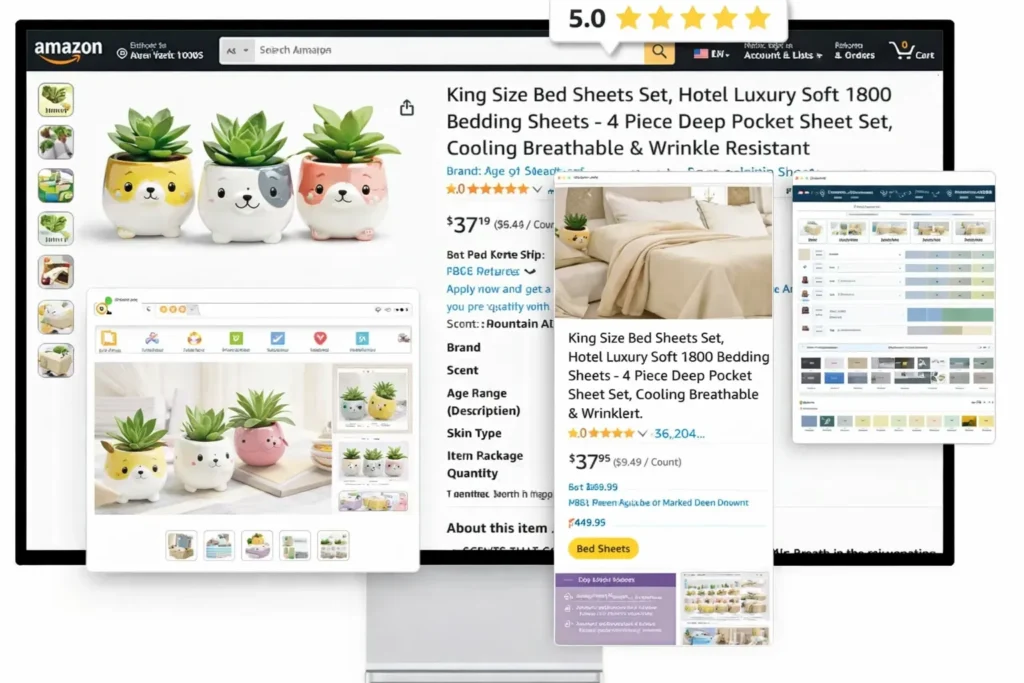
Your product title is one of the most important ranking factors in Amazon SEO. Use high-impact keywords that match customer search behavior while keeping the title clear and readable. A well-optimized title improves both visibility and click-through rate.
Enhance Bullet Points
Bullet points should clearly highlight product benefits while naturally including relevant Amazon keywords. This helps Amazon’s algorithm understand your product better and improves ranking, even if the keywords are not directly noticeable to customers.
Utilize Alt Text and Detailed Descriptions
Adding alt text to images and writing detailed descriptions in A+ content improves keyword indexing and customer engagement. Well-structured content not only boosts SEO but also increases conversion rates by providing more information to buyers.
Cross-Link Products
Linking related products within your listing or brand content helps drive traffic across your catalog. This strategy improves product discoverability and encourages customers to explore more of your offerings.
Use Unique Texts as Alt Texts
To test and improve indexing, you can add unique text in image alt attributes. This helps determine how quickly your content gets indexed and allows you to expand keyword coverage strategically.
Optimize Backend Keywords
Backend keywords play a crucial role in improving visibility. Fill in search terms, generic keywords, and item type fields with relevant terms that are not already used in your listing. This hidden optimization helps your product rank for more search queries without affecting readability.
How CTR Helps Drive Traffic to an Amazon Listing
CTR (Click-Through Rate) is one of the most important factors in Amazon SEO and ranking. It measures how many shoppers click on your listing after seeing it in search results. A higher CTR signals to Amazon that your product is relevant and appealing, which helps improve visibility and traffic.
Increased Visibility
Higher Rankings
A higher CTR indicates that shoppers find your listing attractive and relevant. Amazon’s algorithm rewards listings with strong engagement by ranking them higher in search results, increasing overall visibility.
Enhanced Discoverability
As your ranking improves, your product appears more frequently and in better positions. This increased exposure leads to more impressions and higher chances of attracting potential buyers.
Better Engagement
Attracts More Clicks
A strong CTR means more users are clicking on your listing. This increased engagement brings more traffic and creates more opportunities for conversions and sales.
Quality Traffic
Users who click on your listing are usually interested in your product. This results in more targeted traffic, which improves conversion rates and overall listing performance.
Improved Conversion Rates
Positive Signals
When customers click on your listing and make a purchase, it sends strong positive signals to Amazon. This reinforces your listing’s relevance and can further boost your rankings.
Cost Efficiency in Advertising
Lower Ad Costs
In Amazon PPC campaigns, a higher CTR can reduce your cost-per-click (CPC). Amazon rewards high-performing listings with better ad placements at lower costs, making your campaigns more efficient.
Better ROI
More clicks at a lower cost means better returns on your ad spend. Improving CTR helps you get more value from your advertising budget while increasing traffic.
CTR Hack: The Key to Winning on Amazon
A high CTR can dramatically improve your rankings and sales. One of the most effective ways to increase CTR is by optimizing your main product image.
Main Image Optimization: Our Most Powerful CTR Hack
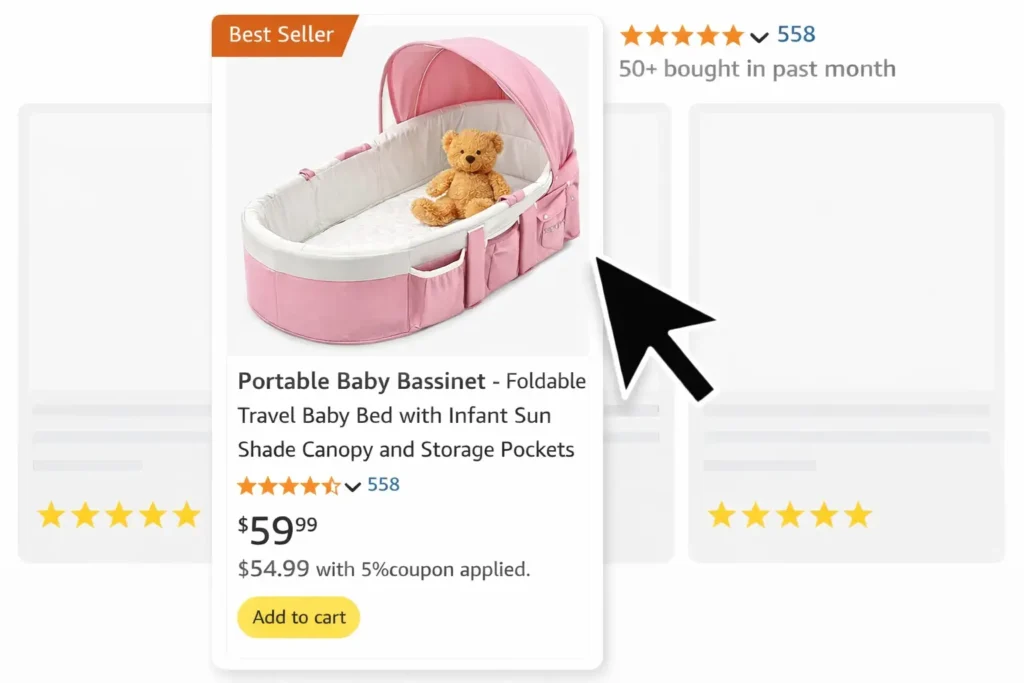
How do you optimize your Amazon listing image? Your main image is the first thing customers see, and it plays a major role in whether they click on your product or not.
What This CTR Hack Is
Enhance your main image by adding subtle visual elements such as feature highlights or keyword-based labels. These elements make your product stand out without misleading customers.
Why It Works
A visually appealing main image grabs attention instantly. Improving image quality and clarity can significantly increase CTR, sometimes even doubling or tripling your clicks.
How to Implement It
Use high-quality images that clearly show your product and its benefits. Highlight key features visually so customers can quickly understand the value. Test different image variations to see which performs best.
Continuous Improvement
Regularly test and update your main image based on performance data. Market trends and competition change, so ongoing optimization is essential to maintain high CTR and strong rankings.
ICAP Marketing Funnel for PPC, SEO, and CTR Optimization
ICAP stands for Impressions, Clicks, Add to Cart, and Purchases. It is a powerful framework used to analyze and improve your Amazon PPC strategy, SEO performance, and CTR optimization.
This funnel helps you identify exactly where your listing is underperforming and what needs to be improved. By understanding each stage, you can make better decisions to increase traffic, improve conversions, and boost overall sales.
ICAP Marketing Funnel for PPC
Enhance Visibility Through Impressions
Focus on increasing impressions by targeting relevant keywords in your PPC campaigns. More impressions mean more opportunities to attract clicks and drive traffic.
Focus on Click Performance
Analyze which keywords generate the highest click-through rate. Keywords with high clicks but low impressions are strong opportunities for scaling campaigns.
Use Search Query Performance Data
Review your Search Query Performance Report in Brand Analytics to identify high-performing keywords. This helps you understand which search terms are driving traffic and engagement.
Optimize Campaign Structure
Create targeted campaigns based on keyword performance. Use broad match keywords to discover new opportunities and refine them into exact match for better control.
Monitor and Adjust Bids
Track metrics like ACoS and ROI regularly. Adjust bids based on performance to maximize traffic while maintaining profitability.
Refine and Scale Campaigns
Pause underperforming keywords and increase budgets for high-performing ones. This ensures your ad spend is focused on driving quality traffic.
ICAP Marketing Funnel for SEO
Identify High-Impact Keywords
Use Brand Analytics and search query data to find keywords that generate impressions, clicks, and conversions. These are your priority keywords for optimization.
Prioritize Based on Performance
Focus on keywords that show strong engagement. High-click and high-conversion keywords should be integrated into your listing content.
Optimize Listings with Keywords
Add high-performing keywords to your title, bullet points, backend search terms, and A+ content. This improves your organic ranking and visibility.
Combine PPC and SEO Insights
Use data from PPC campaigns to strengthen your SEO strategy. Keywords that perform well in ads often perform well organically.
ICAP Funnel for Main Image CTR Optimization
Impressions
If your listing gets high impressions but low clicks, your main image may not be attractive enough. Improving image quality and clarity can increase CTR.
Clicks
If CTR is low, it means your image or title is not engaging. Update your main image to highlight key features and make it more visually appealing.
Add to Cart
If clicks are high but add-to-cart rate is low, the issue may be with your product page content, pricing, or secondary images rather than the main image.
Purchases
If customers add to cart but do not purchase, focus on improving trust factors such as reviews, pricing, and overall listing quality.
Bonus: 6 Effective Ways to Drive External Traffic to Your Amazon Listing
Driving traffic from outside Amazon is a powerful way to improve your Amazon SEO, rankings, and sales performance. While Amazon PPC is essential, external traffic helps boost visibility, especially during product launches and growth phases.
By bringing in targeted visitors from other platforms, you signal demand to Amazon’s algorithm, which can lead to higher rankings and increased conversions.
Social Media Marketing
Use platforms like Facebook, Instagram, Pinterest, and Twitter to reach your target audience. Consistent content, product showcases, and engaging posts can drive steady traffic to your Amazon listings and increase brand awareness.
Pay-Per-Click (PPC) Advertising
Run Google Ads or social media ads targeting relevant keywords and audiences. Retargeting campaigns can help bring back users who have already shown interest, increasing the chances of conversion and improving traffic quality.
Influencer Marketing
Collaborate with influencers in your niche to promote your product. Influencers can drive highly targeted and trusted traffic, helping you reach potential buyers and build credibility quickly.
Email Marketing
Build an email list and send targeted campaigns featuring your Amazon products. Offering discounts, promotions, or valuable content can encourage users to visit your listing and make a purchase.
Affiliate Marketing
Partner with affiliates who promote your products to their audience. This strategy helps expand your reach and drive consistent traffic from external sources without upfront advertising costs.
Cross-Channel Marketing
Promote your products across multiple platforms, including blogs, YouTube, social media, and email campaigns. A consistent message across channels helps increase visibility and drive more traffic to your Amazon listings.
Conclusion
Driving traffic to your Amazon listing requires a combination of PPC, SEO, and CTR optimization. Each plays a unique role, but together they create a powerful system for growth.
By implementing these strategies, you can:
- Increase visibility
- Drive targeted traffic
- Improve conversions
- Boost rankings
The key is consistency. Keep testing, optimizing, and refining your strategy to stay ahead of the competition.
FAQs
How do I get traffic to my Amazon listing?
Use a combination of Amazon PPC, SEO optimization, and external traffic strategies to increase visibility and attract buyers.
Does PPC help organic ranking?
Yes, PPC drives sales and engagement, which can improve organic rankings over time.
How can I improve CTR on Amazon?
Optimize your main image, title, and pricing to make your listing more attractive and increase clicks.
Is external traffic important for Amazon SEO?
Yes, external traffic signals demand and can significantly boost your rankings.