

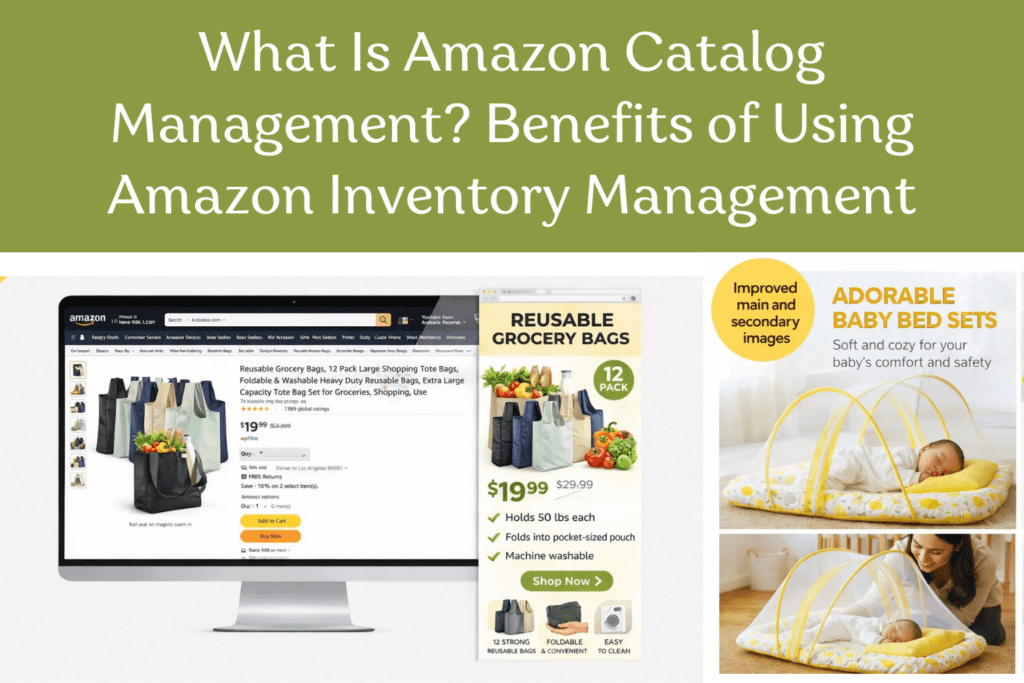
Selling on Amazon has become increasingly competitive as millions of sellers fight for visibility across the marketplace. Many businesses invest heavily in products and advertising but still struggle to achieve consistent sales growth. One of the most common reasons behind poor marketplace performance is improper Amazon catalog management and weak inventory control. Even high-quality products can lose visibility if product listings contain inaccurate product information, missing keywords, poor category structure, or inconsistent inventory updates.
Amazon’s algorithm prioritizes organized and optimized listings because customers expect accurate product data, fast fulfillment, and reliable shopping experiences. When sellers fail to manage their catalog correctly, listings may become suppressed, hidden in search results, or negatively impacted by poor customer trust signals. This directly affects traffic, conversion rates, and overall Amazon sales performance.
Proper Amazon catalog management combined with efficient Amazon inventory management helps sellers maintain accurate product data, improve product visibility, optimize listings for Amazon SEO, and create a better customer experience. Businesses that invest in structured catalog optimization often achieve stronger rankings, higher conversion rates, better operational efficiency, and sustainable long-term growth.
In this complete guide, we will explore what Amazon catalog management means, how inventory management supports Amazon sellers, the benefits of optimized product listings, and why effective catalog organization is essential for scaling an Amazon business successfully.
What Is Amazon Catalog Management?
Amazon catalog management refers to the process of organizing, optimizing, maintaining, and updating product listings within Amazon Seller Central. Every product displayed on Amazon becomes part of the Amazon catalog, which includes product titles, descriptions, bullet points, images, backend keywords, attributes, variations, and category information.
The main goal of Amazon catalog management is to ensure that every product listing contains accurate, optimized, and structured product data that helps customers discover products easily while improving search visibility inside Amazon’s marketplace.
A properly managed Amazon catalog includes:
- Accurate product titles
- SEO-optimized product descriptions
- High-quality product images
- Correct product categories
- Relevant backend search terms
- Structured product attributes
- Consistent inventory availability
- Optimized variation listings
When catalog data is well organized, Amazon’s algorithm can better understand the product and rank it more effectively in search results. This improves discoverability and increases the chances of attracting qualified buyers.
How Amazon Catalog Management Works
Amazon catalog management operates through Amazon Seller Central, where sellers upload and manage product information. Every listing requires structured data that helps Amazon classify products correctly across the marketplace.
The process typically involves:
Product Data Upload
Sellers upload detailed product information including:
- Product title
- Brand name
- Product specifications
- Dimensions
- Material information
- Product descriptions
- Images
- Keywords
- Pricing
Accurate data ensures that customers can clearly understand the product before purchasing.
Product Categorization
Amazon uses categories and subcategories to organize millions of products. Correct category placement improves search visibility and helps customers find products faster.
Improper categorization often reduces discoverability and may place listings in irrelevant search results.
Listing Optimization
Amazon listing optimization focuses on improving the visibility and conversion potential of product listings. Sellers optimize:
- Product titles
- Bullet points
- Backend keywords
- A+ Content
- Product descriptions
- Images
This helps improve organic rankings within Amazon search results.
Catalog Maintenance
Catalog management is not a one-time task. Sellers must continuously monitor and update:
- Product information
- Inventory levels
- Images
- Keywords
- Pricing
- Product variations
Regular updates help maintain listing quality and marketplace performance.
Why Amazon Catalog Management Is Important
Amazon catalog management directly impacts product visibility, customer trust, conversion rates, and sales growth. Poorly structured listings often lead to reduced discoverability and weak customer engagement.
Another important reason catalog management matters is because it directly impacts brand perception within the Amazon ecosystem. Poorly optimized listings with incomplete product information often appear unprofessional and reduce customer confidence. On the other hand, listings that contain detailed descriptions, accurate specifications, professional images, and optimized keywords create a stronger shopping experience. Customers are more likely to trust brands that provide clear and transparent product information, which can ultimately improve repeat purchases and long-term customer loyalty.
Here are the main reasons why catalog management is essential:
Improves Product Visibility
Optimized product listings help Amazon understand what the product is and which search queries it should rank for. Better optimization increases search visibility and organic traffic.
Enhances Customer Experience
Customers rely on accurate product information before making purchasing decisions. Detailed descriptions, quality images, and correct specifications improve trust and reduce confusion.
Reduces Listing Errors
Catalog management helps eliminate:
- Duplicate listings
- Incorrect variations
- Missing attributes
- Wrong product details
- Category mismatches
This creates a cleaner and more professional storefront.
Supports Higher Conversion Rates
When customers clearly understand the product, they are more likely to complete a purchase. Optimized listings improve conversion performance by addressing customer questions directly within the listing.
Understanding Amazon Inventory Management
Amazon inventory management refers to tracking, monitoring, and controlling stock levels for products sold on Amazon. Inventory management ensures that products remain available for customers without overstocking or understocking.
Inventory management has also become increasingly important due to Amazon’s storage limitations and FBA inventory performance metrics. Sellers must carefully balance inventory turnover rates while avoiding long-term storage fees and low inventory level penalties. Businesses that fail to forecast demand accurately may face increased operational costs or lose Buy Box visibility due to stock shortages. Effective inventory planning allows sellers to maintain healthier cash flow while ensuring products remain available during peak shopping seasons such as Prime Day, Black Friday, and holiday sales events.
Inventory management involves:
- Monitoring stock levels
- Forecasting demand
- Tracking product movement
- Managing replenishment schedules
- Preventing stockouts
- Avoiding excess inventory
Efficient inventory management is critical because inventory availability directly affects product rankings, Buy Box eligibility, customer satisfaction, and fulfillment performance.
How Inventory Management Supports Amazon Catalog Management
Inventory management additionally supports advertising performance and listing stability across Amazon campaigns. Sponsored Products advertisements become less effective when inventory levels fluctuate frequently because products may go out of stock during active campaigns. This interrupts sales momentum and negatively affects keyword ranking performance. Maintaining stable inventory levels ensures advertising campaigns continue running efficiently while preserving product ranking history and conversion performance within Amazon’s marketplace algorithm.
Inventory management and catalog management work together closely. Even the best optimized listing can lose visibility if products become unavailable frequently.
Real-Time Stock Accuracy
Inventory systems update product availability automatically, ensuring customers always see accurate stock information.
Prevents Listing Suppression
Listings with inventory inconsistencies may become inactive or suppressed. Proper inventory tracking prevents these issues.
Improves Customer Satisfaction
Customers expect products to be available and delivered quickly. Proper stock management helps sellers avoid canceled orders and delayed shipments.
Supports Search Rankings
Amazon prioritizes listings with stable inventory and strong fulfillment performance. Frequent stockouts can negatively impact search rankings.
7 Major Benefits of Using Amazon Inventory Management
Beyond operational advantages, inventory management also improves strategic business decision-making for Amazon sellers. Accurate inventory analytics help sellers identify best-selling products, seasonal demand trends, and slow-moving inventory categories. These insights allow businesses to optimize purchasing decisions, forecast future growth opportunities, and allocate marketing budgets more effectively. Data-driven inventory management creates a stronger foundation for scaling Amazon operations profitably while reducing unnecessary financial risks associated with poor stock planning.
1. Better Stock Control
Inventory management helps sellers maintain balanced stock levels across multiple products and categories. Sellers can avoid both overstocking and stock shortages.
Balanced inventory improves cash flow while ensuring product availability.
2. Improved Operational Efficiency
Automated inventory tracking reduces manual work and helps sellers manage large product catalogs more efficiently.
Inventory tools streamline:
- Reordering
- Forecasting
- Warehouse coordination
- Fulfillment planning
This improves overall business operations.
3. Reduced Risk of Stockouts
Stockouts damage product rankings and customer trust. Inventory management systems notify sellers when products require replenishment.
Consistent stock availability supports long-term sales stability.
4. Higher Amazon Search Visibility
Amazon favors listings with reliable inventory availability. Products that remain consistently in stock often achieve stronger organic rankings.
Stable inventory contributes positively to marketplace performance.
5. Improved Customer Experience
Customers are more likely to trust sellers who maintain reliable inventory and fast shipping availability.
Accurate stock levels reduce:
- Order cancellations
- Delivery delays
- Negative reviews
This improves customer satisfaction and seller reputation.
6. Better Financial Management
Inventory management helps sellers optimize purchasing decisions and avoid unnecessary storage fees.
Efficient stock planning improves profitability by reducing excess inventory costs.
7. Easier Large Catalog Management
Managing hundreds or thousands of products manually becomes difficult. Inventory management systems help sellers organize large catalogs more effectively.
This ensures consistent product availability across multiple listings and categories.
Common Amazon Catalog Management Challenges
Another major challenge many Amazon sellers face is maintaining catalog consistency across multiple marketplaces and channels. Businesses selling through Amazon, Shopify, Walmart, and eBay simultaneously often struggle to synchronize product data accurately. Differences in SKU structures, image requirements, and category standards may create inconsistencies that affect product visibility and inventory accuracy. Cross-channel catalog management requires centralized systems and standardized workflows to maintain data integrity and prevent operational confusion.
Managing an Amazon catalog can become complex, especially for growing businesses with large product portfolios.
Duplicate Listings
Duplicate listings confuse customers and split ranking authority across multiple ASINs.
Incorrect Product Information
Wrong dimensions, inaccurate descriptions, or missing details reduce customer trust and increase return rates.
Variation Errors
Improper parent-child variations may create catalog confusion and listing suppression issues.
Keyword Optimization Problems
Listings without proper keyword research often fail to rank in Amazon search results.
Inventory Synchronization Issues
Inventory mismatches between warehouses, marketplaces, and Seller Central may lead to overselling or stock discrepancies.
Amazon Listing Optimization Best Practices
Advanced listing optimization also involves understanding customer search intent and behavioral psychology within Amazon’s search ecosystem. Successful sellers research long-tail keywords, competitor listings, and customer review language to identify high-converting search phrases. Incorporating these terms naturally into titles, bullet points, and backend search fields improves relevance signals for Amazon’s search engine. Additionally, conversion-focused content that clearly communicates benefits rather than only features often performs better in competitive product categories. Effective Amazon listing optimization plays a major role in successful catalog management.
Optimize Product Titles
Product titles should include:
- Primary keywords
- Brand name
- Product type
- Important features
- Size or color variations
Titles should remain readable while targeting relevant search terms.
Write SEO-Friendly Bullet Points
Bullet points should explain:
- Product benefits
- Key features
- Use cases
- Material quality
- Functional advantages
Well-written bullets improve conversions and keyword relevance.
Use High-Quality Images
Professional product images improve click-through rates and customer trust.
Amazon recommends:
- White background images
- Multiple angle shots
- Lifestyle images
- Infographics
- Zoom-enabled images
Add Backend Keywords
Backend search terms help listings rank for additional keywords without cluttering visible content.
Optimize Product Descriptions
Descriptions should include detailed product information while naturally incorporating relevant keywords.
Importance of Amazon Seller Central in Catalog Management
Amazon Seller Central also provides valuable business intelligence tools that support long-term catalog optimization strategies. Sellers can access search term reports, inventory health dashboards, customer feedback insights, and conversion analytics directly within the platform. These performance metrics help businesses identify listing weaknesses, optimize underperforming products, and improve overall catalog quality. Sellers who actively monitor Seller Central analytics are often better positioned to respond quickly to marketplace trends and customer behavior changes. Amazon Seller Central serves as the primary dashboard for managing catalog and inventory operations.
Through Seller Central, sellers can:
- Create listings
- Edit product data
- Monitor inventory
- Track orders
- Manage pricing
- Run advertising campaigns
- Review performance metrics
Seller Central provides the tools necessary for maintaining accurate catalog structure and inventory performance.
How Amazon Catalog Optimization Increases Sales
Catalog optimization contributes to stronger sales growth because Amazon rewards high-performing listings with better organic placement across search and recommendation sections. Listings with optimized product data and strong conversion metrics are more likely to appear in “Frequently Bought Together,” “Sponsored Products,” and “Customers Also Bought” placements. This increased exposure generates additional traffic opportunities beyond standard keyword rankings, helping sellers expand product reach and improve total marketplace visibility. Catalog optimization directly impacts sales growth because optimized listings improve visibility and customer confidence.
When listings rank higher in Amazon search results, they attract more qualified traffic. Better product information and strong images also improve conversion rates.
Optimized listings support:
- Increased organic traffic
- Higher click-through rates
- Better conversion performance
- Improved customer trust
- Lower return rates
- Greater marketplace visibility
As a result, businesses achieve stronger and more sustainable Amazon sales growth.
Best Practices for Managing Large Amazon Catalogs
Managing large Amazon catalogs also requires scalable workflows and team collaboration to maintain operational consistency. Many growing businesses assign dedicated catalog managers, content specialists, inventory planners, and advertising teams to oversee different aspects of catalog performance. Structured approval processes help ensure product data remains accurate before updates go live. This level of organization becomes critical when managing thousands of SKUs across multiple fulfillment networks and international marketplaces. Large product catalogs require structured management strategies to maintain listing consistency.
Standardize Product Data
Use consistent formats for:
- Titles
- Descriptions
- Bullet points
- Attributes
- Images
This improves catalog organization.
Automate Inventory Tracking
Automation tools help synchronize inventory across marketplaces and warehouses.
Conduct Regular Catalog Audits
Routine audits identify:
- Missing data
- Duplicate listings
- Inactive products
- Keyword gaps
- Inventory discrepancies
Monitor Listing Performance
Track:
- Conversion rates
- Search rankings
- Inventory turnover
- Click-through rates
- Customer feedback
Performance insights help sellers improve listing quality continuously.
Future of Amazon Catalog and Inventory Management
The future of Amazon catalog and inventory management will likely become more automated through artificial intelligence, machine learning, and predictive analytics technologies. AI-driven tools are already helping sellers generate optimized product content, forecast demand patterns, automate inventory replenishment, and identify listing suppression risks before they impact sales. As Amazon continues prioritizing customer experience and data accuracy, sellers who adopt advanced automation technologies early may gain a significant competitive advantage in increasingly saturated product categories. Amazon’s marketplace continues evolving with increasing competition and algorithm sophistication. Sellers who maintain structured catalog data and efficient inventory systems will gain a stronger competitive advantage.
Emerging trends include:
- AI-powered listing optimization
- Automated inventory forecasting
- Enhanced product data accuracy
- Advanced catalog analytics
- Multi-channel inventory synchronization
Businesses that invest in scalable catalog management strategies will remain better positioned for long-term marketplace success.
Conclusion
Amazon catalog management and inventory management are essential foundations for building a successful Amazon business. Proper catalog optimization helps sellers improve product visibility, maintain accurate product information, and enhance customer trust. At the same time, inventory management ensures stable stock availability, better operational efficiency, and consistent sales performance.
Many sellers focus only on advertising and pricing while ignoring the importance of organized catalog structure and inventory control. However, optimized product listings combined with accurate inventory management create stronger search visibility, better customer experiences, and long-term business growth.
Whether managing a small product catalog or thousands of listings, sellers who prioritize structured Amazon catalog management gain a significant competitive advantage within the marketplace.
Frequently Asked Questions About Amazon Catalog Management and Inventory Management
1. What is Amazon catalog management?
Amazon catalog management is the process of creating, organizing, optimizing, and maintaining product listings within Amazon Seller Central. Every product sold on Amazon becomes part of the Amazon marketplace catalog, which contains important product data such as titles, descriptions, images, bullet points, attributes, keywords, pricing, and category information. Proper catalog management ensures that product listings remain accurate, searchable, and compliant with Amazon’s marketplace guidelines. Sellers use catalog management strategies to improve product visibility, maintain listing quality, and create a better shopping experience for customers.
2. Why is Amazon catalog management important for Amazon sellers?
Amazon catalog management is important because it directly impacts product visibility, search rankings, customer trust, and overall sales performance. Poorly optimized listings often contain incomplete product information, incorrect categories, weak keyword targeting, or inaccurate images, which can reduce discoverability in Amazon search results. Effective catalog management helps sellers maintain professional product listings that improve click-through rates and conversions. It also reduces listing suppression risks and ensures customers receive accurate information before making a purchase decision.
3. What is Amazon inventory management?
Amazon inventory management refers to the process of tracking, monitoring, forecasting, and controlling stock levels for products sold on Amazon. Sellers use inventory management systems to maintain accurate stock quantities, monitor inventory movement, forecast customer demand, and prevent stock shortages or overstock situations. Proper inventory management helps businesses maintain stable product availability while reducing storage costs and operational inefficiencies. Inventory management also supports better order fulfillment and customer satisfaction across Amazon’s marketplace.
4. How does Amazon inventory management help sellers increase sales?
Inventory management helps sellers increase sales by ensuring products remain consistently available for customers. When products frequently go out of stock, Amazon may reduce listing visibility and customers may purchase from competitors instead. Proper inventory control supports better Buy Box performance, improved search rankings, and stable advertising campaigns. Additionally, inventory forecasting helps sellers prepare for seasonal demand spikes and promotional events such as Prime Day, Black Friday, and holiday shopping periods, which can significantly increase sales opportunities.
5. What are the most common Amazon catalog management mistakes?
Some of the most common Amazon catalog management mistakes include uploading inaccurate product information, using incorrect product categories, creating duplicate listings, missing backend keywords, poor-quality images, and incomplete product descriptions. Many sellers also fail to optimize titles and bullet points for Amazon SEO, which reduces search visibility. Inconsistent variation structures and outdated product data can also negatively impact listing performance and customer trust. Regular catalog audits help identify and fix these issues before they affect sales performance.
6. How do sellers optimize Amazon product listings?
Sellers optimize Amazon product listings by improving titles, bullet points, descriptions, backend search terms, images, and product attributes. Effective listing optimization starts with detailed keyword research to identify relevant search terms customers use when shopping on Amazon. Sellers then naturally incorporate these keywords into listing content while maintaining readability and clarity. High-quality images, persuasive product descriptions, and conversion-focused bullet points also improve customer engagement and increase conversion rates.
7. What is the role of Amazon Seller Central in catalog management?
Amazon Seller Central is the primary platform sellers use to manage their product catalog and inventory operations. Through Seller Central, sellers can create product listings, update product data, manage pricing, monitor inventory levels, fulfill customer orders, and track performance analytics. Seller Central also provides reporting tools that help sellers identify listing issues, monitor keyword performance, and improve operational efficiency. It acts as the central hub for all catalog and inventory management activities within Amazon’s marketplace.
8. How does catalog optimization improve Amazon SEO?
Catalog optimization improves Amazon SEO by helping Amazon’s search algorithm better understand product relevance. Optimized listings contain keyword-rich titles, detailed descriptions, structured product attributes, and relevant backend search terms that align with customer search behavior. Amazon uses this information to determine which products should appear in search results for specific keywords. Listings with stronger optimization often achieve higher organic rankings, increased impressions, and more traffic from Amazon search results.
9. Why are accurate product descriptions important on Amazon?
Accurate product descriptions are important because they help customers make informed purchasing decisions. Detailed descriptions explain product features, benefits, materials, dimensions, compatibility, and usage instructions clearly. When customers receive accurate information, they are more likely to trust the seller and complete a purchase. Proper descriptions also reduce confusion, minimize return rates, and improve customer satisfaction. Additionally, keyword-optimized descriptions contribute positively to Amazon SEO performance.
10. What causes Amazon listing suppression?
Amazon listing suppression usually occurs when product listings violate Amazon’s catalog requirements or contain incomplete information. Common causes include missing product images, incorrect dimensions, invalid categories, policy violations, missing attributes, or inaccurate product details. Suppressed listings become inactive or hidden from search results until the issues are resolved. Regular catalog monitoring helps sellers identify suppressed listings quickly and maintain healthy marketplace performance.
11. How does inventory forecasting help Amazon businesses?
Inventory forecasting helps Amazon businesses predict future demand based on historical sales data, seasonality, market trends, and advertising activity. Accurate forecasting allows sellers to replenish stock at the right time while avoiding excess inventory. Proper forecasting reduces storage costs, prevents stockouts, and improves operational efficiency. Businesses that use data-driven forecasting strategies often maintain more stable sales performance and stronger inventory turnover rates.
12. What tools are commonly used for Amazon catalog management?
Amazon sellers use a variety of tools for catalog and inventory management, including Amazon Seller Central, inventory management software, listing optimization tools, repricing tools, keyword research platforms, and catalog automation systems. Popular solutions help sellers synchronize inventory, optimize listings, automate pricing updates, track keyword rankings, and monitor marketplace performance. These tools improve efficiency while reducing manual workload and catalog management errors.
13. How does inventory management affect the Amazon Buy Box?
Inventory management plays an important role in winning and maintaining the Amazon Buy Box. Amazon prioritizes sellers who maintain stable stock availability, fast fulfillment performance, and reliable order handling. Frequent stockouts or inventory inconsistencies can reduce Buy Box eligibility and negatively affect sales. Sellers with strong inventory management systems are more likely to maintain competitive fulfillment metrics that support Buy Box ownership.
14. What are backend keywords in Amazon listings?
Backend keywords are hidden search terms added inside Amazon Seller Central that help improve product discoverability. These keywords are not visible to customers but are indexed by Amazon’s search algorithm. Sellers use backend keywords to target additional search phrases, synonyms, alternate spellings, and related terms that may not fit naturally within visible listing content. Proper backend keyword optimization helps improve search relevance and organic visibility.
15. How do high-quality product images improve Amazon conversions?
High-quality product images improve conversions by helping customers understand the product visually before purchasing. Clear and professional images increase customer trust and reduce uncertainty. Amazon shoppers rely heavily on images to evaluate product quality, features, dimensions, and usability. Lifestyle images, infographics, close-up shots, and white-background product photos all contribute to stronger click-through rates and higher conversion performance.
16. What is the difference between catalog management and inventory management?
Catalog management focuses on organizing and optimizing product information, while inventory management focuses on tracking and controlling stock levels. Catalog management includes listing optimization, product descriptions, categories, keywords, and images. Inventory management involves monitoring stock quantities, forecasting demand, managing replenishment schedules, and maintaining product availability. Both systems work together to support overall marketplace performance and sales growth.
17. Why do Amazon sellers need regular catalog audits?
Regular catalog audits help sellers identify listing errors, outdated information, duplicate ASINs, keyword gaps, suppressed listings, and inventory inconsistencies. Over time, product data may become inaccurate due to policy updates, supplier changes, or operational errors. Routine audits help maintain listing quality and improve search visibility. Businesses that conduct regular catalog reviews often achieve better operational consistency and stronger marketplace performance.
18. How does poor inventory management impact Amazon rankings?
Poor inventory management can negatively affect Amazon rankings because frequent stockouts reduce product availability and customer satisfaction. Amazon’s algorithm favors listings that maintain stable inventory and reliable fulfillment performance. When products become unavailable repeatedly, listings may lose keyword rankings and organic traffic. Inconsistent inventory can also interrupt advertising campaigns and reduce conversion momentum within Amazon’s search ecosystem.
19. Can Amazon catalog management help reduce return rates?
Yes, effective catalog management can significantly reduce return rates by ensuring customers receive accurate and detailed product information before purchasing. Clear descriptions, precise specifications, realistic images, and accurate sizing information help customers understand what they are buying. This reduces confusion and minimizes the chances of customers returning products due to unmet expectations or incorrect assumptions.
20. What are the long-term benefits of proper Amazon catalog and inventory management?
Long-term benefits include improved product visibility, higher organic rankings, better operational efficiency, increased customer trust, stronger conversion rates, and sustainable sales growth. Businesses that maintain organized catalog structures and efficient inventory systems are better positioned to scale successfully within Amazon’s competitive marketplace. Proper management also supports better advertising performance, lower operational costs, and stronger brand credibility over time.
21. How do sellers keep their Amazon catalog in sync when they also sell on Shopify, Walmart, or eBay?
Manual syncing breaks down fast because each channel has different SKU structures, image requirements, and category standards, so the same product often needs slightly different data on each platform. Most sellers solve this with a centralized inventory or catalog management tool that pushes updates to every channel from one source, rather than editing each marketplace separately. Without that central system, stock counts and product details drift out of sync over time, which is what usually causes overselling or mismatched listings between channels.
22. What causes parent-child variation errors, and how do sellers fix them?
Variation errors typically happen when child ASINs (different sizes, colors, or styles of the same product) are attached to the wrong parent listing, share inconsistent attributes, or get created as separate standalone listings instead of proper variations. This splits reviews and ranking authority across multiple ASINs instead of consolidating them under one listing, which hurts visibility for all versions of the product. Fixing it usually means auditing the variation family in Seller Central, confirming every child shares the correct variation theme (size, color, etc.), and merging or relisting any ASINs that were incorrectly split off.