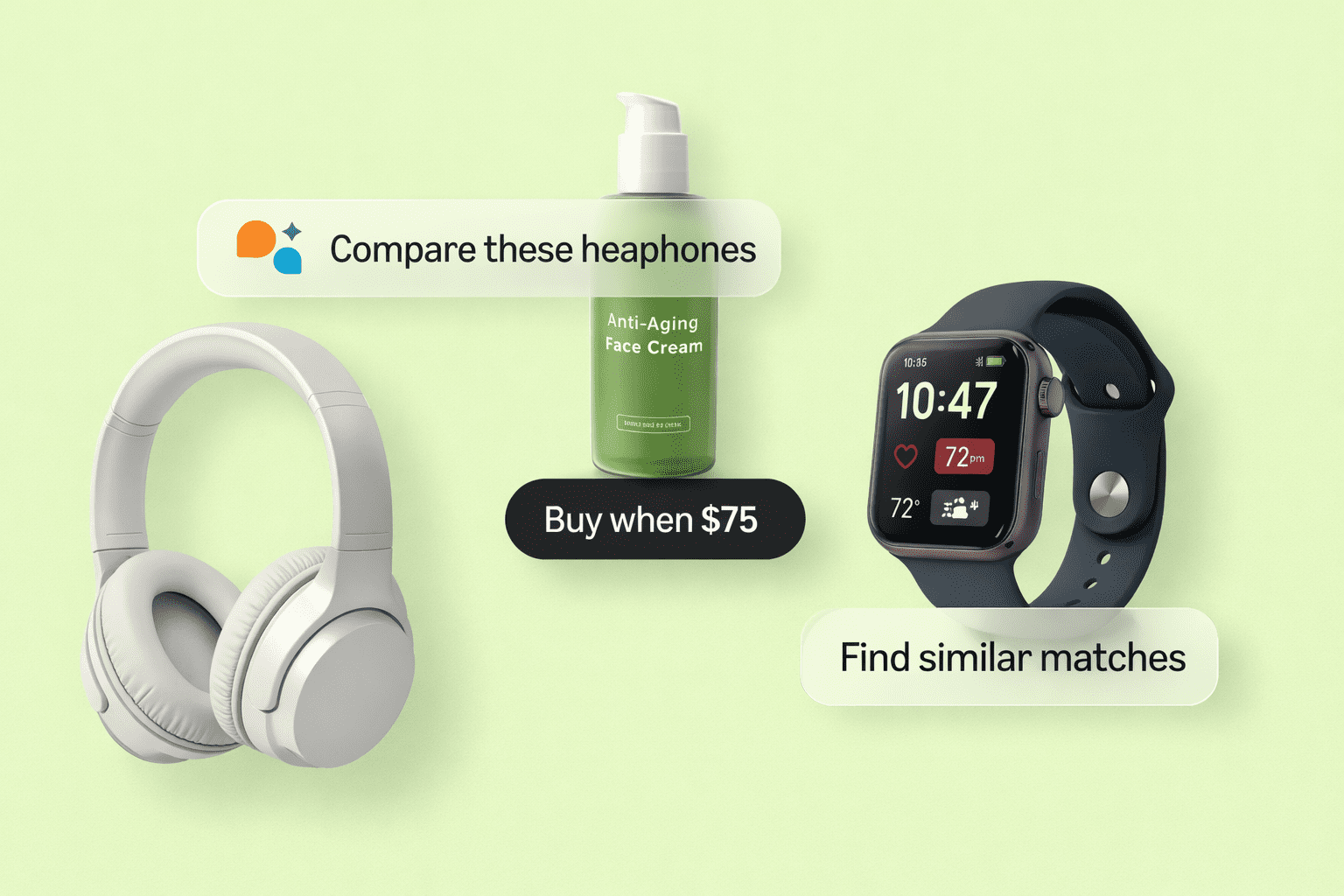


Amazon’s AI shopping assistant Rufus is fundamentally changing how customers search, compare, and purchase products on Amazon. Rather than typing simple short-tail keywords like “walking stick” or “wireless headphones,” shoppers can now ask full conversational questions such as “What is the best lightweight walking stick for elderly travel?” or “Which headphones have the best battery life for long flights?” Rufus then analyzes product listings, reviews, structured data, Q&A content, and other contextual signals to recommend the products that most accurately answer the shopper’s intent.
For Amazon sellers, this means traditional listing optimization is no longer enough. Ranking for keywords alone does not guarantee visibility in Rufus recommendations. Your product listing must now function as a complete answer source, clearly explaining your product’s features, benefits, use cases, and buyer suitability in language that Amazon’s AI can understand and match to shopping questions.
What Are Rufus AI Shopping Questions?
Rufus AI shopping questions are natural-language product queries submitted by Amazon customers through Amazon’s AI shopping assistant. These questions are typically more detailed, specific, and intent-driven than standard search terms because shoppers use conversational phrasing when interacting with AI. Rather than searching for broad product names, customers describe their exact needs, intended use, pain points, and preferences.
For example, instead of searching “walking cane,” a buyer may ask “What is the best foldable walking cane for elderly people who travel frequently?” This gives Amazon significantly more context about what the customer actually wants. Rufus then evaluates listings to determine which product best satisfies those needs. Sellers who structure listings to answer these detailed queries directly will have a substantial advantage in AI-driven search visibility.
Why Traditional Amazon SEO Is No Longer Enough
Traditional Amazon SEO has historically focused on keyword indexing, backend search terms, PPC ranking velocity, and exact-match optimization. While those factors still matter, Rufus introduces a new semantic layer to Amazon search by evaluating contextual relevance rather than simple keyword presence.
This means your product can rank organically for a keyword but still fail to appear in Rufus recommendations if your listing does not clearly explain why the product is relevant to the shopper’s question. A competitor with better contextual content—even with weaker keyword rankings—may be chosen instead because Rufus sees their listing as the better answer. The future of Amazon SEO is no longer just about indexing; it is about intent satisfaction.
How Rufus Evaluates Product Listings
Amazon Rufus pulls data from multiple areas of your product detail page to understand your product comprehensively. Each part of your listing contributes semantic signals that help Amazon determine whether your product should be recommended for a particular shopping question.
Product Title
Your product title is one of the first elements Rufus analyzes to determine what your product is, who it is intended for, and what primary value it offers. A title overloaded with repetitive keywords can reduce clarity, making it harder for AI to interpret your product accurately. Instead, your title should clearly communicate product type, core feature, intended user, and primary benefit in a readable format.
A well-optimized title helps Rufus understand your listing at a high level before it evaluates deeper contextual content throughout the rest of the page.
Bullet Points
Bullet points are among the most important Rufus optimization elements because they provide structured feature and benefit explanations. Rufus uses bullet points to understand what the product does, how it helps, why it matters, and which buyers it suits.
Thin, generic bullet points provide weak semantic value. Expanded benefit-driven bullets that explain features in context help Rufus connect your product to specific buyer questions more effectively.
Product Description
The product description allows sellers to provide deeper explanatory context in paragraph form. This helps Rufus understand broader use cases, nuanced benefits, and supplemental information that may not fit into bullet points.
Descriptions are particularly valuable for addressing complex shopping questions and adding educational content about product applications.
A+ Content
A+ Content provides enhanced semantic depth by allowing sellers to expand on features, include comparisons, educate shoppers, and reinforce product positioning. While many sellers use A+ only for branding, it can also strengthen Rufus optimization when used strategically.
Detailed A+ modules can provide additional contextual signals that improve AI understanding.
Customer Reviews
Customer reviews give Rufus real-world validation of your product’s claims. If multiple buyers mention that your product is lightweight, easy to fold, durable, or ideal for travel, Rufus may use those recurring review themes to strengthen recommendation confidence.
Reviews also help Amazon understand subjective attributes that sellers may not emphasize enough in listing content.
Q&A Section
The customer Q&A section contains direct buyer concerns and answers, making it highly valuable for Rufus. Questions asked here often mirror the exact phrasing shoppers use when speaking to AI assistants.
Optimizing and monitoring Q&A can provide powerful insight into which concerns your listing should address more clearly.
15 Advanced Ways to Optimize for Rufus AI Shopping Questions
1. Research Real Customer Shopping Questions Before Writing
Effective Rufus optimization begins with understanding the exact questions customers ask before buying. If you do not know what concerns drive the purchase decision, you cannot create content that answers them.
Research customer questions by reviewing competitor listings, Amazon Q&A sections, search term reports, customer support tickets, reviews, and Rufus prompts on similar products. This research reveals the specific language, objections, and pain points buyers care about most.
When you understand the questions customers ask, you can structure your listing around answering those questions directly.
2. Turn Bullet Points Into Direct Answers
Each bullet point should function as a response to a potential shopping question rather than merely listing a product feature.
For example, instead of writing “Foldable Design,” explain why the foldable design matters, how it helps the customer, and when it is useful.
A stronger bullet might explain that the walking stick folds compactly for luggage, handbags, and travel convenience. This gives Rufus far more context and aligns your listing with travel-related shopping queries.
3. Expand Every Feature Into Benefits and Context
A raw specification such as “Adjustable Height” has limited semantic value. However, when expanded into a full explanation—such as how adjustable height improves posture, comfort, and fit across different user heights—it provides much stronger contextual understanding.
Every feature in your listing should explain:
- What the feature is
- Why it matters
- How it helps
- Who benefits from it
- When it is useful
This transforms generic content into intent-rich semantic content.
4. Use Problem-Solution Language
Many shoppers ask Rufus questions based on pain points rather than features. They may ask which product reduces discomfort, improves safety, or solves a specific issue.
Your listing should therefore frame features as solutions to customer problems. Instead of only describing what the product has, explain what issue it solves and how it improves the customer’s experience.
Problem-solution phrasing aligns strongly with buyer intent and AI recommendations.
5. Add Detailed Use Cases Throughout Listing
Products are often purchased for specific situations. Rufus evaluates whether your product is relevant to the customer’s intended scenario, so your listing should mention all appropriate use cases.
For a walking stick, this may include:
- Daily mobility support
- Indoor walking
- Outdoor walking
- Travel and commuting
- Post-surgery recovery
- Holiday trips
Each additional use case increases the number of shopping questions your listing may match.
6. Clearly State Target Audience
If your listing does not explain who the product is for, Rufus may struggle to match it to audience-based shopping questions.
Explicitly mention who the product is designed for, such as elderly adults, seniors, men, women, disabled users, or people recovering from surgery.
Clear audience targeting improves recommendation accuracy.
7. Include FAQ-Style Content in Descriptions
FAQ-style formatting helps Rufus identify direct answers to common customer questions. Including sections that explicitly answer buyer concerns improves your listing’s conversational relevance.
This can include answers to:
- Is the product travel friendly?
- Can it be used outdoors?
- What height range does it support?
- Is assembly required?
Direct answers improve semantic clarity.
8. Optimize for Long-Tail Conversational Keywords
Since Rufus processes natural language, long-tail conversational phrases should be integrated naturally into your listing.
Rather than focusing only on short keywords, include phrases resembling how customers actually ask shopping questions.
This broadens your reach for conversational AI-driven discovery.
9. Complete Every Structured Attribute
Structured catalog data helps Amazon understand your product at a technical level. Missing attributes reduce recommendation quality.
Ensure all relevant fields are completed accurately in Seller Central, including dimensions, weight, material, intended audience, indoor/outdoor use, portability, and compatibility.
Complete data improves structured relevance.
10. Encourage Detailed Reviews That Reinforce Buying Factors
Reviews often contain natural language descriptions of what buyers valued most about the product. Encouraging customers to leave detailed feedback helps reinforce the same themes you want Rufus to recognize.
The more customers naturally mention portability, durability, comfort, and travel friendliness, the stronger those semantic associations become.
11. Use A+ Content Strategically
Many sellers treat A+ Content as branding-only space. However, Rufus can benefit from the additional context A+ provides when it includes educational and descriptive content.
Use A+ to expand on:
- Product comparisons
- Use-case breakdowns
- Feature explanations
- Buyer suitability
- Setup instructions
This improves semantic depth.
12. Analyze Competitor Rufus Recommendations
Search your product category using Rufus and study which competitor listings appear. Analyze their content to understand what signals Amazon may be prioritizing.
Look for patterns in:
- Bullet formatting
- Review themes
- Use-case language
- Audience targeting
- Feature explanations
Then improve your own listing strategically.
13. Keep Updating Listings Based on New Customer Data
Buyer behavior evolves over time. New objections, preferences, and trends emerge constantly.
Treat listing optimization as ongoing rather than one-time work. Update content regularly based on:
- New reviews
- Q&A trends
- PPC data
- Competitor shifts
- Seasonal demand changes
Frequently Asked Questions About Rufus AI Optimization
Does Rufus Read Bullet Points and Descriptions?
Yes. Rufus analyzes both bullet points and product descriptions to understand features, benefits, use cases, and relevance.
Can Customer Reviews Impact Rufus Recommendations?
Yes. Reviews provide valuable semantic and trust signals that can reinforce product relevance.
Does A+ Content Help With Rufus?
Yes. A+ Content adds contextual depth and can improve Amazon’s understanding of your product
Should I Rewrite My Entire Listing?
Not always, but most sellers benefit significantly from rewriting weak, thin, or outdated content
How Often Should Listings Be Updated?
Ideally every 30–60 days or whenever significant new customer data becomes available.
Can I See How My Competitors Rank in Rufus Recommendations?
Yes. Searching your product category directly in Rufus shows which competitor listings get recommended, letting you study their bullet formatting, review themes, and use-case language.
Do Backend Structured Attributes Affect Rufus Recommendations?
Yes. Complete Seller Central attributes like dimensions, material, and intended use give Rufus additional structured context beyond just title and bullet text.
Final Thoughts
Optimizing your listing for Rufus AI shopping questions means building content that directly answers buyer concerns rather than simply targeting keywords. The listings that perform best in the future of Amazon search will be those that provide the clearest, most detailed, and most context-rich answers to shopper needs.
Winning with Rufus requires sellers to think beyond ranking and focus on becoming the best answer for the customer.