

Amazon FBA has transformed how businesses scale online, but success today requires more than just listing products. With rising competition and smarter algorithms, sellers must adopt a data-driven Amazon FBA growth strategy that focuses on visibility, conversion, and long-term scalability.
If you want to understand how to grow your Amazon FBA business, you need to build a system—not just tactics. The sellers who dominate Amazon are those who combine product sourcing, keyword optimization, conversion rate optimization, and advertising strategies into one cohesive growth engine.
With billions of monthly shoppers on Amazon, the opportunity is massive—but only for those who execute correctly. This guide will break down the most effective strategies to help you increase Amazon sales, improve rankings, and build a profitable FBA business.
What is Amazon FBA Growth Strategy?
Amazon FBA growth strategy is a structured approach to increasing sales and profitability by optimizing product sourcing, listings, advertising, pricing, and customer experience.
Amazon FBA Growth Formula
Amazon Growth = Traffic × Conversion Rate × Product Selection × Scaling
This formula explains why many sellers fail. Even if you have traffic, poor product selection or low conversion rate will limit growth. True success comes from optimizing all four elements simultaneously.
Step-by-Step Amazon FBA Growth Strategy
Step 1: Product Research & Sourcing Strategy
The success of your Amazon FBA business starts with selecting the right products. No amount of optimization can fix a poor product choice.
A strong product research strategy focuses on identifying products that have high demand, low competition, and strong profit margins. Instead of chasing trending products blindly, successful sellers analyze data such as Best Sellers Rank (BSR), sales velocity, and historical trends.
Long-term growth requires building a repeatable sourcing system. This includes identifying reliable suppliers, analyzing product performance, and continuously adding new high-potential products to your inventory.
Additionally, expanding your supplier network allows you to diversify your product range and reduce risk. Sellers who rely on limited inventory often struggle to scale, while those with a broad product portfolio capture more market demand.
Step 2: Amazon Listing Optimization
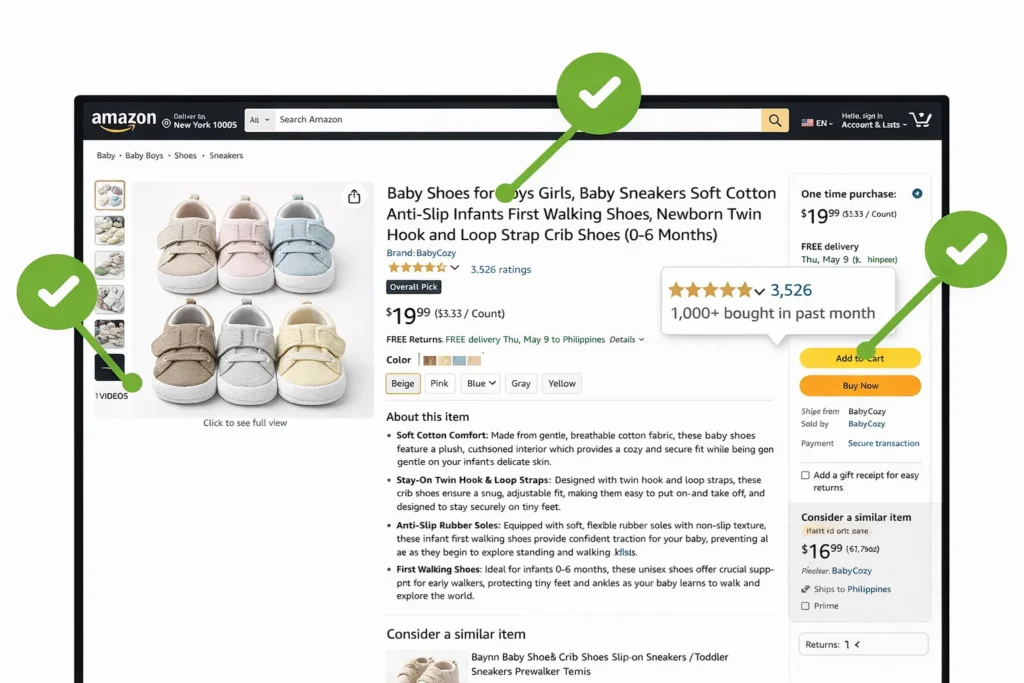
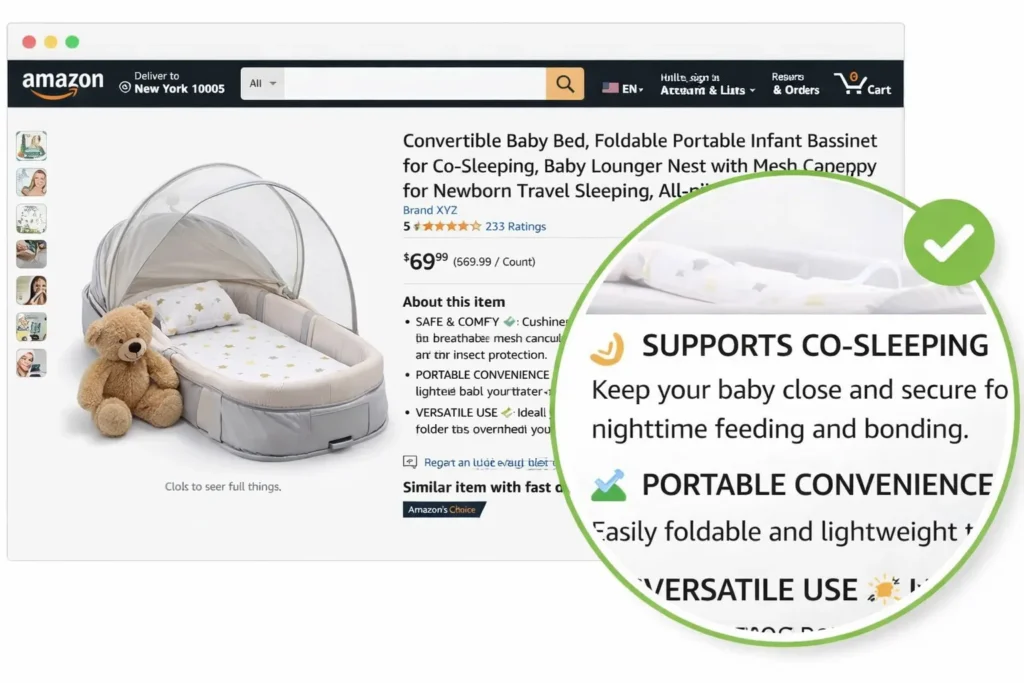
Once you have the right product, the next step is optimizing your listing for both visibility and conversion. This is where Amazon SEO and conversion rate optimization come together.
Your product title should include primary keywords while remaining clear and readable. Bullet points should highlight benefits rather than features, helping customers understand the value of the product quickly.
Images play a crucial role in conversion. High-quality visuals that demonstrate product usage, benefits, and differentiation can significantly improve click-through and conversion rates.
Backend keywords allow you to target additional search terms without affecting readability. Including synonyms, variations, and related keywords helps expand your reach.
Ultimately, a well-optimized listing ensures that your product not only ranks higher but also converts traffic into sales efficiently.
Step 3: Traffic Generation Strategy
Traffic is essential for growth. Without visibility, even the best product will not generate sales.
Amazon provides two primary traffic sources: organic and paid.
Organic traffic comes from Amazon SEO, where your product ranks for relevant keywords. Paid traffic comes from Amazon PPC, which allows you to target specific keywords and appear in sponsored positions.
In addition to Amazon traffic, external sources such as Google SEO, social media, and influencer marketing can significantly boost visibility. Amazon increasingly rewards external traffic because it brings new customers to the platform.
A strong traffic strategy combines all these channels to create a consistent flow of visitors.
Step 4: Amazon PPC & Sales Velocity Strategy
Amazon PPC is one of the fastest ways to increase sales and improve ranking. By running targeted ad campaigns, you can generate initial sales velocity, which is a key ranking factor.
A successful PPC strategy involves identifying high-performing keywords, optimizing bids, and continuously refining campaigns based on performance data.
As your product gains traction, PPC helps maintain visibility and supports organic ranking growth. Over time, this reduces dependency on ads and improves profitability.
Step 5: Amazon Conversion Rate Optimization (CRO)
Driving traffic is only part of the equation. To maximize sales, you must optimize your listing to convert visitors into buyers.
Conversion rate optimization involves improving every element of your listing:
- Images that clearly show product benefits
- Bullet points that solve customer problems
- Competitive pricing
- Strong reviews and ratings
Customers make decisions quickly. If your listing is unclear or unconvincing, they will move to a competitor. A high-converting listing ensures that every visitor has a higher chance of becoming a buyer.
Step 6: Pricing & Buy Box Strategy
Pricing plays a critical role in both conversion and ranking. Amazon’s algorithm favors products that are competitively priced because they are more likely to sell.
Winning the Buy Box is essential for increasing sales. This requires a balance between competitive pricing, strong seller performance, and fast shipping.
Dynamic pricing strategies help maintain competitiveness without sacrificing profitability.
Step 7: Inventory & Supply Chain Management
Inventory management is often overlooked but is crucial for growth. Running out of stock can negatively impact ranking and sales velocity.
To avoid this, sellers must forecast demand accurately and maintain consistent inventory levels. Using FBA ensures faster shipping and better customer experience, which also improves ranking.
Advanced Amazon FBA Growth Strategies
1. Product Expansion Strategy
Adding new products allows you to capture more market share and increase revenue streams. Successful sellers continuously expand their product portfolio.
2. Competitor Analysis Strategy
Analyzing competitors helps identify trends, pricing strategies, and product opportunities. This reduces guesswork and improves decision-making.
3. Promotions & Deals Strategy
Promotions such as coupons, lightning deals, and discounts increase visibility and sales velocity. They are especially effective during product launches and seasonal events.
4. External Traffic Strategy
Driving traffic from Google, YouTube, and social media improves ranking and diversifies your growth channels.
Amazon FBA Business Model Explained
Understanding the Amazon FBA model is essential before scaling. Fulfillment by Amazon allows sellers to outsource storage, packaging, and shipping to Amazon, enabling them to focus on growth strategies rather than logistics.
This model improves customer experience through fast delivery, Prime eligibility, and reliable service. As a result, products fulfilled by Amazon tend to have higher conversion rates and better rankings.
For sellers aiming to scale, FBA provides a strong foundation because it simplifies operations and allows you to focus on optimization, marketing, and expansion.
Amazon FBA Profit Optimization Strategy
Increasing sales is important, but profitability is what sustains your business.
To improve profit:
- Reduce FBA fees through better packaging
- Optimize shipping and sourcing costs
- Focus on high-margin products
- Improve conversion rate to reduce ad spend
A profitable business is not just about revenue—it’s about maximizing return on investment.
Common Mistakes That Limit Amazon Growth
- Choosing low-demand products
- Ignoring keyword optimization
- Poor listing quality
- Weak PPC strategy
- Inconsistent inventory
Avoiding these mistakes is essential for long-term success.
Amazon FBA Profit Optimization Strategy
To increase profit:
- Reduce FBA fees
- Optimize sourcing costs
- Focus on high-margin products
- Improve conversion rates
Profitability ensures long-term sustainability.
FAQs
How to grow Amazon FBA business?
Focus on product research, listing optimization, PPC advertising, and conversion rate improvement.
What is the best Amazon FBA growth strategy?
A combination of SEO, PPC, product sourcing, and customer experience optimization.
How to increase Amazon FBA sales?
Increase traffic, improve conversion rate, and scale high-performing products.
How to scale Amazon FBA?
Expand product range, optimize listings, and use data-driven strategies.
Final Thoughts
Building a successful Amazon FBA growth strategy requires a long-term mindset. It is not about quick wins but about creating a system that consistently improves performance.
The sellers who win are those who:
- Focus on data-driven decisions
- Optimize continuously
- Scale strategically