

Why Single Keyword SEO No Longer Works
Many Amazon sellers still follow outdated strategies where they try to rank for one primary keyword and build their entire listing around it. However, Amazon’s algorithm has evolved significantly, and this approach is no longer effective.
Today, Amazon evaluates listings based on how well they perform across multiple related keywords, not just a single search term. This means your product must demonstrate relevance across an entire group of keywords that represent the same buyer intent.
For example, a product may not rank well if it only targets “phone mount,” but if it performs well across related terms like “car phone holder,” “dashboard phone stand,” and “magnetic phone mount,” Amazon recognizes it as a strong match for that category.
This shift makes Amazon keyword clustering essential. Instead of focusing on one keyword, you build a system that targets a full keyword ecosystem. This increases visibility, improves conversion rates, and reduces dependency on paid ads.
In simple terms:
Single keyword = limited growth
Keyword clusters = scalable growth system
What is Amazon Keyword Clustering?
Amazon keyword clustering is the process of grouping similar keywords based on search intent and meaning, then strategically targeting them within a single product listing.
For example:
- amazon seo strategy
- amazon seo strategy for brands
- amazon seo for private label
All these keywords belong to the same cluster because they reflect the same user intent, even though the wording is slightly different.
Instead of treating each keyword separately, clustering allows you to optimize your listing for the entire group.
This improves:
- Keyword coverage
- Listing relevance
- Ranking potential
It also helps avoid keyword duplication and confusion in your listing structure.
Why Keyword Clustering is Important
Amazon does not rank listings based on a single keyword anymore. Instead, it evaluates:
- How relevant your listing is across multiple keywords
- How well your listing converts (CVR)
- How many sales you generate from those keywords
When your product performs well across a cluster of related keywords, Amazon sees it as a strong, reliable result for that search category.
This leads to:
- Higher rankings
- Increased organic traffic
- More consistent sales
Another key benefit is reduced dependency on PPC. When your listing ranks organically for multiple keywords, you spend less on ads, improving your Amazon TACoS optimization.
This is why keyword clustering is a core part of
Amazon SEO vs PPC strategy
Types of Keyword Clusters
Primary Keywords
Primary keywords are high-volume search terms that define your product category. These keywords bring the most traffic but are highly competitive.
For example:
- “phone mount”
- “car phone holder”
These keywords should be used carefully in your title because they strongly influence ranking and visibility.
However, relying only on primary keywords is risky because competition is high.
Secondary Keywords
Secondary keywords have moderate search volume but clearer intent. These keywords help expand your reach and improve ranking stability.
They often include:
- Slight variations
- More descriptive phrases
- Mid-intent searches
These keywords are ideal for bullet points and product descriptions.
Long-Tail Keywords
Long-tail keywords are highly specific and usually have lower search volume but higher conversion rates.
For example:
- “magnetic phone mount for dashboard”
- “phone holder for Uber drivers”
These keywords attract customers who are ready to buy.
Long-tail keywords are essential for:
- Higher CVR
- Better targeting
- Stronger indexing
How Amazon Keyword Clustering Works
Amazon’s algorithm evaluates how your listing performs across multiple related keywords. If your product consistently generates clicks and sales for a group of keywords, Amazon increases your ranking across that entire cluster.
This means:
- More keyword coverage = more visibility
- More sales across keywords = stronger ranking signals
For example, if your product converts well for 10 related keywords, Amazon may push your ranking higher even for competitive terms within that cluster.
This creates a compounding effect:
More keywords → more sales → higher ranking → more traffic
Step-by-Step Amazon Keyword Clustering Strategy (Detailed)
Step 1: Keyword Research
Start by building a large keyword list (50–100+ keywords minimum). Use tools like Helium 10 or Amazon search suggestions.
Focus on:
- Buyer intent keywords
- Competitor keywords
- Long-tail variations
This ensures strong Amazon keyword indexing
Step 2: Group Keywords by Intent
Group keywords based on meaning and intent, not just similar words.
For example:
- “best phone mount” → research intent
- “magnetic phone mount for car” → purchase intent
Grouping by intent improves relevance and conversion.
Step 3: Listing Optimization
Distribute keywords across your listing:
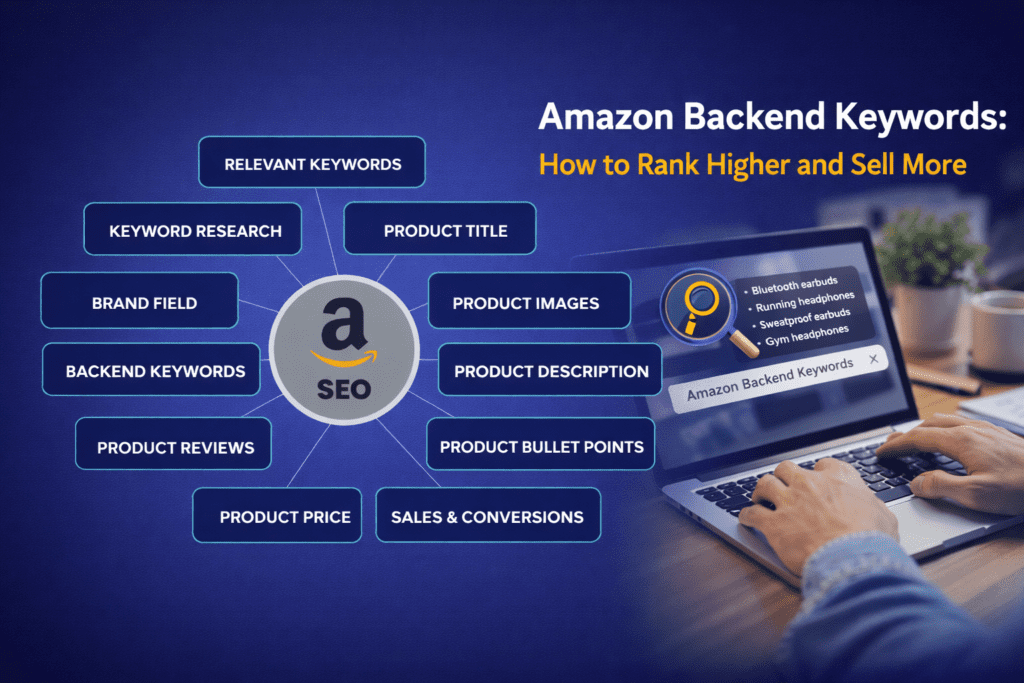
- Title → primary keywords
- Bullet points → secondary keywords
- Backend → long-tail keywords
Avoid keyword stuffing and maintain readability.
Balanced placement improves both SEO and conversion.
Step 4: Monitor and Optimize
Keyword clustering is not a one-time setup. You must track:
- Which keywords generate sales
- Which keywords drive traffic
- Which keywords underperform
Update clusters regularly based on performance data.
How Does Keyword Clustering Improve Amazon PPC Campaigns?
Amazon keyword clustering transforms disorganized PPC campaigns into structured, high-performing systems by grouping keywords based on intent. Instead of running large campaigns with mixed keywords, clustering allows you to create focused ad groups where each group targets a specific keyword cluster. This makes bid optimization more accurate and improves overall campaign efficiency.
When different intent keywords are placed in the same ad group, performance data becomes unclear. For example, a keyword with high conversion intent behaves very differently from a research-based keyword. If both are combined, you cannot set the right bid or understand what is actually working. This leads to wasted spend and poor optimization decisions.
A better approach is to separate keywords into clusters based on buyer intent. For instance, a brand defense cluster that includes branded search terms requires aggressive bidding because these users are already familiar with your product. On the other hand, mid-funnel keywords like “best phone mount for car” need moderate bids and focus on comparison-based intent. Similarly, upper-funnel keywords such as “phone keeps falling in car” should be treated as discovery terms with lower bids, as these users are still exploring solutions.
This structured approach allows you to align your bidding strategy with user intent. Instead of applying a single strategy across all keywords, you can optimize each cluster individually, leading to better control over performance metrics like CTR, CVR, and ACoS.
Industry best practices suggest that each cluster-based ad group should contain around 25 to 60 keywords. If you use too few keywords, your campaign may not generate enough traffic. If you include too many, relevance decreases and optimization becomes difficult. Maintaining this balance ensures both reach and efficiency.
Another major advantage of keyword clustering in PPC is simplified management. When a cluster underperforms, you can adjust the entire group strategy instead of analyzing hundreds of individual keywords. This saves time and makes scaling easier.
Keyword Clustering + Ranking Model
Amazon ranking depends on:
Ranking = Relevance + Sales Velocity + CVR
Keyword clustering improves:
- Relevance → by covering multiple keywords
- Sales velocity → by increasing traffic
- CVR → by targeting the right audience
This creates a strong ranking system.
Keyword Clustering + TACoS Impact
Keyword clustering directly impacts profitability.
- More keywords ranked → more organic traffic
- More organic traffic → less reliance on ads
- Less ad spend → lower TACoS
This is critical for Amazon TACoS optimization
Amazon SEO vs PPC Strategy
PPC and SEO work together in keyword clustering:
- PPC helps discover high-performing keywords
- SEO helps rank organically
- Clustering expands keyword coverage
This creates a hybrid growth system.
Common Amazon Keyword Clustering Mistakes
1. Grouping Keywords by Volume Instead of Intent
Many sellers group keywords based on search volume, assuming similar numbers mean similar intent. However, keywords with the same volume can represent completely different buyer stages. This creates confusion in your listing and reduces relevance.
Fix: Always group keywords based on buyer intent (research, comparison, purchase). This improves targeting, increases conversion rate (CVR), and strengthens your Amazon SEO performance.
2. Keyword Stuffing in Listing
A common mistake is adding too many keywords into the title and bullets without structure. This makes the listing look unnatural and reduces readability, which negatively affects CTR and customer trust.
Fix: Use a structured approach—place primary keywords in the title, secondary keywords in bullets, and long-tail keywords in backend. Focus on clarity and conversion, not just keyword count.
3. Ignoring Long-Tail Keywords
Many sellers only target high-volume keywords and ignore long-tail keywords. This limits visibility and misses high-intent buyers who are more likely to convert.
Fix: Include long-tail keywords in your clustering strategy. These keywords improve conversion rates, help faster ranking, and support Amazon TACoS optimization by reducing ad dependency.
4. Mixing All Keywords in One PPC Campaign
Running all keywords in one PPC campaign creates poor targeting and inaccurate data. It becomes difficult to optimize bids and control performance.
Fix: Use cluster-based PPC campaigns. Separate keywords by intent and create focused ad groups. This improves CTR, CVR, and reduces wasted ad spend.
5. Not Updating Keyword Clusters
Keyword trends and competition change over time, but many sellers treat clustering as a one-time task. This leads to outdated strategies and declining performance.
Fix: Regularly review and update your keyword clusters based on performance data, seasonality, and market trends. Continuous optimization keeps your listing competitive.
6. Ignoring Backend Search Terms
Backend keywords are often underused or filled with duplicate terms. This reduces keyword coverage and limits indexing potential.
Fix: Use backend search terms to add unique, long-tail keywords that are not already in your listing. This improves Amazon keyword indexing and visibility.
7. Keyword Cannibalization
When similar keywords are used without proper clustering, they compete within the same listing. This weakens ranking signals and reduces overall performance.
Fix: Assign clear roles to each keyword cluster and avoid overlap. Each cluster should target a specific intent and section of the listing.
8. Focusing Only on Keywords, Not Conversion
Many sellers optimize keywords but ignore listing quality. Even with good keywords, low conversion rates will hurt ranking.
Fix: Improve images, reviews, A+ content, and pricing. A strong conversion rate boosts both SEO and PPC performance.
Keyword Clustering Benchmarks
- 50–100 keywords → strong coverage
- 20–50 keywords → moderate
- Below 20 → weak
More relevant keywords = more ranking opportunities
Keyword Clustering Growth Loop
Keywords → Clusters → Ranking → Sales → More Keywords → Growth
This loop drives long-term organic growth and scalability.
Frequently Asked Questions
What is Amazon keyword clustering?
It is grouping keywords based on intent to improve ranking.
How many clusters should I create?
Typically 5–8 clusters per listing.
Does keyword clustering improve PPC?
Yes, it improves targeting and reduces wasted spend.
How often should I update clusters?
Every 2–3 months.
Conclusion
Amazon keyword clustering is not just a tactic—it is a system. Instead of focusing on individual keywords, you build a structured approach that improves visibility, conversion, and profitability.
To succeed:
- Focus on keyword intent
- Optimize listing structure
- Monitor performance
- Combine SEO with PPC
Strong clustering leads to higher ranking, more traffic, and sustainable growth.