

f you’re asking “why my product is not indexing amazon”, you’re already facing one of the most critical issues in Amazon SEO. Indexing is the foundation of visibility—if your product is not indexed, it simply cannot rank, no matter how optimized your listing looks.
Many sellers assume adding keywords automatically guarantees indexing, but Amazon’s A9 algorithm works differently. It evaluates relevance, performance signals, and listing quality before deciding whether your product should be indexed for a keyword. This means indexing is not just about keywords—it’s about how well your entire listing aligns with search intent and user behavior.
What is Amazon Indexing?
Amazon indexing is the process by which Amazon’s algorithm associates your product listing with specific search terms. Once indexed, your product becomes eligible to appear in search results when customers use those keywords.
However, indexing does not guarantee ranking. It simply means your product is recognized for that keyword. Ranking depends on performance metrics like CTR, conversion rate, and sales velocity. This is why amazon indexing and ranking strategy must always work together.
How to Check If Your Product is Indexed
To identify indexing issues, you must first verify whether your product is indexed.
The most effective method is:
- Search using ASIN + keyword
If your product appears, it is indexed. If not, it means Amazon has not recognized your listing for that keyword.
For deeper analysis, you can use tools like Helium 10 or SellerApp to track keyword indexing across multiple terms. This helps you identify gaps in your amazon keyword indexing strategy.
Why My Product Is Not Indexing Amazon
1. Keywords Not Properly Placed in Listing
Keyword placement plays a major role in indexing. Amazon gives more importance to certain sections such as the title, bullet points, and backend search terms.
If your keywords are only placed in less important areas or missing from key sections, Amazon may ignore them. Additionally, improper formatting or unnatural keyword insertion can reduce effectiveness.
A strong amazon listing optimization strategy ensures keywords are distributed naturally across all high-impact sections, increasing the chances of indexing.
2. Low Keyword Relevance and Context Mismatch
Amazon’s algorithm is highly focused on relevance. If your keywords do not closely match your product’s category, features, or use case, they may not be indexed.
For example, adding broad or unrelated keywords in an attempt to capture more traffic often backfires. Amazon prioritizes listings that clearly match user intent, so irrelevant keywords are filtered out.
This is why understanding search intent and keyword relevance is essential for successful indexing.
3. New Listing and Indexing Delay
New listings often experience a delay in indexing. Amazon needs time to crawl and process your listing data.
In most cases:
- Basic indexing happens within 24–72 hours
- Competitive keywords may take longer
During this phase, your listing may not appear for many keywords, which is normal. However, if indexing does not improve over time, it indicates deeper issues.
4. No Sales, Traffic, or Engagement Signals
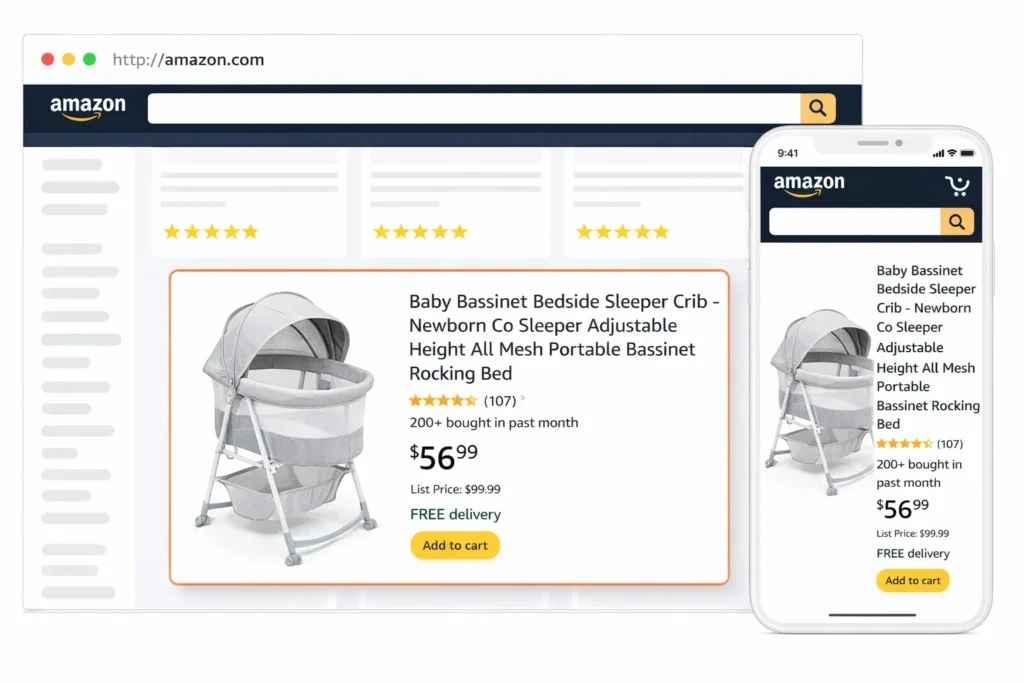
Amazon heavily relies on performance data. If your product has no sales, low CTR, or minimal traffic, the algorithm may not prioritize indexing it for competitive keywords.
This happens because Amazon wants to show products that are likely to convert. Without performance signals, your listing lacks credibility in the algorithm’s eyes.
This is where amazon ppc for indexing becomes important. Running ads can generate initial traffic and help trigger indexing.
5. Backend Keywords Not Fully Utilized
Backend search terms are one of the most underutilized areas in Amazon SEO. These hidden keywords help Amazon understand your product better without affecting front-end readability.
If backend keywords are:
- Empty
- Repetitive
- Poorly structured
You lose a major indexing opportunity.
A well-optimized backend improves your amazon keyword indexing strategy and expands your keyword reach.
6. Keyword Stuffing and Over-Optimization
While keywords are important, overusing them can harm your listing. Keyword stuffing creates unnatural content, which can confuse Amazon’s algorithm.
Instead of improving indexing, excessive repetition may:
- Reduce readability
- Lower trust
- Limit keyword recognition
Amazon prefers clean, structured, and natural content that aligns with user experience.
7. Suppressed or Incomplete Listing
If your listing is suppressed or missing critical information, it may not be indexed properly.
Common issues include:
- Missing images
- Incomplete product attributes
- Policy violations
Amazon prioritizes complete and compliant listings, so ensuring your listing is fully optimized is essential.
8. Incorrect Category or Product Type
Category selection directly affects indexing. If your product is listed in the wrong category, Amazon may not show it for relevant searches.
Each category has its own keyword ecosystem, so placing your product incorrectly limits its visibility.
9. Targeting Highly Competitive Keywords
Highly competitive keywords require strong performance signals. If your product is new or lacks sales history, it may not get indexed for these keywords.
Starting with long-tail keywords helps build initial traction and improves your chances of indexing.
10. Poor Listing Quality and Conversion Rate
Amazon favors listings that convert well. If your listing has poor images, weak copy, or unclear value proposition, it may struggle to get indexed.
This is because Amazon wants to show products that provide a good customer experience.
How to Fix Amazon Indexing Issues
To fix indexing problems, you need a combination of SEO and performance optimization.
Start by optimizing your listing with properly placed keywords in the title, bullet points, and backend. Ensure all keywords are relevant and aligned with your product.
Next, improve your listing quality by adding high-quality images, clear descriptions, and strong A+ content. This increases engagement and conversion rate.
Running PPC campaigns is also essential. Target exact match keywords to generate traffic and send positive signals to Amazon’s algorithm.
Focusing on long-tail keywords helps you gain indexing faster and build authority gradually.
Advanced Amazon Indexing Strategy
For advanced results, combine multiple strategies:
- Use keyword grouping for better structure
- Track indexing performance regularly
- Update listings based on data
- Scale winning keywords
This creates a strong amazon indexing and ranking system.
Common Mistakes That Kill Indexing
Many sellers unknowingly block their own indexing by making common mistakes such as using irrelevant keywords, overloading listings with too many keywords, ignoring backend search terms, and not running PPC campaigns.
Avoiding these mistakes is just as important as optimization.
FAQs: Why My Product Is Not Indexing Amazon
Why is my product not indexing on Amazon even after adding keywords?
Your product may not be indexing because Amazon does not consider your keywords relevant enough. Simply adding keywords is not enough—your listing must match search intent, include proper keyword placement in title and bullets, and have good performance signals like CTR and sales. Without relevance and engagement, Amazon may ignore those keywords.
How long does it take for a product to get indexed on Amazon?
Amazon indexing usually takes 24–72 hours for new listings, but for competitive keywords, it can take longer. In some cases, indexing depends on performance signals such as traffic and conversions, so new products may take more time to get indexed properly.
Can Amazon PPC help with keyword indexing?
Yes, Amazon PPC plays a major role in indexing. Running ads on target keywords brings traffic and engagement, which signals Amazon that your product is relevant. This increases the chances of your product getting indexed for those keywords.
Why are some keywords indexed and others not?
Amazon indexes only those keywords that are highly relevant to your product. If some keywords are too broad, unrelated, or highly competitive, they may not get indexed. Proper keyword grouping and relevance are essential for consistent indexing.
Do backend keywords help with Amazon indexing?
Yes, backend keywords are very important for indexing. They allow you to add additional search terms without affecting your visible content. However, they must be relevant, unique, and not repeated. Proper backend optimization improves your overall amazon keyword indexing strategy.
Can too many keywords stop indexing?
Yes, keyword stuffing can negatively affect indexing. Adding too many keywords or repeating them excessively makes your listing look unnatural and can confuse Amazon’s algorithm. A clean and structured keyword strategy works better than overloading your listing.
Why is my product indexed but not ranking?
Indexing and ranking are different. If your product is indexed but not ranking, it means Amazon recognizes your product for that keyword but does not consider it competitive enough. You need better CTR, conversions, and sales to improve ranking.
How can I fix Amazon indexing issues quickly?
To fix indexing issues, optimize your listing with proper keyword placement, improve relevance, update backend keywords, and run PPC campaigns to generate traffic. Focusing on long-tail keywords first can also help you gain faster indexing.
Conclusion
Understanding why my product is not indexing amazon is the first step toward fixing the problem. Indexing is not just about adding keywords—it is about relevance, performance, and optimization.
To succeed:
- Focus on keyword relevance
- Optimize your listing structure
- Drive traffic through PPC
- Continuously improve performance
When done correctly, indexing leads to ranking—and ranking leads to sales.