
Amazon has become the largest eCommerce marketplace in the world, attracting millions of entrepreneurs who want to build profitable online businesses. With more than 9 million sellers globally, the platform is filled with opportunity—but also with plenty of hype.
One trend that has gained massive attention recently is “Amazon automation.”
Many services claim they can build and manage an entire Amazon store for you while you sit back and earn passive income. These offers often promise fully automated operations, from product research and supplier sourcing to order fulfillment and customer service.
But this raises an important question many sellers are asking:
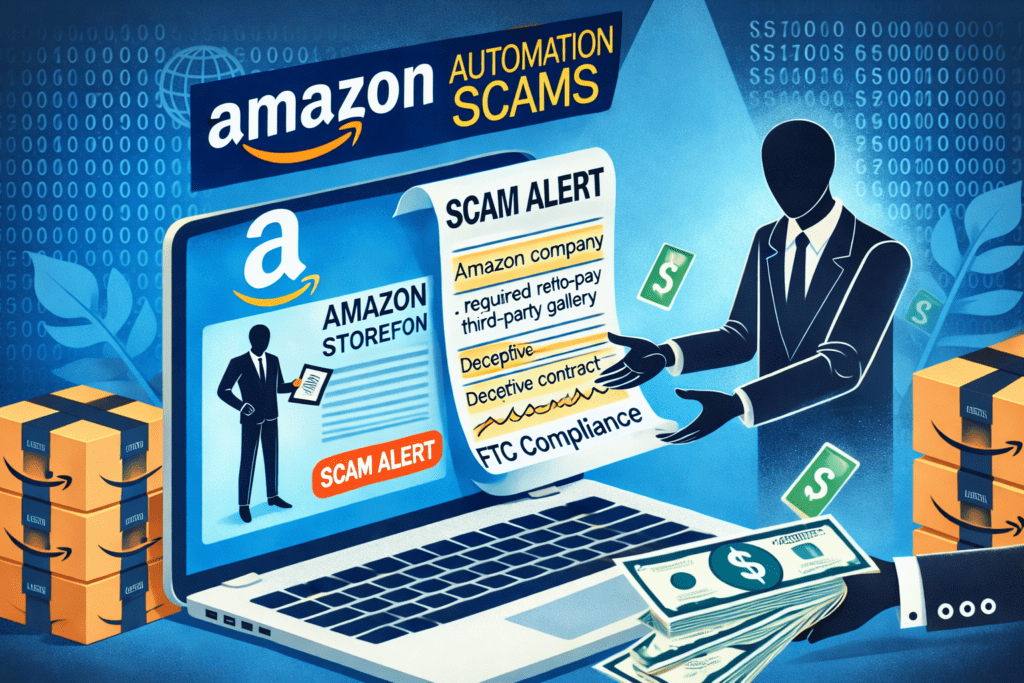
Is Amazon automation legitimate, or is it just another online business scam?
After working with Amazon brands and sellers for more than 10 years in the eCommerce industry, the reality is more nuanced. Automation itself is not the problem. In fact, automation is already deeply integrated into Amazon’s ecosystem.
However, the way some companies market “done-for-you Amazon stores” can create unrealistic expectations for new entrepreneurs.
In this guide, we’ll break down what Amazon automation actually means, why it has become so popular, and how sellers can use automation responsibly to grow their business.
For more expert insights on Amazon growth strategies, visit the EcomRanker :
What Is Amazon Automation?
Amazon automation generally refers to outsourcing the management of your Amazon store to a third-party service provider.
These companies typically handle tasks such as:
- Product research
- Supplier sourcing
- Inventory management
- Listing creation
- Advertising campaigns
- Order fulfillment
- Customer support
In return, automation providers usually charge a large upfront fee, sometimes ranging from $10,000 to $30,000 or more, along with a share of the profits.
The idea sounds appealing.
You invest capital, experts handle the operational work, and your store generates passive income.
But the reality is rarely that simple.
Why Amazon Automation Has Become So Popular
The surge in Amazon automation services is largely driven by the appeal of passive income and online entrepreneurship.
There are several reasons why so many people are attracted to this business model.
Passive Income Appeal
Many entrepreneurs are drawn to the idea of earning money without managing day-to-day operations.
Automation services promise a “hands-off” Amazon business, which sounds extremely attractive to busy professionals and investors.
Lower Barrier to Entry
Compared to traditional retail businesses, launching an Amazon store requires far less infrastructure.
With programs like Fulfillment by Amazon (FBA), sellers can outsource logistics entirely.
Amazon warehouses handle picking, packing, shipping, returns, and even customer service.
This infrastructure makes the idea of automated eCommerce seem more achievable.
Aggressive Online Marketing
Many automation providers use strong marketing messages like:
- “Done-for-you Amazon store”
- “Build passive income with Amazon”
- “Automated FBA business”
These promises often attract beginners who want to enter the Amazon marketplace but lack experience.
Outsourcing Expertise
Running a successful Amazon store requires knowledge of product research, keyword optimization, advertising strategy, and marketplace policies.
Automation services position themselves as experts who can handle these complexities, making it easier for newcomers to get started.
Warning Signs of Risky Amazon Automation Services
While automation tools themselves are legitimate, some companies operate with questionable business practices.
Sellers should watch for several common red flags.
High Upfront Fees
Many automation services charge significant setup fees.
Investing $20,000 or more without guaranteed results can be extremely risky, especially for new sellers who are still learning the platform.
Limited Control Over Your Business
When a third-party company manages every aspect of your store, you may lose visibility into important decisions.
This includes product selection, pricing strategy, and supplier relationships.
Without oversight, poor management decisions could negatively impact your store performance.
Dependency on Third-Party Operators
Your success becomes completely dependent on the automation company’s competence and integrity.
If they fail to manage campaigns properly or violate Amazon policies, your account could face penalties or suspension.
Overly Optimistic Income Promises
Be cautious of services that guarantee large profits or passive income.
Running a successful Amazon business still requires strategy, monitoring, and ongoing optimization.
There are no shortcuts.
The Difference Between Scams and Real Automation
It’s important to understand that automation itself is not the problem.
In fact, automation tools are widely used by successful Amazon sellers.
Automation can include:
- AI-driven product research tools
- Advertising bid optimization
- Listing performance analytics
- Inventory forecasting software
These tools help sellers operate more efficiently while still maintaining control of their business.
For example, AI-driven keyword research can help sellers optimize product listings and improve search visibility.
If you want to understand how listing optimization impacts rankings, read our guide on Amazon SEO strategy:
How Automation Is Actually Used by Successful Sellers
Professional Amazon sellers rarely rely on complete automation.
Instead, they combine automation tools with human strategy and expertise.
Automation helps streamline repetitive tasks, allowing sellers to focus on strategic growth areas like:
- Product development
- Brand positioning
- Advertising optimization
- Customer experience
This hybrid approach is far more sustainable than fully outsourcing an Amazon store.
The Role of AI in Modern Amazon Automation
Artificial intelligence has become an increasingly powerful tool for Amazon sellers.
AI-driven tools can analyze massive amounts of data to identify trends and optimize listings.
Examples include:
- Keyword research automation
- Conversion rate analysis
- Pricing optimization
- Advertising bid adjustments
AI can also help identify which search terms drive the most sales, enabling sellers to create more effective product listings.
To learn more about improving Amazon product visibility, read our guide on how to optimize Amazon listings:
Why Many Sellers Choose Full Service Amazon Management Instead
Instead of relying on questionable automation services, many brands prefer working with experienced Amazon growth agencies.
A professional agency provides:
Strategic planning
Listing optimization
Advertising management
Performance analytics
Account health monitoring
Unlike automation services that promise passive income, experienced agencies work closely with sellers to build sustainable long-term growth strategies.
You can explore leading agencies offering these services here:
https://ecomranker.com/amazon-account-management-agencies/
Should You Use Amazon Automation?
Automation can be extremely helpful when used correctly.
However, sellers should approach it carefully and maintain full visibility into their operations.
Here are some practical guidelines:
Use automation tools for efficiency
Stay involved in business decisions
Avoid unrealistic passive income promises
Choose experienced partners carefully
Amazon remains one of the most competitive marketplaces in the world.
Success requires continuous learning, optimization, and strategic thinking.
Automation should support your business—not replace your involvement entirely.
Final Thoughts
Amazon automation has become a major trend in the eCommerce industry, but not all automation services are created equal.
While some companies promise fully automated Amazon stores and passive income, the reality is that building a profitable Amazon business requires ongoing strategy and management.
Automation tools can certainly help streamline operations, improve efficiency, and support data-driven decision making.
However, sellers should always remain actively involved in their business and carefully evaluate any third-party service providers.
For more expert insights on Amazon selling strategies, marketplace trends, and growth tools, visit EcomRanker:
Frequently Asked Questions
Is Amazon automation legitimate?
Automation tools are legitimate, but some services promising fully automated Amazon stores may use misleading marketing tactics.
How much do Amazon automation services cost?
Many automation services charge $10,000 to $30,000 upfront, often with additional revenue sharing agreements.
Can Amazon stores be fully automated?
Not completely. Successful Amazon businesses still require strategic management and oversight.
What are safer alternatives to automation services?
Using automation tools alongside expert guidance from Amazon growth agencies is often a more reliable approach.
Do successful Amazon sellers use automation?
Yes. Most experienced sellers use automation tools to streamline operations while maintaining strategic control.