
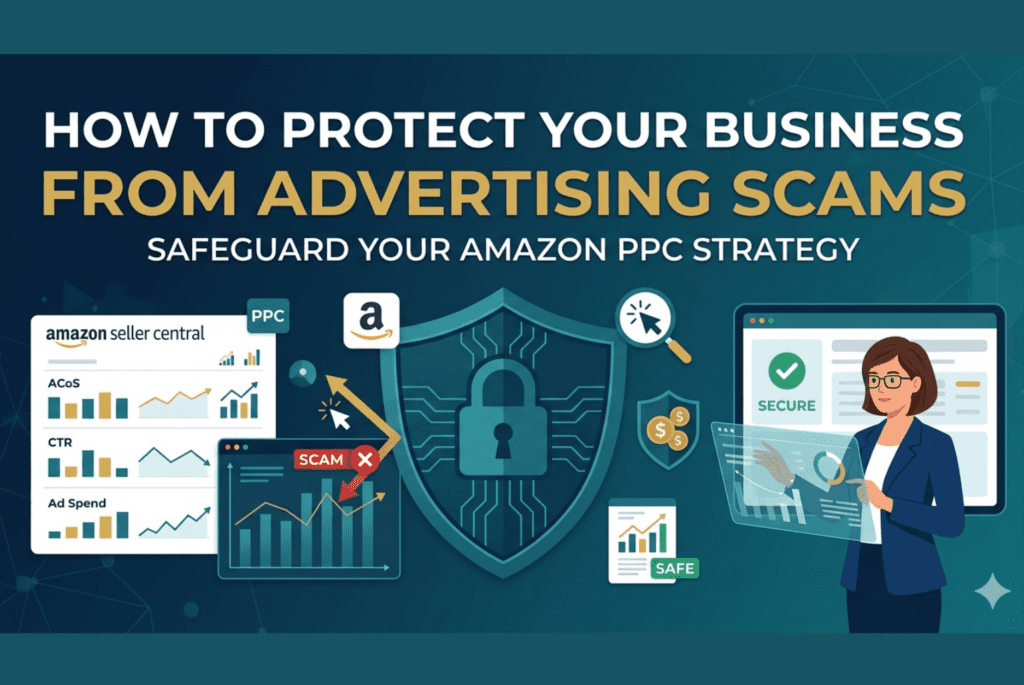
Digital advertising has become one of the most powerful tools for growing modern businesses. From Google Ads and Amazon PPC campaigns to social media advertising and influencer marketing, companies now have more opportunities than ever to reach customers online. However, as online advertising continues to expand, advertising scams and ad fraud have also become major threats to businesses worldwide.
Advertising fraud can drain marketing budgets, damage brand reputation, distort campaign analytics, and reduce return on investment. Many businesses unknowingly fall victim to fake clicks, bot traffic, fraudulent PPC agencies, misleading advertising services, and fake lead generation schemes. These scams not only waste money but also prevent businesses from reaching real customers who are genuinely interested in their products or services.
According to the uploaded research content, businesses lost billions of dollars globally due to digital ad fraud, and these losses continue to rise each year.
As a trusted ecommerce growth and digital marketing agency, Ecom Ranker helps businesses build transparent, performance-driven advertising strategies focused on real traffic, authentic conversions, and long-term growth. Understanding how advertising scams work is the first step toward protecting your business and maximizing your advertising ROI.
What Is Advertising Fraud?
Advertising fraud, also known as ad fraud, occurs when scammers manipulate advertising systems, metrics, or platforms to generate fake engagement and steal advertising budgets from businesses. Fraudsters create artificial clicks, impressions, conversions, or traffic that appear legitimate but provide no real business value.
Advertising scams can occur across:
- Google Ads campaigns
- Amazon PPC campaigns
- Social media advertising
- Display advertising networks
- Affiliate marketing programs
- Lead generation campaigns
The uploaded guide explains that many fraudulent service providers promise exceptional advertising performance while using unethical tactics such as fake traffic, misleading analytics, or fabricated campaign data.
These scams often target businesses unfamiliar with digital advertising metrics or companies looking for quick marketing success without fully understanding campaign management processes.
Why Advertising Scams Are Increasing
The rapid growth of digital advertising has created enormous opportunities for scammers. Businesses now spend billions annually on online advertising, making the industry a highly attractive target for fraud.
Several factors contribute to the rise of ad fraud:
- Increased online competition
- Automated advertising systems
- Lack of transparency
- Complex advertising metrics
- AI-generated bot traffic
- Businesses outsourcing campaign management
Many scammers exploit businesses by offering:
- Unrealistically low pricing
- Guaranteed rankings
- Fake traffic services
- Automated lead generation
- Inflated campaign reports
Businesses eager for rapid growth often overlook warning signs and invest in fraudulent advertising solutions that fail to generate genuine leads or sales.
The Financial Impact of Advertising Fraud
Advertising scams can severely damage business finances because companies pay for fake clicks, fraudulent impressions, and non-converting traffic.
The uploaded content highlights that U.S. businesses lost tens of billions of dollars due to ad fraud, with losses continuing to increase globally.
Financial damage from ad fraud may include:
- Wasted advertising budgets
- Higher cost-per-click (CPC)
- Reduced return on ad spend (ROAS)
- Lower conversion rates
- Increased customer acquisition costs
For small and medium-sized businesses, even moderate ad fraud can disrupt marketing budgets and limit growth opportunities.
Businesses investing heavily in PPC advertising should work with transparent and experienced agencies like EcomRanker PPC Services to ensure campaigns focus on real customer engagement rather than vanity metrics.
How Advertising Scams Damage Marketing Performance
Advertising fraud does more than waste money. It also distorts campaign performance data, making it difficult for businesses to understand what strategies actually work.
Fake engagement can create misleading analytics such as:
- Artificially high click-through rates
- Fake website traffic
- Inflated impressions
- Fraudulent conversions
- False lead submissions
These distorted metrics often lead businesses to make poor marketing decisions based on inaccurate data.
For example:
- Businesses may increase budgets on ineffective campaigns.
- Marketing teams may target the wrong audience.
- Companies may ignore campaigns generating real results.
The uploaded guide explains that fake traffic and bot-driven engagement prevent businesses from connecting with real customers, reducing genuine sales opportunities.
Common Types of Advertising Scams
Understanding how ad fraud works helps businesses identify suspicious activity before major financial damage occurs.
1. Click Fraud
Click fraud occurs when bots, competitors, or fraudulent systems repeatedly click on ads without genuine purchase intent. The goal is often to drain advertising budgets or manipulate campaign performance.
For example:
A competitor may repeatedly click your Google Ads to exhaust your daily advertising budget, allowing their ads to appear more prominently afterward.
The uploaded content explains that click fraud is one of the most common forms of PPC advertising scams.
Businesses can reduce click fraud risks through:
- IP filtering
- Geographic targeting
- Click fraud detection software
- Negative keyword optimization
- Regular traffic monitoring
2. Fake Website Traffic
Fake traffic scams involve sending automated bot traffic to websites to create the illusion of campaign success. While analytics may show increased visitors, the traffic does not generate real engagement or sales.
Common signs of fake traffic include:
- Extremely high bounce rates
- Very short session durations
- Unusual geographic traffic sources
- No conversions despite high traffic
The uploaded guide notes that fake traffic often inflates analytics while negatively impacting SEO and campaign performance.
Businesses should carefully monitor traffic quality rather than focusing solely on visitor volume.
3. Conversion Fraud
Conversion fraud occurs when scammers generate fake leads, form submissions, downloads, or purchases to make campaigns appear successful.
Examples include:
- Fake contact forms
- Automated lead submissions
- Bot-generated account registrations
- Fraudulent ecommerce orders
Businesses paying for lead generation services are especially vulnerable to conversion fraud because fake leads often appear legitimate initially.
The uploaded content explains that businesses may notice increased leads but later discover that none are genuine potential customers.
4. Bot Traffic Manipulation
Bots are automated programs designed to mimic human behavior online. Advanced bots can:
- Visit websites
- Click ads
- Scroll pages
- Trigger impressions
- Simulate engagement
Bot traffic often creates false advertising performance data while delivering zero real business value.
The uploaded guide highlights that retailers sometimes notice unusually high traffic without meaningful user interaction or purchases, indicating bot activity.
5. Misleading PPC Agencies
One of the most dangerous advertising scams involves fraudulent PPC management services that promise unrealistic results while hiding poor campaign practices.
Scam agencies often:
- Inflate campaign reports
- Use fake traffic sources
- Avoid transparent reporting
- Promise guaranteed rankings
- Deliver low-quality leads
The uploaded content warns businesses about PPC agencies that provide impressive-looking reports without generating real sales or conversions.
Businesses should always verify agencies carefully before signing long-term advertising contracts.
Red Flags That Indicate Advertising Scams
Recognizing warning signs early can help businesses avoid financial losses and advertising fraud.
1. Unrealistic Guarantees
No legitimate agency can guarantee:
- Instant rankings
- Overnight success
- Massive ROI without testing
- Guaranteed conversions
Digital advertising performance depends on competition, audience behavior, budget, and campaign quality.
The uploaded guide explains that unrealistic guarantees are one of the clearest scam indicators.
2. High-Pressure Sales Tactics
Scammers often pressure businesses into making quick decisions without proper research or review.
Examples include:
- Limited-time offers
- Immediate contract demands
- Aggressive upselling
- Fear-based marketing
Legitimate agencies provide transparent proposals and allow businesses time to evaluate services carefully.
3. Lack of Transparency
Transparency is essential in digital advertising. Scam advertisers often avoid sharing:
- Campaign data
- Ad placement details
- Traffic sources
- Conversion reports
- Budget breakdowns
Businesses should always request detailed reporting and campaign access.
The uploaded content identifies vague reporting and hidden campaign practices as major warning signs.
4. No Verifiable Reviews or Case Studies
Legitimate agencies usually provide:
- Client testimonials
- Case studies
- Verified reviews
- Portfolio examples
Businesses should carefully research online reviews and verify references before hiring advertising partners.
5. Extremely Low Pricing
While affordability matters, unusually cheap advertising services often indicate:
- Low-quality traffic
- Outsourced spam tactics
- Fake engagement
- Minimal campaign management
High-quality PPC management requires expertise, tools, optimization, and strategic planning.
The uploaded guide explains that extremely low pricing often leads to poor advertising performance.
6. Black-Hat Advertising Tactics
Black-hat tactics violate platform policies and may result in account suspensions or long-term brand damage.
Examples include:
- Click spamming
- Fake reviews
- Keyword stuffing
- Automated engagement manipulation
Businesses should avoid agencies promoting unethical growth shortcuts.
How To Protect Your Business From Advertising Scams
Preventing advertising fraud requires proactive monitoring, strong internal policies, and transparent advertising partnerships.
Step 1: Verify Advertising Vendors
Before hiring agencies or advertising partners:
- Research reviews
- Verify business registration
- Request case studies
- Check client references
- Confirm platform certifications
The uploaded guide strongly recommends reviewing business legitimacy before signing advertising contracts.
Step 2: Use Fraud Detection Tools
Advanced tools help businesses monitor suspicious activity and identify fraudulent traffic.
Recommended technologies include:
- Google Analytics
- DoubleVerify
- MOAT
- Fraudlogix
- Integral Ad Science
These tools help businesses detect:
- Fake clicks
- Bot traffic
- Impression fraud
- Suspicious geographic traffic
Step 3: Monitor Campaign Analytics Carefully
Businesses should regularly analyze:
- Bounce rates
- Conversion quality
- Geographic traffic
- Session duration
- Lead quality
- Traffic sources
Sudden spikes in traffic without conversions often indicate suspicious activity.
The uploaded guide recommends conducting regular campaign audits to identify abnormal patterns.
Step 4: Demand Transparent Reporting
Legitimate agencies provide detailed reporting that includes:
- Impressions
- Clicks
- Conversions
- Geographic targeting
- Ad placement details
- ROI analysis
Businesses should avoid agencies that refuse to share campaign data openly.
Step 5: Focus on Real Business Metrics
Instead of vanity metrics like impressions or traffic volume, businesses should prioritize:
- Qualified leads
- Sales conversions
- Customer acquisition cost
- ROAS
- Revenue growth
Real business performance matters more than inflated engagement statistics.
The Role of SEO and PPC Transparency
Integrated digital marketing strategies combining SEO and PPC help businesses build sustainable long-term growth while reducing reliance on risky advertising shortcuts.
Helpful resources from EcomRanker Amazon SEO Strategy Guide and Amazon Listing Optimization Services help businesses improve visibility using ethical optimization methods focused on genuine customer engagement.
Why Businesses Trust EcomRanker
EcomRanker provides transparent ecommerce marketing solutions focused on:
- Ethical PPC management
- Amazon SEO
- Listing optimization
- Conversion rate optimization
- Marketplace growth strategies
- Data-driven advertising
Their approach emphasizes:
- Real customer engagement
- Transparent reporting
- Long-term profitability
- Sustainable growth
By combining ethical advertising strategies with SEO optimization, EcomRanker helps businesses avoid fraudulent marketing practices while maximizing digital growth opportunities.
Final Thoughts
Advertising scams continue to grow as digital marketing becomes more competitive and automated. Businesses that fail to monitor campaigns carefully risk losing money, damaging brand credibility, and making poor strategic decisions based on fake data.
Protecting your business from advertising scams requires:
- Careful vendor verification
- Transparent reporting
- Fraud detection tools
- Campaign audits
- Ethical advertising partnerships
Businesses should focus on real conversions, qualified leads, and long-term customer relationships rather than vanity metrics and unrealistic promises.
For businesses seeking transparent and performance-driven digital marketing strategies, Ecom Ranker offers trusted ecommerce growth solutions designed to maximize ROI while protecting advertising investments.
Frequently Asked Questions About Advertising Scams and Ad Fraud Prevention
1 . What are advertising scams?
Advertising scams are fraudulent schemes designed to trick businesses into spending money on fake or misleading advertising services. These scams often involve fake traffic, bot-generated clicks, fraudulent leads, misleading PPC services, or manipulated campaign reports that make it appear as though advertisements are performing well when they are not generating real business results.
Scammers typically target businesses that are unfamiliar with digital advertising metrics or companies looking for quick growth solutions. They may promise guaranteed rankings, instant traffic, or massive returns on investment while using unethical tactics that provide little to no real value.
Advertising scams can occur across multiple platforms including:
- Google Ads
- Amazon PPC
- Social media advertising
- Display advertising
- Affiliate marketing networks
Businesses should work with transparent and experienced digital marketing agencies like Ecom Ranker that focus on ethical advertising strategies and real customer engagement rather than vanity metrics.
2 . What is ad fraud in digital marketing?
Ad fraud refers to any deceptive activity that manipulates online advertising systems for financial gain. Fraudsters use bots, fake accounts, automated scripts, or misleading traffic sources to create artificial engagement such as fake clicks, impressions, conversions, or website visits.
The main goal of ad fraud is to steal advertising budgets while making campaign performance appear legitimate. Businesses often pay for traffic or engagement that does not come from real users or potential customers.
Common forms of ad fraud include:
- Click fraud
- Fake website traffic
- Conversion fraud
- Bot traffic
- Impression fraud
- Fraudulent lead generation
According to the uploaded content, ad fraud costs businesses billions of dollars every year and continues to grow as digital advertising expands.
3 . How does click fraud work?
Click fraud occurs when bots, competitors, or fraudulent systems repeatedly click on online advertisements without any genuine interest in the business. These fake clicks consume advertising budgets while providing no meaningful conversions or customer engagement.
Click fraud is especially common in Pay-Per-Click advertising campaigns such as:
- Google Ads
- Amazon PPC
- Bing Ads
- Social media ads
For example, competitors may repeatedly click on your ads to exhaust your daily advertising budget, allowing their ads to gain better visibility. Bots may also generate fake clicks automatically to inflate campaign activity.
Businesses can reduce click fraud risks by:
- Monitoring traffic patterns
- Using fraud detection software
- Filtering suspicious IP addresses
- Reviewing geographic targeting
- Setting up negative keywords
The uploaded guide explains that click fraud is one of the most common forms of advertising fraud affecting businesses today.
4 . What is fake traffic in advertising campaigns?
Fake traffic refers to artificial website visits generated by bots or automated systems rather than real users. Scammers use fake traffic to make advertising campaigns appear successful by inflating visitor numbers and engagement metrics.
Although analytics may show increased traffic, fake visitors typically:
- Leave websites quickly
- Do not convert into customers
- Do not engage with content
- Generate extremely high bounce rates
Businesses may mistakenly believe campaigns are performing well based on visitor numbers alone while actual conversions remain low.
The uploaded content notes that fake traffic can also negatively impact SEO performance because search engines may interpret low engagement signals as poor user experience.
Businesses should focus on traffic quality and conversion rates rather than simply increasing visitor volume.
5 . What are the warning signs of advertising scams?
Several warning signs can indicate fraudulent advertising services or scam agencies.
Common red flags include:
- Guaranteed rankings or instant success promises
- Extremely low pricing
- High-pressure sales tactics
- Lack of transparency
- Vague reporting
- No verifiable client reviews
- Fake testimonials
- Poor communication
- Black-hat marketing tactics
For example, agencies that promise overnight SEO rankings or guaranteed PPC conversions are often using misleading sales tactics because legitimate advertising performance depends on many variables.
The uploaded guide explains that unrealistic guarantees and vague reporting are major indicators of potential advertising scams.
Businesses should carefully research agencies before signing advertising contracts.
6 . How can businesses protect themselves from advertising scams?
Businesses can reduce the risk of advertising fraud by implementing proactive security and verification measures.
Important protection strategies include:
- Verifying agency credentials
- Checking online reviews
- Requesting case studies
- Monitoring analytics regularly
- Using fraud detection software
- Conducting campaign audits
- Demanding transparent reporting
- Avoiding unrealistic promises
The uploaded guide strongly recommends verifying advertising vendors before investing in campaigns.
Businesses should also work only with reputable agencies that provide clear reporting and transparent communication throughout campaign management.
7 . Why is transparency important in PPC advertising?
Transparency helps businesses understand how advertising budgets are being spent and whether campaigns are generating real results. Scam agencies often hide important campaign details or provide vague reports that inflate metrics without showing actual conversions or revenue growth.
A trustworthy PPC agency should provide:
- Campaign access
- Budget breakdowns
- Conversion reports
- Traffic source data
- Geographic targeting details
- ROI analysis
Transparent reporting allows businesses to identify problems early and optimize campaigns more effectively.
Professional ecommerce growth agencies like Ecom Ranker focus on clear communication and performance-driven reporting designed around measurable business growth.
8 . What is conversion fraud?
Conversion fraud occurs when scammers generate fake leads, purchases, downloads, or form submissions to make campaigns appear successful. Businesses paying for lead generation services are especially vulnerable because fake leads may initially seem legitimate.
Examples of conversion fraud include:
- Automated form submissions
- Fake account registrations
- Bot-generated downloads
- Fraudulent ecommerce orders
Businesses often discover conversion fraud when:
- Leads cannot be contacted
- Customers provide fake information
- Sales do not increase despite “high conversion rates”
The uploaded guide explains that conversion fraud can seriously distort campaign performance data and mislead businesses into increasing budgets on ineffective campaigns.
9 . Can fake traffic hurt SEO performance?
Yes, fake traffic can negatively affect SEO performance because search engines evaluate user engagement signals when ranking websites.
Bot-generated traffic often produces:
- High bounce rates
- Low session duration
- Minimal interaction
- Poor engagement metrics
These signals may cause search engines to believe users are not finding value on the website, potentially reducing organic rankings over time.
Businesses should prioritize high-quality, relevant traffic rather than artificially increasing visitor numbers.
Combining ethical SEO strategies with transparent advertising campaigns through EcomRanker Amazon SEO Services helps businesses build sustainable long-term visibility.
10 . Why do scam advertising agencies offer extremely low pricing?
Fraudulent agencies often use extremely low pricing to attract businesses looking for cheap marketing services. However, quality advertising management requires:
- Skilled professionals
- Advanced tools
- Campaign optimization
- Audience research
- Ongoing performance monitoring
Agencies offering unrealistically cheap services may rely on:
- Fake traffic
- Automated bots
- Poor-quality traffic sources
- Black-hat tactics
- Minimal campaign management
The uploaded content explains that extremely low pricing is often a major warning sign of scam advertising services.
Businesses should compare pricing carefully and focus on long-term ROI rather than the cheapest available service.
11 . What tools help detect advertising fraud?
Several professional tools help businesses identify suspicious advertising activity and reduce fraud risks.
Popular fraud detection tools include:
- Google Analytics
- DoubleVerify
- MOAT
- Fraudlogix
- Integral Ad Science
These tools help monitor:
- Bot traffic
- Click fraud
- Impression fraud
- Suspicious geographic traffic
- Invalid conversions
Regular analytics monitoring also helps businesses identify unusual campaign behavior before significant budget losses occur.
The uploaded guide recommends using fraud detection technologies alongside regular campaign audits for stronger protection.
12 . Why are regular advertising audits important?
Regular campaign audits help businesses identify suspicious activity, improve campaign efficiency, and ensure advertising budgets align with business goals.
During advertising audits, businesses should review:
- Traffic quality
- Conversion accuracy
- Geographic traffic sources
- Bounce rates
- Session duration
- Lead quality
- ROI performance
Unusual spikes in traffic or engagement without corresponding sales may indicate fraudulent activity.
The uploaded guide emphasizes that regular audits are essential for detecting advertising fraud early.
Businesses that monitor campaigns consistently are more likely to identify problems before significant financial damage occurs.
13 . Why should businesses work with a trusted digital marketing agency?
Managing digital advertising effectively requires expertise in:
- PPC optimization
- Traffic analysis
- Fraud prevention
- Conversion tracking
- SEO strategy
- Campaign reporting
Trusted agencies help businesses avoid advertising scams by using ethical marketing strategies focused on real customer engagement and long-term growth.
Professional agencies provide:
- Transparent reporting
- Verified traffic sources
- ROI-focused optimization
- Strategic campaign planning
- Ongoing performance analysis
EcomRanker helps businesses build secure, data-driven ecommerce growth strategies that prioritize genuine traffic, authentic conversions, and sustainable digital marketing success.