
Amazon’s algorithm is not just a search system—it is a revenue optimization engine designed to maximize customer satisfaction and platform profitability at the same time. Every product that appears in Amazon search results is selected based on its likelihood to generate a sale while delivering a positive customer experience.
Understanding how Amazon algorithm works is critical because ranking on Amazon directly determines your visibility, traffic, and ultimately your revenue. Unlike Google, where content can rank based on backlinks and authority, Amazon ranks products based on performance signals and buying behavior.
This means that if your product performs better than competitors—by getting more clicks, conversions, and sales—it will naturally rise in rankings. Over time, this creates a powerful compounding effect where better performance leads to more visibility, and more visibility leads to higher sales.
What is Amazon Algorithm?
Amazon algorithm is a data-driven ranking system that determines which products appear in search results based on keyword relevance, conversion rate, sales velocity, customer experience, and overall performance metrics.
Evolution of Amazon Algorithm: A9 to A10
Amazon’s algorithm has evolved significantly over the years, moving from a simple keyword-based system to a complex AI-driven model.
Initially, the A9 algorithm focused heavily on keyword matching and conversionhttps://ecomranker.com/amazon-conversion-rate-optimization/ rates. It prioritized products that matched search queries and generated higher sales. However, as competition increased, Amazon introduced A10, which expanded the ranking criteria.
The A10 algorithm places greater emphasis on organic sales, external traffic, brand authority, and customer satisfaction signals. This shift reflects Amazon’s long-term goal of creating a better shopping ecosystem rather than just maximizing short-term revenue.
Amazon Ranking Algorithm Framework
To fully understand ranking, you need to think of Amazon’s algorithm as a multi-layered system.
Layer 1: Relevance
This layer determines whether your product appears in search results. Amazon analyzes:
- Keywords in title, bullets, description
- Backend search terms
- Product category relevance
If your listing is not properly optimized, it will not even enter the ranking competition.
Layer 2: Click Performance
Once visible, Amazon evaluates whether customers click on your listing.
Key CTR drivers include:
- Main image quality
- Product title clarity
- Pricing attractiveness
- Ratings and reviews
A higher click-through rate signals relevance and increases ranking potential.
Layer 3: Conversion Performance
This is the most critical layer. Amazon measures how many visitors convert into buyers.
Factors affecting conversion:
- Product images
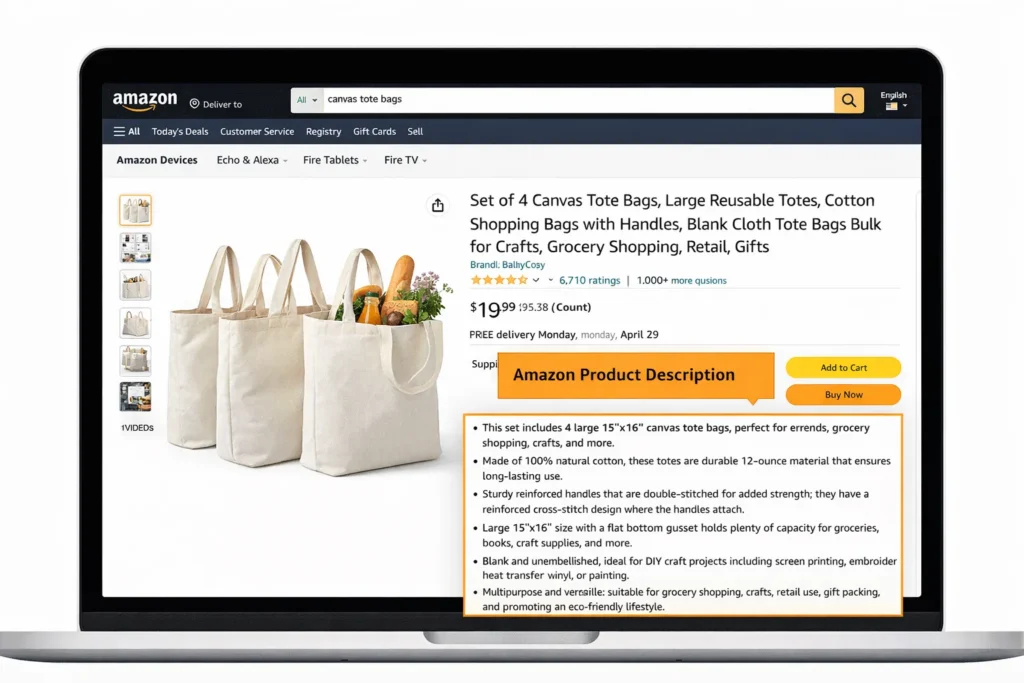
- Bullet points and description
- Reviews and ratings
- Pricing and offers
Products with higher conversion rates are pushed higher in rankings.
Layer 4: Sales Velocity
Amazon tracks how frequently your product sells over time.
Consistent sales growth signals:
- Product demand
- Customer satisfaction
- Market relevance
This is why products with steady sales outperform those with occasional spikes.
Layer 5: Customer Experience Signals
Amazon evaluates long-term customer satisfaction, including:
- Return rate
- Negative feedback
- Seller performance
- Delivery speed
Poor customer experience can negatively impact ranking even if sales are high.
Key Ranking Factors Explained
Keyword Relevance & Search Intent
Keywords remain the foundation of Amazon SEO, but the algorithm has become smarter. It now evaluates search intent, meaning it tries to understand what the customer actually wants.
For example, a search for “wireless headphones for gym” implies durability and sweat resistance. Listings that clearly communicate these features are more likely to rank higher.
Click-Through Rate
CTR is often underestimated but plays a critical role in ranking. A product that gets more clicks than competitors signals higher relevance.
Improving CTR requires:
- Eye-catching main images
- Clear and concise titles
- Competitive pricing
- Strong review ratings
Conversion Rate Optimization (CRO)
Amazon is heavily conversion-focused. Listings that convert better are rewarded with higher rankings.
Advanced amazon conversion rate optimization techniques include:
- Using emotional triggers
- Highlighting benefits over features
- Adding comparison charts
- Using A+ Content
Sales Velocity & Momentum
Sales velocity is not just about total sales—it’s about sales momentum.
Products that show consistent growth are favored over those with declining performance. This is why launching with PPC campaigns can help boost rankings quickly.
Reviews & Social Proof
Reviews are critical trust signals. However, Amazon evaluates more than just star ratings.
It considers:
- Review recency
- Review authenticity
- Verified purchases
High-quality reviews improve both ranking and conversion.
Pricing Strategy & Buy Box Impact
Pricing directly affects conversion rate and Buy Box eligibility. Amazon favors competitively priced products because they are more likely to sell.
Dynamic pricing strategies and repricing tools can help maintain competitiveness.
Fulfillment & Logistics Performance
Fast delivery is a key factor in customer satisfaction. Products fulfilled by Amazon (FBA) often rank higher due to:
- Faster shipping
- Better customer experience
- Higher trust
How Amazon Algorithm Uses Machine Learning
Amazon’s algorithm is powered by machine learning, which continuously adapts based on customer behavior.
It analyzes patterns such as:
- Which products customers click
- Which products they buy
- How they interact with listings
Over time, the algorithm becomes better at predicting what customers want, making ranking more competitive.
External Traffic & Off-Amazon Signals
One of the biggest changes in modern Amazon SEO is the importance of external traffic.
Amazon now rewards listings that bring customers from:
- Google search
- Social media
- Influencer marketing
- Email campaigns
This is because external traffic helps Amazon acquire new users.
Advanced Optimization Strategy (Step-by-Step to Rank & Scale on Amazon)
Building a successful Amazon business requires more than isolated tactics—it demands a structured, data-driven optimization system. The most effective sellers don’t rely on guesswork; they follow a step-by-step framework that aligns with how Amazon’s algorithm evaluates listings. This advanced optimization strategy focuses on five critical stages: keyword optimization, click-through rate improvement, conversion rate optimization, sales velocity growth, and customer experience enhancement.
Each step builds on the previous one, creating a compounding effect where improved performance leads to better rankings, increased visibility, and higher sales.
Step 1: Keyword Optimization (Foundation of Visibility)
Keyword optimization is the starting point of any successful Amazon strategy because it determines whether your product appears in search results. Without proper keyword targeting, even the best product will remain invisible to potential customers.
The process begins with identifying high-intent keywords, which are search terms that indicate a strong likelihood of purchase. These include long-tail keywords such as “wireless earbuds for running” rather than broad terms like “earbuds.” High-intent keywords typically have lower competition and higher conversion rates, making them essential for both ranking and profitability.
Once identified, keywords must be strategically integrated across your listing. The product title should include the primary keyword, while bullet points and descriptions should incorporate secondary and semantic variations. Backend search terms should be used to capture additional keywords without affecting readability.
However, modern Amazon SEO is not about keyword stuffing. The algorithm evaluates how naturally keywords are used and whether the content aligns with customer intent. Listings that clearly communicate value while maintaining keyword relevance perform significantly better in both ranking and conversion.
Step 2: CTR Optimization (Winning the Click Battle)
Once your product becomes visible in search results, the next challenge is attracting clicks. Click-through rate (CTR) is a critical ranking factor because it signals to Amazon that your product is relevant and appealing to customers.
The most influential element for CTR is the main product image. It must be clear, high-resolution, and visually compelling. Products that stand out visually—through better lighting, angles, or presentation—are more likely to capture attention in crowded search results.
Your product title also plays a key role. It should be easy to read while highlighting the most important benefits and features. Overly complex or keyword-stuffed titles can reduce trust and discourage clicks.
Pricing and reviews further influence CTR. A competitive price combined with strong ratings creates an immediate perception of value. Customers naturally gravitate toward listings that appear trustworthy and cost-effective.
Improving CTR is not just about aesthetics—it directly impacts ranking. Listings with higher CTR are rewarded with better visibility, creating a cycle where more clicks lead to higher rankings and more traffic.
Step 3: Conversion Optimization (Turning Traffic into Sales)
Driving traffic is only half the equation; the real growth happens when that traffic converts into sales. This is where conversion rate optimization (CRO) becomes the most critical factor in your strategy.
A high-converting listing answers all customer questions quickly and clearly. Product images should demonstrate the product’s use, benefits, and unique selling points. Infographics and lifestyle images help customers visualize how the product fits into their lives.
Bullet points should focus on benefits rather than features. Instead of simply stating specifications, they should explain how the product solves a problem or improves the customer’s experience.
The product description and A+ Content provide an opportunity to build trust and reinforce value. Detailed explanations, comparison charts, and brand storytelling help customers make informed decisions.
Conversion optimization also involves removing friction. If customers feel confused or uncertain, they are less likely to purchase. Clear messaging, strong visuals, and persuasive content work together to create a seamless buying experience.
Step 4: Sales Velocity Boost (Accelerating Ranking Growth)
Sales velocity refers to how quickly and consistently your product generates sales. It is one of the most powerful ranking signals in Amazon’s algorithm because it directly reflects product demand and performance.
To increase sales velocity, many sellers rely on Amazon PPC campaigns. Advertising allows you to generate immediate traffic and drive initial sales, which helps improve ranking position. By targeting high-converting keywords, you can accelerate growth and gain visibility in competitive niches.
Promotions and discounts also play a key role. Limited-time offers, coupons, and deals create urgency and encourage customers to make quick purchasing decisions. This not only increases sales but also improves conversion rates.
However, the goal is not just to create short-term spikes in sales. Amazon favors products with consistent sales momentum over time. This means your strategy should focus on maintaining steady growth rather than relying on temporary boosts.
Step 5: Customer Experience Improvement (Long-Term Ranking Stability)
The final and often overlooked step is optimizing for customer experience. Amazon’s algorithm prioritizes products that deliver a positive experience because it directly impacts customer satisfaction and retention.
Customer reviews are one of the strongest signals of product quality. Positive reviews build trust and improve both conversion rate and ranking. However, it is not just the quantity of reviews that matters—the quality, recency, and authenticity are equally important.
Delivery speed and fulfillment also play a major role. Products that offer fast and reliable shipping, especially through Fulfillment by Amazon (FBA), are more likely to rank higher because they meet customer expectations.
Product quality is equally critical. High return rates or negative feedback can harm your ranking, even if your sales are strong. This is why long-term success depends on delivering a product that consistently meets or exceeds customer expectations.
Amazon Algorithm Formula
Ranking = Relevance × CTR × Conversion Rate × Sales Velocity
This formula explains why some products rank higher even with fewer keywords—they perform better overall.
Advanced SEO Sections
Amazon SEO vs Google SEO
Amazon SEO focuses on sales and conversion, while Google SEO focuses on content and authority. This makes Amazon a performance-driven platform.
Future of Amazon Algorithm
- Increased focus on AI and personalization
- Greater importance of external traffic
- More emphasis on brand authority
- Higher competition in all categories
FAQs
How does Amazon algorithm work?
Amazon algorithm works by analyzing keyword relevance, conversion rate, sales velocity, and customer experience to rank products.
What is A9 vs A10 algorithm?
A9 focuses on keyword relevance and conversions, while A10 adds external traffic, brand authority, and customer engagement.
What is the most important ranking factor?
Conversion rate is one of the most important factors because it directly impacts sales performance.
How can I improve my Amazon ranking?
Optimize keywords, improve conversion rate, increase sales velocity, and enhance customer experience.
Does PPC help Amazon SEO?
Yes, PPC increases traffic and sales, which improves ranking signals.
Final Thoughts
Understanding how Amazon algorithm works gives you a competitive advantage. It allows you to build a strategy that aligns with Amazon’s goals—delivering the best products to customers while maximizing sales.
Success on Amazon is not about tricks or shortcuts. It is about creating a system that consistently performs better than competitors across all ranking factors.