
What Is an Amazon Virtual Bundle?
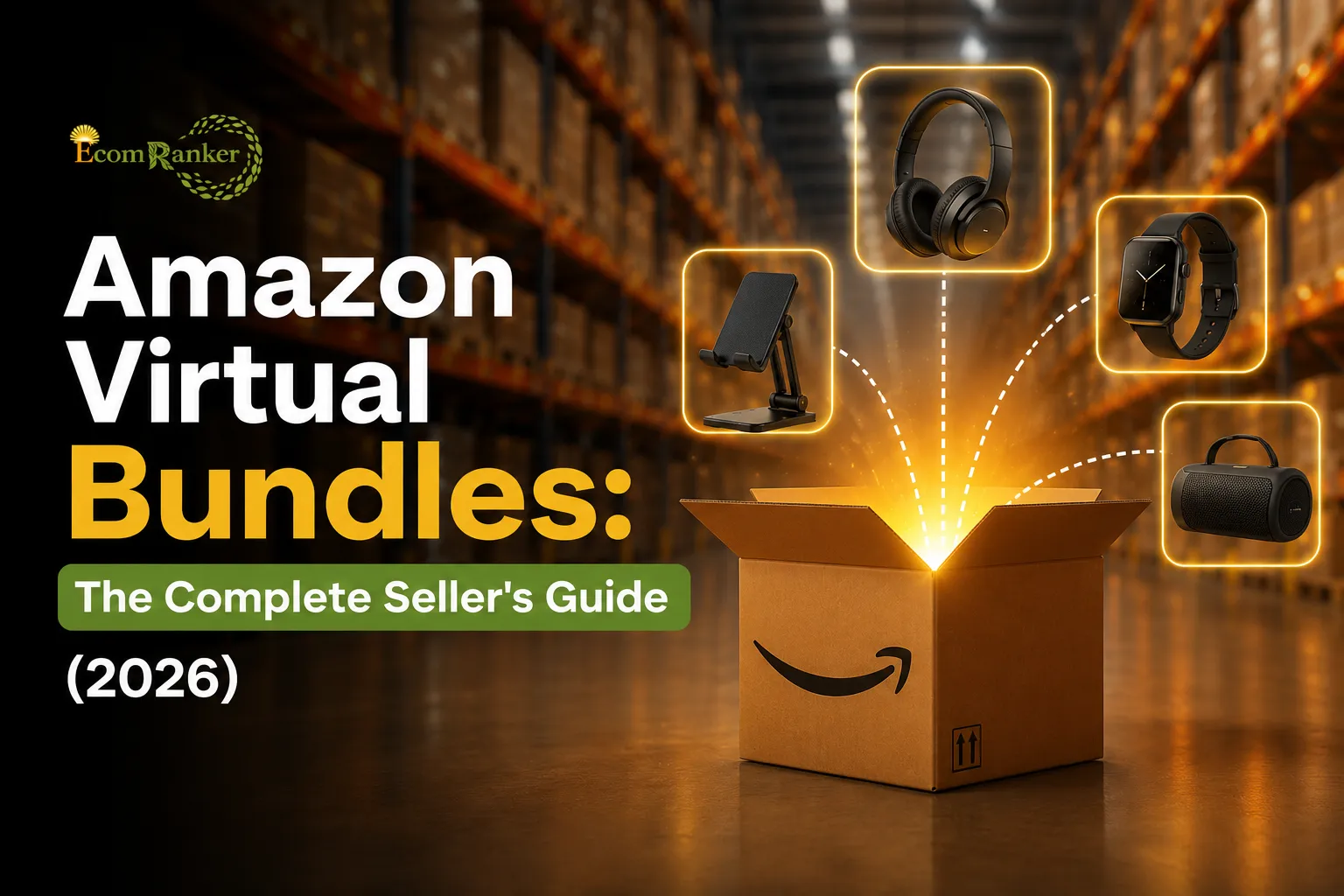
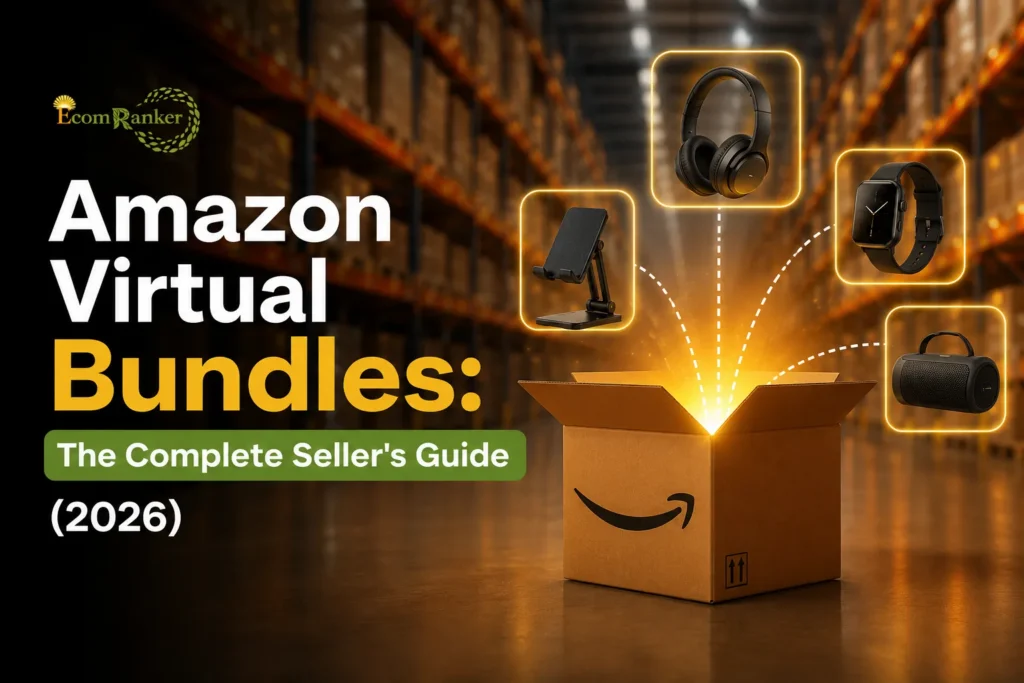
A Virtual Bundle groups 2-5 complementary products you already sell into a single new listing — with its own ASIN — without physically repackaging anything. Each component keeps drawing from its own existing FBA inventory; Amazon simply presents the group as one buyable offer. Done well, this increases average order value and helps sell slower-moving items alongside your bestsellers, without spending anything on advertising.
Important market note: as of 2026, Virtual Bundles are available on Amazon.com (US) only — the feature has not rolled out to Amazon.co.uk. UK-only sellers can’t use this tool yet; brands selling on both marketplaces can use it for their US catalogue while relying on other cross-sell tactics (Frequently Bought Together, A+ Content comparison modules) on the UK storefront.
Virtual Bundles vs. Physical Bundles
| Virtual Bundle | Physical Bundle | |
| Inventory | Draws from each component’s existing FBA stock — no separate bundle inventory | Requires a new, separately packaged and barcoded unit |
| Setup | Built inside Seller Central’s Virtual Bundles tool | Requires a new listing, new UPC, and physical repackaging |
| Fulfillment fees | Each component keeps its own fee tier | Fees based on the fully packaged bundle’s dimensional weight — can jump a size tier and quietly erode margin |
| Speed to launch | Same day, no new inventory needed | Requires new inventory prep and inbound shipment |
| Best for | Testing cross-sell combinations quickly, moving slow inventory | A permanent, branded bundle SKU meant to be a standalone product |
Virtual Bundle Eligibility Requirements
Amazon checks every component ASIN against these requirements — a bundle submission is rejected if any single item fails:
- Brand Registry enrollment — you must own the brand, not resell someone else’s
- Every component ASIN must be Fulfilled by Amazon (FBA); FBM and Seller-Fulfilled Prime items are not eligible
- Each component must be in active, buyable, “New” condition status
- All ASINs must belong to your own registered brand — third-party or wholesale ASINs can’t be included
- Professional Seller account (Individual accounts are not eligible)
- Account in good standing, with no active policy violations
- Between 2 and 5 ASINs per bundle
Certain product types — gift cards, digital products, and subscription items — are excluded from bundling regardless of brand or account status.
Virtual Bundle Pricing Rules
The bundle price must be equal to or less than the sum of its individual component prices. If a bundle’s price ever exceeds that sum — including after a component’s individual price changes — the bundle loses Buy Box eligibility immediately.
This is the single most common bundle mistake: bundle prices don’t auto-update when a component’s price changes. If you raise the price on one item in an active bundle and forget to adjust the bundle price to match, you can silently lose the Buy Box on a listing that was previously converting well. Build a recurring price-check into your workflow, not a one-time setup step.
How to Create a Virtual Bundle: Step by Step
Step 1: Identify Complementary Products
Use Amazon’s Market Basket Analysis report (in Brand Analytics) to see which products are already frequently bought together by real customers — this beats guessing at complementary pairings.
Step 2: Open the Virtual Bundles Tool
In Seller Central, go to Brands > Virtual Bundles (the exact menu path has moved between Seller Central updates — if you don’t see it under Brands, check under Advertising as a fallback).
Step 3: Select Your Products
Choose 2-5 eligible ASINs. The first product added becomes your bundle’s main product for display purposes. You can adjust the quantity of each component if the bundle should include more than one unit of an item.
Step 4: Write the Bundle Title and Description
Keep the title brief and descriptive, clearly naming what’s included. The description should explain why the combination makes sense together, not just restate the component names.
Step 5: Set the Bundle Price
Price at or below the sum of individual component prices. Most successful bundles offer a visible discount versus buying items separately — that’s the core incentive for the shopper to choose the bundle over individual purchases.
Step 6: Submit and Monitor
After submission, monitor the new bundle ASIN’s Buy Box status and component pricing regularly — bundles are more fragile to price drift than standard listings because they depend on multiple prices staying in the correct relationship to each other.
Measuring Virtual Bundle Performance
Amazon’s bundle-specific analytics are limited — Seller Central doesn’t cleanly separate bundle sales from individual SKU sales in every report. In practice, most sellers track performance by:
- Tracking the bundle’s own ASIN/SKU directly through Business Reports for traffic, sessions, and conversion rate, the same way you’d track any other listing.
- Comparing pre- and post-bundle velocity on the slower-moving component, to see whether the bundle is genuinely lifting its sales or just cannibalizing standalone purchases of the bestseller.
- Watching Buy Box eligibility uptime on the bundle ASIN specifically, since bundles lose eligibility more easily than standard listings when component pricing drifts.
Frequently Asked Questions
Q: Are Amazon Virtual Bundles available in the UK?
A: Not yet, as of 2026 — the feature is currently US-only. UK sellers can use Frequently Bought Together and A+ Content comparison modules as alternative cross-sell tools in the meantime.
Q: Do I need Brand Registry to create a virtual bundle?
A: Yes — Brand Registry enrollment is required, and you can only bundle ASINs from your own registered brand.
Q: Can FBM sellers create virtual bundles?
A: No. Every component ASIN in a virtual bundle must be Fulfilled by Amazon (FBA); FBM and Seller-Fulfilled Prime items are excluded.
Q: How many products can be in a virtual bundle?
A: Between 2 and 5 ASINs.
Q: What happens if my bundle price exceeds the sum of its components?
A: The bundle immediately loses Buy Box eligibility. Since component prices can change independently, bundle pricing needs to be checked regularly, not just set once at launch.
Q: Do virtual bundles need their own UPC?
A: No — this is a key difference from physical bundles, which do require a new GS1 UPC. Virtual bundles draw entirely from existing component inventory and identifiers.
Q: Can I bundle gift cards or digital products?
A: No, these product types are excluded from virtual bundling regardless of brand or account standing.
Q: Will a virtual bundle cannibalize sales of my individual products?
A: It can, if the bundle discount is too aggressive or the products are frequently bought individually anyway. Compare pre- and post-bundle sales velocity on each component to check whether the bundle is adding incremental revenue or just shifting existing purchases.