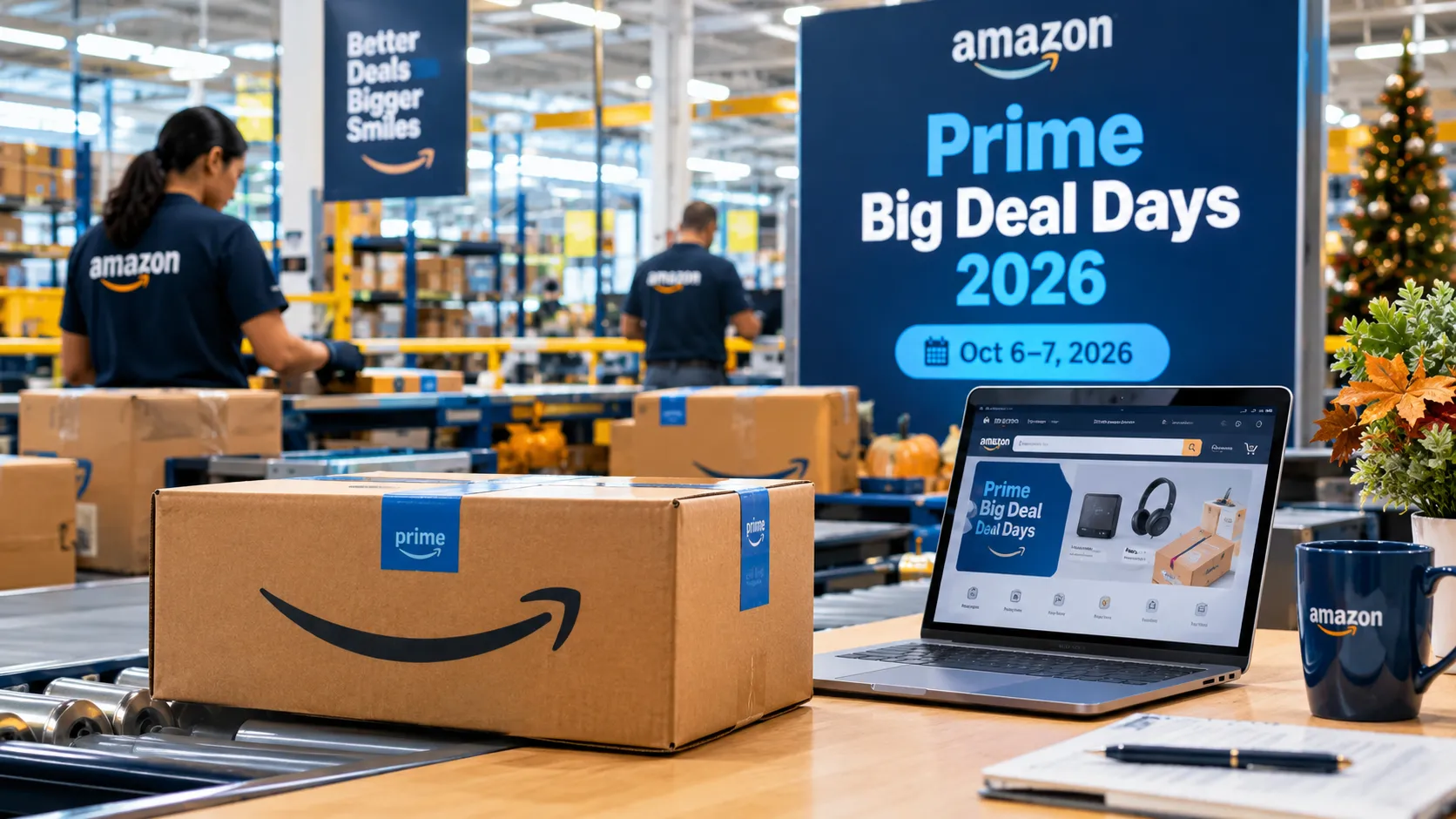


Amazon Launches New AI Tools, Ad Automation, Attribution Updates, and Seller Platform Enhancements as Marketplace Competition Intensifies in 2026
Amazon has rolled out a major series of updates across Seller Central, Vendor Central, and Amazon Advertising in 2026, signaling one of the most transformative periods for marketplace sellers in recent years. With artificial intelligence now deeply integrated into analytics, advertising, creative generation, and campaign management, Amazon is rapidly evolving from a traditional eCommerce marketplace into a fully AI-driven operating ecosystem for brands and sellers.
The latest platform updates impact virtually every part of the seller journey—from how listings are optimized and campaigns are managed to how data is analyzed and performance is measured. Sellers across global marketplaces, particularly in the US, UK, and India, are being urged to adapt quickly as Amazon increases automation, reduces manual control, and pushes advertisers toward AI-powered decision-making. According to recent platform announcements, brands that fail to modernize their operations risk falling behind in both visibility and profitability.
Amazon Launches “AI Canvas” Inside Seller Central
One of Amazon’s most significant 2026 updates is the introduction of AI Canvas, a new artificial intelligence-powered workspace inside Seller Central designed to help sellers analyze and interpret business data more efficiently.
Unlike traditional dashboards that require sellers to manually navigate reports, AI Canvas allows users to ask questions in plain English and instantly receive visual dashboards, sales insights, inventory analytics, and advertising performance summaries. The system also supports predictive “what-if” scenarios, enabling sellers to forecast outcomes based on pricing changes, inventory adjustments, or advertising budget modifications.
This development marks a major shift in Amazon’s seller tools strategy. Seller Central is moving beyond being a reporting platform and becoming an intelligent decision-making engine. The launch of AI Canvas may also reduce seller dependence on third-party analytics software such as Helium 10 and Jungle Scout by bringing advanced business intelligence directly inside Amazon’s ecosystem.
Amazon Ads Introduces New AI Creative and Optimization Tools
Amazon Advertising has expanded its AI capabilities by launching advanced creative and campaign optimization tools for sellers and advertisers. These tools include an AI Image Generator for producing ad creatives automatically and a Performance Recommendation Engine that provides bid, targeting, and campaign improvement suggestions based on real-time performance data.
The tools are designed to reduce the time and cost associated with ad creative production while helping advertisers scale campaigns faster and improve return on ad spend (ROAS). Amazon’s system now evaluates campaign metrics continuously and offers dynamic recommendations aimed at improving overall performance.
For many sellers, this means lower dependence on external creative agencies and PPC managers for routine optimization tasks, as Amazon increasingly automates previously manual workflows.
Major Amazon PPC Algorithm Shift Changes How Ads Are Ranked
Amazon has also implemented a fundamental shift in how its PPC advertising algorithm functions in 2026. The marketplace is moving away from a purely keyword-based targeting system and transitioning toward AI-powered persona and intent-based targeting.
Under the updated model, Amazon’s advertising algorithm now evaluates far more than keyword relevance. It increasingly considers:
- Customer shopping behavior
- Review sentiment
- Product conversion rates
- Browsing history
- Purchase intent signals
- Stage of the customer journey
This change means that exact-match keyword targeting is becoming less dominant as Amazon’s AI better understands shopper intent and context. Sellers who rely solely on keyword stuffing and traditional PPC structures may find performance declining unless their listings, reviews, and conversion rates remain strong. Amazon is effectively becoming an answer engine rather than just a search engine.
New Machine-Learning Attribution Model Improves Ad Reporting
Amazon has introduced a new machine-learning attribution system for its advertising platform in 2026, significantly changing how ad performance is measured and attributed.
Previously, Amazon used a more basic attribution model that assigned credit broadly across ad views and clicks. The new AI-driven model now evaluates the full customer journey more intelligently by analyzing placement context, engagement signals, shopper interactions, and conversion pathways.
This update aims to provide sellers with more accurate ACOS and ROAS metrics, helping brands better understand which campaigns genuinely drive results and where budget should be allocated.
The change applies across multiple Amazon ad formats, including Sponsored Brands, Sponsored Display, and DSP campaigns.
Amazon Automates Sponsored Brands Creative Management
In another major advertising shift, Amazon has significantly automated Sponsored Brands ad creation.
Under the updated framework, advertisers running Sponsored Brands campaigns are now required to include multiple ASINs, and Amazon’s AI increasingly selects the creative combinations automatically. Manual control over headlines, product selection, and certain visual elements has been reduced as Amazon prioritizes automated optimization.
This reflects Amazon’s broader strategy of giving advertisers less manual control while using machine learning to determine which combinations drive the highest conversion rates.
For sellers, the implication is clear: Amazon’s AI—not the advertiser—is increasingly deciding what shoppers see.
Amazon Invests Billions in AI Infrastructure
Amazon continues to aggressively invest in artificial intelligence as part of its long-term marketplace and advertising strategy. Reports indicate the company is allocating approximately $200 billion toward AI infrastructure and development, with major investments focused on:
- Advertising automation
- Seller tools
- Warehouse robotics
- Logistics AI
- Recommendation systems
- Product discovery algorithms
This confirms Amazon’s strategic direction for the future: AI will increasingly control product visibility, advertising performance, and ranking decisions across the marketplace.
For sellers, adapting to AI-led systems is no longer optional—it is becoming essential for long-term competitiveness.
What These Changes Mean for Amazon Sellers in 2026
Amazon’s latest updates indicate a clear transformation in how success is achieved on the platform.
The traditional seller playbook of keyword optimization, manual PPC bidding, and simplelisting SEO is no longer enough. Instead, Amazon now rewards sellers who align with AI-driven ranking and advertising systems by focusing on conversion signals, customer satisfaction, listing quality, and data-driven optimization.
Brands that continue using outdated strategies may struggle as Amazon’s systems prioritize intelligent automation over manual inputs.
Final Analysis
Amazon’s 2026 seller and vendor updates make one thing clear: the marketplace is entering a new era dominated by automation, artificial intelligence, and predictive optimization.
Amazon is no longer just a marketplace where sellers list products and run ads—it is becoming a highly automated commerce ecosystem where AI influences nearly every factor that determines visibility and profitability.
The sellers who will thrive in this environment are those who adapt early, leverage AI tools strategically, improve conversion-focused listings, and build systems that align with Amazon’s evolving machine-learning ecosystem.
Frequently Asked Questions
Q: Does AI Canvas or the AI Image Generator cost extra to use?
A: Amazon has not announced separate pricing for AI Canvas or the Sponsored Brands AI creative tools — they’re being rolled out as built-in features inside Seller Central and Amazon Ads rather than paid add-ons, consistent with how Amazon has positioned its other AI-driven seller tools in 2026.
Q: Should sellers stop using third-party tools like Helium 10 now that AI Canvas exists?
A: Not yet. AI Canvas is a genuine step toward native business intelligence inside Seller Central, but it currently pulls only from Amazon’s own data — it can’t see your true cost of goods, non-Amazon sales channels, or supplier-side data the way established third-party tools can. Most sellers are better served treating AI Canvas as a fast, free first-look dashboard rather than a full replacement for dedicated analytics software.