
Introduction: Why Profit Analytics is the Real Growth Engine
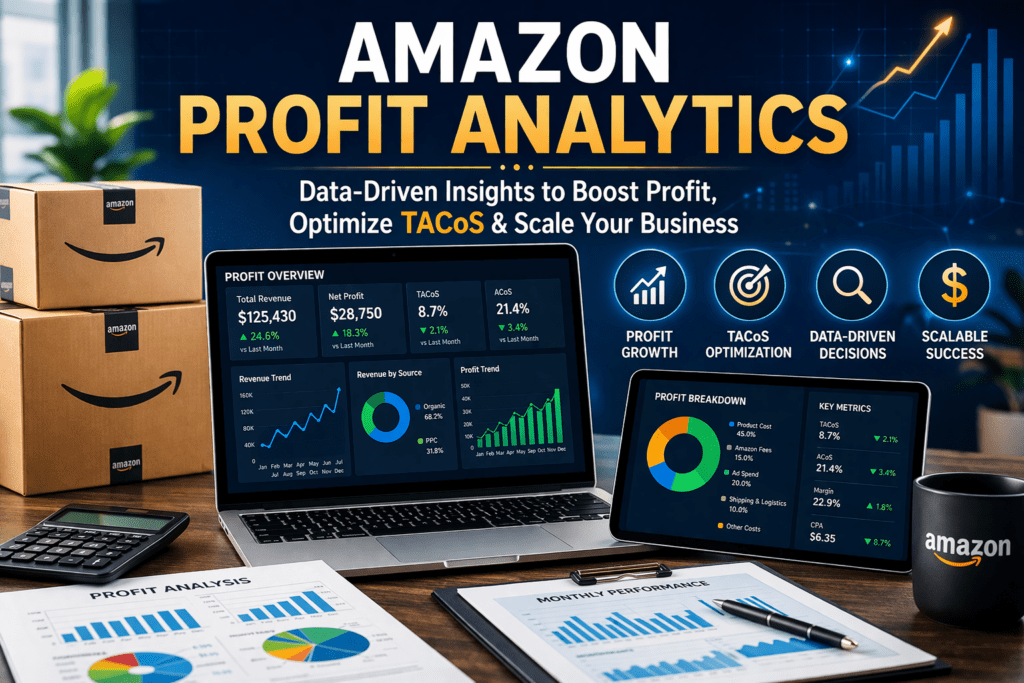
Most Amazon sellers focus on increasing sales, but revenue alone does not guarantee success. A business can scale rapidly and still struggle financially if profitability is not managed properly. This is why Amazon profit analytics is essential—it connects your Amazon SEO strategy, PPC campaigns, TACoS optimization, CTR, and CVR into one unified system focused on profit.
A data-driven seller does not focus on “How much did I sell?” but instead asks, “How much did I keep?” This mindset is what separates high-performing brands from sellers stuck in constant ad dependency.
What is Amazon Profit Analytics?
Amazon profit analytics is the process of analyzing all revenue streams and expenses to determine the true profitability of your business. It includes both organic sales driven by Amazon SEO and paid sales generated through PPC campaigns, along with all associated costs such as product sourcing, Amazon fees, and logistics.
By tracking these elements together, sellers gain a complete understanding of their financial performance. This allows them to make better decisions regarding pricing, advertising, and scaling. Without profit analytics, even a strong Amazon SEO + PPC strategy can fail to deliver sustainable results.
It includes analyzing:
- Organic and paid revenue
- Advertising costs (Amazon PPC)
- Product sourcing and manufacturing costs
- Amazon FBA and referral fees
- Shipping and logistics
This holistic view helps sellers build a strong Amazon SEO + PPC growth system that is focused on profitability rather than just revenue.
Core Profit Formula (Foundation Model)
At the core of profit analytics is a simple but powerful formula:
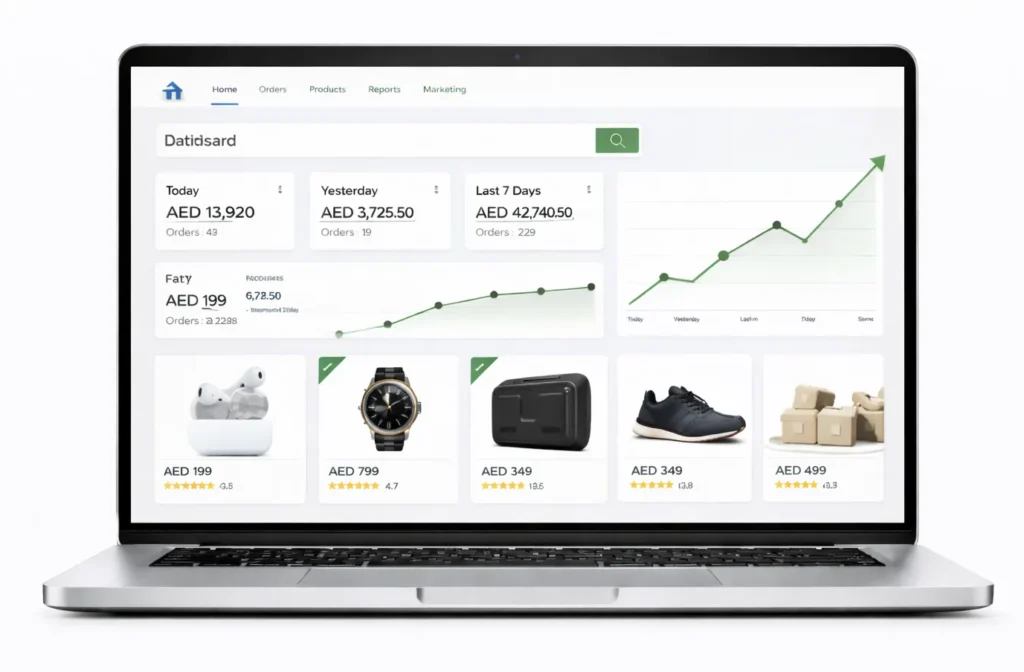
Profit = Revenue – (Ad Spend + Product Cost + Amazon Fees + Logistics)
This formula highlights an important truth: profitability depends not just on revenue, but on how efficiently you manage costs. Many sellers increase ad spend to boost sales, but without monitoring this equation, they risk reducing their overall profit.
A well-balanced strategy ensures that every increase in revenue is supported by controlled costs, making your Amazon growth system both scalable and sustainable.
Contribution Margin & Break-even Analysis
Understanding contribution margin is critical for scaling.
- Contribution Margin = Revenue – Variable Costs
- Break-even ACoS = Profit Margin %
Contribution margin and break-even analysis are essential for understanding how much you can spend on ads without losing money. The contribution margin shows how much profit remains after covering variable costs, while break-even ACoS defines the maximum advertising cost you can afford.
For example, if your product has a 30% profit margin, your break-even ACoS is also 30%. Spending beyond this level means your campaigns are no longer profitable. This insight is crucial for aligning your Amazon PPC optimization strategy with profitability goals rather than just growth.
Revenue Streams Breakdown (Organic vs PPC)
Amazon revenue comes from two main sources:
- Organic Sales (SEO-driven)
- Paid Sales (PPC-driven)
Amazon revenue is divided into two main sources: organic sales and paid sales. Organic sales come from your Amazon SEO efforts, where your product ranks naturally for relevant keywords. Paid sales, on the other hand, come from PPC campaigns that drive immediate traffic.
A profitable business gradually shifts toward a higher percentage of organic sales. This reduces dependency on ads and lowers overall costs. When your Amazon SEO strategy for brands or private label improves, your TACoS decreases, and your profit margins increase. This balance between organic and paid traffic is the foundation of long-term success.
Cost Structure Deep Dive
To optimize profit, you must understand your cost structure:
- Fixed costs (product sourcing, packaging)
- Variable costs (ads, shipping, fees)
Reducing unnecessary costs while maintaining quality is key to improving profitability.Understanding your cost structure is one of the most important aspects of profit analytics. Costs can be divided into fixed costs, such as product manufacturing and packaging, and variable costs, such as advertising spend, shipping, and Amazon fees.
Many sellers underestimate how quickly small increases in costs can reduce overall profit. For example, higher ad spend or increased shipping fees can significantly impact margins. By regularly analyzing your cost structure, you can identify areas for optimization and ensure that your Amazon TACoS optimization strategy remains effective.
Key Profit Metrics Every Seller Must Track
To build a scalable system, track:
- TACoS (Total Advertising Cost of Sales)
- ACoS (Ad efficiency)
- CPA (Cost per acquisition)
- LTV (Lifetime value)
- Conversion rate (CVR)
These metrics provide insights into both short-term performance and long-term growth.
Profit Analytics + TACoS Connection
TACoS is one of the most important indicators of how well your business is performing. When TACoS decreases, it usually means that your organic sales are increasing and your reliance on paid advertising is reducing. This directly improves profitability because you are generating more revenue without increasing costs.
A strong Amazon TACoS optimization strategy ensures that your business transitions from ad-driven growth to organic growth. This is the stage where profitability becomes more stable and scalable.TACoS is one of the strongest indicators of profit health. As your Amazon TACoS optimization strategy improves:
- Organic sales increase
- Ad spend becomes more efficient
- Profit margins improve
Lower TACoS = stronger SEO + better profitability
Pricing Strategy Optimization
Pricing plays a critical role in both conversion rate and profit margin. Setting the right price requires balancing competitiveness with profitability. If your price is too low, you may increase sales but reduce margins. If it is too high, you may lose conversions.
A data-driven pricing strategy considers competitor pricing, customer perception, and cost structure. Adjusting pricing strategically can significantly improve both CVR and overall profit.
- Competitive positioning
- Profit margins
- Customer perception
Dynamic pricing based on demand and competition can significantly improve profit.
Conversion Rate (CVR) Impact on Profit
Conversion rate is one of the most powerful drivers of profitability. A higher CVR means you can generate more sales from the same amount of traffic, reducing the need for additional ad spend. This directly lowers your cost per acquisition and improves your margins.
Improving CVR involves optimizing your listing with high-quality images, persuasive bullet points, and strong social proof. When your listing converts efficiently, it strengthens both your Amazon SEO performance and PPC efficiency, leading to better overall results.
Conversion rate plays a major role in profitability. A higher CVR means:
- More sales from the same traffic
- Lower cost per acquisition
- Higher revenue without increasing ad spend
Improving CVR through listing optimization is essential for both Amazon SEO and TACoS optimization.
PPC Efficiency & Profit Scaling
A strong Amazon PPC scaling strategy focuses on:
- Scaling high-performing keywords
- Reducing wasted spend
- Optimizing bids
Efficient PPC campaigns support SEO growth and improve overall profitability.
Ad Waste Reduction Strategy
One of the quickest ways to improve profitability is by eliminating wasted ad spend. Many sellers run campaigns without regularly reviewing performance data, leading to unnecessary spending on low-performing keywords.
By analyzing search term reports and identifying keywords with low conversion rates or high costs, you can reduce inefficiencies and improve overall campaign performance. This not only lowers TACoS but also increases profit margins.
Eliminating wasted ad spend is one of the fastest ways to increase profit.
Focus on:
- Removing low-converting keywords
- Adding negative keywords
- Monitoring search term reports
Efficient ad spend = higher profit margins
Inventory & Supply Chain Impact on Profit
Inventory management has a direct impact on profitability. Overstocking increases storage fees, while stockouts can lead to lost sales and reduced rankings. A well-managed inventory ensures consistent sales and stable performance.
Efficient supply chain management helps reduce costs and maintain product availability, which is essential for sustaining both Amazon SEO rankings and PPC performance.
Inventory management directly affects profit. Overstocking increases storage costs, while stockouts reduce sales and ranking.
A balanced inventory strategy ensures:
- Consistent sales
- Lower storage fees
- Stable ranking
External Traffic & Profit Growth
Driving external traffic (Google, social media) increases total revenue without increasing Amazon ad spend.
This improves:
- Sales velocity
- Organic ranking
- Profit margins
External traffic strengthens your Amazon SEO strategy for brands
Advanced Profit Benchmarks
Typical benchmarks:
- Profit margin: 20%–40%
- Break-even ACoS: 25%–35%
- Ideal TACoS: 5%–15%
These benchmarks help guide your Amazon growth strategy.
SEO vs PPC vs Profit (Strategic Model)
SEO and PPC play different but complementary roles in an Amazon business. PPC provides immediate visibility and helps generate data, while SEO builds long-term organic traffic. Profitability depends on balancing these two strategies effectively.
The goal is to use PPC to boost initial growth and then rely on SEO to sustain that growth. This reduces ad dependency and improves margins over time.
- SEO → long-term organic growth
- PPC → short-term traffic and data
- Profit → balance between both
The goal is to reduce PPC dependency while increasing organic sales.
Build a Profit-First Amazon System
A successful Amazon business is built on:
- Strong Amazon SEO strategy
- Efficient PPC campaigns
- Data-driven profit analytics
- Continuous optimization
When these elements align, you create a scalable and profitable system.
Frequently Asked Questions
1. What is Amazon profit analytics?
It is the process of analyzing revenue, costs, and ad spend to measure profitability.
2. Why is profit more important than revenue?
Revenue does not account for costs, while profit reflects actual earnings.
3. How do I calculate profit on Amazon?
Use the formula: Revenue minus all costs including ads and fees.
4. What is a good profit margin on Amazon?
20%–40% is considered healthy.
5. How does TACoS affect profit?
Lower TACoS increases profitability by reducing ad dependency.
6. What is break-even ACoS?
It is the maximum ACoS you can afford without losing money.
7. How can I improve Amazon profit?
Improve CVR, reduce ad waste, optimize pricing, and increase organic sales.
8. Does PPC reduce profit?
Not if optimized properly—PPC should support SEO and drive profitable sales.
9. What role does SEO play in profit?
SEO increases organic sales, reducing ad costs and improving margins.
10. How often should I track profit metrics?
Weekly tracking is recommended for consistent optimization.
11. Can I scale with low profit margins?
Scaling is risky with low margins; optimization is required first.
12. What is the best profit strategy?
Combine SEO, PPC, and data analytics for sustainable growth.