
The world of eCommerce fulfillment is evolving rapidly. Over the last decade, Amazon has dominated the conversation around logistics innovation, same-day delivery, and supply chain optimization.
But Walmart is now making a serious move to close that gap.
The company has quietly started testing dark stores in Dallas and Arkansas, and if you’re selling on Walmart Marketplace, this development could fundamentally reshape how products compete for visibility, conversions, and delivery advantage.
From my perspective after 10+ years working with marketplace brands, one thing is clear:
Delivery speed is becoming the new ranking signal in eCommerce marketplaces.
In this article, we’ll break down:
• What Walmart dark stores actually are
• Why Walmart is testing them again
• How they change the competitive dynamics for sellers
• Which products will benefit most
• How smart brands can prepare now
• How agencies like EcomRanker help sellers adapt to marketplace shifts
Understanding Walmart’s Dark Store Strategy
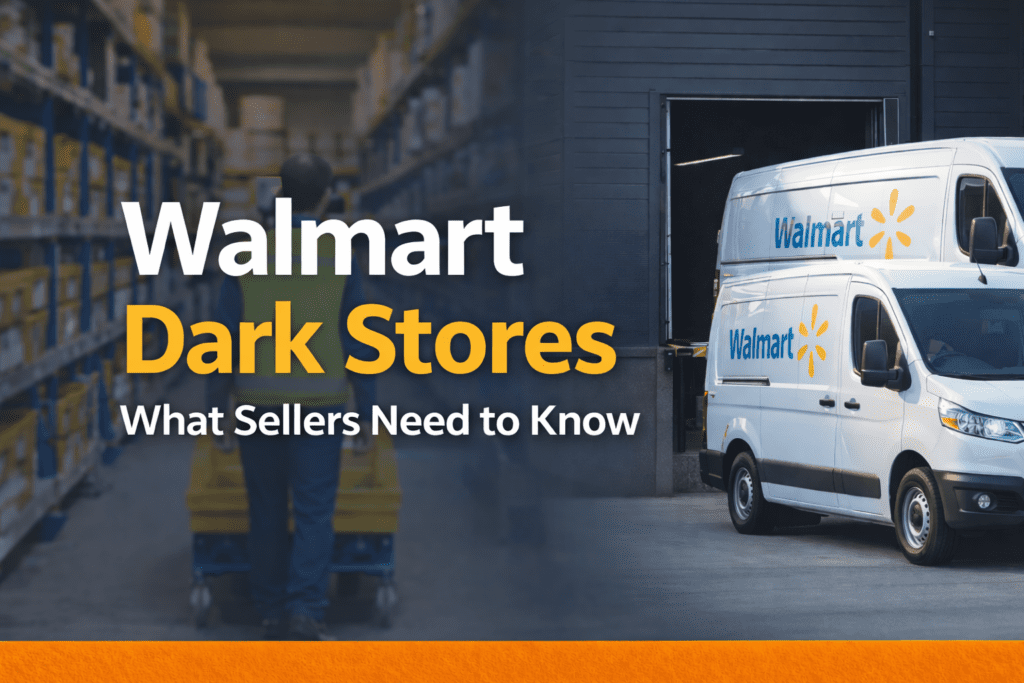
A dark store is essentially a retail location converted into a fulfillment center dedicated entirely to online orders.
Unlike traditional stores where customers shop in person, dark stores operate exclusively for order picking, packing, and fast delivery.
The concept allows retailers to deliver products much faster than traditional warehouse fulfillment.
In Walmart’s case, the goal is simple:
Compete directly with Amazon’s fast delivery ecosystem.
Amazon’s logistics advantage has long been one of its strongest competitive moats.
But Walmart has something Amazon doesn’t:
Thousands of retail locations close to customers.
By transforming some of these locations into dark stores, Walmart can drastically reduce last-mile delivery times.
Why Walmart Is Bringing Back Dark Stores
Interestingly, Walmart experimented with dark stores during the pandemic but eventually shut them down.
Now the concept is returning — and this time the strategy is much more refined.
There are three main reasons behind the revival.
1. The Amazon Delivery Pressure
Amazon has spent billions building one of the most advanced logistics networks in the world.
Customers now expect:
• same-day delivery
• next-day delivery
• ultra-fast shipping
Walmart’s dark store strategy is a direct response to this pressure.
By placing fulfillment hubs closer to customers, Walmart can dramatically reduce delivery times.
2. Rising Customer Expectations
Consumer behavior has changed dramatically in recent years.
Customers increasingly value delivery speed as much as product price.
According to marketplace data across hundreds of brands:
• fast delivery improves conversion rates
• faster shipping increases repeat purchases
• slow delivery increases cart abandonment
In other words:
Logistics speed directly impacts revenue.
3. Operational Efficiency
Dark stores allow Walmart to:
• optimize inventory flow
• reduce store congestion
• automate order picking
• improve delivery routing
This creates a more efficient system for handling online orders.
What Walmart Dark Stores Mean for Marketplace Sellers
Many sellers assume fulfillment changes won’t affect them.
That assumption is dangerous.
Marketplace infrastructure changes often create new competitive advantages for certain products.
And dark stores are no exception.
The Two-Tier Marketplace Effect
Walmart dark stores are expected to create a two-tier marketplace environment.
Tier 1: Products eligible for fast delivery
Tier 2: Products using traditional fulfillment
Products in the first tier gain major advantages:
• faster delivery
• better conversion rates
• improved search visibility
• higher customer satisfaction
This means sellers must start thinking about fulfillment strategy as a ranking factor.
Velocity Becomes the Key Qualification Metric
One of the most important signals Walmart is using to select products for dark store inventory is sales velocity.
High-velocity products are far more likely to be stocked in these locations.
Typical qualification indicators include:
• consistent daily sales
• predictable demand
• low seasonality
• strong reorder frequency
• stable inventory availability
Products that meet these criteria become ideal candidates for premium fulfillment access.
How Smart Sellers Should Respond
The smartest brands are not waiting for the rollout to expand.
Instead, they are preparing early.
Below are strategic actions sellers should take immediately.
Phase 1: Product Portfolio Analysis
Start by evaluating your product catalog.
Look for products with:
• consistent sales patterns
• predictable demand
• strong margins
• stable inventory flow
These SKUs are your dark store candidates.
Phase 2: Inventory Stability
Dark stores prioritize inventory reliability.
Products that frequently go out of stock are unlikely to qualify.
Sellers should focus on:
• improving supply chain consistency
• building inventory buffers
• forecasting demand more accurately
Phase 3: Listing Optimization
Fast delivery increases conversion rates, but listing quality still matters.
Sellers should optimize:
• product titles
• images
• pricing strategy
• keyword targeting
You can learn more about listing optimization in our guide:
Amazon Listing Optimization Guide
Phase 4: Marketplace Advertising Strategy
Advertising remains essential for maintaining sales velocity.
High-performing sellers typically combine:
• PPC campaigns
• organic ranking strategy
• conversion optimization
At EcomRanker, we help brands design integrated marketplace growth strategies that combine advertising and organic visibility.
Learn more here:
Marketplace Advertising Strategy
The Bigger eCommerce Trend: Speed as a Ranking Factor
Delivery speed is increasingly becoming a core competitive advantage.
Across major marketplaces we see the same pattern.
Fast delivery leads to:
• higher conversion rates
• improved customer satisfaction
• better product rankings
• stronger brand loyalty
This is why logistics innovation is becoming a central focus for major retailers.
Why Marketplace Sellers Should Pay Attention
Dark stores represent more than a fulfillment experiment.
They signal a larger shift in marketplace competition.
Winning brands in the next decade will be those that combine:
• strong product demand
• reliable inventory flow
• optimized listings
• fast fulfillment
This is exactly the type of integrated strategy we help brands build at EcomRanker.
The Role of Marketplace Strategy Agencies
Many brands struggle to keep up with constant marketplace changes.
New algorithms, fulfillment systems, and advertising tools appear every year.
Experienced agencies help brands stay ahead of these changes.
At EcomRanker, we specialize in:
• Amazon growth strategies
• Walmart marketplace optimization
• PPC campaign management
• product launch strategy
You can explore our services here:
Amazon PPC Management Services
Walmart Marketplace Growth Services
Amazon SEO Optimization Services
Frequently Asked Questions
What is a Walmart dark store?
A Walmart dark store is a retail location converted into a fulfillment hub used exclusively for processing online orders.
These stores do not serve walk-in customers and focus entirely on picking, packing, and shipping products quickly.
Why is Walmart testing dark stores again?
Walmart is reintroducing dark stores to compete with Amazon’s fast delivery infrastructure.
The goal is to reduce delivery times and improve eCommerce operational efficiency.
How will dark stores impact Walmart Marketplace sellers?
Dark stores may give high-velocity products faster delivery capabilities, which could increase conversion rates and improve marketplace visibility.
What products are most likely to benefit?
Products with consistent demand, strong inventory availability, and repeat purchase patterns are most likely to be prioritized for dark store fulfillment.
Should Walmart sellers change their strategy?
Yes. Sellers should focus on improving sales velocity, inventory consistency, and listing optimization to position their products for faster fulfillment programs.
Final Thoughts
Walmart’s dark store strategy marks another major step in the evolution of marketplace logistics.
As delivery speed becomes a key differentiator, sellers must start thinking beyond product listings and advertising.
Success will depend on building complete marketplace systems that combine product demand, inventory reliability, and fulfillment speed.
Brands that adapt early will gain a strong competitive advantage.
Those who ignore these shifts risk falling behind as marketplace expectations continue to evolve.
If you want help building a future-proof marketplace strategy, our team at EcomRanker helps brands optimize advertising, listings, and fulfillment strategies for long-term growth.