
In today’s highly competitive digital marketing world, businesses constantly search for the best strategies to increase visibility, generate leads, and drive sales. Two of the most powerful online marketing methods are Local SEO and Paid Ads. Both strategies help businesses attract customers, but they work in very different ways.
Some businesses invest heavily in Google Ads and paid campaigns for instant traffic, while others focus on Local SEO to build long-term organic visibility. Choosing the right strategy often depends on business goals, competition, budget, industry, and growth expectations.
The biggest question many businesses ask is:
Local SEO vs Paid Ads — which is better?
The answer depends on what you want to achieve. In this detailed guide, we will compare Local SEO and Paid Advertising, explain their benefits and limitations, and help businesses understand which strategy delivers better long-term results.
What Is Local SEO?
Local SEO (Local Search Engine Optimization) is the process of optimizing a business to appear in local search results on Google Search and Google Maps. It helps businesses attract nearby customers searching for products or services in specific geographic areas.
When users search for:
- “SEO agency near me”
- “best salon in London”
- “dentist nearby”
- “coffee shop in Manchester”
Google displays local business listings based on relevance, proximity, and trust.
Local SEO focuses on improving:
- Google Business Profile
- Website optimization
- Local citations
- Customer reviews
- Local backlinks
- Location pages
- Content marketing
The goal of Local SEO is to improve organic visibility without paying for every click or visitor.
Businesses looking to improve their Google Maps rankings should also read our guide on How to Optimize Your Google Business Profile for Better Rankings.
What Are Paid Ads?
Paid Ads are online advertisements where businesses pay platforms like Google, Facebook, Instagram, or YouTube to display their ads to targeted audiences.
The most common type is Google Ads, where businesses bid on keywords to appear at the top of search results instantly.
For example, businesses can run ads for keywords such as:
- SEO services
- Local plumber
- Ecommerce SEO agency
- Emergency electrician
Paid ads usually appear:
- Above organic search results
- On websites
- On social media platforms
- In YouTube videos
- In mobile apps
With Paid Advertising, businesses pay for:
- Clicks (PPC)
- Impressions
- Leads
- Conversions
Paid ads provide immediate visibility but require ongoing advertising budgets.
Main Difference Between Local SEO and Paid Ads
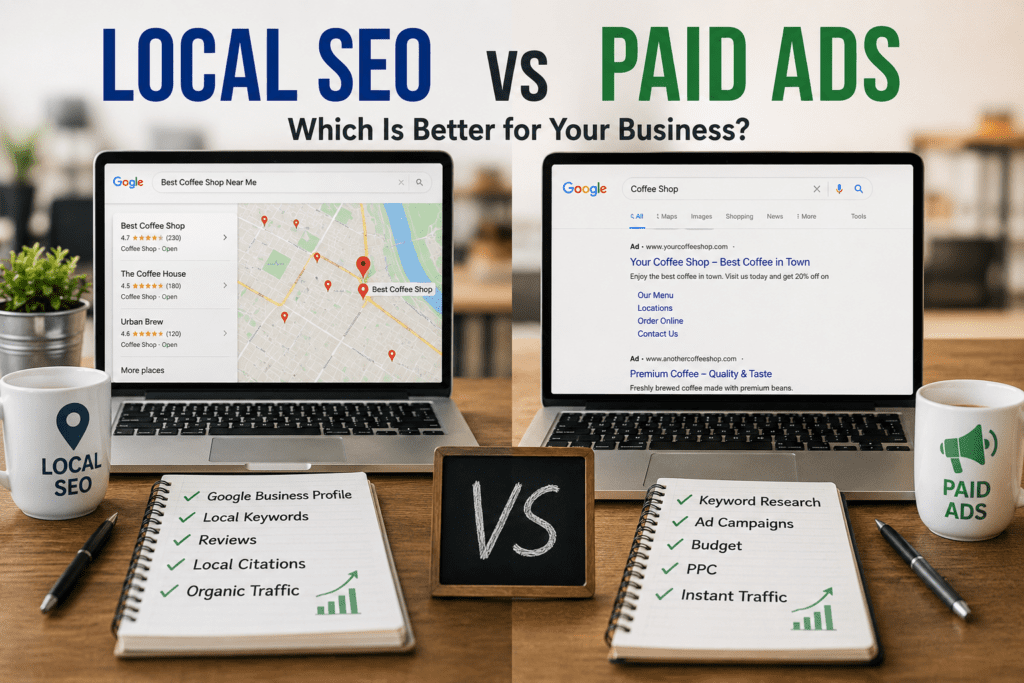
The biggest difference between Local SEO and Paid Ads is how traffic is generated.
Local SEO focuses on earning organic visibility naturally through optimization and trust-building, while paid ads generate traffic instantly through advertising spend.
Local SEO is a long-term strategy designed to create sustainable traffic over time. Paid ads are a short-term strategy that delivers immediate results as long as the advertising budget continues.
Local SEO vs Paid Ads Comparison Table
| Feature | Local SEO | Paid Ads |
|---|---|---|
| Traffic Source | Organic search traffic | Paid advertising traffic |
| Cost Structure | Long-term investment | Pay-per-click or impressions |
| Results Speed | Slow but sustainable | Immediate visibility |
| Long-Term ROI | High | Depends on budget |
| Trust Factor | Higher customer trust | Lower trust than organic |
| Click Cost | No direct click cost | Cost for every click |
| Ranking Duration | Long-lasting | Stops when ads stop |
| Best For | Long-term growth | Instant leads and traffic |
| Customer Intent | High local intent | High transactional intent |
| Competition | SEO-based competition | Bid-based competition |
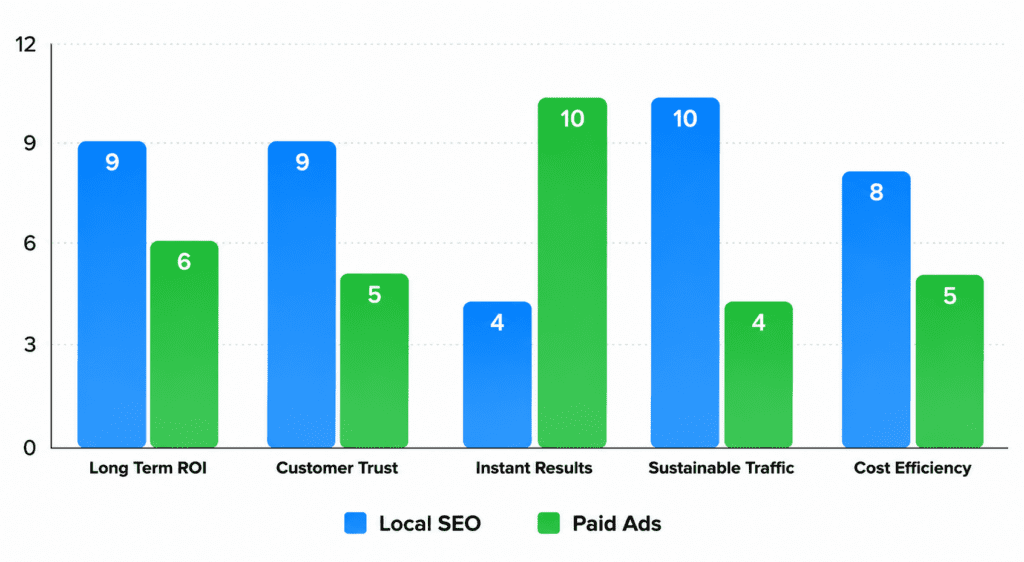
Local SEO vs Paid Ads Comparison
Comparison of long-term benefits between Local SEO and Paid Ads strategies.
Benefits of Local SEO
Long-Term Organic Visibility
One of the biggest advantages of Local SEO is long-term visibility. Once a business achieves strong rankings in Google Maps and local search results, it can continue receiving traffic without paying for every visitor.
Unlike paid ads, organic rankings can generate leads consistently even when advertising budgets are reduced.
Businesses that invest in local SEO often experience sustainable growth over time.
Higher Customer Trust
Most users trust organic search results more than advertisements. Businesses appearing naturally in Google Maps and local results are often perceived as more credible and trustworthy.
Customer reviews, optimized business profiles, and strong local content improve trust even further.
Trust plays a major role in customer decision-making, especially for local businesses.
Better Return on Investment
Although Local SEO requires time and effort, it often produces better long-term ROI compared to paid ads.
Businesses continue receiving organic traffic without paying for every click, which reduces customer acquisition costs over time.
For small businesses with limited budgets, local SEO can provide more sustainable growth opportunities.
Improved Google Maps Visibility
Local SEO helps businesses rank in:
- Google Maps
- Google Map Pack
- “Near me” searches
- Mobile local searches
Google Maps visibility is extremely valuable because customers searching locally often have high buying intent.
Limitations of Local SEO
Results Take Time
One of the main disadvantages of local SEO is that results are not immediate.
Depending on competition, businesses may need:
- Several weeks
- Several months
- Continuous optimization
before seeing major ranking improvements.
Businesses looking for instant leads may find SEO too slow initially.
Requires Continuous Optimization
Local SEO is not a one-time process.
Businesses must continuously:
- Update content
- Manage reviews
- Build backlinks
- Optimize profiles
- Monitor rankings
Competitors are also improving their SEO strategies constantly, so businesses must remain active.
Benefits of Paid Ads
Instant Visibility
The biggest advantage of Paid Ads is immediate exposure.
Businesses can appear at the top of Google search results within hours of launching campaigns.
This makes paid advertising ideal for:
- New businesses
- Promotions
- Seasonal campaigns
- Product launches
- Emergency services
Fast Lead Generation
Paid ads can generate leads quickly because businesses target high-intent keywords directly.
For example:
- Emergency plumber near me
- Best dentist nearby
- SEO agency for ecommerce
These searches often lead to fast conversions.
Highly Targeted Advertising
Paid ads allow businesses to target:
- Locations
- Age groups
- Interests
- Devices
- Search intent
- Demographics
This precision helps businesses reach highly relevant audiences quickly.
Scalable Marketing Strategy
Businesses can increase or reduce ad spending anytime depending on goals and performance.
Paid advertising provides flexibility for:
- Budget scaling
- Seasonal marketing
- Event promotions
- Product launches
Limitations of Paid Ads
Expensive Over Time
Paid ads can become expensive, especially in competitive industries.
Businesses pay for:
- Every click
- Every impression
- Every lead
High-cost keywords may quickly consume advertising budgets.
Traffic Stops When Ads Stop
Unlike local SEO, paid traffic disappears immediately once campaigns are paused.
Businesses relying only on paid ads may struggle with long-term sustainability if budgets decrease.
Lower Trust Compared to Organic Results
Many users skip advertisements and trust organic search results more.
Customers often view organic rankings as more authentic and trustworthy than sponsored listings.
Which Strategy Is Better for Small Businesses?
For most small businesses, the ideal strategy is combining both Local SEO and Paid Ads.
Local SEO provides:
- Long-term growth
- Sustainable traffic
- Stronger brand trust
Paid ads provide:
- Immediate traffic
- Fast lead generation
- Promotional flexibility
Using both strategies together creates a balanced digital marketing approach.
For example:
- Use paid ads for instant visibility
- Build local SEO for long-term rankings
This combination often produces the best business growth results.
Best Situations for Local SEO
Local SEO works best for:
- Restaurants
- Dentists
- Local agencies
- Salons
- Lawyers
- Home services
- Medical clinics
Businesses targeting nearby customers benefit greatly from strong local SEO strategies.
To improve your local rankings further, read our article on 7 Tips for an Effective Local SEO and AIO Strategy.
Best Situations for Paid Ads
Paid ads are highly effective for:
- Product launches
- Ecommerce stores
- Competitive industries
- Seasonal promotions
- Fast lead generation
- Limited-time offers
Businesses needing immediate traffic often benefit from advertising campaigns.
Can Local SEO and Paid Ads Work Together?
Yes, combining Local SEO and Paid Ads often creates the strongest marketing strategy.
Benefits of combining both include:
- More search visibility
- Increased brand awareness
- Better conversion opportunities
- More customer touchpoints
- Improved lead generation
Businesses appearing in both ads and organic search results often achieve higher click-through rates and stronger customer trust.
Future of Local SEO and Paid Advertising
Digital marketing continues evolving rapidly with AI-powered search and changing user behavior.
Future trends include:
- AI-driven search results
- Voice search optimization
- Smart ad targeting
- Hyperlocal SEO
- Personalized advertising
Businesses that invest in both SEO and paid advertising strategically will maintain stronger online visibility and competitive advantages.
Final Thoughts
When comparing Local SEO vs Paid Ads, there is no single perfect answer for every business.
Local SEO is better for:
- Long-term growth
- Sustainable traffic
- Better ROI
- Higher trust
Paid Ads are better for:
- Immediate visibility
- Fast leads
- Promotions
- Scalable campaigns
The best strategy for most businesses is using both together strategically.
Businesses should focus on:
- Building strong local SEO foundations
- Optimizing Google Business Profiles
- Running targeted paid campaigns
- Creating high-quality content
- Improving customer trust
Combining both strategies helps businesses maximize visibility, generate leads consistently, and achieve long-term digital growth.
FAQs About Local SEO vs Paid Ads
1. Is Local SEO Better Than Paid Ads?
Local SEO is better for long-term organic growth and sustainable traffic, while paid ads are better for immediate visibility and fast lead generation. The best choice depends on business goals, competition, and marketing budget.
2. Which Is More Affordable: Local SEO or Paid Ads?
Local SEO is usually more cost-effective long-term because businesses do not pay for every click. Paid ads can become expensive over time, especially in competitive industries.
3. How Long Does Local SEO Take to Show Results?
Local SEO usually takes several weeks to several months depending on competition, optimization quality, and local market conditions.
4. Do Paid Ads Improve Organic SEO Rankings?
Paid ads do not directly improve SEO rankings, but they can increase brand visibility, traffic, and customer engagement, which may indirectly support SEO efforts.
5. Can Small Businesses Compete Using Local SEO?
Yes, local SEO allows small businesses to compete effectively by targeting nearby customers and optimizing local search visibility.
6. Are Google Ads Worth It for Local Businesses?
Google Ads can be very effective for local businesses needing immediate leads, especially for competitive or high-conversion industries.
7. Which Generates Better ROI?
Local SEO often generates better long-term ROI, while paid ads provide faster but temporary results.
8. Should Businesses Use Both Local SEO and Paid Ads?
Yes, combining both strategies usually produces the strongest results by balancing immediate traffic with long-term organic growth.
9. Why Do Customers Trust Organic Results More?
Users often see organic results as more authentic and credible than paid advertisements, especially when businesses have strong reviews and local authority.
10. What Is the Future of Local SEO and Paid Ads?
Future trends include AI-powered search, voice search optimization, personalized ads, and hyperlocal targeting strategies.