
The Biggest Risk in Website Redesign (That Most Businesses Ignore)
Redesigning your website is one of the most exciting steps in growing your business online.
It gives you the opportunity to:
- Improve your design
- Upgrade user experience
- Modernize your brand
- Increase conversions
But here’s the reality most businesses overlook:
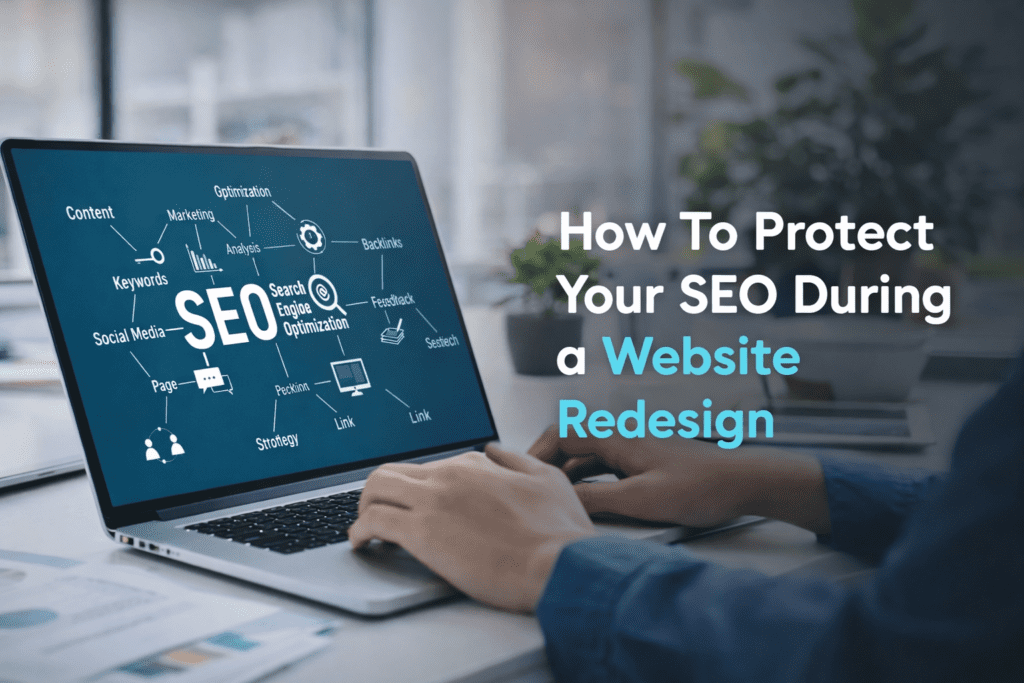
A website redesign can destroy your SEO if not handled properly.
Many businesses spend months (or years) building their organic traffic. They rank on Google, generate leads, and build authority.
Then they redesign their website…
And suddenly:
- Rankings drop
- Traffic disappears
- Leads decline
All because SEO was not considered during the redesign process.
As explained earlier, redesigning without SEO planning can lead to loss of rankings, broken links, and reduced visibility .
At Ecom Ranker, we’ve seen this happen countless times—and we’ve also helped businesses redesign their websites without losing SEO, and often improving it.
Why Website Redesign Is Important (But Risky)
Over time, every website needs an update.
Design trends change, user expectations evolve, and technology improves. A website that looked modern five years ago may now feel outdated.
A redesign helps:
- Improve user experience
- Enhance performance
- Align with branding
- Add new features
But while redesign improves appearance and usability, it can negatively impact SEO if not managed carefully.
This is because SEO is deeply connected to:
- URLs
- Content
- Site structure
- Internal linking
Even small changes can affect rankings.
How Website Redesign Affects SEO (Deep Explanation)
When you redesign your website, you are not just changing design—you are changing the foundation of your SEO.
Let’s understand how.
1. URL Structure Changes Can Break Rankings
One of the biggest SEO risks during redesign is changing URLs.
Search engines have already indexed your existing pages. If URLs change without proper redirection:
- Pages show 404 errors
- Link equity is lost
- Rankings drop
This is one of the most common mistakes.
2. Content Changes Can Remove SEO Value
Your content is the backbone of your SEO.
If you:
- Remove high-ranking pages
- Change keywords
- Rewrite content poorly
You lose rankings.
Search engines rely on your content to understand your relevance.
3. Technical SEO Issues Can Damage Performance
During redesign, technical issues often arise:
- Slow loading speed
- Broken links
- Poor mobile optimization
These directly affect:
- Rankings
- User experience
4. Metadata Changes Can Impact Visibility
Meta titles and descriptions help search engines understand your pages.
If they are removed or poorly optimized:
Your click-through rate and rankings drop.
5. Internal Linking Structure Gets Disrupted
Internal links help search engines crawl your website.
If linking structure breaks:
- Pages lose authority
- Crawlability decreases
SEO performance weakens.
The Right Approach: Redesign Without Losing SEO
A successful website redesign is not just about visuals.
It’s about preserving and improving your SEO at the same time.
At Ecom Ranker, we follow a strategy that ensures:
- SEO is protected
- Traffic remains stable
- Rankings improve after redesign
How To Protect SEO During Website Redesign (Expert Strategy)
Start With a Complete SEO Audit
Before redesigning anything, you must understand your current SEO performance.
Analyze:
- Top-performing pages
- Ranking keywords
- Backlinks
- Traffic sources
This helps you identify what must be preserved.
Maintain URL Structure (Or Use Proper Redirects)
Keeping URLs unchanged is the safest option.
If changes are necessary:
Use 301 redirects to transfer SEO value.
This ensures:
- No broken links
- No ranking loss
Preserve High-Performing Content
Not all content is equal.
Some pages bring traffic, others don’t.
Focus on:
- Retaining top pages
- Improving existing content
- Keeping important keywords
Optimize Metadata Properly
Meta titles and descriptions should:
- Include keywords
- Reflect content accurately
- Improve CTR
Updating metadata is good—but only if done strategically.
Improve Website Speed During Redesign
A redesign is the perfect time to fix speed issues.
Optimize:
- Images
- Code
- Hosting
Faster websites rank better.
Ensure Mobile-Friendly Design
Your redesigned website must work perfectly on mobile.
This includes:
- Responsive layout
- Fast loading
- Easy navigation
Mobile optimization is critical for SEO.
Maintain Internal Linking Structure
Ensure your internal links:
- Are not broken
- Follow a logical structure
- Support SEO
Explore SEO services at
Monitor Performance Before & After Launch
Use tools like:
- Google Analytics
- Search Console
Track:
- Traffic changes
- Ranking fluctuations
- Errors
Test Before Going Live
Before launching your redesigned website:
Check for:
- Broken links
- Missing pages
- SEO errors
Testing prevents major issues after launch.
Post-Launch SEO Optimization
After redesign:
- Monitor rankings
- Fix errors quickly
- Optimize content
SEO is not one-time—it’s continuous.
Why Choose Ecom Ranker for Website Redesign SEO?
At Ecom Ranker, we understand that redesign is not just about looks—it’s about performance.
We help businesses:
- Redesign without losing SEO
- Improve rankings
- Increase traffic
- Boost conversions
FAQs
Can website redesign affect SEO?
Yes, both positively and negatively depending on how it is handled.
How to redesign a website without losing SEO?
By maintaining URLs, content, internal links, and technical SEO.
What is the biggest SEO risk in redesign?
Changing URLs without redirects.
Final Thoughts
Website redesign is a powerful opportunity.
But it comes with risks.
If done wrong:
- You lose rankings
- You lose traffic
- You lose revenue
If done right:
- You improve SEO
- You increase conversions
- You scale your business