

Why Combining Amazon SEO + PPC is Critical
Many Amazon sellers make the mistake of focusing only on one strategy—either PPC or SEO. Some believe that running ads alone will generate enough sales, while others rely only on organic ranking. However, this limits growth and increases risk.
The reality is that Amazon SEO and PPC are not separate—they are deeply connected. When used together, they create a system that drives both immediate and long-term success. PPC gives instant visibility, while SEO ensures sustainable traffic and profitability.
Key Takeaways
- PPC drives quick traffic and sales
- SEO builds long-term organic ranking
- Combining both increases total visibility
- Data from PPC improves SEO decisions
As explained earlier, relying on just one strategy reduces your full potential on Amazon
What is Amazon SEO?
Amazon SEO is the process of optimizing your product listing so that it appears higher in organic search results. It focuses on improving discoverability through keywords, content, and conversion optimization.
A well-optimized listing not only ranks higher but also converts better, which further boosts rankings due to Amazon’s algorithm.
Key Components of Amazon SEO
Amazon SEO is built on several critical elements that work together to improve your product’s visibility and conversion rate. The foundation starts with a keyword-rich product title, which helps Amazon understand your product and match it with relevant search queries. A well-optimized title increases both discoverability and click-through rate.
Next are optimized bullet points, which clearly communicate product features and benefits while naturally incorporating important keywords. These bullets not only help with ranking but also influence buying decisions by highlighting value.
Another important element is backend search terms, where you can include additional keywords that are not visible to customers but help improve indexing and reach. This ensures your product appears for a wider range of search queries.
High-quality images play a major role in both SEO and conversions. Clear, professional images improve click-through rates and engagement, which are key ranking factors on Amazon.
Finally, A+ content enhances your product listing with rich visuals, detailed descriptions, and brand storytelling. This improves customer trust and increases conversion rates, further boosting your ranking.
Why SEO Matters on Amazon
Amazon SEO is essential for building long-term success on the platform. One of its biggest advantages is that it generates free organic traffic, allowing your product to attract customers without continuous ad spending.
It also helps in reducing dependency on ads. As your product ranks higher organically, you can rely less on PPC campaigns, leading to better profit margins over time.
Another key benefit is that SEO improves conversion rates. A well-optimized listing with strong content and visuals makes it easier for customers to trust your product and complete a purchase.
Most importantly, SEO helps in building long-term brand value. Consistent rankings, strong visibility, and high-quality listings establish your brand as a trusted presence on Amazon, leading to sustainable growth.
What is Amazon PPC?
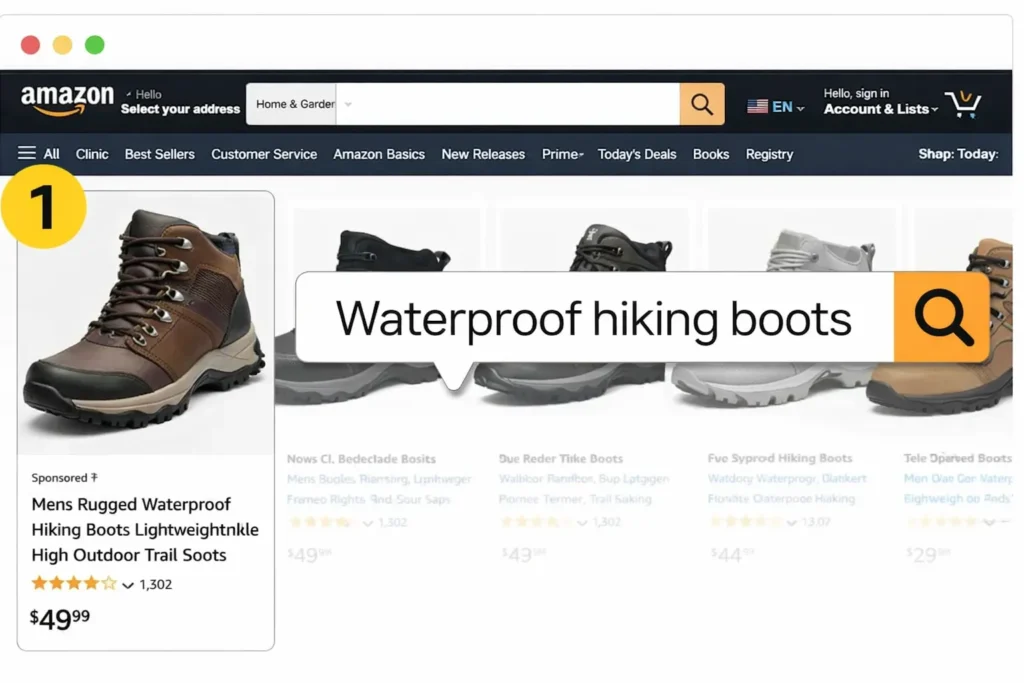
Amazon PPC is a paid advertising system where sellers pay per click to promote their products. These ads appear in high-visibility placements like search results and product pages.
PPC is essential for new product launches and scaling because it allows sellers to reach customers instantly.
Core Benefits of Amazon PPC
Amazon PPC offers several powerful advantages that help sellers grow quickly on the platform. One of the biggest benefits is immediate visibility, as your products appear at the top of search results, allowing you to reach potential customers instantly. This is especially useful in competitive categories where organic ranking takes time.
Another major advantage is fast sales generation. PPC campaigns drive targeted traffic to your listings, helping you generate sales quickly and improve your product’s sales velocity. This increased activity also positively impacts your organic rankings over time.
PPC is also essential for keyword data collection. By running campaigns, you can identify which keywords are driving clicks and conversions. This data can then be used to optimize your listing SEO, making your overall strategy more effective and data-driven.
Additionally, PPC provides strong product launch support. When launching a new product, ads help you gain visibility, generate initial sales, and build momentum, which is crucial for ranking organically on Amazon.
Where Amazon PPC Ads Appear
Amazon PPC ads are strategically placed in high-visibility areas across the platform to maximize exposure and conversions. One of the most prominent placements is at the top of search results, where your product appears before organic listings, increasing the chances of getting clicks.
Ads also appear on product detail pages, allowing you to target customers who are already browsing similar or competing products. This placement helps capture high-intent buyers and redirect them to your listing.
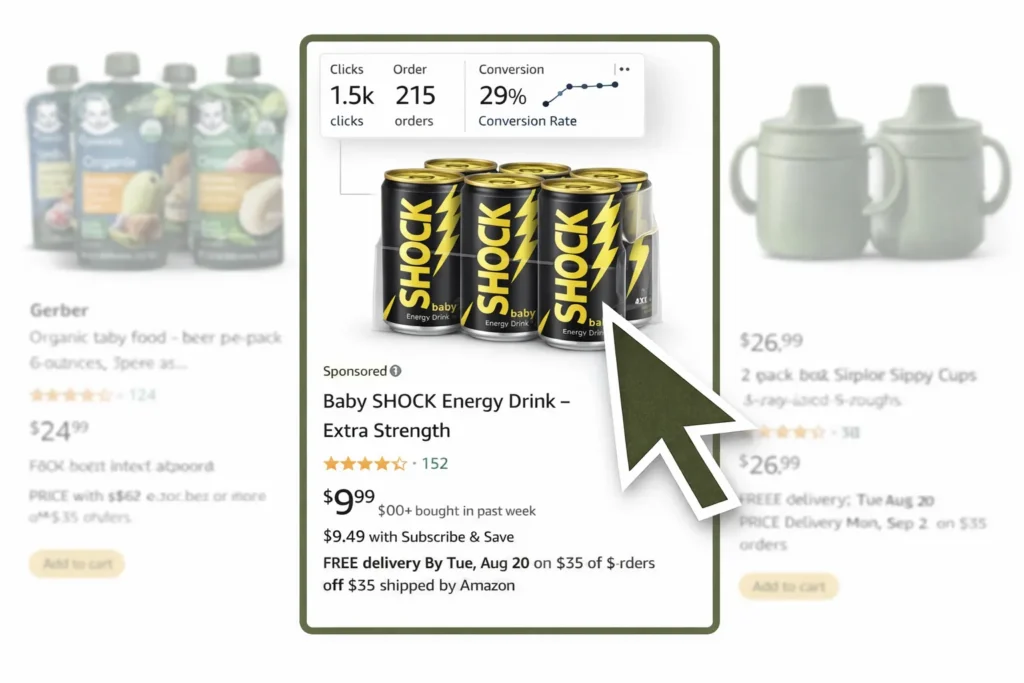
In addition, PPC ads show as sponsored product listings, which are integrated within search results and product pages. These ads blend naturally with organic listings, making them highly effective in attracting customer attention and driving sales.
How Amazon SEO and PPC Work Together
Amazon SEO and PPC complement each other by sharing data and improving performance simultaneously. PPC helps push keywords up in ranking, while SEO ensures those rankings stay stable.
This synergy is what separates average sellers from top-performing brands.
How PPC Helps SEO
- Generates sales velocity
- Improves keyword ranking
- Pushes keywords into “strike zone”
- Signals relevance to Amazon algorithm
How SEO Helps PPC
- Improves conversion rates
- Reduces cost per click
- Increases ad efficiency
- Boosts ROI
As highlighted, PPC helps move keywords into ranking positions (20–50), improving organic performance
The Foundation of SEO + PPC
Keyword strategy is the backbone of combining Amazon SEO and PPC. Without proper keyword research and data sharing, both strategies fail to perform effectively.
The key is to continuously test keywords in PPC and then integrate high-performing ones into your SEO.
Primary Keywords
Primary keywords are your main target terms with high search volume and strong competition. These should be naturally included in your title, headings, and core content to signal relevance to search engines.
- Amazon SEO and PPC strategy
The main focus keyword that targets users looking to combine both strategies for growth and ranking. - Amazon listing optimization
A high-intent keyword focused on improving product pages for better visibility and conversions. - Amazon PPC optimization
Targets users aiming to improve ad performance, reduce costs, and increase ROI.
Secondary Keywords
Secondary keywords support your primary terms and help you rank for related searches. They add depth to your content and improve topical authority.
- Amazon keyword research
Focuses on finding high-performing keywords to use in both SEO and PPC campaigns. - Amazon ranking strategy
Targets users looking for methods to improve product ranking on Amazon. - PPC data for SEO
Highlights the importance of using paid campaign insights to enhance organic optimization.
Long-Tail Keywords
Long-tail keywords are more specific and less competitive, making them easier to rank for. They often bring highly targeted traffic with better conversion potential.
- how to combine amazon ppc and seo
Targets users searching for step-by-step guidance on integrating both strategies effectively. - amazon ppc keyword strategy 2026
Focuses on updated and future-ready PPC keyword strategies for competitive advantage. - reduce ACOS with amazon seo
Appeals to sellers looking to lower advertising costs by improving organic rankings.
The 2:1 Keyword Ratio Strategy
One of the most effective strategies is maintaining a balance between SEO and PPC keywords. This ensures you are not overly dependent on ads while still driving growth.
The recommended approach is to focus more on SEO while using PPC strategically.
How It Works
- 2 keywords optimized for SEO
- 1 keyword targeted in PPC
Benefits of This Strategy
- Strong organic foundation
- Controlled ad spend
- Balanced growth
- Better keyword coverage
This ratio helps maintain long-term profitability while scaling effectively
Budget Allocation Strategy
Managing budget correctly is critical when combining SEO and PPC. Overspending on ads without SEO can reduce profitability, while ignoring PPC slows growth.
A balanced budget ensures both short-term and long-term success.
Recommended Budget Split
- PPC: 10% of revenue
- SEO: 3% investment
Why This Works
- PPC drives immediate traffic
- SEO reduces future ad dependency
- Improves overall ROI
Step-by-Step Strategy to Combine SEO + PPC
To successfully combine both strategies, you need a structured approach. Random execution leads to wasted ad spend and poor rankings.
Step 1: Keyword Research
Start by identifying high-volume and high-converting keywords using tools.
- Use Helium 10 or Jungle Scout
- Focus on buyer-intent keywords
- Analyze competitor listings
Step 2: Launch PPC Campaigns
Run different types of campaigns to gather data and test keywords.
- Auto campaigns for discovery
- Broad match for reach
- Phrase match for targeting
Step 3: Analyze PPC Data
PPC data gives real insights into what actually works in the market.
- Identify high CTR keywords
- Track conversion rates
- Focus on low ACOS keywords
Step 4: Optimize SEO Listing
Now integrate winning keywords into your listing.
- Add keywords in title
- Update bullet points
- Improve description
Step 5: Scale PPC Campaigns
After optimization, scale only the profitable campaigns.
- Increase bids on winners
- Pause non-performing keywords
- Focus on ROI
Benefits of Combining Amazon SEO and PPC
Using both Amazon SEO and PPC together creates a powerful growth engine that enhances visibility, improves conversions, and increases overall profitability. Instead of relying on one strategy, combining both allows sellers to scale faster while maintaining long-term stability.
Key Benefits
Better conversion rates
Optimized listings combined with targeted ads lead to higher conversions, making both SEO and PPC more effective.
Double visibility (ads + organic)
Your product appears in both sponsored ads and organic results, increasing chances of clicks and dominating search results.
Higher sales velocity
PPC drives immediate sales while SEO sustains them, creating consistent momentum that boosts overall product ranking.
Improved keyword ranking
PPC helps identify and push high-performing keywords, which improves organic rankings when integrated into your listing.
Lower advertising costs
As your product ranks organically, you rely less on ads, reducing ACOS and improving profit margins over time.
Advanced Strategies Used by Experts
Top Amazon sellers don’t rely on basic tactics—they implement advanced, data-driven strategies to dominate rankings, reduce costs, and maximize profits. These techniques focus on optimizing every stage of the customer journey while continuously improving performance using real data.
Advanced Techniques
- PPC funnel strategy (Awareness → Conversion)
This strategy targets customers at different stages, starting with broad campaigns for awareness and narrowing down to exact match keywords for high-converting buyers. - Keyword ranking push campaigns
Sellers aggressively bid on selected high-value keywords to boost rankings quickly, then reduce ad spend once organic positions are secured. - Listing A/B testing
Testing different titles, images, and bullet points helps identify what drives the highest conversion rates and improves overall performance. - Conversion rate optimization
Enhancing images, content, and product presentation increases the likelihood of turning clicks into sales, improving both SEO and PPC results.
Why These Work
- Data-driven decisions
Every strategy is based on real performance data, ensuring smarter optimization and better ROI instead of guesswork. - Continuous improvement
Regular testing and optimization allow sellers to adapt to market trends and stay ahead of competitors. - Competitive advantage
Using advanced strategies helps sellers outperform competitors who rely only on basic SEO or PPC methods.
Common Mistakes to Avoid
Many sellers fail because they do not properly integrate SEO and PPC. Avoiding these common mistakes can significantly improve your rankings, reduce ad costs, and increase overall profitability.
Avoid These Errors
- Running PPC without SEO
Running ads without optimizing your listing leads to poor conversions and wasted budget, as traffic doesn’t turn into sales. - Ignoring keyword data
PPC campaigns generate valuable keyword insights, and ignoring this data means missing opportunities to improve rankings and performance. - Overspending on ads
Spending aggressively without strategy increases ACOS and reduces profit margins, especially when campaigns are not optimized. - Poor listing optimization
Weak titles, images, and bullet points reduce conversion rates, which negatively impacts both SEO rankings and PPC efficiency. - Not tracking performance metrics
Without monitoring metrics like CTR, ACOS, and conversion rate, you cannot identify what’s working or optimize your campaigns effectively.
FAQs: Amazon SEO and PPC Strategy
1. What is the difference between Amazon SEO and PPC?
Amazon SEO focuses on optimizing product listings to rank organically in search results, while Amazon PPC is a paid advertising model where sellers pay for clicks to gain visibility.
SEO builds long-term traffic and reduces dependency on ads, whereas PPC provides immediate visibility and helps generate quick sales.
Key Differences
- SEO = Organic ranking
- PPC = Paid visibility
- SEO = Long-term growth
- PPC = Instant traffic
2. Should I use Amazon SEO or PPC first?
You should ideally use both together from the beginning. However, if you are launching a new product, PPC should be prioritized initially to generate traffic and sales data.
Once you start getting keyword data from PPC, you should optimize your SEO listing to improve organic rankings.
Best Approach
- Start with PPC for data
- Use data to improve SEO
- Gradually reduce ad dependency
3. How does Amazon PPC help SEO ranking?
Amazon PPC helps SEO by increasing product visibility, generating clicks, and driving sales. These signals tell Amazon’s algorithm that your product is relevant, which improves organic rankings.
PPC can push keywords into higher ranking positions, especially in the early stages.
How PPC Boosts SEO
- Increases sales velocity
- Improves keyword ranking
- Generates conversion data
- Builds relevance signals
4. Can Amazon SEO reduce PPC costs?
Yes, strong Amazon SEO can significantly reduce PPC costs over time. When your product ranks organically for high-volume keywords, you rely less on paid ads.
Additionally, optimized listings improve conversion rates, which lowers cost-per-click and improves ad performance.
Benefits of SEO for PPC
- Lower ACOS
- Higher conversion rate
- Reduced ad spend
- Better ROI
5. What is the best keyword strategy for Amazon SEO and PPC?
The best strategy is to use PPC campaigns to discover high-performing keywords and then integrate those keywords into your SEO listing.
This creates a data-driven approach where both strategies support each other.
Keyword Strategy Tips
- Use PPC for keyword testing
- Add converting keywords to listing
- Focus on long-tail keywords
- Continuously optimize
6. What is the ideal budget split between SEO and PPC?
A commonly recommended budget split is allocating around 10% of revenue to PPC and 3% to SEO. This ensures a balance between immediate growth and long-term sustainability.
Over time, as SEO improves, your reliance on PPC can decrease.
Budget Breakdown
- PPC: 10% (growth driver)
- SEO: 3% (long-term investment)
7. How long does Amazon SEO take to show results?
Amazon SEO typically takes a few weeks to a few months to show noticeable results, depending on competition, keyword difficulty, and listing quality.
However, combining SEO with PPC can speed up this process significantly.
Timeline Factors
- Competition level
- Keyword difficulty
- PPC support
- Listing optimization
8. What are the biggest mistakes in Amazon SEO and PPC?
Many sellers fail because they treat SEO and PPC separately instead of combining them into one strategy.
Ignoring data and poor optimization are also major issues.
Common Mistakes
- Running PPC without SEO
- Ignoring keyword data
- Over-spending on ads
- Poor listing optimization
- Not tracking performance
9. How can I rank my Amazon product faster?
To rank faster, you need to combine aggressive PPC campaigns with strong SEO optimization. Focus on high-converting keywords and drive consistent sales.
This increases your product’s relevance and ranking speed.
Ranking Tips
- Target high-converting keywords
- Optimize listing fully
- Run PPC campaigns aggressively
- Improve conversion rate
10. Is Amazon PPC worth it in 2026?
Yes, Amazon PPC remains one of the most effective tools for increasing visibility and sales. However, relying only on PPC is not sustainable.
The best results come from combining PPC with SEO for long-term growth and profitability.
Final Insight
- PPC = Short-term growth
- SEO = Long-term success
- Together = Maximum profit
Conclusion
Amazon SEO and PPC are not optional—they are essential together. When combined correctly, they create a system that drives both immediate results and long-term success.
Final Insights
- PPC gives speed
- SEO builds stability
- Together they maximize profit
If you want to dominate Amazon in 2026, combining SEO and PPC is no longer a strategy—it’s a necessity.