

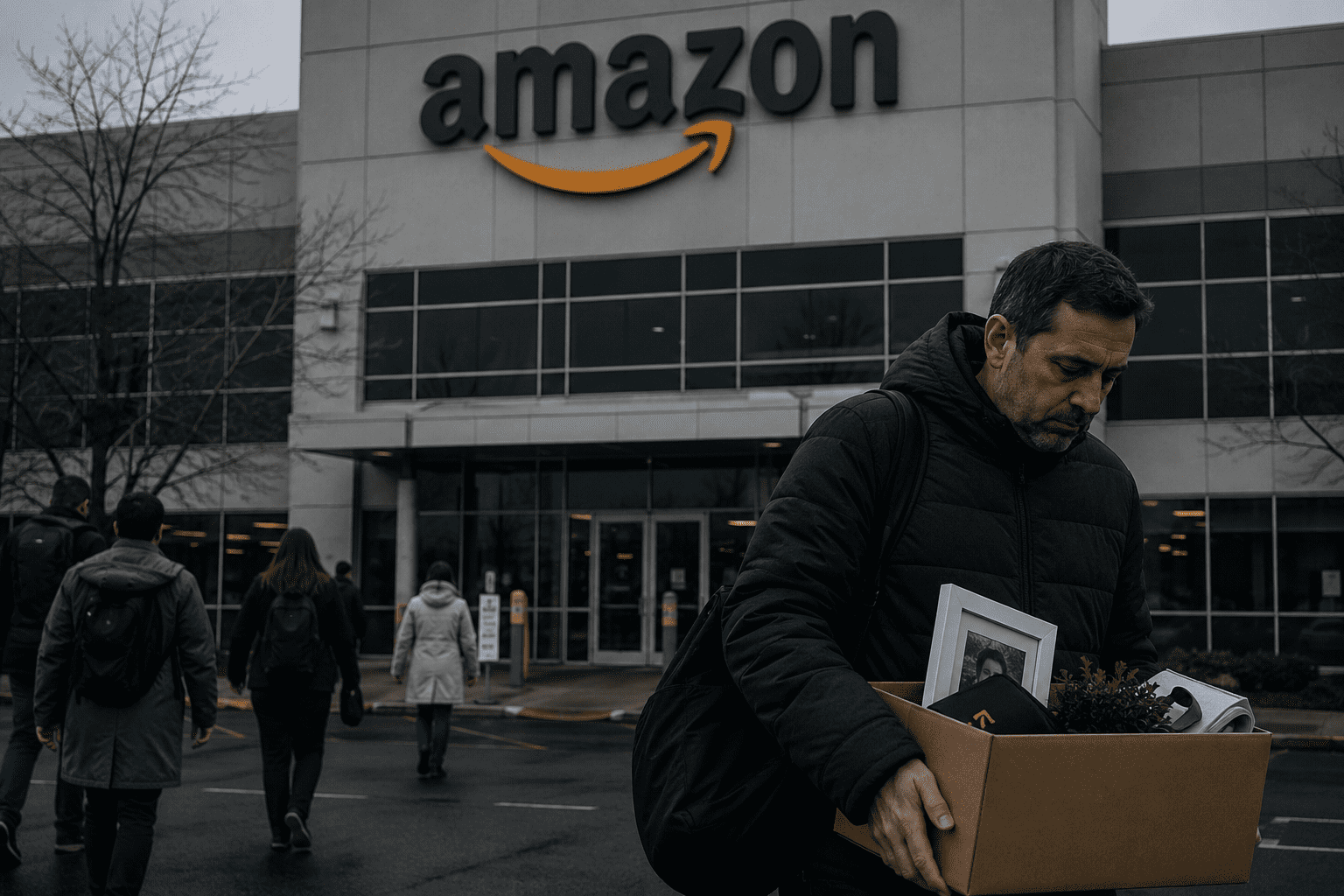
Amazon’s layoffs are back — and this time, the cuts are landing in one of the company’s most critical business units: Selling Partner Services (SPS), the division that helps millions of third-party sellers operate on Amazon’s marketplace. The latest round of layoffs comes after more than 30,000 corporate job cuts across multiple waves since late 2025, signaling that Amazon’s restructuring efforts are far from over.
The move has intensified concerns across the tech industry about the growing role of artificial intelligence and automation in reshaping white-collar employment. While Amazon insists the layoffs are part of broader operational reviews, many employees and analysts believe AI-driven efficiency is accelerating workforce reductions faster than expected.
Amazon’s Latest Layoffs Target Selling Partner Services
The newest layoffs are affecting Amazon’s Selling Partner Services division, which provides onboarding, logistics support, account management, and operational assistance to third-party merchants selling on the platform. The SPS team plays a major role in keeping Amazon’s massive marketplace ecosystem functioning smoothly.
According to reports, Amazon described the number of affected employees as “small,” but the decision is significant because it impacts a division directly tied to the company’s core retail marketplace.
This latest reduction follows:
- A major layoff round in October 2025
- Another large workforce reduction in January 2026
- Smaller cuts in robotics and retail units earlier this year
Combined, those reductions pushed Amazon’s corporate job cuts beyond 30,000 roles in less than a year.
Why Amazon Is Cutting Jobs
Amazon says the layoffs are part of an ongoing effort to streamline operations and reduce bureaucracy inside the company. CEO Andy Jassy has repeatedly emphasized improving efficiency, simplifying management structures, and eliminating overlapping roles.
The company expanded aggressively during the pandemic years, hiring hundreds of thousands of workers to meet surging e-commerce demand. But as online shopping growth normalized, Amazon began reevaluating its workforce size and internal structure.
Executives have pointed to several reasons behind the layoffs:
- Post-pandemic overhiring
- Cost reduction initiatives
- Faster decision-making
- Streamlining retail operations
- AI-driven productivity improvements
While Amazon has not officially stated that AI alone is replacing workers, the timing of these layoffs alongside massive AI investments has raised serious questions inside and outside the company.
How AI Is Changing Amazon
Under Andy Jassy’s leadership, Amazon has dramatically accelerated its artificial intelligence strategy. The company is investing billions into generative AI, cloud computing infrastructure, automation systems, and machine learning technologies.
AI tools are increasingly being integrated into:
- Customer support
- Advertising systems
- Logistics optimization
- Inventory forecasting
- Internal coding tools
- Seller support automation
- AWS cloud services
Industry analysts believe many repetitive corporate functions can now be partially automated using generative AI systems. Tasks once handled by large support teams — including reporting, operational monitoring, basic communication workflows, and analytics — are increasingly being managed with AI-assisted software.
That shift is creating growing anxiety across the tech sector, especially among middle-management and administrative employees.
Which Amazon Jobs Could Be Most Vulnerable?
Current reports suggest Amazon’s layoffs are primarily affecting corporate and operational support roles rather than warehouse workers or delivery staff.
The roles considered most vulnerable include:
- Administrative support
- Recruiting and HR
- Customer operations
- Seller management support
- Reporting and analytics teams
- Middle-management positions
- Repetitive digital workflow roles
At the same time, Amazon continues hiring aggressively in high-demand technical areas such as:
- Artificial intelligence
- Cloud computing
- Robotics
- Data engineering
- Machine learning infrastructure
- Automation systems
This reflects a broader industry trend where companies are cutting traditional corporate positions while increasing investment in AI-focused talent.
Employee Anxiety Is Growing
Inside Amazon, employee morale has reportedly been shaken by repeated restructuring rounds and ongoing uncertainty about future cuts. Workers are increasingly concerned about:
- Performance expectations tied to AI tools
- Automation replacing routine work
- Increased workloads after layoffs
- Burnout from leaner teams
- Long-term job security
Some employees reportedly fear that AI adoption could permanently reduce the number of corporate jobs needed across the company.
The concern is not limited to Amazon. Across Silicon Valley, companies are increasingly emphasizing “efficiency” and “automation” as they restructure operations around AI technologies.
Amazon Is Part of a Bigger Trend
Amazon’s layoffs are happening alongside a wider wave of workforce reductions across the global tech industry. Companies including Meta, Microsoft, Walmart, Dell, and others have announced major restructuring initiatives tied to efficiency and AI-driven operational changes.
Business Insider reports that more than 30 major companies announced layoffs in 2026 alone, with AI increasingly cited as a factor behind workforce restructuring.
The World Economic Forum has also projected that AI could significantly reduce demand for some existing job categories by 2030 while simultaneously increasing demand for AI-related skills.
Is This the Beginning of a Larger Workforce Shift?
Amazon’s latest layoffs may represent more than another round of corporate cost-cutting. Many experts believe the company is becoming an early example of how AI could fundamentally reshape white-collar work over the next decade.
Generative AI systems are improving rapidly in areas like:
- Writing and communication
- Data analysis
- Customer interaction
- Software development
- Workflow automation
As these systems become more capable, companies may require fewer employees to perform the same amount of work.
For Amazon, the strategy appears clear: reduce operational complexity, increase automation, and double down on AI infrastructure. The long-term impact on jobs, however, remains uncertain.
What Happens Next?
Amazon has not announced another large-scale layoff round yet, but analysts expect continued restructuring throughout 2026 as the company pushes deeper into AI-driven operations.
The company still employs more than a million workers globally, and Amazon says it continues hiring in strategic growth areas. However, the repeated layoffs suggest that corporate roles connected to repetitive operational work may continue facing pressure.
The bigger question now is not whether AI will change the workforce — but how quickly companies like Amazon will redesign entire departments around automation.
For employees across the tech industry, Amazon’s latest cuts may be an early warning of a much larger transformation already underway.