

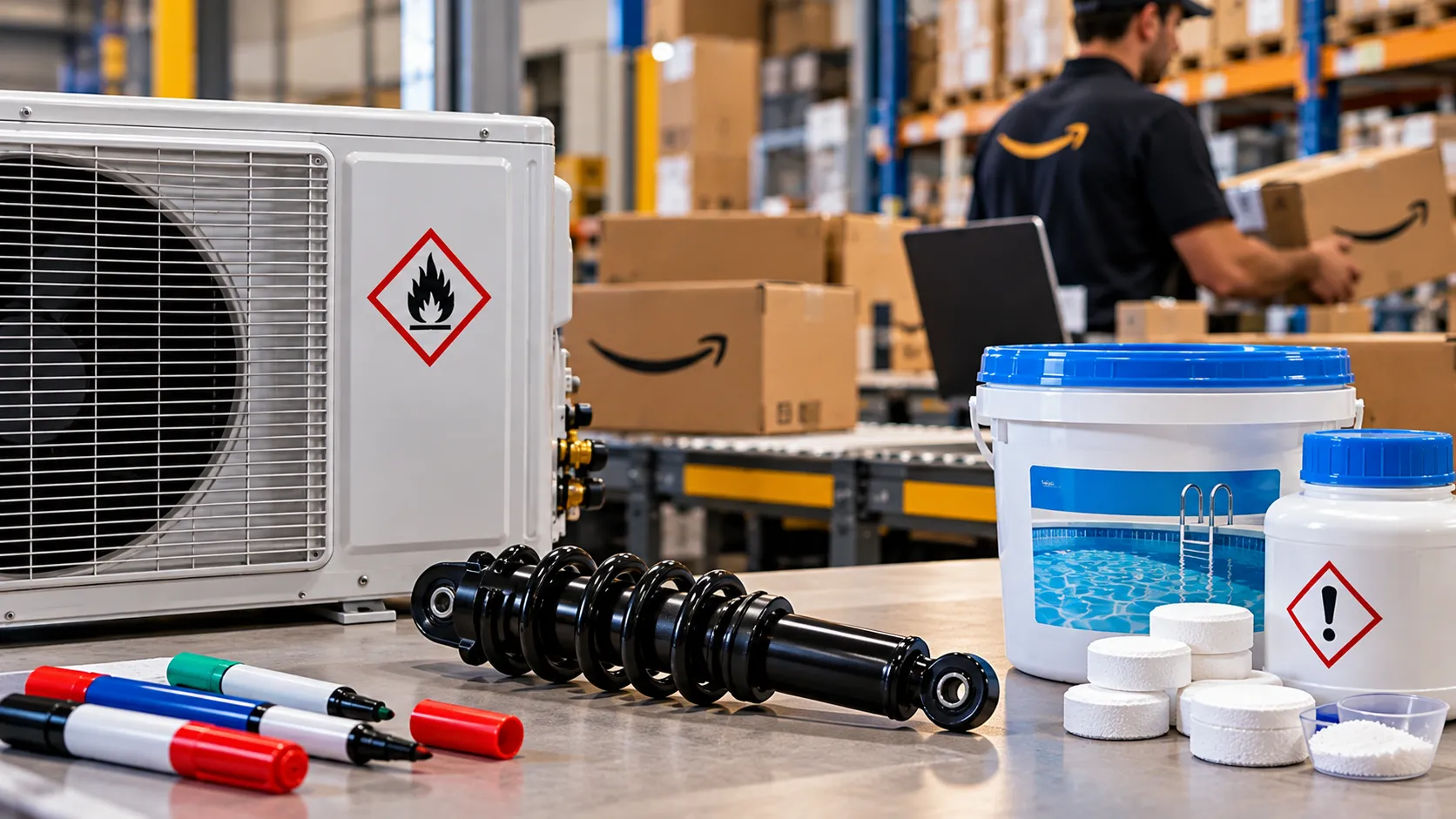
Starting October 26, 2026, Amazon will ask sellers new dangerous goods (hazmat) compliance questions when they create or edit listings in four product categories: refrigeration and cooling products, shock absorbers, markers and writing instruments, and pool and spa chemicals.
Amazon says the change will help it identify dangerous goods more accurately, enable more shipping methods, and reduce unnecessary disposal costs and fees. For sellers in these categories, accurate answers will decide whether a listing goes live quickly or gets stuck in review.
Key Highlights
| Detail | What You Need to Know |
|---|---|
| Start date | October 26, 2026 |
| When questions appear | When you create a new listing or edit an existing one |
| Categories affected | Refrigeration and cooling, shock absorbers, writing instruments, pool and spa chemicals |
| Existing listings | No immediate action needed; questions appear at your next edit |
| Amazon’s stated goals | Identify dangerous goods, enable more ship methods, reduce disposal costs and fees |
| Where to preview the questions | Seller Central help: “Dangerous goods (hazmat) required information and documentation” |
Which Categories Are Affected and What Amazon Will Ask
| Category | Includes | What the Questions Cover |
|---|---|---|
| Refrigeration and cooling | Refrigerators, air conditioners, freezers and similar products | Properties of the refrigerant gas |
| Shock absorbers | Shock absorbers and suspension lift supports | How the shock-absorbing mechanism works |
| Writing instruments | Markers and other writing instruments | Ink properties |
| Pool and spa treatment | Pool and spa water treatment chemicals | Chemical composition and packaging |
Why These Categories?
Each of these product types can be either hazardous or non-hazardous, depending on details that usually aren’t clear from a standard listing:
- Refrigerants: Some cooling appliances use refrigerant gases that are flammable or under pressure, while others use gases with fewer restrictions. The type of gas affects how the product can be stored and shipped.
- Shock absorbers: Gas-charged or pressurised shocks and lift supports can be regulated for transport, while purely mechanical designs often aren’t.
- Markers: Solvent- or alcohol-based inks can be flammable. Water-based inks usually aren’t.
- Pool chemicals: Some pool and spa products contain strong oxidisers or corrosive substances. Their chemical makeup and packaging strongly affect how they must be handled.
Without these details, Amazon may classify products too strictly, which limits how they can ship and adds costs, or classify them incorrectly, which can lead to disposal. The new questions are meant to collect the right information when the listing is created.
What Changes for Sellers
For new listings: From October 26, you’ll need to answer the relevant compliance questions when you create a listing in any of these categories. Incomplete or inaccurate answers can delay your listing going live.
For existing listings: You don’t need to update anything right away. The questions will appear the next time you edit a listing in these categories. That means a routine change, such as updating a title, price-related detail or image, could prompt the new questions, so have your product information ready.
Why This Can Help Sellers
Compliance changes often mean more work, but Amazon has positioned this one as a benefit:
- More shipping options: Accurate classification can open up shipping methods that cautious hazmat handling previously ruled out.
- Lower disposal costs: Correctly classified products are less likely to be flagged as hazardous and disposed of unnecessarily.
- Fewer fees: Better data should mean fewer surprise fees linked to dangerous goods handling.
- Faster listing approvals: Complete answers at the start reduce back-and-forth during hazmat review.
How to Prepare Before October 26
Having worked through many of Amazon’s hazmat reviews with sellers over the past decade, I’d recommend these steps:
1. Identify affected ASINs.
List every product you sell in the four categories, including variations and bundles, so you know which listings will trigger the questions.
2. Collect documents from your manufacturers.
Ask suppliers for Safety Data Sheets (SDS), product specifications, and details such as refrigerant type, ink composition, the shock absorber mechanism, or chemical formulation and packaging. Getting these in advance avoids delays later.
3. Preview the questions.
Read Amazon’s help page, “Dangerous goods (hazmat) required information and documentation,” so you know what you’ll be asked.
4. Plan your edits.
Since any edit can trigger the questions, avoid making quick changes to these listings during the Great Indian Festival or other peak sales periods until you have your answers ready.
5. Answer accurately, not just quickly.
Wrong answers can lead to misclassification, restricted shipping, stranded FBA inventory or disposal. If you’re unsure about a technical detail, check with your manufacturer before submitting.
6. Check inventory already under hazmat review.
If products in these categories are currently blocked or under review, the new questions may help resolve them. Review your dangerous goods status in Seller Central once the questions are live.
Expert View
Amazon’s hazmat classification has long been one of the most frustrating parts of selling in categories like appliances, auto parts and pool supplies. Products are often flagged too cautiously, or reviewed for weeks before they can ship. Collecting clear, category-specific information at the listing stage is a sensible fix. Sellers who prepare their documentation now will benefit most, with faster approvals, more shipping options and fewer unexpected disposals. Those who answer carelessly may find that the questions meant to help them create new problems.