
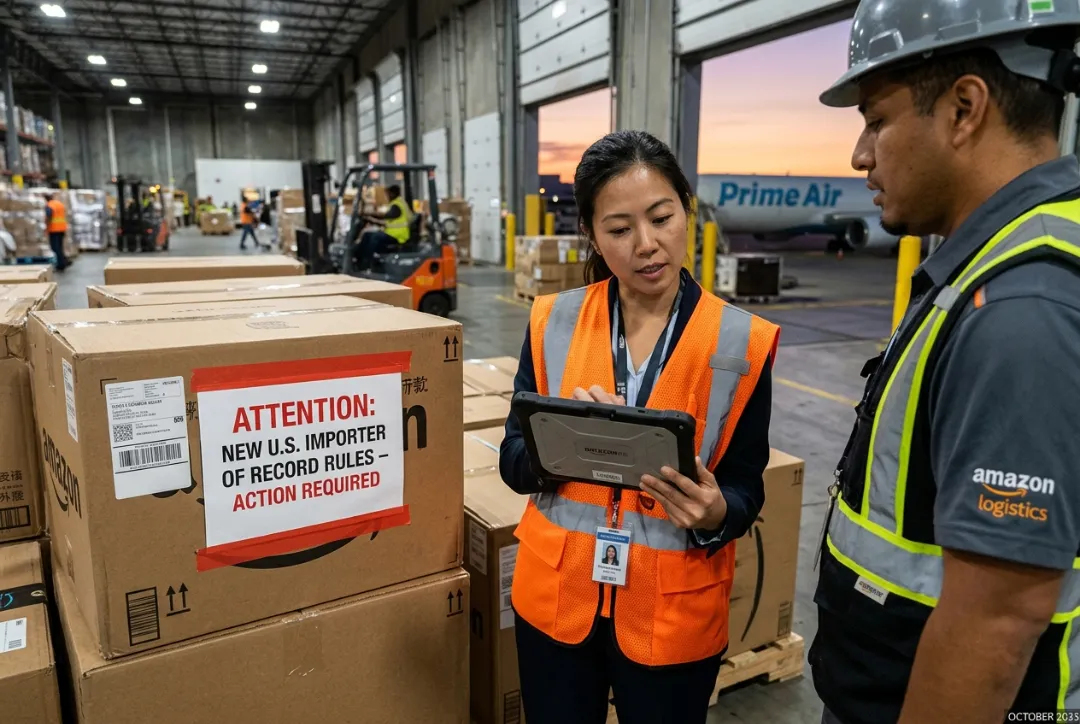
Amazon has told sellers to review their customs setup now, because a new Amazon importer of record rule for foreign importers is under U.S. government review and could be put in place quickly. Nothing changes today, and current import operations continue as usual, according to the Amazon Services team. But any seller that brings goods into the United States through a foreign importer of record (IOR) should act before the rule lands, not after.
What Amazon told sellers
In a notice to sellers, Amazon said the U.S. government is working to implement Executive Order 14411 on Strengthening Customs Enforcement. The order tells federal agencies to write new rules for U.S. imports, and one of those rules, aimed at foreign importers of record, is now under review.
Amazon’s advice is simple: confirm who your importer of record is, check how that party is preparing, and line up alternatives early in case the rules take effect fast. Amazon also said it will share updates as implementation details become available.
Why it is happening: Executive Order 14411
The President signed Executive Order 14411 on June 3, 2026. It directs the Department of Homeland Security (DHS) and U.S. Customs and Border Protection (CBP) to tighten who can act as an importer of record and to draw a sharper line between U.S. and foreign IORs.
Most parts of the order need formal rulemaking first. Trade law firms note that the revised importer eligibility rules are due within 180 days of the order, which points to late November or early December 2026 unless CBP acts sooner. That puts the Amazon importer of record rule on a short clock.
What could change for foreign importers of record
Based on the order and legal analysis from customs and trade firms, foreign IORs could face the toughest changes:
- No informal entries. Foreign IORs would be barred from filing informal entries, which are typically lower-value shipments.
- Stricter formal entries. Continuous bonds could be restricted unless CBP is satisfied that duties are protected. A foreign IOR would also need CTPAT validation, where eligible, or must use a CTPAT-validated, licensed customs broker.
- Assets and bonding. Every IOR may need a minimum level of tangible U.S. assets, a higher bond, or both.
- Good standing. An IOR that is not in good standing, based on customs compliance and payment history, could be barred from importing.
- More disclosure. Expect requests for ownership and beneficial ownership details, business affiliations, expected import volumes and U.S. assets.
- Tougher penalties. The order calls for less flexibility when customs violations are reduced or mitigated.
Under the order, a U.S. IOR is a U.S. citizen, a lawful permanent resident, or a qualifying U.S.-organized entity that is genuinely located in the country and controlled by U.S. citizens or permanent residents. Anyone who does not meet that test is treated as a foreign IOR.
Who is affected
The sellers with the most to lose are those who ship inventory into the U.S. under a foreign-based importer of record, often arranged through a freight forwarder or customs broker. Sellers whose IOR is a U.S. entity will likely see fewer changes, Amazon says, but should still confirm their status.
How to prepare: a seller checklist
- Confirm your IOR status. Ask your freight forwarder or customs broker: “Is my Importer of Record a U.S. entity or a foreign entity?” If you are unsure who your forwarder is, check your shipping service agreement or logistics contract.
- Ask how they are preparing. If your IOR is foreign, ask how they plan to meet the new requirements, including asset, bonding and good-standing provisions. Vague answers are a warning sign.
- Review your bond and broker setup. Check whether your broker is CTPAT-validated and whether your current bond would still work.
- Gather your paperwork. Collect ownership, affiliate and U.S. asset information so you can respond quickly if CBP asks.
- Check your compliance history. Fix any past customs issues now, before a good-standing test is applied.
- Plan a backup. Explore a compliant U.S. importer of record option while you still have time to switch without disrupting stock.
What it means for Amazon sellers
Higher bonding costs, extra paperwork or a change of IOR can raise landed costs and slow inbound shipments. That squeezes margins just as peak season ramps up. When costs rise, every advertising dollar has to work harder, so it is worth tightening your campaigns early. Ecomranker’s Amazon PPC management services help sellers cut wasted spend and protect profit while supply chain rules change.
Frequently asked questions
What is an importer of record?
Does the Amazon importer of record rule apply today?
How do I know if my importer of record is foreign?
Where can I follow official updates?
The bottom line
The Amazon importer of record rule is not in force yet, but the window to prepare is short. Confirm your IOR, question your forwarder, and have a backup ready. For more Amazon seller news and practical guidance, follow updates from Ecomranker.