
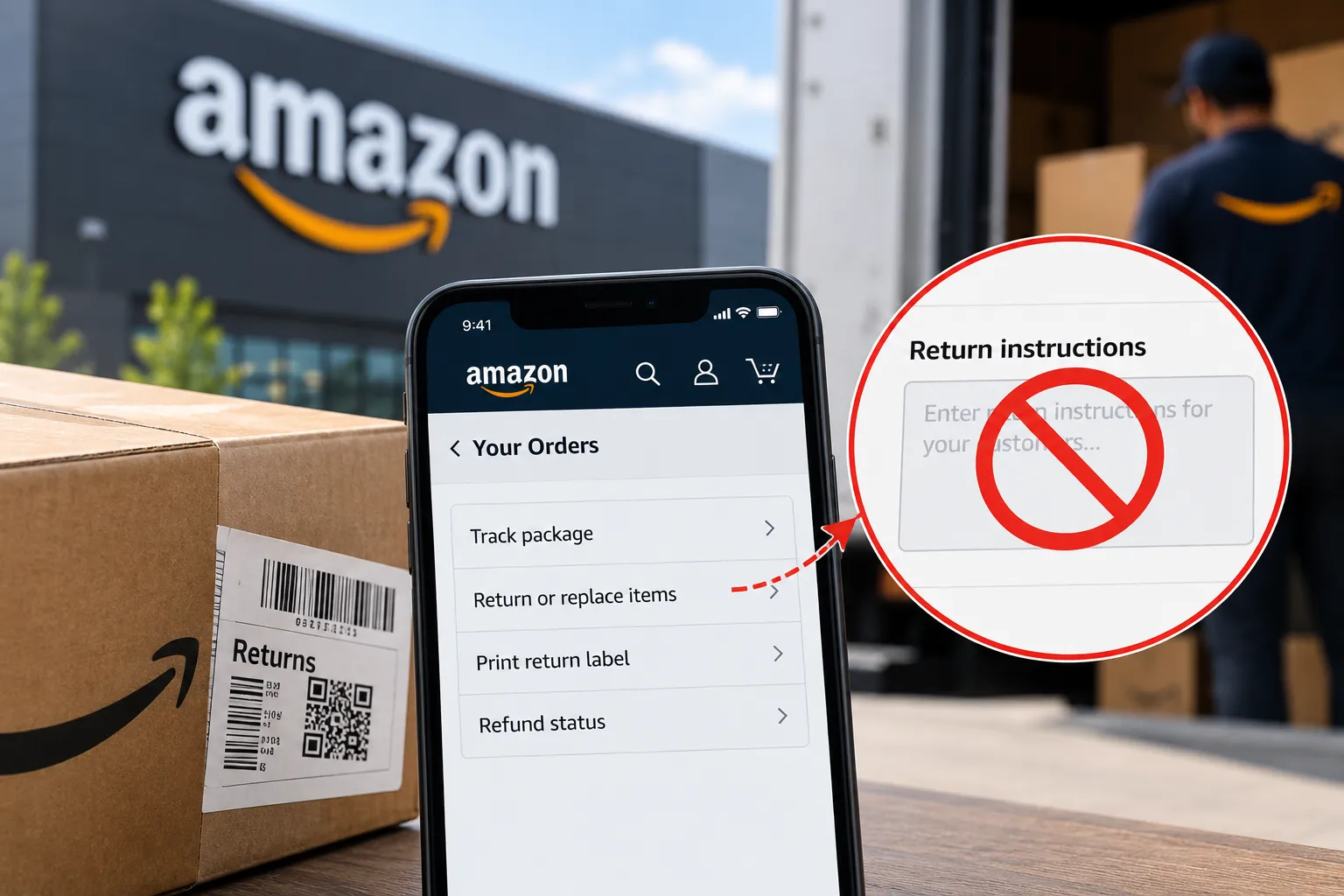
Amazon removed the field where FBM sellers wrote custom return instructions, cutting it from both Return Settings and the individual Manage Seller-Fulfilled Returns / Authorize Return screen. Sellers first noticed the notice in Seller Central in mid-August 2026: “Starting August 2026, the option to add return instructions in your return settings will no longer be available.” That’s the entire explanation Amazon gave.
This account is built directly from the original Seller Forums thread where the change surfaced — including Amazon’s own staff reply to the thread, which lays out three concrete workarounds most coverage of this change has left out entirely.
What Sellers Lost, in Their Own Words
The seller who first flagged the change described a common FBM setup: manually authorizing returns and using Amazon-generated unpaid labels, so the customer covers return shipping unless the item is genuinely defective. The return instructions field was how they told buyers an item had to come back unused and in its original packaging, and explained why they, not the seller, were on the hook for the shipping cost.
With the field gone, that seller and others replying to the thread raised the same concern: without that messaging, buyers may simply get a shipping label and no guidance at all, which raises the odds of items coming back used, damaged, or incomplete.
Amazon’s Own Reply: Three Things You Can Still Do
An Amazon Seller Forums staff account responded directly in the thread — and was upfront that Amazon hasn’t specified what standardized messaging, if any, now replaces the field for buyers. The reply pointed to three tools sellers still have:
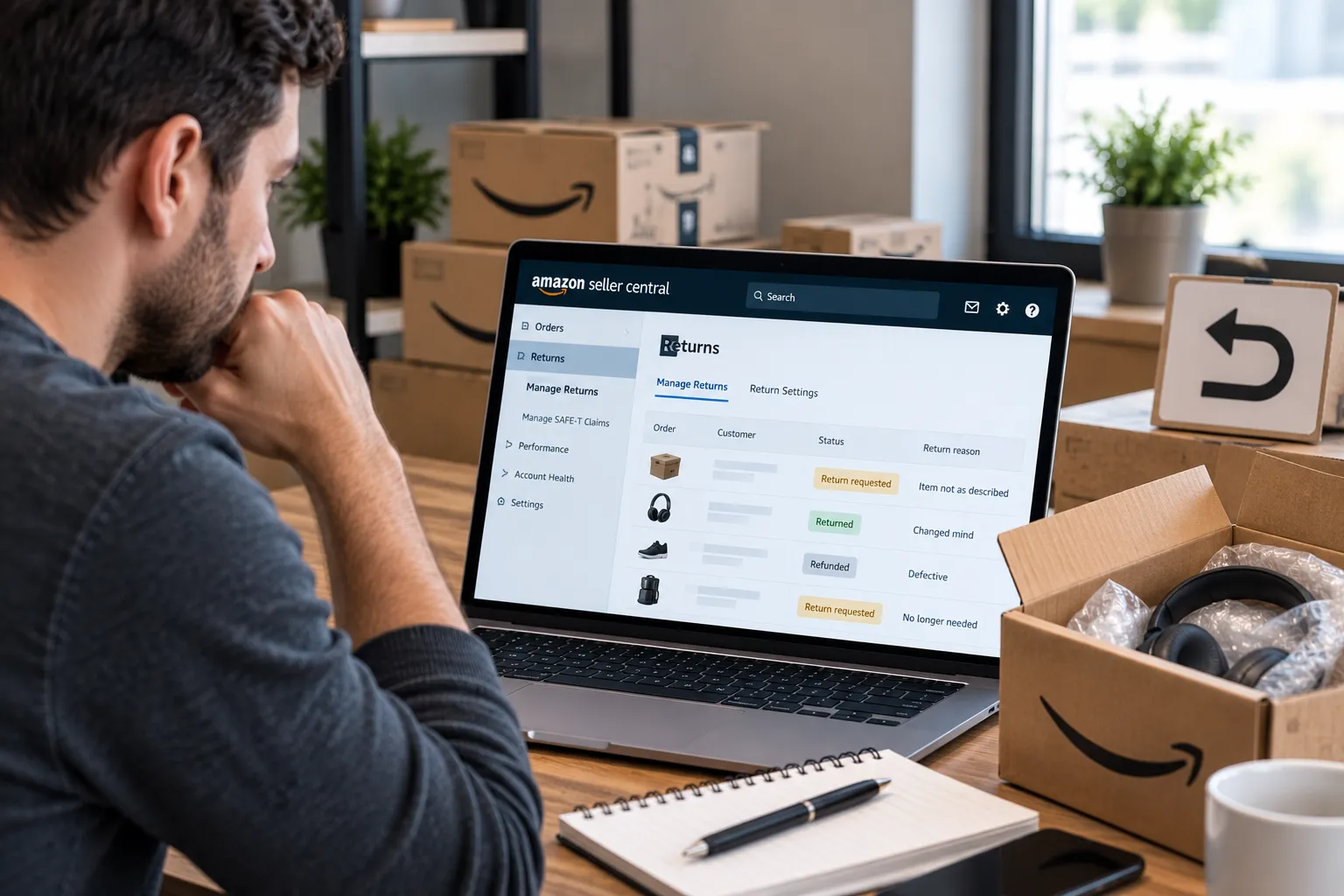
- Use Buyer-Seller Messaging proactively — when you manually authorize a return, the “Contact Buyer” option in Manage Returns still lets you send return-related instructions or ask questions needed to process the return.
- Review the rest of Return Settings — the custom instructions field is gone, but other return preferences are still configurable there, and out-of-policy or category-exempt returns still route through manual authorization, which keeps a touchpoint with the buyer.
- Apply restocking fees where eligible — in the US, Canada, and UK marketplaces, a restocking fee can still be applied when an item comes back in a condition other than what was shipped.
Amazon’s own guidance, in other words, is to shift what used to be a static instructions field into an active message you send yourself at the point of authorization — not a replacement field, a different workflow.
Why This Change Lands Harder Than It Looks
This isn’t an isolated tweak. It follows two other 2026 changes that already narrowed how much control FBM sellers have over the return process: as of January 26, 2026, the inspection window before a refund auto-triggers extended from two business days to four calendar days, and as of February 8, 2026, Amazon eliminated the high-value item exemption, meaning every US seller-fulfilled return now goes through an Amazon-generated prepaid label — sellers can no longer opt out and arrange their own return shipping for expensive or fragile items. Stack that on top of losing the instructions field, and FBM sellers have progressively less say over both who pays for a return and what the buyer is told before sending it.
With returns running close to 19-20% of orders industry-wide, and some categories running well past 25%, a small process change at this stage of the return flow compounds across a meaningful share of total orders.
SAFE-T Claims: The Safety Net If a Return Comes Back Damaged
If a returned item does come back used, damaged, or missing parts, SAFE-T claims remain the main path to recovering some of that cost on seller-fulfilled orders. Reimbursement is not guaranteed, and damage-related SAFE-T claims are commonly capped at 50% of the item’s price — file with clear photos of the returned item’s condition and any buyer correspondence, since incomplete evidence is the most common reason claims get denied.
A Related Change: Germany’s Return Window Is Shrinking Too
Separately, and only loosely connected to the US instructions change, Amazon is shortening the voluntary 30-day return window to a 14-day statutory window in 16 product categories in Germany starting September 1, 2026, according to Basic Tutorials’ coverage of the update — categories reportedly include furniture, beauty, pet supplies, food and beverages, luggage, and tires, while clothing, shoes, watches, jewelry, and Amazon-branded devices keep the 30-day window. Items delivered by October 1, 2026 retain the old window during the transition. Sellers in the affected German categories should confirm their own Seller Central return settings reflect whichever window currently applies to each listing.
What FBM Sellers Should Do Now
The instructions field disappearing doesn’t mean the underlying obligation to prevent bad returns goes away — it just moves the burden onto a manual message you have to remember to send. A few concrete steps close most of that gap:
- Write a short, reusable return-instructions message now, covering condition, packaging, and who pays shipping, and send it through Buyer-Seller Messaging every time you manually authorize a return.
- Update your product listing’s return-related bullet points or A+ content to state condition and packaging requirements up front, since that information no longer has a dedicated home at the return-authorization step.
- Document your restocking fee policy internally and apply it consistently, with photos, so it doesn’t look arbitrary if a buyer disputes a partial refund.
For custom or condition-sensitive listings, where the difference between a manufacturing defect and buyer’s remorse is a judgment call, having that reusable message ready matters even more than for standard catalog items — you no longer get a second chance to set expectations before the item ships back.
Sellers still get automatic-refund protection through Amazon’s gift return process and other Amazon-managed flows, but for manually authorized FBM returns specifically, the instructions field being gone means the message has to come from you, every time, rather than sitting pre-filled in Return Settings.
The Bottom Line
Amazon gave sellers one sentence of notice and no replacement feature — but its own forum reply confirms the tools to manage this haven’t disappeared, they’ve just moved from a settings field to an active message you send yourself. Combined with February’s prepaid-label mandate and January’s shortened inspection window, FBM sellers are managing more of the return relationship through manual process and less through configuration. Account Health stays visible in the new Seller Central regardless of which workspace you’re in, which is worth keeping an eye on if return-related disputes start showing up in your metrics after this change.