

What the March 31, 2026 FBA labeling change means for non-brand sellers — and how to prepare your supply chain before your next shipment.
Amazon is closing the door on one of the last labeling shortcuts available to resellers. Starting March 31, 2026, any seller who is not enrolled in Amazon Brand Registry as a Brand Representative will be required to apply an Amazon-issued FNSKU barcode to every unit shipped into Fulfillment by Amazon (FBA) — even when the product already carries a valid manufacturer barcode such as a UPC, EAN, or GTIN.
For years, resellers with a compliant manufacturer barcode could ship stickerless inventory into commingled FBA pools. That option is going away entirely. Amazon is ending inventory commingling for non-brand sellers, which means every unit you send in after the effective date needs its own scannable, Amazon-assigned FNSKU label — no exceptions, and no grandfather clause for existing listings.
Effective date: March 31, 2026 — applies to inventory shipped on or after this date, not just new listings. Existing replenishment shipments are affected too.
If your business relies on wholesale, arbitrage, or reselling recognizable branded products without brand ownership, this update touches your entire inbound workflow — from how your supplier packs cartons to how your prep center scans units at receiving. Below, we break down exactly what’s changing, who’s affected, why Amazon is making the change, and the steps to stay compliant before your next shipment gets held at the dock.
What Is an FNSKU Barcode?
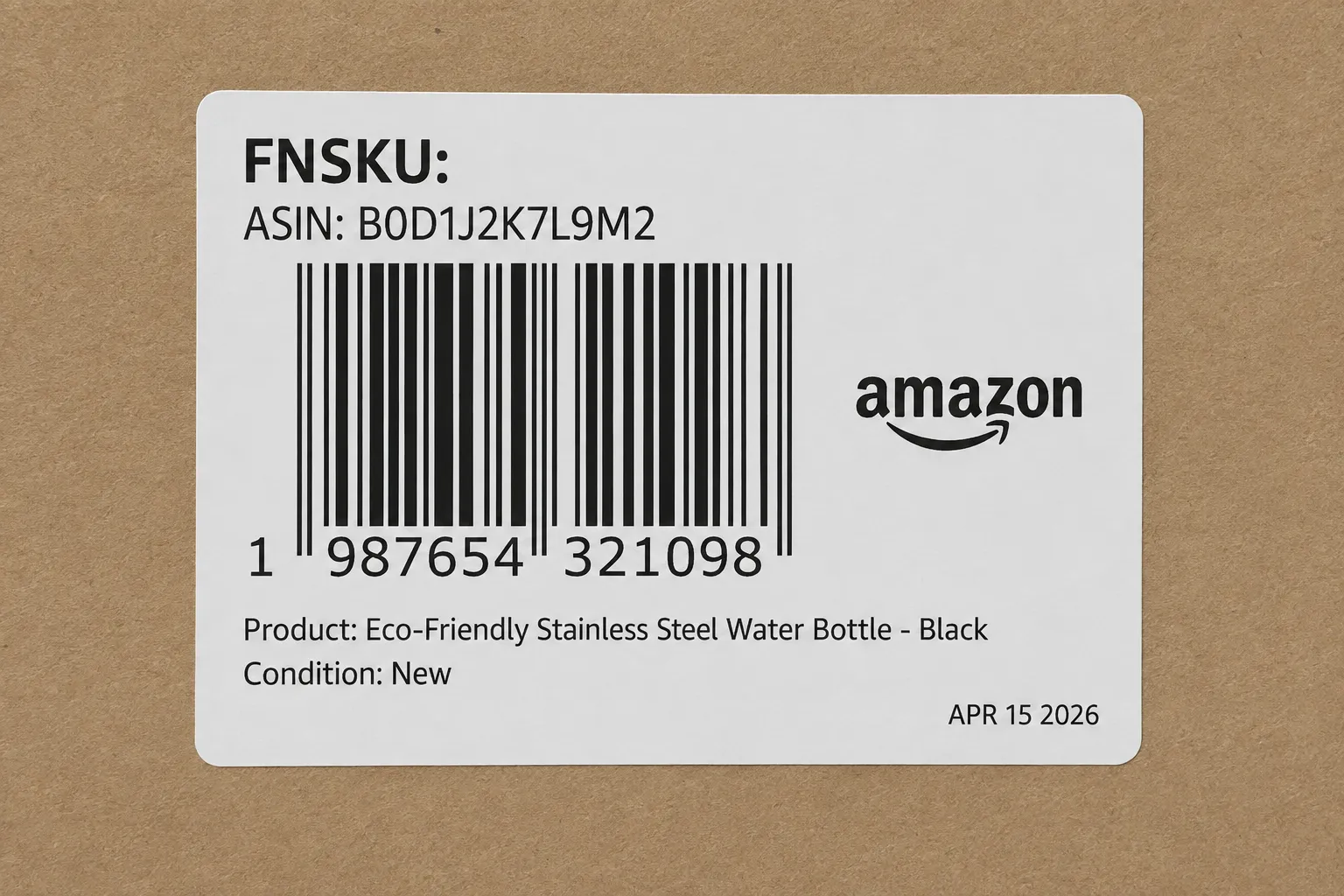
An FNSKU (Fulfillment Network Stock Keeping Unit) is a barcode Amazon assigns to identify a specific unit of inventory as belonging to a specific seller account inside the FBA network. It’s easy to confuse with a UPC or an ASIN, but each identifier serves a different purpose:
| Identifier | What It Identifies | Who Assigns It |
| UPC / EAN / GTIN | The physical product itself, globally | GS1 / manufacturer |
| ASIN | The Amazon product listing (catalog page) | Amazon |
| FNSKU | The specific seller’s inventory unit inside FBA | Amazon (per seller) |
In short: a UPC tells the world what the product is, an ASIN tells Amazon which listing it belongs to, and an FNSKU tells Amazon’s fulfillment network which seller owns that individual unit. Two sellers can list an identical product on the same ASIN, but each one’s physical units need to be traceable back to the correct account — that’s the job the FNSKU has always done for non-exempt inventory, and it’s the reason Amazon is now making it universal for resellers.
What’s Changing on March 31, 2026
Amazon’s updated policy comes down to three core rules:
- A UPC is no longer a universal exemption. Resellers may need an Amazon FNSKU even when a fully valid, scannable UPC is already printed on the retail packaging.
- Brand Registry enrollment alone is not enough. The exemption applies specifically to sellers holding Brand Representative status for that product — simply being Brand Registry-enrolled on an unrelated brand does not qualify a listing for the manufacturer-barcode exemption.
- Commingled, stickerless inventory pools for non-brand sellers are ending. Every eligible unit shipped in on or after March 31, 2026 must carry its own FNSKU label, regardless of what other barcodes already appear on the packaging.
Sellers can set a barcode preference — manufacturer barcode or Amazon barcode — inside Seller Central, but that preference only applies going forward, to offers created after the change takes effect. It does not retroactively cover barcode decisions made on existing offers, so every active SKU needs to be checked individually rather than assumed to be compliant.
Who Is Affected — and Who Is Exempt
Resellers (Not Brand Representatives)
If you sell products you don’t manufacture or hold Brand Registry rights to — wholesale accounts, online arbitrage, retail arbitrage, or general reselling — this change applies to you directly. Every unit you send to FBA needs an Amazon FNSKU label applied before it reaches the fulfillment center, even if the product already has a scannable UPC from the manufacturer.
Brand Owners with Brand Representative Status
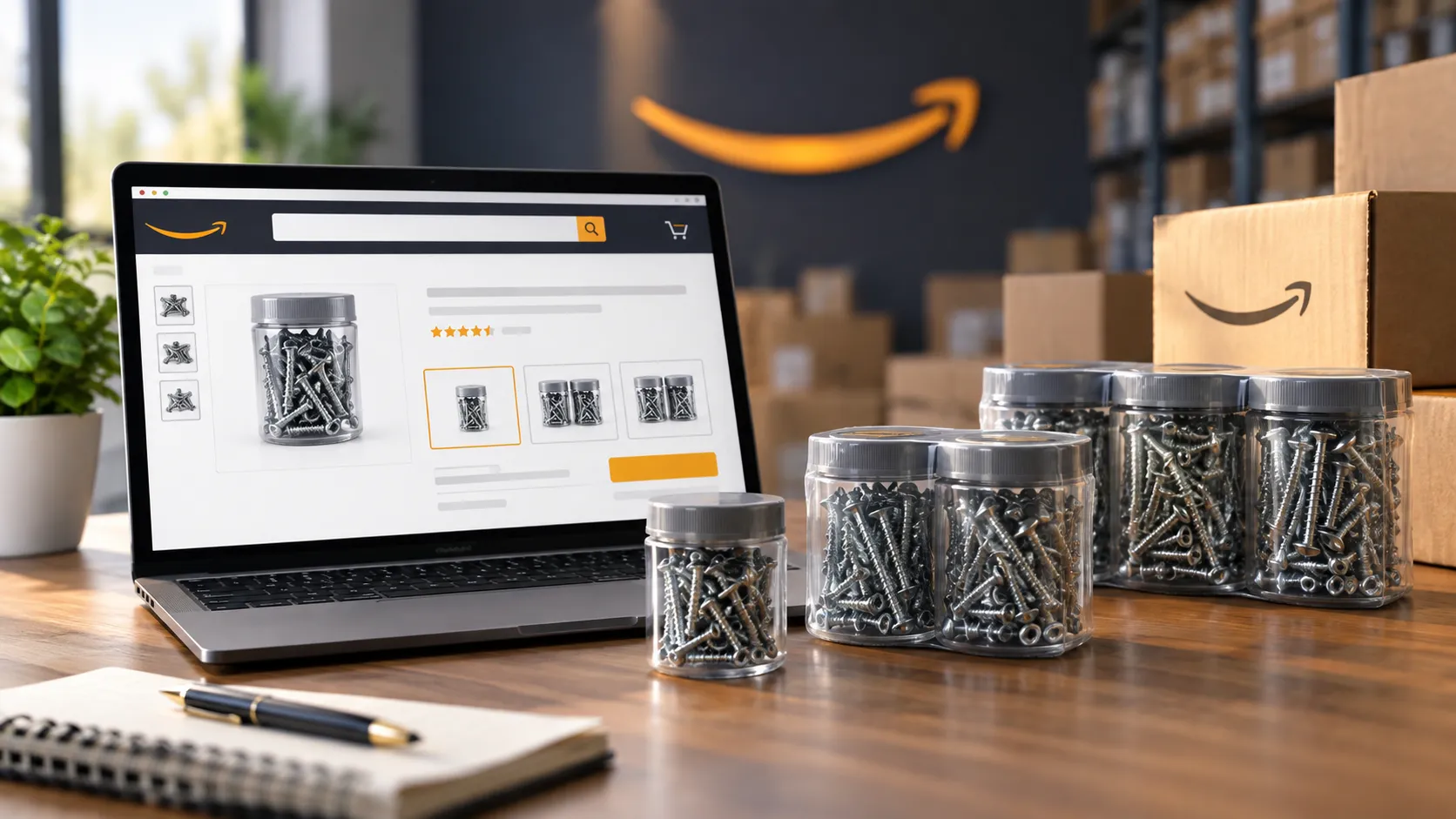
Sellers enrolled in Amazon Brand Registry and approved as a Brand Representative for a given product can continue shipping stickerless, using the manufacturer’s barcode, provided the product meets Amazon’s eligibility criteria. Amazon tracks these units virtually rather than through a physical Amazon-issued sticker.
One Exception That Applies to Everyone
Products that never had a manufacturer barcode to begin with — private-label items launched without a UPC, or listings created directly against an Amazon-generated barcode — still require an FNSKU label regardless of brand status. This rule was already in place and isn’t changing.
Two sellers can list the exact same ASIN and receive two different barcode requirements. Always check the specific offer — marketplace, condition, fulfillment channel, and brand representative status — rather than assuming a blanket rule for your whole catalog.
Why Amazon Is Making This Change
The update is a direct response to sellers abusing commingled, stickerless inventory to obscure which units belonged to which account. When products are pooled under a single manufacturer barcode, Amazon can’t always tell whose unit shipped to a customer — which becomes a serious problem when a customer receives a counterfeit item, an expired product, or a quality defect.
By requiring a unique FNSKU on every reseller unit, Amazon can trace a defective or counterfeit item back to the exact seller who sent it in, rather than treating an entire commingled pool as suspect. It’s a traceability and brand-protection move first, and an operational change for sellers second.
How the Rule Applies: Quick Reference
| Seller Type | Manufacturer Barcode (UPC/EAN) | FNSKU Required? |
| Reseller, not Brand Representative | Present on packaging | Yes — required on every unit |
| Brand Representative (Brand Registry) | Present on packaging, eligible product | No — virtual tracking applies |
| Any seller, product has no manufacturer barcode | Not present | Yes — always required |
| Reseller, existing SKU shipped after 3/31/26 | Present on packaging | Yes — replenishment shipments included |
How to Prepare Your FBA Business Before the Deadline
Treat this as an inbound supply chain project, not a last-minute prep task. Barcode compliance has to be resolved before cartons leave your supplier, prep center, or warehouse — Amazon will no longer clean up mislabeled inventory after it arrives at a fulfillment center, and as of January 1, 2026, Amazon also stopped offering prep and item labeling services for US FBA shipments, which puts the labeling responsibility squarely on the seller or a third-party provider.
- Audit every active offer in Seller Central. Check the barcode setting, brand representative status, marketplace, and condition for each SKU — don’t assume catalog-wide compliance.
- Set your barcode preference for new offers. Decide upfront whether new listings will use manufacturer barcodes or Amazon barcodes, understanding this setting only applies going forward.
- Update supplier and prep center instructions now. Remove outdated labeling files and instructions before your next production run so old workflows don’t ship non-compliant units by mistake.
- Budget for labeling costs. Whether you label at the source, at a prep center, or through a third-party labeling service, factor the added cost and lead time into your landed cost calculations.
- Re-check every SKU when anything changes. A change in marketplace, variation, condition, or fulfillment channel can change the barcode requirement for that specific offer — build this into your SOPs permanently, not just as a one-time fix.
The operational risk isn’t just a compliance fine — it’s stranded inventory. A shipment that arrives with the wrong barcode setup can get held at receiving, leaving units unavailable to sell while ad spend keeps running against a listing that’s technically out of stock. No PPC strategy can outrun inventory that customers can’t actually buy.
FAQ: Amazon FNSKU Requirements for Resellers
Does this apply to all marketplaces, or just the US?
The March 31, 2026 change has been confirmed for the US marketplace, with the underlying commingling and Brand Representative logic mirrored across other Amazon marketplaces. Always verify current requirements for each specific marketplace you sell in, since rollout timing and exceptions can vary by region.
What happens if I ship inventory without an FNSKU after the deadline?
Non-compliant units are likely to face receiving issues, including delays or rejection at the fulfillment center, which can strand inventory and disrupt your sell-through and advertising performance until the units are relabeled and reprocessed.
Can I still use my manufacturer’s UPC if it’s already GS1-compliant?
Only if you hold Brand Representative status for that specific product inside Brand Registry. A valid, scannable UPC on its own is no longer sufficient for resellers to skip the FNSKU requirement.
Does becoming Brand Registry-enrolled automatically exempt my products?
No. The exemption is tied to Brand Representative status for that specific brand and product, not simply having a Brand Registry account. Sellers should confirm their representative status is approved and applies to the exact ASINs in question.
Who should apply the FNSKU label — me, my supplier, or a prep center?
Any of the three can work, as long as the correct label is verified before the shipment leaves for Amazon. Many sellers now build labeling into supplier production runs or route inventory through a third-party prep center specifically to keep this off their own operational plate.
Get Ahead of the March 2026 Deadline
Barcode compliance is a small line item until it strands a shipment — then it becomes a stockout, a broken PPC campaign, and a scramble to relabel inventory under time pressure. EcomRanker works with FBA sellers and resellers across the UK, US, UAE, and India marketplaces to review labeling workflows, Brand Registry status, and inbound processes alongside the advertising strategy built on top of them, so a compliance gap never turns into wasted ad spend on inventory customers can’t buy.
Our team is senior-only — every account is managed by specialists with 7+ years of hands-on Amazon experience, including operating our own seven-figure Amazon brand — backed by a proprietary AI-powered keyword and PPC platform and a 98% client retention rate across $100M+ in managed annual revenue. If your catalog includes reseller or wholesale ASINs, now is the time to have that reviewed.
Talk to EcomRanker about auditing your FBA labeling setup and Amazon growth strategy before the March 31, 2026 deadline.