
Search Engine Optimization has become one of the most important digital marketing strategies for businesses that want to grow online visibility, increase website traffic, and generate long-term organic leads. In today’s highly competitive online market, businesses cannot rely only on paid advertising or social media promotion. A strong and sustainable SEO strategy is essential for achieving consistent growth and maintaining visibility on search engines like Google.
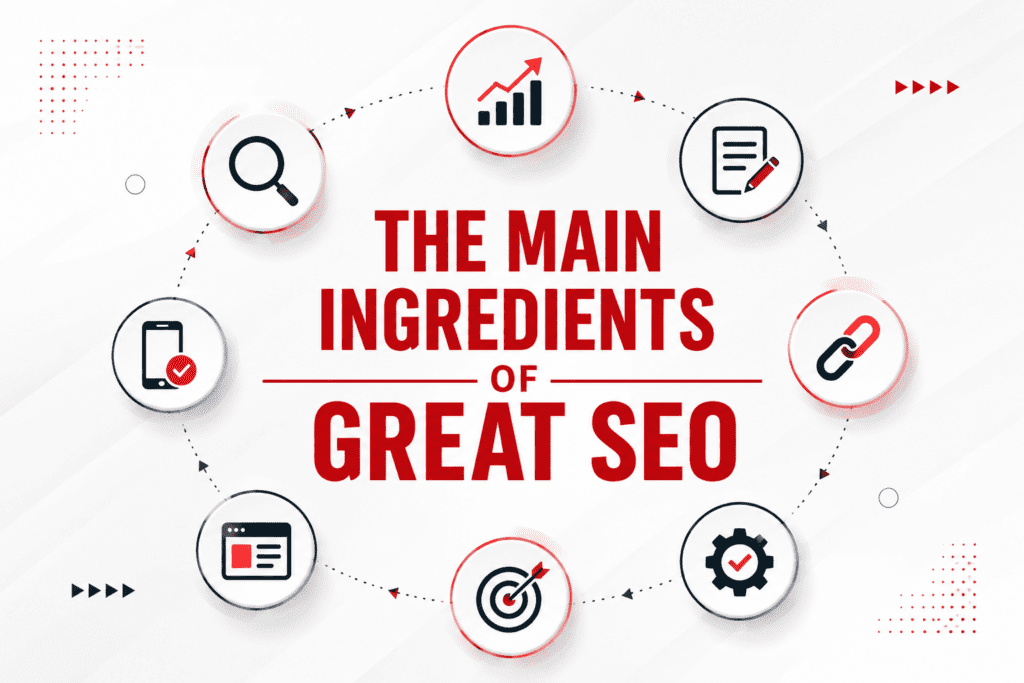
However, successful SEO is not built on one single tactic. Great SEO is created through multiple elements working together strategically. These elements include content strategy, technical SEO, website architecture, HTML optimization, link building, website trust, and social presence. When combined properly, these ingredients create a powerful SEO foundation that helps websites rank higher and attract targeted audiences.
At ecomranker.com, businesses can discover modern SEO strategies designed to improve rankings, optimize websites, and increase digital authority. Understanding the main ingredients of great SEO is the first step toward building a successful online presence.
Why SEO Is Important for Businesses
SEO is important because most online experiences begin with a search engine. When users search for products, services, or information, Google aims to provide the most relevant and trustworthy results. Businesses that appear on the first page of search results receive significantly more traffic and visibility compared to websites that rank lower.
A strong SEO strategy helps businesses:
- Increase organic traffic
- Improve Google rankings
- Build brand authority
- Generate qualified leads
- Improve user experience
- Increase website credibility
- Reduce dependency on paid advertising
Modern SEO is no longer just about keywords. Google now prioritizes websites that provide valuable content, excellent user experiences, strong technical performance, and trustworthy information.
Content Strategy: The Foundation of Great SEO
One of the most important ingredients of successful SEO is a strong content strategy. Content is the core of every SEO campaign because search engines aim to deliver valuable information that satisfies user intent.
Businesses must create content that is informative, engaging, relevant, and helpful to their target audience. Modern users do not want to consume content that feels overly promotional or self-serving. Instead, they want solutions, answers, guides, tutorials, and insights that genuinely help them solve problems.
A strong content strategy involves:
- Creating high-quality blog posts
- Publishing informative guides
- Answering customer questions
- Updating old content
- Targeting relevant keywords
- Matching search intent
For example, businesses targeting SEO services, eCommerce SEO, or digital marketing strategies should publish content related to those topics regularly.
Search engines reward websites that consistently produce useful and authoritative content. Businesses that focus on content value rather than simply stuffing keywords into pages achieve better long-term SEO results.
Keyword Research and Optimization
Keyword research is another critical ingredient of great SEO. Keywords help search engines understand what a webpage is about and determine which searches it should rank for.
Effective keyword optimization begins by identifying:
- Primary keywords
- Secondary keywords
- Long-tail keywords
- Search intent
- User behavior patterns
For example, a business targeting eCommerce SEO may optimize for keywords such as:
- eCommerce SEO services
- SEO audit checklist
- technical SEO optimization
- Google ranking factors
- website traffic growth
- SEO content strategy
Keywords should appear naturally throughout content, including:
- Titles
- Meta descriptions
- Headings
- URLs
- Image alt text
- Paragraph content
However, businesses must avoid keyword stuffing because Google prioritizes readability and helpful content over excessive keyword repetition.
Website Architecture and Technical SEO
Website architecture plays a major role in SEO success because it affects how search engines crawl and understand a website.
Technical SEO focuses on optimizing the backend structure and functionality of a website to improve search visibility and user experience.
A technically optimized website should:
- Load quickly
- Be easy to crawl
- Have clean navigation
- Use secure HTTPS encryption
- Be mobile-friendly
- Include structured internal linking
Strong website architecture improves crawlability and ensures search engines can discover important pages efficiently.
Businesses should regularly review:
- XML sitemaps
- Robots.txt files
- Broken links
- Redirects
- Core Web Vitals
- Mobile usability
Technical SEO is extremely important because even excellent content may fail to rank if search engines cannot access or index webpages properly.
Mobile Optimization and User Experience
Mobile optimization has become one of the most important ranking factors in modern SEO. Google now uses mobile-first indexing, meaning it primarily evaluates the mobile version of websites when determining rankings.
A mobile-friendly website should:
- Display correctly on smartphones
- Load quickly
- Use responsive design
- Offer easy navigation
- Avoid intrusive popups
Poor mobile experiences often lead to:
- Higher bounce rates
- Lower engagement
- Reduced conversions
- Poor rankings
User experience is also closely connected to SEO. Search engines prioritize websites that provide smooth navigation, readable content, and positive interactions.
Businesses that invest in mobile optimization and UX improvements typically see stronger SEO performance.
Website Speed Optimization
Website speed is another major ingredient of successful SEO. Users expect fast-loading websites, and slow websites often lose visitors quickly.
Google considers page speed a ranking factor because slow websites negatively affect user experience.
Page speed optimization includes:
- Compressing images
- Minimizing CSS and JavaScript
- Using browser caching
- Improving hosting quality
- Using Content Delivery Networks (CDNs)
Faster websites improve:
- User engagement
- SEO rankings
- Conversion rates
- Time on site
Core Web Vitals have made website speed even more important in recent years.
HTML Optimization for Better Rankings
HTML optimization is a key part of on-page SEO. Properly optimized HTML elements help search engines understand webpage structure and relevance.
Important HTML elements include:
- Title tags
- Meta descriptions
- Header tags
- Schema markup
- Image alt text
Title tags are especially important because they directly influence rankings and click-through rates.
An optimized title tag should:
- Include the target keyword
- Stay concise
- Match search intent
- Encourage clicks
Meta descriptions may not directly affect rankings, but they strongly influence user engagement in search results.
Header tags such as H1, H2, and H3 help organize content while improving readability and keyword relevance.
Businesses should also avoid hidden text, keyword stuffing, or manipulative SEO tactics because Google penalizes spammy optimization methods.
Internal Linking Strategy
Internal linking is another essential ingredient of effective SEO. Internal links connect pages within the same website and help distribute authority throughout the site.
Benefits of internal linking include:
- Improved crawlability
- Better page authority distribution
- Increased page views
- Better user navigation
- Stronger keyword relevance
Businesses should use descriptive anchor text such as:
- SEO audit checklist
- technical SEO guide
- content marketing strategy
- website optimization tips
- eCommerce SEO services
Strong internal linking structures help search engines understand page relationships and improve indexing efficiency.
Building Website Trust and Authority
Trust is one of the most important SEO ingredients because Google prioritizes websites that appear credible, authoritative, and reliable.
Website trust is influenced by several factors including:
- Domain authority
- Backlink quality
- User engagement
- Content quality
- Website age
- HTTPS security
Websites that consistently publish valuable content and earn links from trusted websites build stronger authority over time.
Businesses should avoid practices that reduce trust such as:
- Excessive advertising
- Spammy backlinks
- Thin content
- Misleading information
Google’s algorithms increasingly focus on Experience, Expertise, Authoritativeness, and Trustworthiness (E-E-A-T).
Link Building and Backlinks
Backlinks remain one of the strongest ranking factors in SEO. A backlink occurs when another website links to your content.
Search engines treat backlinks as votes of confidence. Websites with high-quality backlinks are generally viewed as more authoritative.
Strong backlink strategies include:
- Guest posting
- Digital PR
- Creating shareable content
- Building industry partnerships
- Publishing original research
The quality of backlinks matters far more than quantity. Links from trusted and relevant websites provide stronger SEO value.
Businesses should avoid:
- Paid links
- Link farms
- Spammy directories
- Black-hat SEO techniques
Natural link building remains one of the most effective long-term SEO strategies.
Social Presence and Brand Awareness
Although social media signals are not direct Google ranking factors, a strong social presence supports SEO in many ways.
Social media helps businesses:
- Increase brand visibility
- Distribute content
- Build audience trust
- Generate website traffic
- Improve brand recognition
Platforms such as:
help businesses reach wider audiences and strengthen online authority.
Brands with strong social engagement often experience increased branded searches and content shares, which indirectly support SEO performance.
Local SEO and Geographic Relevance
Location-based optimization is especially important for local businesses. Google often prioritizes nearby businesses for local search queries.
Businesses should optimize:
- Google Business Profiles
- Local keywords
- NAP consistency
- Local backlinks
- Customer reviews
For example, searches such as:
- SEO agency near me
- local SEO services
- digital marketing company in London
rely heavily on local SEO signals.
Strong local SEO improves visibility in Google Maps and local search results.
The Role of User Engagement in SEO
User engagement metrics help search engines evaluate whether users find content helpful and relevant.
Important engagement signals include:
- Bounce rate
- Time on page
- Click-through rate
- Page views
- User interactions
Websites with strong engagement typically provide:
- Valuable content
- Fast page speeds
- Easy navigation
- Clear design
- Helpful information
Improving engagement helps strengthen SEO performance over time.
Avoiding Common SEO Mistakes
Many businesses struggle with SEO because of avoidable mistakes.
Common SEO errors include:
- Keyword stuffing – Overusing keywords unnaturally in content can harm readability and lead to Google penalties.
- Duplicate content – Having identical or very similar content across multiple pages can confuse search engines and reduce rankings.
- Slow websites – Pages that load slowly create poor user experiences and increase bounce rates.
- Poor mobile optimization – Websites that do not work properly on mobile devices may lose rankings due to Google’s mobile-first indexing.
- Weak internal linking – Poor internal linking makes it harder for users and search engines to navigate your website effectively.
- Thin content – Low-quality or very short content often fails to provide value and struggles to rank in search results.
- Broken links – Links leading to missing or error pages negatively affect user experience and crawlability.
- Missing metadata – Missing title tags and meta descriptions reduce search visibility and click-through rates.
- Ignoring SEO audits – Failing to perform regular SEO audits can allow technical and content issues to grow over time.
Regular SEO audits help businesses identify and fix these issues before they affect rankings significantly.
The Future of SEO
SEO continues evolving rapidly as search engines become more advanced. Emerging trends include:
- AI-powered search
- Voice search optimization
- Visual search
- Semantic SEO
- User experience signals
- Entity-based search
Google increasingly prioritizes helpful, people-first content rather than outdated SEO tactics.
Businesses that invest in content quality, technical SEO, user experience, and authority building will continue achieving long-term SEO success.
Why Businesses Need a Complete SEO Strategy
Great SEO is not built from one tactic alone. Successful SEO campaigns combine:
- Content marketing
- Technical SEO
- Keyword optimization
- Link building
- Mobile optimization
- Website speed
- User experience
- Social presence
When all these ingredients work together, websites achieve stronger rankings, higher traffic, and increased authority.
Businesses looking to improve online visibility should focus on building a complete SEO strategy rather than relying on shortcuts or outdated optimization methods.
Final Thoughts
The main ingredients of great SEO work together to create long-term online success. Businesses that focus on content quality, technical optimization, keyword research, user experience, trust building, and link authority position themselves for stronger search engine rankings and sustainable growth.
Modern SEO is about helping users, solving problems, and creating valuable digital experiences. Search engines reward websites that prioritize quality, relevance, usability, and trustworthiness.
At ecomranker.com, businesses can explore advanced SEO strategies designed to improve rankings, increase traffic, and strengthen online visibility in competitive digital markets.
The future of SEO belongs to brands that combine strategic optimization with authentic, high-quality content and excellent user experiences.
FAQs
1 . What is SEO and why is it important for businesses?
Search Engine Optimization (SEO) is the process of improving a website’s visibility in search engines like Google, Bing, and Yahoo. SEO helps websites rank higher for relevant keywords so businesses can attract more organic traffic from users searching for products, services, or information online.
SEO is important because most online users click on websites that appear on the first page of search results. A strong SEO strategy helps businesses increase visibility, build trust, generate leads, and improve conversions without relying entirely on paid advertising. Modern SEO also improves website usability, user experience, and content quality, making websites more valuable for both users and search engines.
2 . Why is content strategy considered the foundation of great SEO?
A strong content strategy is considered the foundation of SEO because search engines prioritize valuable and relevant content that satisfies user intent. Content helps search engines understand what webpages are about and determines whether pages deserve rankings for specific search queries.
High-quality content improves:
- Organic traffic
- User engagement
- Keyword relevance
- Backlink opportunities
- Website authority
Businesses that consistently publish informative blogs, guides, tutorials, product pages, and helpful resources build stronger online authority over time. Content should focus on solving problems, answering questions, and providing genuine value rather than simply promoting products or services.
3 . How does keyword research improve SEO performance?
Keyword research helps businesses identify the exact words and phrases users search for online. Proper keyword optimization allows websites to target relevant searches and improve rankings for important topics.
Good keyword research includes:
- Primary keywords
- Secondary keywords
- Long-tail keywords
- Search intent analysis
- Competitor research
Keywords should appear naturally throughout webpages including titles, headings, meta descriptions, URLs, and content paragraphs. However, modern SEO focuses on natural language and semantic relevance rather than excessive keyword repetition.
Effective keyword research helps businesses create content that matches user needs and improves visibility in search engine results.
4 . What is technical SEO and why does it matter?
Technical SEO refers to optimizing the backend structure and performance of a website so search engines can crawl, index, and understand pages more efficiently.
Technical SEO includes:
- Website speed optimization
- Mobile responsiveness
- XML sitemaps
- HTTPS security
- Internal linking
- Crawlability improvements
- Core Web Vitals optimization
Without strong technical SEO, search engines may struggle to access webpages properly, causing rankings and traffic to decline. Technical SEO also improves user experience by making websites faster, more secure, and easier to navigate.
5 . Why is website speed important for SEO?
Website speed is important because users expect fast-loading pages. Slow websites create poor user experiences and often cause visitors to leave quickly, increasing bounce rates.
Google considers page speed a ranking factor because faster websites generally provide better experiences for users.
Website speed optimization includes:
- Compressing images
- Minimizing CSS and JavaScript
- Using browser caching
- Optimizing hosting performance
- Using Content Delivery Networks (CDNs)
Faster websites often experience:
- Better rankings
- Higher conversions
- Increased engagement
- Lower bounce rates
Website speed has become even more important with Google’s Core Web Vitals update.
6 . How does mobile optimization affect SEO rankings?
Google now uses mobile-first indexing, meaning it primarily evaluates the mobile version of websites when determining rankings. Websites that are not mobile-friendly may experience lower visibility in search results.
A mobile-optimized website should:
- Load quickly on smartphones
- Use responsive design
- Display correctly on all screen sizes
- Offer easy navigation
- Avoid intrusive popups
Since most internet users browse using mobile devices, mobile optimization is now essential for both SEO performance and user satisfaction.
7 . What role do backlinks play in SEO?
Backlinks are links from other websites pointing to your site. Search engines treat backlinks as signals of trust and authority.
When trusted websites link to your content, Google sees your website as more credible and valuable. High-quality backlinks can significantly improve rankings and domain authority.
Strong backlink strategies include:
- Guest posting
- Digital PR
- Content marketing
- Industry partnerships
- Creating shareable content
However, businesses should avoid spammy or paid links because low-quality backlinks can harm SEO performance.
8 . Why is internal linking important for SEO?
Internal linking connects webpages within the same website and helps both users and search engines navigate content more efficiently.
Benefits of internal linking include:
- Better crawlability
- Improved page authority distribution
- Stronger keyword relevance
- Increased user engagement
- Easier website navigation
Using descriptive anchor text such as SEO audit checklist, technical SEO guide, or content marketing strategy helps search engines understand webpage relationships more clearly.
Strong internal linking structures also improve indexing and user experience.
9 . How does website authority impact SEO?
Website authority refers to the overall credibility and trustworthiness of a website in the eyes of search engines.
Authority is influenced by factors such as:
- Backlink quality
- Content quality
- User engagement
- Domain age
- Brand reputation
- Technical SEO performance
Websites with higher authority are more likely to rank well for competitive keywords. Building authority takes time and requires consistent SEO efforts focused on quality content and trustworthy optimization practices.
10 . What is the importance of HTML optimization in SEO?
HTML optimization helps search engines understand webpage structure and relevance. Important HTML elements include:
- Title tags
- Meta descriptions
- Header tags
- Schema markup
- Image alt text
Optimized HTML improves:
- Search visibility
- Click-through rates
- Content organization
- Keyword relevance
For example, title tags containing target keywords help search engines understand the page topic while also encouraging users to click in search results.
11 . How does user experience influence SEO?
User experience (UX) plays a major role in modern SEO because Google prioritizes websites that satisfy users effectively.
Important UX factors include:
- Easy navigation
- Fast loading speeds
- Mobile responsiveness
- Readable content
- Clear layouts
- Interactive elements
Websites with poor UX often experience higher bounce rates and lower engagement, which can negatively affect rankings.
Strong user experience helps users stay longer on websites and interact more with content, improving SEO performance over time.
12 . Why is social media important for SEO?
Although social media is not a direct Google ranking factor, it strongly supports SEO by increasing brand awareness, content visibility, and website traffic.
Social media platforms help businesses:
- Promote content
- Reach larger audiences
- Build trust
- Increase engagement
- Generate backlinks indirectly
Businesses with active social media presence often receive more branded searches and content shares, which support overall digital authority.
13 . What are common SEO mistakes businesses should avoid?
Many businesses struggle with SEO because of avoidable optimization mistakes such as:
- Keyword stuffing
- Duplicate content
- Thin content
- Slow-loading pages
- Poor mobile optimization
- Weak internal linking
- Missing metadata
- Spammy backlinks
- Broken links
Regular SEO audits help identify these issues early and improve overall website performance.
14 . How long does SEO take to show results?
SEO is a long-term strategy and usually takes several months before significant improvements appear. Most websites begin seeing measurable results within 3 to 6 months depending on competition, website quality, content strategy, and backlink profile.
Factors affecting SEO timelines include:
- Industry competition
- Keyword difficulty
- Website authority
- Technical SEO health
- Content quality
- Backlink strength
Businesses that consistently invest in SEO typically achieve stronger long-term growth and sustainable traffic over time.
15 . Why do businesses need a complete SEO strategy?
Successful SEO requires multiple elements working together rather than relying on a single tactic. A complete SEO strategy combines:
- Content marketing
- Keyword research
- Technical SEO
- Link building
- Mobile optimization
- User experience
- Website speed optimization
- Authority building
Businesses that integrate all these SEO ingredients achieve stronger rankings, better visibility, increased traffic, and improved online growth.
A complete SEO strategy helps websites remain competitive as search engine algorithms continue evolving.