
In the world of digital marketing, simply publishing content on a website is not enough to achieve top rankings on Google. Businesses must ensure every webpage is fully optimized for both search engines and users. This is where an On-Page SEO Audit becomes extremely important.
An on-page SEO audit helps identify weaknesses, optimization opportunities, and technical issues affecting a webpage’s visibility in search engine results. It allows businesses to improve rankings, increase organic traffic, enhance user experience, and maximize website performance.
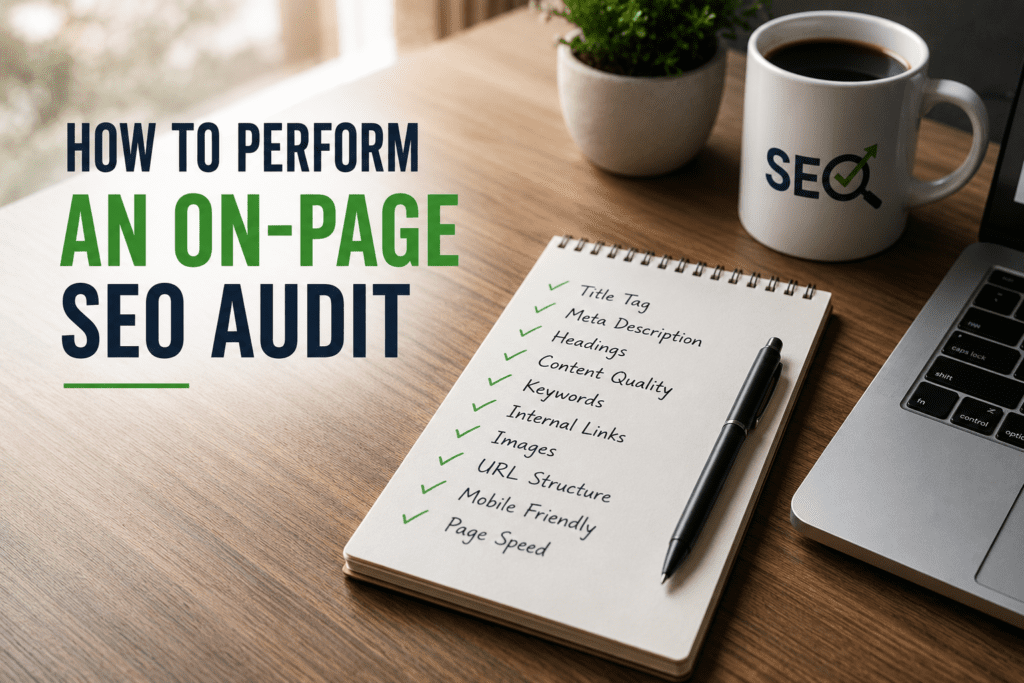
A properly executed On-Page SEO Audit analyzes important SEO elements such as keywords, content quality, title tags, meta descriptions, headings, internal links, page speed, mobile usability, image optimization, and user engagement signals.
This detailed guide explains how to perform a complete on-page SEO audit step-by-step while following modern Google SEO best practices for 2026.
What Is an On-Page SEO Audit?
An On-Page SEO Audit is the process of analyzing and optimizing individual webpages to improve their search engine visibility and overall user experience. The audit focuses on identifying issues that may prevent pages from ranking effectively on Google.
Unlike technical SEO audits that focus on backend website performance, on-page SEO audits concentrate on content and page-level optimization factors.
An effective on-page SEO audit examines:
- Keyword optimization
- Content quality
- Meta tags
- Heading structure
- Internal linking
- URL structure
- Image optimization
- User experience
- Mobile-friendliness
- Page speed
- Search intent alignment
Performing regular audits helps websites remain competitive in evolving search engine algorithms.
Why On-Page SEO Audits Are Important
An on-page SEO audit is essential because it helps websites identify SEO weaknesses before they negatively affect rankings and traffic. Even strong websites can lose rankings if content becomes outdated, keywords lose relevance, or pages fail to meet modern SEO standards.
Regular audits improve:
- Organic search visibility
- User engagement
- Click-through rates
- Website authority
- Conversion rates
- Content relevance
- Search engine crawlability
Google continuously updates its ranking systems to prioritize high-quality, helpful, and user-focused content. Businesses that regularly audit and optimize webpages maintain stronger search performance over time.
Step 1: Analyze Target Keywords
The first step in an on-page SEO audit is reviewing keyword targeting. Every page should target a primary keyword along with several related secondary keywords.
Keyword optimization helps search engines understand the topic and relevance of a webpage.
During keyword analysis, businesses should evaluate:
- Primary keyword usage
- Secondary keyword integration
- Search intent alignment
- Keyword stuffing issues
- Long-tail keyword opportunities
For example, if the page targets “on-page SEO audit”, related keywords may include:
- SEO audit checklist
- on-page SEO optimization
- SEO audit tools
- Google SEO audit
- website content optimization
Keywords should appear naturally throughout content rather than being forced unnaturally into paragraphs.
Step 2: Review Title Tags
The title tag is one of the most important on-page SEO elements because it tells both users and search engines what the page is about.
An optimized title tag should:
- Include the primary keyword
- Remain under 60 characters
- Be compelling and clickable
- Match search intent
- Avoid keyword stuffing
Example of a strong SEO title:
How to Perform an On-Page SEO Audit for Better Rankings
Weak title tags can reduce click-through rates and negatively impact rankings.
Businesses should ensure every page has a unique and optimized title tag.
Step 3: Optimize Meta Descriptions
Meta descriptions provide a summary of webpage content in search engine results pages.
Although meta descriptions are not direct ranking factors, they strongly influence click-through rates.
A good meta description should:
- Include target keywords
- Remain under 155 characters
- Encourage users to click
- Clearly describe the page content
Example:
Learn how to perform a complete on-page SEO audit to improve rankings, boost organic traffic, and optimize website performance.
Compelling meta descriptions improve search visibility and user engagement.
Step 4: Evaluate Heading Structure
Headings help organize webpage content for both readers and search engines.
Proper heading structure improves:
- Readability
- User experience
- Content organization
- Keyword relevance
A webpage should use:
- One H1 heading
- Multiple H2 headings
- Supporting H3 and H4 headings where needed
Headings should naturally include relevant keywords while accurately describing section content.
Example optimized headings:
- On-Page SEO Audit Checklist
- SEO Content Optimization Tips
- Internal Linking Best Practices
- Image SEO Optimization
Clear heading structures improve content accessibility and SEO performance.
Step 5: Check Content Quality
Content quality is one of Google’s most important ranking factors. Websites with thin, outdated, or low-value content struggle to rank well in modern search results.
An on-page SEO audit should evaluate whether content:
- Matches user intent
- Provides valuable information
- Answers user questions
- Is original and unique
- Uses proper formatting
- Contains updated information
High-quality content should include:
- Detailed explanations
- Clear paragraphs
- Relevant examples
- Helpful insights
- Visual content where appropriate
Google prioritizes content that demonstrates expertise, authority, and trustworthiness.
Step 6: Optimize Keyword Placement
Keywords should appear strategically throughout the webpage without overstuffing.
Important keyword placement areas include:
- Title tags
- Meta descriptions
- H1 headings
- First paragraph
- Subheadings
- Image alt text
- URL structure
However, excessive keyword repetition can harm readability and trigger Google spam signals.
Modern SEO focuses on natural keyword integration and semantic relevance rather than keyword density alone.
Step 7: Review URL Structure
SEO-friendly URLs help users and search engines understand page topics more clearly.
An optimized URL should:
- Be short and descriptive
- Include target keywords
- Avoid random characters
- Use hyphens instead of underscores
Good URL example:
example.com/on-page-seo-audit
Poor URL example:
example.com/page?id=12345
Clean URL structures improve both usability and SEO performance.
Step 8: Analyze Internal Linking
Internal links connect pages within the same website and help distribute authority throughout the site.
A strong internal linking strategy improves:
- Crawlability
- User navigation
- Page authority
- Time on site
Businesses should use descriptive anchor text for internal links.
Important SEO Anchor Text Examples
- on-page SEO checklist
- SEO content optimization
- technical SEO audit
- keyword research strategy
- website speed optimization
- Google ranking factors
- SEO audit tools
- internal linking strategy
- mobile SEO optimization
- content marketing strategy
Relevant anchor text helps search engines understand page relationships and keyword relevance.
Step 9: Optimize Images
Image optimization improves page speed, accessibility, and SEO performance.
An image SEO audit should review:
- Image file sizes
- Alt text
- File names
- Lazy loading
- Image compression
Optimized image filenames should describe the image clearly.
Example:
on-page-seo-audit-checklist.jpg
Alt text should include descriptive and keyword-relevant information naturally.
Large unoptimized images can significantly slow down websites and hurt rankings.
Step 10: Improve Page Speed
Page speed is a critical ranking factor and user experience metric.
Slow websites often experience:
- Higher bounce rates
- Lower engagement
- Reduced conversions
- Poor mobile usability
Businesses can improve speed through:
- Image compression
- Browser caching
- CSS and JavaScript optimization
- Faster hosting
- Content Delivery Networks (CDNs)
Google’s Core Web Vitals make page speed optimization even more important for SEO success.
Step 11: Check Mobile-Friendliness
Google uses mobile-first indexing, meaning it primarily evaluates the mobile version of websites.
An on-page SEO audit should ensure webpages:
- Load correctly on mobile devices
- Use responsive design
- Have readable text
- Avoid intrusive popups
- Provide easy navigation
Poor mobile experiences can significantly reduce rankings and conversions.
Mobile optimization is now essential for both SEO and user satisfaction.
Step 12: Evaluate User Experience (UX)
User experience directly impacts SEO performance because Google prioritizes pages that satisfy users.
Important UX factors include:
- Easy navigation
- Readable content
- Clear design
- Fast loading speed
- Logical layout
- Interactive elements
Websites with poor user experiences often suffer from higher bounce rates and lower engagement.
Good UX encourages users to stay longer and interact more with content.
Step 13: Review Content Freshness
Outdated content can lose rankings over time as competitors publish newer and more relevant information.
An SEO audit should identify pages requiring updates such as:
- Statistics
- Examples
- Trends
- Links
- Screenshots
- SEO strategies
Refreshing content regularly helps maintain rankings and relevance.
Updated content also signals to search engines that the website remains active and trustworthy.
Step 14: Analyze Search Intent
Search intent refers to the reason behind a user’s search query.
Google prioritizes pages that best satisfy search intent.
An on-page SEO audit should determine whether content matches the user’s expectations.
Common search intent types include:
- Informational
- Transactional
- Navigational
- Commercial investigation
For example, users searching “how to perform an on-page SEO audit” expect educational and actionable content rather than sales-focused pages.
Matching search intent improves rankings and user satisfaction.
Step 15: Check Duplicate Content
Duplicate content can confuse search engines and weaken SEO performance.
Common duplicate content issues include:
- Similar product pages
- Copied content
- Multiple URL versions
- Printer-friendly pages
Businesses should use canonical tags and proper redirects to manage duplicate content effectively.
Unique and valuable content performs better in search rankings.
Step 16: Optimize Call-To-Actions (CTAs)
An effective webpage should guide users toward desired actions.
CTAs improve:
- Conversions
- Engagement
- Lead generation
Examples include:
- Contact forms
- Newsletter signups
- Product purchases
- Free downloads
Well-placed CTAs improve overall page effectiveness without harming SEO performance.
Best Tools for On-Page SEO Audits
Several SEO tools help businesses perform comprehensive on-page SEO audits.
Popular tools include:
- Google Search Console
- Ahrefs
- SEMrush
- Screaming Frog
- Moz Pro
- Surfer SEO
- Google PageSpeed Insights
- GTmetrix
These tools help identify optimization opportunities and technical issues affecting rankings.
Common On-Page SEO Mistakes
Many websites struggle because of avoidable SEO mistakes.
Common problems include:
- Keyword stuffing
- Thin content
- Duplicate content
- Missing meta tags
- Slow loading pages
- Poor mobile usability
- Weak internal linking
- Missing alt text
- Broken links
- Poor heading structure
Regular SEO audits help identify and fix these issues before they impact rankings significantly.
The Future of On-Page SEO
On-page SEO continues evolving as Google becomes more focused on user experience, helpful content, and AI-driven search understanding.
Future trends include:
- AI-powered search experiences
- Voice search optimization
- Semantic SEO
- Entity-based search
- User behavior signals
- Personalized search results
Businesses must prioritize high-quality, people-first content while maintaining strong technical and on-page optimization practices.
Final Thoughts
An on-page SEO audit is one of the most important processes for improving website visibility and maintaining strong Google rankings. Regular audits help businesses identify weaknesses, improve content quality, optimize keywords, strengthen internal linking, and enhance user experience.
Successful on-page SEO combines:
- Keyword optimization
- High-quality content
- Strong UX
- Mobile usability
- Fast loading speeds
- Proper metadata
- Internal linking
Websites that consistently perform SEO audits remain competitive in evolving search engine environments and achieve stronger long-term organic growth.
FAQs
1 . What is an On-Page SEO Audit?
An On-Page SEO Audit is the process of analyzing and optimizing individual webpages to improve their performance in search engine results. It focuses on reviewing important SEO elements such as keywords, title tags, meta descriptions, content quality, internal linking, URL structure, mobile usability, and page speed.
The purpose of an on-page SEO audit is to identify weaknesses that may prevent a webpage from ranking effectively on Google. Regular audits help businesses improve search visibility, increase organic traffic, enhance user experience, and maintain strong SEO performance over time.
2 . Why is an On-Page SEO Audit important?
An on-page SEO audit is important because search engine algorithms constantly evolve, and webpages can lose rankings if they are not updated and optimized regularly. Even high-quality websites may experience traffic drops due to outdated content, poor keyword optimization, slow loading speeds, or weak user experience.
Performing regular SEO audits helps businesses:
- Improve Google rankings
- Increase organic traffic
- Enhance content quality
- Optimize user experience
- Fix SEO issues
- Improve mobile usability
- Strengthen internal linking
A well-optimized webpage performs better in search results and provides a better experience for users.
3 . How often should you perform an On-Page SEO Audit?
Most websites should perform an on-page SEO audit every 3 to 6 months. However, large websites, e-commerce stores, and competitive industries may require more frequent audits to maintain strong rankings.
Regular audits are especially important after:
- Google algorithm updates
- Website redesigns
- Major content updates
- Traffic drops
- Ranking declines
Frequent SEO audits help businesses identify issues early and stay competitive in search engine results.
4 . What are the most important elements in an On-Page SEO Audit?
Several elements play a critical role in an effective on-page SEO audit. The most important factors include:
- Keyword optimization
- Content quality
- Title tags
- Meta descriptions
- Heading structure
- Internal linking
- Mobile optimization
- Page speed
- Image optimization
- URL structure
- User experience
All these elements work together to help search engines understand webpage content while improving usability for visitors.
5 . How does keyword optimization improve SEO?
Keyword optimization helps search engines understand what a webpage is about. Proper keyword placement improves the chances of ranking for relevant search terms users type into Google.
Keywords should appear naturally in:
- Title tags
- Headings
- Meta descriptions
- URLs
- First paragraphs
- Image alt text
However, overusing keywords can harm rankings because Google prioritizes natural and helpful content rather than keyword stuffing.
6 . Why are title tags important in SEO?
Title tags are one of the strongest on-page SEO signals because they tell search engines and users what a webpage contains. A well-optimized title tag improves both rankings and click-through rates.
Good title tags should:
- Include the primary keyword
- Stay under 60 characters
- Be unique for every page
- Match search intent
- Encourage clicks
A strong title tag can significantly improve search visibility and user engagement.
7 . What role do meta descriptions play in SEO?
Meta descriptions provide a short summary of webpage content that appears in search results. While meta descriptions are not direct ranking factors, they strongly influence whether users click on a webpage.
An effective meta description should:
- Include target keywords
- Clearly explain the content
- Encourage user action
- Stay under 155 characters
Higher click-through rates often lead to better overall SEO performance.
8 . Why is content quality important for on-page SEO?
Google prioritizes high-quality, helpful, and user-focused content. Thin or low-value content often struggles to rank because it does not satisfy user intent.
High-quality content should:
- Solve user problems
- Answer important questions
- Provide detailed information
- Be easy to read
- Include updated insights
- Use proper formatting
Content quality is one of the biggest ranking factors in modern SEO.
9 . How does internal linking help SEO?
Internal linking connects webpages within the same website and helps search engines understand site structure and content relationships.
Benefits of internal linking include:
- Improved crawlability
- Better page authority distribution
- Easier user navigation
- Increased page views
- Reduced bounce rates
Using descriptive anchor text also improves keyword relevance and search engine understanding.
10 . Why is mobile optimization important in SEO?
Google uses mobile-first indexing, meaning it primarily evaluates the mobile version of a website for rankings. Websites that perform poorly on smartphones may experience lower search visibility.
Mobile optimization includes:
- Responsive design
- Fast mobile loading speeds
- Readable text
- Easy navigation
- Mobile-friendly layouts
A strong mobile experience improves both SEO performance and user satisfaction.
11 . How does page speed affect on-page SEO?
Page speed directly impacts user experience and Google rankings. Slow-loading pages often cause users to leave websites quickly, increasing bounce rates and reducing engagement.
Page speed optimization includes:
- Compressing images
- Minimizing CSS and JavaScript
- Using browser caching
- Improving hosting performance
- Using Content Delivery Networks (CDNs)
Faster websites generally achieve better rankings and higher conversion rates.
12 . What are SEO-friendly URLs?
SEO-friendly URLs are short, descriptive, and easy-to-read webpage addresses that help search engines and users understand page topics.
Good SEO URLs should:
- Include keywords
- Use hyphens
- Avoid random numbers or symbols
- Remain concise
Example:
example.com/on-page-seo-audit
SEO-friendly URLs improve crawlability and usability.
13 . Why is search intent important in on-page SEO?
Search intent refers to the reason behind a user’s search query. Google prioritizes content that best satisfies what users are looking for.
Common search intent types include:
- Informational
- Transactional
- Navigational
- Commercial investigation
Matching search intent improves rankings, engagement, and user satisfaction because the content directly answers user needs.
14 . What tools are best for On-Page SEO Audits?
Several SEO tools help businesses analyze webpages and identify optimization opportunities.
Popular SEO audit tools include:
- Google Search Console
- Ahrefs
- SEMrush
- Screaming Frog
- Surfer SEO
- Moz Pro
- Google PageSpeed Insights
- GTmetrix
These tools help detect technical issues, keyword problems, speed concerns, and content weaknesses.
15 . What are common On-Page SEO mistakes?
Many websites experience ranking issues because of common SEO mistakes such as:
- Keyword stuffing
- Thin content
- Duplicate content
- Missing title tags
- Weak internal linking
- Slow page speed
- Poor mobile optimization
- Missing image alt text
- Poor heading structure
Regular on-page SEO audits help identify and fix these issues before they negatively affect rankings and traffic.