
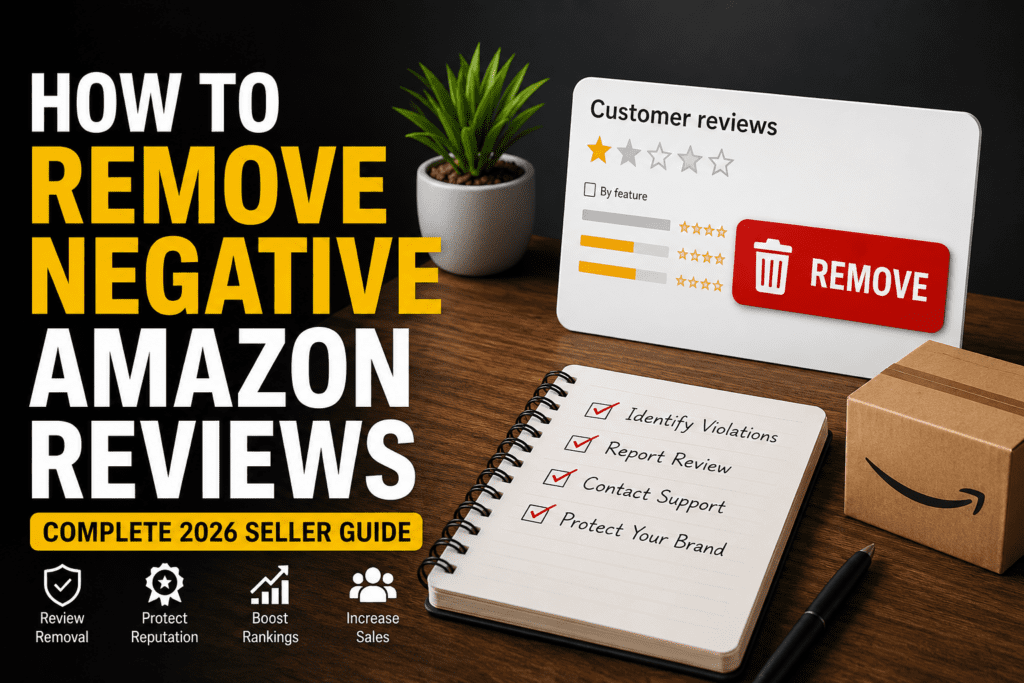
Negative Amazon reviews can significantly damage product rankings, conversion rates, customer trust, and long-term brand growth. In today’s highly competitive Amazon marketplace, shoppers often compare star ratings before even reading product features. A single wave of poor reviews can reduce sales velocity, impact keyword indexing, lower click-through rates, and hurt Buy Box ownership.
For private label sellers, wholesalers, and brand owners, understanding how Amazon review removal works is no longer optional. It has become an essential part of Amazon account management and marketplace survival.
The challenge is that Amazon does not allow sellers to delete reviews freely. Reviews are protected under Amazon’s customer trust system, and only reviews violating Amazon guidelines can potentially be removed. Sellers who attempt manipulative tactics risk account suspensions, listing suppression, or permanent bans.
This detailed guide explains everything sellers need to know about removing negative Amazon reviews, identifying fake reviews, handling seller feedback, responding professionally to customers, and protecting long-term account health.
If you are struggling with declining rankings or poor review performance, combining review management with strong Amazon SEO Strategy and listing optimization is essential for sustainable ranking growth.
Table of Contents
- Understanding Amazon Reviews vs Seller Feedback
- Why Negative Reviews Hurt Amazon Rankings
- How Amazon’s Review System Works
- Types of Reviews Amazon May Remove
- Amazon Community Guidelines Explained
- Step-by-Step Process to Remove Negative Amazon Reviews
- How to Remove Negative Seller Feedback
- How to Identify and Report Fake Amazon Reviews
- How to Contact Amazon Support Correctly
- How to Respond to Negative Reviews Professionally
- Amazon Review Manipulation Policies
- Common Mistakes Sellers Make
- Advanced Strategies to Prevent Negative Reviews
- Best Tools for Amazon Review Monitoring
- Long-Term Reputation Management Strategy
- Frequently Asked Questions
- Final Thoughts
Understanding Amazon Reviews vs Seller Feedback
One of the most misunderstood areas of Amazon selling is the difference between product reviews and seller feedback. Many sellers attempt removal requests using the wrong system, which often leads to rejection.
What Are Amazon Product Reviews?
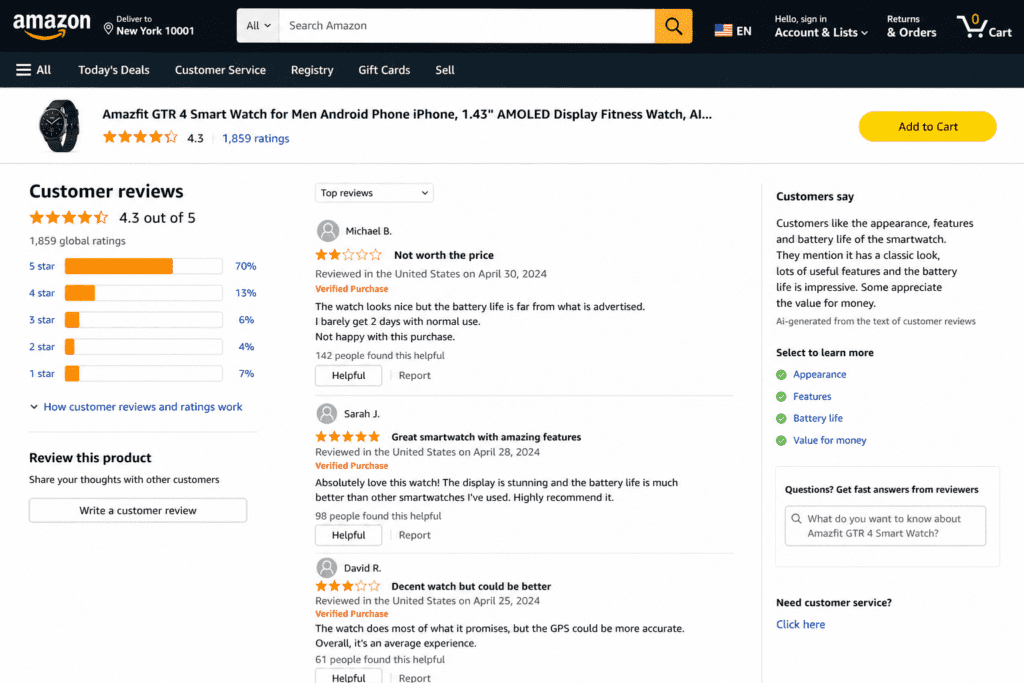
Amazon product reviews are customer opinions related directly to the product itself. These reviews appear publicly on product listings and heavily influence customer buying decisions.
Product reviews usually discuss:
- Product quality
- Material durability
- Product performance
- Sizing accuracy
- Features and functionality
- Packaging quality
- Product expectations vs reality
These reviews directly impact conversion rates and organic keyword rankings within Amazon’s algorithm.
When shoppers search for products on Amazon, listings with higher ratings and stronger review histories generally receive better engagement, stronger conversions, and improved ranking positions.
This is why professional sellers invest heavily in Amazon Listing Optimization to reduce customer dissatisfaction and minimize negative reviews.
What Is Amazon Seller Feedback?
Seller feedback focuses on the customer’s purchasing experience with the seller rather than the product itself.
Seller feedback commonly includes:
- Shipping speed
- Customer service quality
- Packaging during transit
- Communication with buyers
- Delivery problems
- Refund handling
Seller feedback affects important account metrics such as:
- Order Defect Rate (ODR)
- Account health
- Buy Box ownership
- Seller reputation score
- Customer trust signals
Unlike product reviews, seller feedback can sometimes be removed automatically if Amazon fulfilled the order through FBA.
Understanding this distinction is critical because Amazon uses completely different removal policies for product reviews and seller feedback.
Why Negative Reviews Hurt Amazon Rankings
Amazon’s ranking system prioritizes customer satisfaction heavily. Reviews are one of the strongest behavioral signals influencing Amazon’s algorithm.
When a listing receives multiple negative reviews, Amazon may interpret the product as lower quality or less relevant to shoppers.
This can impact:
- Organic keyword rankings
- Conversion rates
- Click-through rates
- Advertising efficiency
- Session duration
- Sales velocity
- Repeat purchases
For competitive categories, even a small rating drop can create major ranking losses.
For example:
- A product with 4.7 stars typically converts much higher than a product with 4.1 stars
- Lower conversion rates reduce Amazon’s confidence in the listing
- Reduced confidence lowers organic visibility
Negative reviews also affect advertising profitability because PPC campaigns convert less efficiently when shoppers see poor ratings.
This is why successful brands combine review management with professional Amazon PPC Management Services to maintain profitability and ranking stability.
How Amazon’s Review System Works
Amazon’s review ecosystem is designed to maintain customer trust and platform authenticity.
The company uses advanced machine learning systems and moderation teams to identify:
- Fake reviews
- Manipulated ratings
- Incentivized reviews
- Coordinated review attacks
- Review abuse networks
Amazon prioritizes review integrity because reviews directly influence consumer purchasing behavior.
This means Amazon generally protects customer opinions unless they clearly violate policy guidelines.
Many sellers misunderstand this system and believe any “unfair” review should be removable. However, Amazon allows customers to express negative experiences freely unless specific rules are broken.
Understanding Amazon policy correctly improves your chances of successful review removal requests.
Types of Reviews Amazon May Remove
Amazon does not remove reviews simply because they are negative. However, some reviews violate policy and may qualify for removal.
1. Seller-Related Complaints Posted as Product Reviews
One of the most common removable review categories involves seller-related complaints appearing inside product reviews.
Examples include complaints about:
- Late delivery
- Shipping delays
- Courier damage
- Wrong package handling
- Seller communication issues
Amazon considers these fulfillment-related issues rather than product feedback.
Example:
“Product arrived late and seller never replied.”
Since this review discusses seller experience instead of the actual product, Amazon may remove it.
This removal category is especially important for FBA sellers because Amazon often assumes responsibility for logistics.
2. Profanity and Offensive Content
Amazon prohibits reviews containing:
- Harassment
- Hate speech
- Threats
- Explicit profanity
- Abusive language
- Discriminatory remarks
If a review contains offensive content violating community standards, sellers can report it through Seller Central.
3. Fake or Manipulated Reviews
Amazon aggressively targets fake review activity.
Examples include:
- Competitor sabotage reviews
- Paid review networks
- Coordinated attacks
- Bot-generated reviews
- Incentivized feedback
- Multiple suspicious reviews from linked accounts
Fake reviews are a growing problem across Amazon marketplaces, particularly in highly competitive niches.
Brand owners should actively monitor suspicious review patterns to protect listing integrity.
4. Reviews for the Wrong Product
Sometimes customers accidentally leave reviews for another ASIN or completely unrelated item.
These reviews may qualify for removal if evidence clearly shows the review is unrelated to the purchased product.
5. Promotional or Spam Content
Amazon prohibits reviews containing:
- External website links
- Marketing promotions
- Phone numbers
- Email addresses
- Advertising content
- Coupon offers
Spam-like reviews violating these rules can potentially be removed.
Amazon Community Guidelines Explained
Amazon Community Guidelines determine whether a review qualifies for removal.
The guidelines prohibit:
- Review manipulation
- Fake engagement
- Irrelevant content
- Offensive behavior
- Promotional abuse
- Misleading reviews
Sellers must understand these policies carefully before contacting support.
Incorrect or weak removal requests usually result in automated rejection responses.
Professional account management teams often prepare evidence-based cases referencing exact policy violations to improve approval chances.
Businesses seeking stronger marketplace stability often benefit from professional <strong><a href=”https://ecomranker.com/full-service-amazon-account-management/”>Amazon Account Management Services</a></strong> to handle compliance and reputation monitoring.
Step-by-Step Process to Remove Negative Amazon Reviews
Step 1: Analyze the Review Carefully
First, determine whether the review actually violates Amazon policy.
Ask:
- Does the review discuss shipping instead of product quality?
- Does it contain abusive language?
- Is the content fake or suspicious?
- Is it unrelated to the ASIN?
- Does it contain promotional material?
If the answer is no, removal is unlikely.
Step 2: Gather Supporting Evidence
Strong evidence increases approval chances significantly.
Collect:
- Review URL
- ASIN
- Screenshot
- Order information if available
- Reviewer details
- Policy violation explanation
Detailed documentation helps Amazon support agents understand the issue quickly.
Step 3: Use the “Report Abuse” Feature
Under the review section, click:
“Report abuse”
This sends the review into Amazon’s moderation queue for evaluation.
Although automated moderation may not always remove the review immediately, repeated legitimate reports can help trigger manual investigation.
Step 4: Open a Seller Central Support Case
Inside Seller Central:
- Navigate to Help
- Select Customer Reviews
- Open a support case
- Explain the exact policy violation
- Attach evidence
Always keep communication professional and policy-focused.
Step 5: Escalate If Necessary
Many removal requests require persistence.
If rejected:
- Reopen the case
- Clarify the violation
- Reference Amazon policy specifically
- Submit additional screenshots
- Escalate politely
Support quality varies significantly between agents.
Persistence often matters.
How to Remove Negative Seller Feedback
Seller feedback removal is generally easier than product review removal.
Amazon may automatically strike through or remove feedback related to:
- FBA delivery delays
- Warehouse handling problems
- Amazon shipping errors
- Carrier-related issues
This is because Amazon accepts responsibility for fulfillment problems under FBA.
Seller Feedback Removal Process
Inside Seller Central:
- Go to Performance
- Open Feedback Manager
- Locate negative feedback
- Select “Request Removal”
- Submit justification
Sellers should monitor feedback regularly because negative seller metrics can reduce Buy Box ownership and affect account health.
How to Identify and Report Fake Amazon Reviews
Fake reviews are increasingly sophisticated.
Common warning signs include:
- Multiple identical reviews
- Generic language patterns
- Sudden review spikes
- Irrelevant content
- Suspicious reviewer history
- Multiple reviews from new accounts
Competitor attacks are particularly common in aggressive niches.
Professional brands often use review monitoring tools to detect suspicious activity early before it impacts rankings heavily.
How to Respond to Negative Reviews Professionally
Not every negative review can be removed.
In these situations, public responses become extremely important.
Potential buyers read seller responses carefully before purchasing.
A professional response can improve trust even when the review remains visible.
Best Practices for Review Responses
Acknowledge the Customer’s Experience
Avoid arguing with customers publicly.
Professional empathy improves brand perception.
Offer Resolution
Provide support options and demonstrate willingness to help.
Stay Calm and Professional
Aggressive responses damage trust further.
Professional communication shows accountability and customer care.
Amazon Review Manipulation Policies
Amazon has intensified enforcement against review manipulation dramatically.
Prohibited actions include:
- Paying for reviews
- Offering refunds for review removal
- Using fake buyer accounts
- Review exchange groups
- Incentivized positive reviews
- Artificial review boosting
Violations can lead to:
- Listing suspension
- Review removal
- Account deactivation
- Permanent bans
Sellers should focus on genuine customer experience improvement instead of manipulation tactics.
Common Mistakes Sellers Make
Many sellers accidentally worsen their review problems.
Common mistakes include:
- Arguing emotionally with support
- Filing weak removal cases
- Ignoring recurring product issues
- Using black-hat review tactics
- Overlooking listing optimization problems
Long-term success comes from improving product quality and customer satisfaction systematically.
Advanced Strategies to Prevent Negative Reviews
The best review strategy is prevention.
Improve Product Quality
Poor-quality products inevitably create negative reviews regardless of marketing quality.
Continuous product improvement is essential.
Optimize Product Listings Properly
Misleading images and inaccurate descriptions create unrealistic expectations.
Strong Amazon SEO Optimization improves targeting accuracy and customer satisfaction simultaneously.
Monitor Customer Complaints
Recurring issues reveal operational weaknesses.
Track patterns involving:
- Packaging
- Sizing
- Missing parts
- Material quality
- Durability complaints
Improve PPC Traffic Quality
Poor PPC targeting attracts irrelevant buyers who are more likely to leave poor reviews.
Professional Amazon PPC Strategy improves buyer intent matching and reduces dissatisfaction.
Strengthen Customer Support
Fast and professional support often prevents negative feedback escalation.
Customer experience remains one of Amazon’s strongest ranking signals.
Best Tools for Amazon Review Monitoring
Professional sellers use advanced monitoring tools to protect brand reputation.
Popular tools include:
- Helium 10
- Jungle Scout
- FeedbackWhiz
- Sellerise
- DataDive
These tools help track:
- Review trends
- Negative review spikes
- Competitor attacks
- Product sentiment
- ASIN reputation monitoring
Long-Term Reputation Management Strategy
Review management should never be reactive only.
Top-performing Amazon brands build systems focused on:
- Product quality improvement
- Listing optimization
- Customer support excellence
- PPC targeting precision
- Inventory management
- Packaging improvements
- Continuous feedback monitoring
Strong operational systems naturally reduce negative review frequency over time.
Frequently Asked Questions About Removing Negative Amazon Reviews
Can Amazon remove negative reviews from my product listing?
Yes, Amazon can remove negative reviews, but only if the review violates Amazon’s Community Guidelines or review policies. Amazon will not remove a review simply because it is negative or hurts sales performance. The review must clearly break one or more platform rules.
Amazon may remove reviews that contain:
- Profanity or abusive language
- Hate speech or harassment
- Promotional or spam content
- External links or contact information
- Seller-related complaints posted as product reviews
- Fake or manipulated review activity
- Reviews written for the wrong product
For example, if a customer writes a review complaining only about shipping delays or delivery issues instead of the actual product, Amazon may remove it because fulfillment complaints belong in seller feedback rather than product reviews.
Before requesting removal, sellers should carefully review Amazon policies and collect evidence supporting the violation. Submitting weak or emotional requests usually results in rejection.
Many professional sellers combine review management with Amazon Account Management Services to monitor policy compliance and protect account health more effectively.
Can sellers delete Amazon reviews themselves?
No, Amazon sellers cannot manually delete customer reviews from product listings.
Amazon fully controls the review system to maintain platform trust and authenticity. Sellers only have the ability to:
- Report reviews for abuse
- Open support cases
- Request investigation for policy violations
- Respond publicly to customer reviews
Amazon removed direct seller review deletion capabilities years ago because of widespread abuse and manipulation concerns.
This means sellers must focus on identifying genuine policy violations rather than attempting to remove every negative review.
In many situations, improving product quality, optimizing listings, and enhancing customer experience becomes more effective than removal attempts alone.
Brands struggling with poor conversion rates due to reviews should also strengthen their Amazon Listing Optimization strategy to align customer expectations properly.
What types of negative Amazon reviews are easiest to remove?
The easiest reviews to remove are usually reviews that clearly violate Amazon guidelines.
Common removable review categories include:
Seller-Related Reviews
If the customer complains about:
- Shipping delays
- Delivery problems
- Customer service
- Packaging damage caused during transit
Amazon may remove the review because it does not discuss the actual product.
Offensive or Abusive Reviews
Reviews containing:
- Threats
- Harassment
- Explicit profanity
- Hate speech
often violate Amazon community standards.
Fake or Competitor Reviews
Suspicious review activity such as:
- Competitor attacks
- Paid reviews
- Coordinated negative campaigns
- Bot-generated content
may qualify for investigation and removal.
Wrong Product Reviews
If a customer accidentally reviews the wrong product or ASIN, Amazon may remove the review after verification.
The clearer the policy violation, the higher the chances of successful removal.
How do I report a fake Amazon review?
Reporting fake Amazon reviews requires a structured approach and strong evidence.
Start by identifying suspicious behavior such as:
- Multiple identical reviews
- Generic wording patterns
- Sudden spikes in negative ratings
- Reviews unrelated to the product
- Suspicious reviewer history
Once identified, sellers can:
- Click “Report Abuse” directly under the review
- Open a Seller Central support case
- Submit screenshots and review URLs
- Explain the suspected policy violation clearly
- Escalate through Brand Registry if enrolled
Amazon uses machine learning systems and fraud detection teams to investigate suspicious review activity.
However, sellers should avoid making unsupported accusations. Amazon generally requires evidence before taking enforcement action.
Advanced brands often use monitoring tools alongside Amazon SEO Management to maintain both visibility and reputation protection.
Does negative feedback affect Amazon rankings?
Yes, negative reviews and seller feedback can significantly impact Amazon rankings and overall listing performance.
Amazon’s ranking algorithm prioritizes customer satisfaction metrics heavily. Poor reviews often lead to:
- Lower conversion rates
- Reduced click-through rates
- Higher return rates
- Lower sales velocity
- Reduced keyword rankings
- Lower Buy Box ownership
For example, a product with 4.8 stars usually converts substantially better than a similar product with 4.1 stars.
As conversions decline, Amazon may reduce the product’s organic visibility because the platform perceives the listing as less valuable to shoppers.
Negative reviews can also increase advertising costs because poor-rated products generally convert less efficiently in PPC campaigns.
This is why experienced sellers combine review management with professional Amazon PPC Management Services to maintain profitability and ranking stability.
Can Amazon remove reviews related to FBA shipping problems?
Yes, Amazon may remove reviews or strike through seller feedback related to Fulfillment by Amazon (FBA) issues because Amazon controls the logistics process.
If a customer complains about:
- Late delivery
- Damaged shipment
- Packaging problems
- Warehouse handling issues
- Courier delays
Amazon often accepts responsibility for these operational failures.
In seller feedback cases, Amazon may automatically remove or strike through the feedback if the issue was caused by FBA operations rather than the seller directly.
This is one reason many sellers prefer FBA, as Amazon absorbs part of the logistical accountability.
However, if the review also criticizes the product itself, Amazon may still keep the review active.
How long does Amazon review removal take?
Amazon review removal timelines vary significantly depending on the complexity of the case and the type of violation involved.
Typical timeframes include:
- Automated removals: 24–72 hours
- Standard support investigations: 3–7 days
- Escalated review investigations: several weeks
Some requests are rejected automatically and require reopening the case with stronger evidence.
Persistent but professional follow-up often improves success rates.
Sellers should avoid opening multiple duplicate cases aggressively because this may slow down the investigation process further.
Can I contact customers directly to remove negative reviews?
Amazon allows limited customer communication, but sellers must follow strict communication guidelines.
You may:
- Offer customer support
- Help resolve issues
- Request honest feedback updates after resolution
However, you may NOT:
- Offer refunds in exchange for review removal
- Pay customers to change reviews
- Provide discounts for positive feedback
- Pressure buyers into deleting reviews
These actions violate Amazon’s review manipulation policies and can lead to account suspension.
The safest approach is to focus on resolving customer problems genuinely and professionally.
Good customer service often encourages customers to voluntarily update their reviews without policy violations.
What is the difference between seller feedback and product reviews?
Many Amazon sellers confuse these two systems, but they function very differently.
Product Reviews
Product reviews evaluate the actual product experience, including:
- Quality
- Features
- Durability
- Performance
- Value for money
These reviews appear publicly on the product listing and heavily influence conversions and rankings.
Seller Feedback
Seller feedback evaluates the seller experience, including:
- Shipping speed
- Packaging
- Customer support
- Delivery handling
- Communication
Seller feedback impacts:
- Account health
- Order Defect Rate (ODR)
- Buy Box eligibility
- Seller reputation metrics
Amazon uses separate removal systems and policies for both categories.
Understanding this distinction improves removal request accuracy significantly.
Can negative reviews destroy Amazon sales?
Yes, poor reviews can dramatically reduce Amazon sales, especially in highly competitive product categories.
Modern Amazon shoppers heavily depend on ratings and reviews before purchasing.
Even a small rating decline can:
- Reduce trust instantly
- Lower conversion rates
- Increase ad costs
- Hurt keyword rankings
- Reduce organic traffic
- Impact repeat purchases
For example, many shoppers filter products by ratings above 4 stars. Falling below that threshold can significantly reduce visibility.
Negative reviews also create long-term brand reputation challenges if recurring product issues remain unresolved.
This is why successful brands continuously invest in:
- Product quality improvements
- Listing optimization
- PPC targeting refinement
- Customer support systems
- Reputation monitoring
Combining review management with strong Amazon PPC Strategy and SEO optimization creates stronger long-term marketplace stability.
Should I hire an Amazon agency to manage reviews and account health?
For growing brands, professional Amazon management can often save significant time, reduce account risks, and improve marketplace performance.
Experienced Amazon agencies help sellers with:
- Review monitoring
- Policy compliance
- Listing optimization
- PPC management
- Account health monitoring
- Keyword ranking improvements
- Brand protection strategies
Because Amazon policies constantly evolve, professional support helps sellers avoid costly compliance mistakes.
At EcomRanker, we help Amazon brands improve rankings, manage PPC campaigns, optimize listings, monitor reputation, and scale sustainably through data-driven marketplace growth strategies.
Final Thoughts
Negative Amazon reviews are one of the biggest challenges facing modern Amazon sellers. However, sellers who understand Amazon policy, monitor reviews proactively, improve customer experience, and optimize listings strategically can protect both rankings and long-term profitability.
Successful Amazon growth requires more than review removal alone. It requires a complete strategy involving:
- Listing optimization
- Amazon SEO
- PPC management
- Customer experience improvement
- Brand reputation monitoring
- Compliance-focused account management
At EcomRanker, we help Amazon sellers scale through advanced SEO strategies, conversion optimization, PPC management, and full-service marketplace growth solutions designed for long-term ranking success.