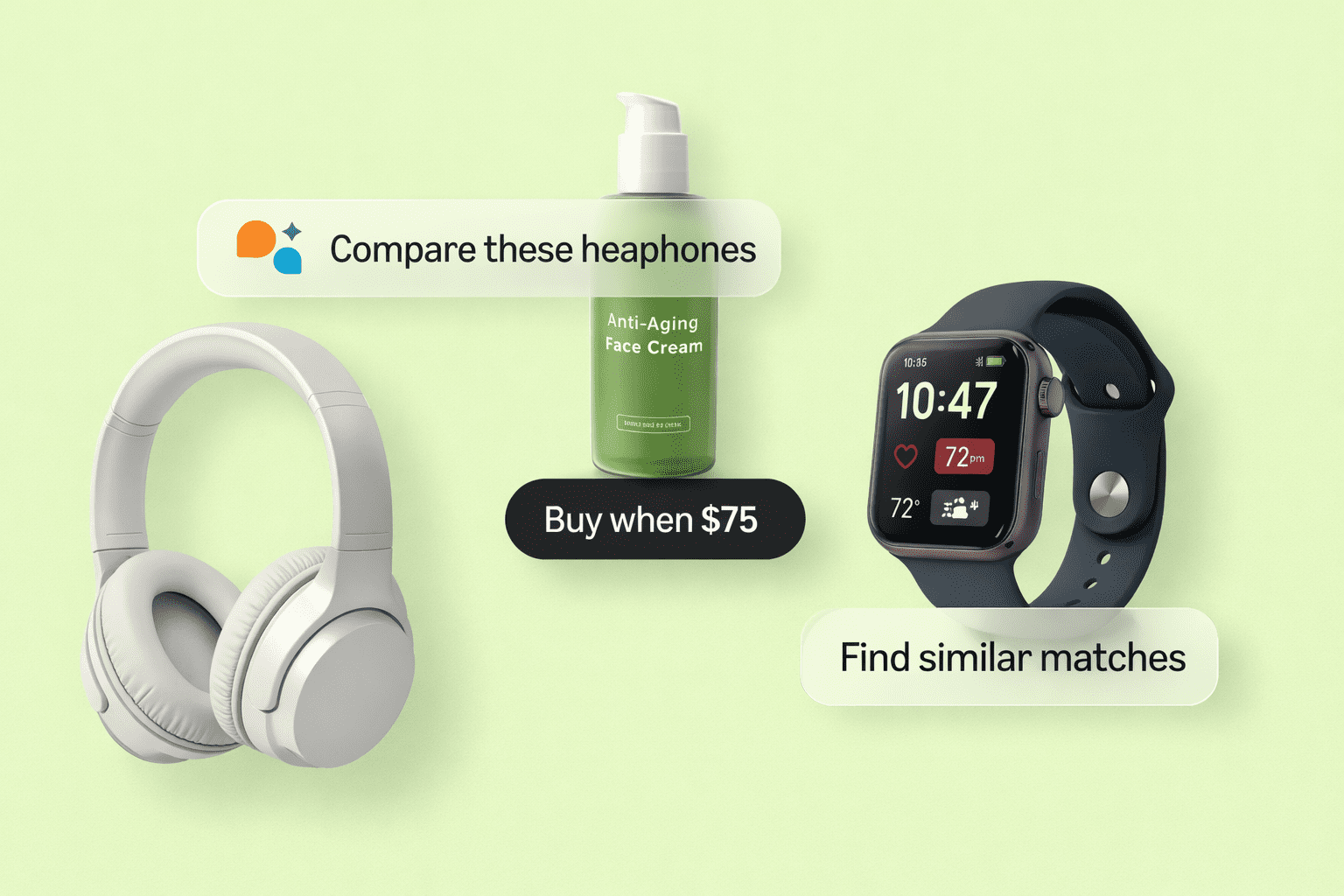

Amazon’s AI shopping assistant Rufus is transforming how shoppers discover and compare products on Amazon. Instead of relying solely on traditional keyword matching, Rufus interprets natural language shopping questions, analyzes product content contextually, and recommends listings that best answer the shopper’s intent. This means Amazon sellers must evolve beyond basic keyword stuffing and begin optimizing listings for semantic relevance, contextual matching, buyer intent, and AI understanding.
For example, when a customer asks Rufus:
- “What is the best lightweight walking stick for elderly travel?”
- “Which folding cane is easiest to carry in luggage?”
- “Recommend a durable non-slip walking aid for seniors”
Amazon Rufus evaluates listings based on how well the content answers those questions—not simply who repeated the keyword most.
If your listing is not optimized for AI shopping assistants, you risk losing visibility to competitors who better structure their product content for Amazon’s evolving algorithm.
Why Amazon Rufus AI Matters for Product Ranking
Traditional Amazon SEO focused primarily on indexing and ranking products based on keyword relevance. However, Rufus introduces a more sophisticated layer of product discovery by understanding shopping intent, contextual relevance, specific buyer needs, and semantic meaning behind customer queries.
This means sellers can no longer rely solely on:
- Exact-match keywords
- Backend search terms
- PPC rankings
Instead, your listing must provide clear contextual signals about:
- Who the product is for
- What problem it solves
- When/where it should be used
- Why it is better than alternatives
Listings optimized for Rufus have a greater chance of being surfaced in AI-powered recommendations, comparison prompts, and question-based discovery journeys.
15 Proven Ways to Optimize Your Amazon Listing for Rufus AI
1. Write Product Titles for Humans and AI Understanding
Your title remains one of the strongest ranking signals for Amazon, but Rufus values readability and contextual meaning more than repetitive keyword stuffing. A well-optimized title should clearly explain the product type, primary feature, intended user, and main benefit.
A poor title overloaded with keywords can confuse AI interpretation and reduce click-through rates. Instead, write titles that naturally describe the product while still incorporating high-value search terms.
Example:
Instead of:
“Walking Stick Foldable Walking Cane Adjustable Walking Aid Cane Elderly Stick”
Use:
“Foldable Walking Stick for Elderly – Adjustable Lightweight Aluminium Walking Cane with Non-Slip Rubber Tip for Travel and Daily Support”
This title helps Rufus understand product type, audience, features, and use cases in one structured sentence.
2. Expand Bullet Points Into Benefit-Driven Descriptions
Many sellers waste bullet points by listing only short features. Rufus performs better when bullet points explain what the feature is, why it matters, and how it helps the customer.
Each bullet should contain a descriptive paragraph-style explanation that adds semantic context. This improves both shopper conversion and AI comprehension.
Weak Bullet:
“Lightweight Aluminium Frame”
Optimized Bullet:
“LIGHTWEIGHT ALUMINIUM FRAME FOR EASY DAILY USE – Crafted from durable rust-resistant aluminium, this walking stick provides dependable support without excess weight, making it ideal for seniors, travel, and everyday mobility assistance.”
This gives Rufus significantly more context about product value and use case.
3. Include Use Cases Throughout the Listing
Amazon Rufus is designed to respond to intent-based shopping questions. Therefore, your listing should explicitly mention real-life scenarios where the product is useful.
Use-case optimization helps your listing appear for longer conversational searches such as:
- Best walking stick for travel
- Cane for post-surgery support
- Foldable walking aid for airplane travel
Add use-case references naturally across title, bullets, description, and A+ Content to improve contextual match opportunities.
Examples of use cases to include:
- Travel and commuting
- Indoor and outdoor use
- Daily walking support
- Hospital recovery
- Elderly mobility assistance
4. Clearly Define Target Audience
Rufus frequently personalizes recommendations based on who the shopper is buying for. If your listing fails to mention the intended audience, you lose relevance for persona-based searches.
Explicitly state who benefits from the product, such as:
- Elderly adults
- Seniors
- Men and women
- Disabled users
- Arthritis sufferers
- Post-operative patients
Mentioning audience types helps Rufus match your listing to highly specific customer questions.
5. Add FAQ-Style Information Within Listing Content
Because Rufus is conversational, listings that answer common buyer questions directly perform better in AI-driven recommendations.
Include FAQ-like content naturally in bullets, descriptions, or A+ sections to address:
- Is it foldable for travel?
- What height range does it support?
- Is the base anti-slip?
- Can it be used outdoors?
- Does it fit in luggage?
This increases your listing’s ability to answer Rufus-generated shopping questions.
6. Optimize Backend Search Terms for Supplemental Relevance
Backend search terms still matter, but their purpose has evolved. Use backend terms to support synonyms, alternate spellings, regional variations, and secondary search phrases not naturally included in visible content.
Examples:
- walking cane
- mobility aid
- senior support stick
- collapsible cane
- fold up walking pole
Avoid duplicating front-end keywords excessively.
7. Fill Every Available Product Attribute
Amazon relies heavily on structured catalog data. Missing attributes reduce Rufus’s understanding of your listing and can limit eligibility for filtered recommendations.
Ensure all applicable fields are completed, including:
- Material
- Size
- Weight
- Height range
- Color
- Target audience
- Usage location
- Occasion
- Product benefits
Complete structured data improves Amazon AI indexing quality.
8. Encourage Detailed Customer Reviews
Customer reviews are increasingly important because Rufus may analyze review sentiment and recurring themes when evaluating products.
Encourage buyers to leave detailed reviews discussing:
- Comfort
- Durability
- Ease of use
- Suitability for travel
- Stability
- Product quality
Reviews containing descriptive natural language strengthen your product’s AI relevance profile.
9. Optimize Images for Contextual Understanding
While text remains critical, contextual product images also improve shopper understanding and conversion.
Use lifestyle and infographic images showing:
- Product in use
- Size comparison
- Height adjustment demo
- Folded vs unfolded view
- Feature callouts
- Intended user scenarios
Visual context supports overall product relevance and conversion.
10. Use A+ Content to Expand Semantic Depth
A+ Content is an underused Rufus optimization opportunity. It allows sellers to include expanded descriptions, comparison charts, feature explanations, and educational content.
Use A+ to elaborate on:
- Product benefits
- Differentiators
- Target users
- Product comparisons
- Feature breakdowns
- Use-case education
This creates additional semantic signals for Amazon’s AI systems.
11. Target Conversational Long-Tail Keywords
Shoppers increasingly search with full questions and conversational phrases. Rufus mirrors this behavior.
Target natural-language keyword phrases like:
- best foldable walking stick for elderly
- lightweight cane for travel
- adjustable walking aid for seniors
- portable mobility stick for disabled adults
Integrate them naturally without keyword stuffing.
12. Use Subjective Buying Attributes Naturally
Many buying decisions involve subjective qualities Rufus understands well.
Incorporate descriptive modifiers like:
- Lightweight
- Comfortable
- Durable
- Premium
- Heavy-duty
- Compact
- Portable
- Ergonomic
These help Rufus map your listing to comparative shopping questions.
13. Add Occasion and Scenario Relevance
Shoppers often ask Rufus for recommendations based on events, activities, or environments.
Include scenario-based language such as:
- Ideal for holidays and travel
- Suitable for indoor and outdoor walking
- Perfect for hospital recovery
- Great for daily errands
- Designed for hiking and mobility support
This expands recommendation opportunities.
14. Monitor Rufus Questions on Your Listing
Amazon increasingly surfaces AI-generated customer prompts/questions on product detail pages.
Regularly review Rufus-related prompts and ensure your listing content directly addresses those themes. If Rufus asks questions your listing cannot answer clearly, improve content accordingly.
15. Continuously Refresh Content Based on Customer Language
The best Rufus optimization strategy is iterative refinement.
Mine language from:
- Customer reviews
- Competitor reviews
- Q&A sections
- Search term reports
- PPC search queries
Then naturally incorporate recurring buyer phrases into your listing.
Frequently Asked Questions About Amazon Rufus Optimization
What Is Amazon Rufus AI?
Amazon Rufus is Amazon’s AI-powered shopping assistant that helps customers discover, compare, and evaluate products using conversational shopping queries.
Does Rufus Affect Amazon SEO Rankings?
Indirectly, yes. Rufus influences product discovery and recommendation visibility, meaning listings optimized for Rufus can gain additional exposure beyond standard search rankings.
Does Rufus Use Reviews to Recommend Products?
Yes. Amazon indicates Rufus can analyze customer reviews and product information to improve recommendations and answer shopping questions.
Should I Still Optimize Backend Keywords?
Absolutely. Backend keywords remain valuable for indexing supplemental terms, synonyms, and alternate spellings.
Can A+ Content Help Rufus Optimization?
Yes. A+ Content provides additional semantic context that can strengthen Amazon’s understanding of your product.
How Often Should I Update My Listing for Rufus?
Review and optimize listings monthly or whenever you gather new customer insights, reviews, or search term data.
Final Thoughts
Amazon Rufus AI represents the future of Amazon search and product discovery. Sellers who adapt early by optimizing listings for semantic relevance, buyer intent, conversational search, and AI understanding will gain a major competitive advantage.
The new era of Amazon SEO is no longer about who stuffs the most keywords—it is about who provides the best answer to the shopper’s question.