
Why Multi-Channel Strategy Is the New Growth Engine
If you’re serious about scaling your eCommerce business in 2026, relying on a single platform is one of the biggest limitations.
Most sellers I’ve worked with over the past decade start on Amazon. Some expand to Flipkart. But very few build a true multi-channel ecosystem — and that’s exactly why they hit a growth ceiling.
To scale sustainably, you need:
- Multiple traffic sources
- Platform diversification
- Centralized marketplace strategy
This is where multi-channel marketplace management becomes critical.
If you’re new to this concept, start with a deeper understanding of
marketplace management services
to see how full ecosystem management works.
What Is Multi-Channel Marketplace Management?
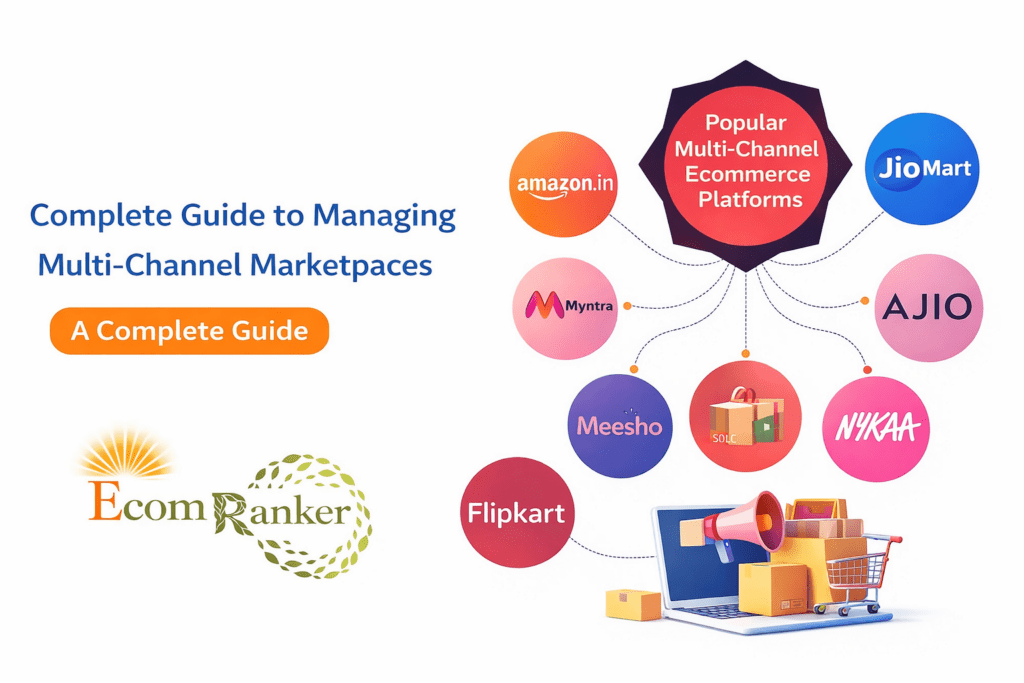
Multi-channel marketplace management is the process of selling and optimizing your products across multiple marketplaces simultaneously, including:
- Amazon
- Flipkart
- Myntra
- Meesho
- Ajio
- Nykaa
But here’s the key:
It’s not about being present everywhere — it’s about managing everything strategically.
Core Components of Multi-Channel Marketplace Management
To build a strong foundation, you need multiple systems working together.
1. Listing Optimization Across Platforms
Each platform has different ranking factors, so copying listings doesn’t work.
For example:
- Amazon prioritizes keyword relevance
- Flipkart prioritizes pricing & performance
- Myntra focuses on visual appeal
That’s why professional
👉 Amazon listing optimization services
are essential to ensure your listings are built for ranking and conversions.
2. Marketplace SEO (Search Visibility)
Without SEO, your product simply won’t be found.
Marketplace SEO includes:
- Keyword research
- Backend keyword optimization
- Content structuring
- Competitor analysis
👉 Learn more about
Amazon SEO services
to understand how ranking actually works.
3. Multi-Platform Advertising Strategy
Running ads without a structured approach is one of the fastest ways to lose money.
A proper strategy includes:
- Platform-wise budget allocation
- Campaign structuring
- Keyword-level optimization
👉 For deeper understanding, check
Amazon PPC management services
to see how ad profitability is achieved.
4. Inventory & Order Synchronization
One of the biggest issues in multi-channel selling is:
❌ Overselling
❌ Stockouts
❌ Dead stock
A centralized system ensures:
- Real-time inventory tracking
- Demand forecasting
- Stock distribution
5. Analytics & Data-Driven Decisions
Data is your biggest advantage.
You should track:
- Conversion rates
- Platform performance
- Ad ROI
- Product-wise profitability
Why Most Multi-Channel Strategies Fail
Let me be direct — most sellers fail because they approach multi-channel selling incorrectly.
Mistake 1: Copy-Paste Listings
Each platform needs unique optimization.
Mistake 2: No Unified Strategy
Running platforms independently leads to:
- Confusion
- Inefficiency
- Lost revenue
Mistake 3: Poor Ad Management
Spending without structure = high ACoS
Mistake 4: Ignoring SEO
Without SEO, your listings won’t rank.
How a Proper Multi-Channel Strategy Works
Here’s the exact framework we use at Ecom Ranker:
Step 1: Platform Selection Strategy
Not all platforms are right for every product.
Step 2: Keyword Mapping Across Channels
Different platforms = different keyword intent
Step 3: Listing Personalization
Each platform gets a tailored listing.
Step 4: Ad Strategy Alignment
Ads support SEO — not replace it.
Step 5: Inventory Planning
Stock based on demand per platform.
Step 6: Continuous Optimization
Weekly improvements are mandatory.
Benefits of Multi-Channel Marketplace Management
Increased Revenue Streams
More platforms = more customers
Reduced Business Risk
If Amazon drops, Flipkart can compensate.
Stronger Brand Presence
Your brand appears everywhere your customer searches.
Better Data Insights
Multiple platforms = better decision-making
Multi-Channel vs Single Channel Strategy
| Factor | Single Channel | Multi-Channel |
|---|---|---|
| Risk | High | Low |
| Growth | Limited | Scalable |
| Stability | Weak | Strong |
Why You Need Marketplace Management Services
Managing multiple platforms manually is extremely complex.
That’s why most growing brands partner with experts.
👉 Explore how
marketplace management services
help streamline your entire business.
At Ecom Ranker, we focus on:
- Centralized strategy
- Platform-specific execution
- ROI-driven growth
Real Example: Multi-Channel Growth
A seller was only on Amazon:
- ₹4 lakh/month revenue
After expanding:
- Amazon + Flipkart + Meesho
- ₹12 lakh/month total revenue
Key improvements:
- Better keyword reach
- Lower ad dependency
- Higher brand visibility
FAQs
1. What is multi-channel marketplace management?
It is managing and optimizing your products across multiple platforms using a unified strategy.
2. Why is multi-channel selling important?
It reduces risk, increases reach, and improves revenue stability.
3. How do marketplace management services help?
They handle SEO, ads, listings, and scaling strategies.
4. What is the role of SEO in marketplaces?
SEO helps your products rank and gain visibility.
5. How can I improve ad performance?
By optimizing campaigns and targeting the right keywords.
👉 Explore:
Amazon PPC management services
6. Is multi-channel selling suitable for beginners?
Yes, but it requires proper strategy and management.
7. How long does it take to see results?
Typically 6–12 weeks depending on competition.
Final Thoughts
Multi-channel selling is no longer a “growth hack” — it’s a business necessity.
If you want:
- Stable revenue
- Scalable growth
- Lower dependency on one platform
Then you need a structured approach backed by experts.
CTA
Ready to scale your business across multiple marketplaces?
Partner with Ecom Ranker for:
- Multi-channel strategy
- Marketplace SEO
- PPC optimization
- Full account management