
Introduction
Running Amazon PPC campaigns without regular audits is like driving blind. Over time, campaigns can become inefficient, wasting budget and reducing profitability.
An Amazon PPC audit helps you:
- Identify wasted ad spend
- Improve campaign performance
- Increase conversions
- Reduce ACoS and TACoS
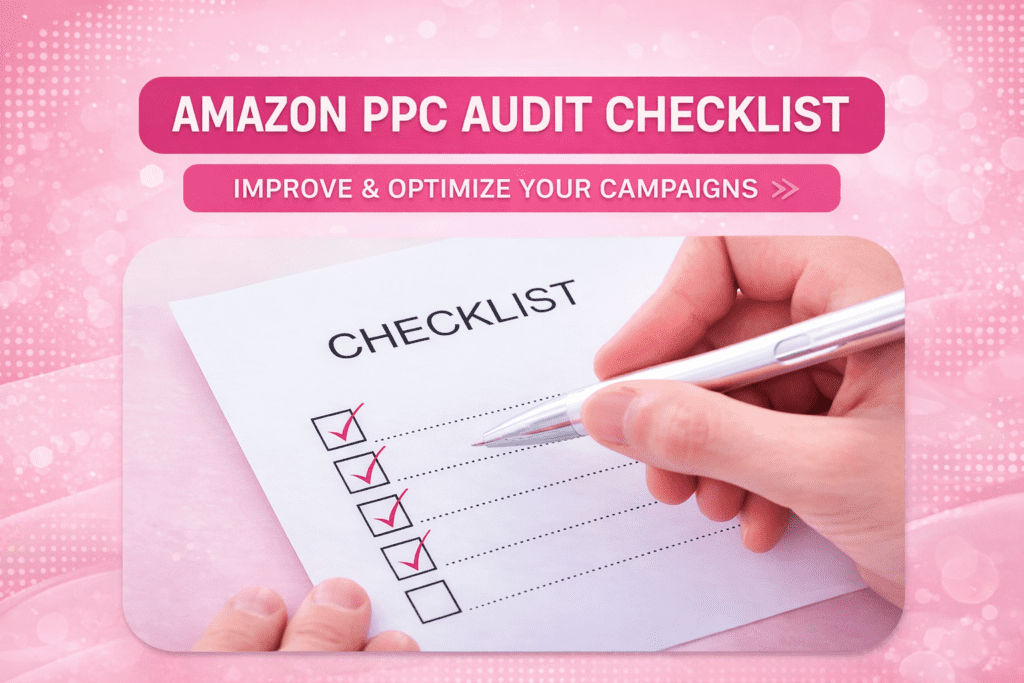
This guide provides a step-by-step PPC audit checklist to optimize your campaigns effectively.
Why You Need a PPC Audit
Regular audits ensure your campaigns stay profitable and competitive.
Benefits:
- Better keyword targeting
- Improved bid efficiency
- Higher conversion rates
- Lower wasted spend
- Stronger overall growth
Ideally, perform a PPC audit weekly or bi-weekly.
Amazon PPC Audit Checklist
1. Keyword Performance Analysis
Keywords are the core of your campaigns.
What to check:
- High ACoS keywords → Reduce bids or pause
- High conversions → Move to Exact match
- High clicks, no sales → Add as negative keywords
Action Steps:
- Download Search Term Report
- Identify top-performing keywords
- Remove irrelevant traffic
Goal: Focus on high-converting keywords only
2. Campaign Structure Optimization
A clean structure improves control and performance.
Ideal Structure:
- Auto Campaign → Discovery
- Manual Broad/Phrase → Expansion
- Manual Exact → Scaling
What to check:
- Are campaigns properly segmented?
- Are match types separated?
- Are top keywords isolated in exact campaigns?
Better structure = easier optimization
3. Budget Usage & Allocation
Budget mismanagement can limit growth or waste money.
What to check:
- Campaigns running out of budget early
- Low-performing campaigns consuming budget
- High-performing campaigns underfunded
Action Steps:
- Increase budget for profitable campaigns
- Reduce spend on poor performers
- Ensure consistent ad visibility
Allocate budget where ROI is highest
4. Bid Optimization Review
Bidding directly impacts performance.
What to check:
- High CPC + low conversions → Reduce bids
- High-performing keywords → Increase bids
- Placement performance (Top of Search vs others)
Smart bidding improves both visibility and profitability
5. Negative Keyword Audit
Negative keywords help eliminate wasted spend.
What to check:
- Irrelevant search terms
- Keywords with clicks but no sales
- Duplicate or overlapping targeting
Add negatives regularly to clean traffic
6. Conversion Rate Optimization (CRO)
Even great ads fail if your listing doesn’t convert.
What to check:
- Product images quality
- Title and bullet points
- Pricing vs competitors
- Reviews and ratings
Higher conversion rate = lower ACoS
7. Placement Performance Analysis
Amazon provides placement-level data.
Focus Areas:
- Top of Search (highest conversions)
- Product Pages
- Rest of Search
Action:
- Increase bids for high-performing placements
- Reduce for low-performing areas
8. ACoS & TACoS Tracking
Metrics guide your strategy.
What to check:
- ACoS per campaign
- TACoS trend over time
Key Insight:
- Low ACoS ≠ always good
- Stable/decreasing TACoS = healthy growth
Focus on profit + growth balance
9. Search Term Mining
This is one of the most powerful optimization steps.
What to do:
- Find converting search terms → Add to Exact campaigns
- Find wasteful terms → Add as negatives
Continuous mining improves efficiency
10. Scaling Opportunities
Once optimized, scale smartly.
Look for:
- High-performing keywords
- Profitable campaigns
- Strong conversion rates
Action:
- Increase bids
- Increase budget
- Expand keyword targeting
Common PPC Audit Mistakes
❌ Not auditing regularly
❌ Ignoring search term data
❌ Over-optimizing too quickly
❌ Cutting budget too early
❌ Focusing only on ACoS
Pro Tips for Better Results
- Audit campaigns weekly
- Track performance trends, not daily fluctuations
- Focus on data-driven decisions
- Combine PPC optimization with listing improvements
- Always test and refine
Conclusion
An Amazon PPC audit is essential for maintaining and scaling profitable campaigns.
✔ Analyze keyword performance
✔ Optimize campaign structure
✔ Manage budget effectively
✔ Improve conversion rate
Regular audits = better performance, lower costs, and higher growth.