
Introduction
Sponsored Products are the backbone of Amazon PPC. They directly target high-intent shoppers and drive immediate sales—but without proper optimization, they can quickly waste budget.
This guide will walk you through how to optimize Sponsored Products campaigns step-by-step to improve conversions, reduce costs, and boost organic rankings.
Why Sponsored Products Optimization Matters
Optimizing your campaigns helps you:
- Increase conversion rates
- Reduce wasted ad spend
- Improve keyword performance
- Boost organic rankings
- Lower TACoS over time
The goal is not just more clicks—but profitable sales and long-term growth.
Core Optimization Steps
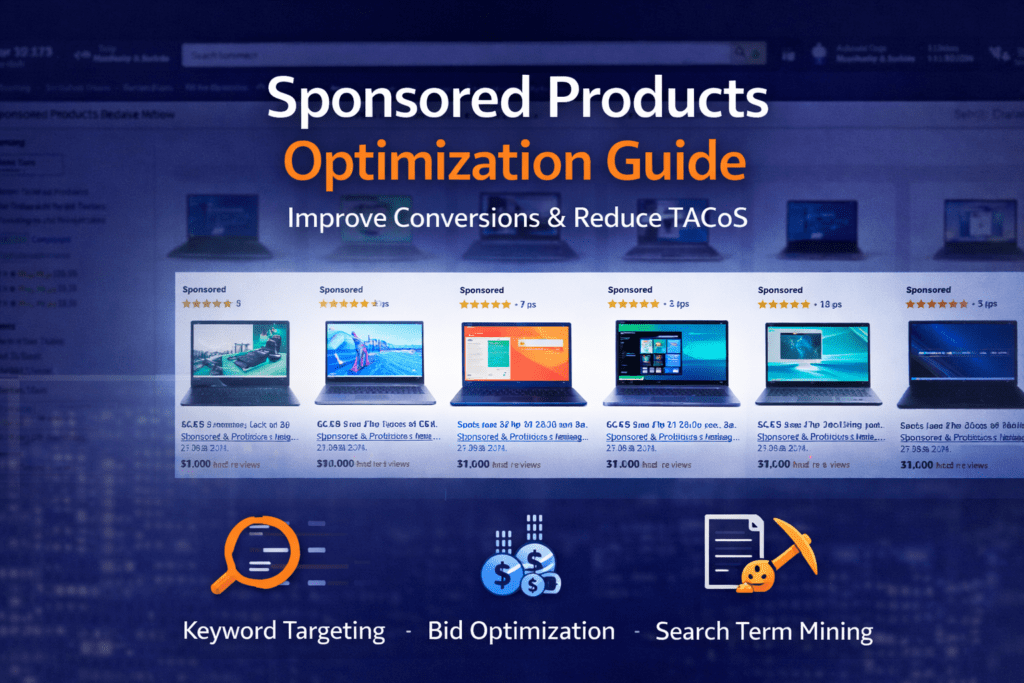
1. Keyword Targeting (Foundation of Success)
Keywords determine when and where your ads appear.
What to do:
- Identify high-converting keywords
- Move them to Exact Match campaigns
- Use Phrase and Broad match for discovery
- Remove irrelevant keywords
Pro Tip:
Focus on buyer intent keywords (e.g., “buy”, “best”, “for use”).
Better targeting = higher conversions + lower ACoS
2. Bid Optimization (Control Your Costs)
Bidding strategy directly impacts profitability.
What to do:
- Increase bids on profitable keywords
- Reduce bids on high ACoS keywords
- Use dynamic bidding (down only) for control
- Adjust bids based on placement (Top of Search performs better)
Advanced Tip:
Segment campaigns by performance:
- High-performing → scale
- Low-performing → optimize or pause
3. Search Term Mining (Hidden Goldmine)
Search term reports reveal what customers are actually searching.
What to do:
- Download Search Term Report weekly
- Identify:
- High-converting terms → add to Exact campaigns
- High-spend, no-sale terms → add as negative keywords
This step alone can drastically reduce wasted spend.
Conversion Optimization (Most Ignored Factor)
Even the best PPC strategy fails if your listing doesn’t convert.
Optimize your listing:
- High-quality images (main + lifestyle)
- SEO-optimized title
- Benefit-driven bullet points
- Competitive pricing
- Strong reviews
Higher conversion rate = lower ACoS + better ranking
Campaign Structure for Optimization
Use a clean and scalable structure:
- Auto Campaign → Keyword discovery
- Manual Broad/Phrase → Expansion
- Manual Exact → Scaling winners
This structure ensures continuous optimization and growth.
Goal: Conversions + Organic Ranking
Your PPC strategy should aim for:
✔ More conversions
✔ Better keyword ranking
✔ Increased organic sales
✔ Lower TACoS over time
Key Insight:
Amazon rewards products that sell well—even through ads.
More PPC sales = higher organic ranking
Advanced Optimization Tips
- Optimize campaigns weekly (not daily changes)
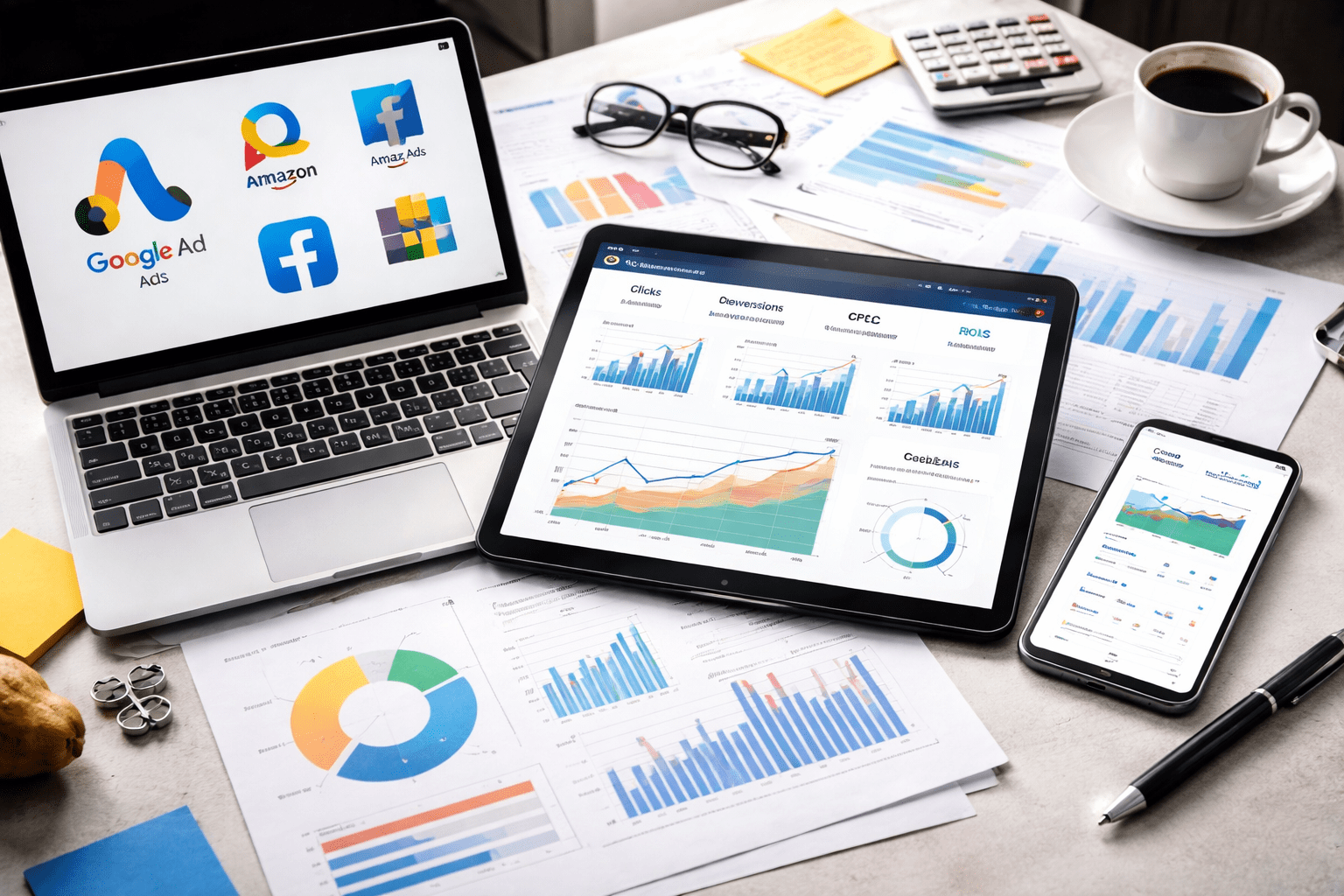
- Track metrics like CTR, CVR, CPC, ACoS
- Use negative keywords aggressively
- Focus on top-performing ASINs
- Test new keywords regularly
Common Mistakes to Avoid
❌ Running ads without listing optimization
❌ Ignoring search term reports
❌ Using only broad match keywords
❌ Not adjusting bids regularly
❌ Focusing only on ACoS
Conclusion
Sponsored Products optimization is not a one-time task—it’s a continuous process.
✔ Optimize keywords
✔ Control bids
✔ Mine search terms
✔ Improve conversion rate
Focus on conversions and organic growth—not just lowering ACoS.