
Amazon has become one of the largest eCommerce platforms in the world, serving millions of customers every day. One of the key reasons for Amazon’s popularity is its customer-friendly return system, which allows buyers to return products quickly and conveniently.
However, while Amazon makes returns simple for buyers, the process can sometimes feel confusing for both customers and sellers. Questions about return eligibility, refund timelines, packaging rules, and seller policies often arise.
This is why understanding how Amazon returns work is important. Buyers need to know how to return products smoothly, while sellers must manage returns effectively to protect their account health, reviews, and profitability.
In this detailed guide, we’ll walk you through everything you need to know about returning Amazon items — from initiating a return to understanding refund methods and seller strategies.
If you’re an Amazon seller looking to improve your overall account performance, you may also want to read our guide on Amazon listing optimization strategies:
Understanding Amazon’s Return Policy
Amazon’s return policy is designed to give customers confidence when shopping online. Since customers cannot physically inspect products before purchasing, Amazon allows returns within a specific time window.
For most items sold and fulfilled by Amazon, the standard return window is 30 days from the delivery date.
This means customers can return products for several reasons including:
- Receiving the wrong item
- Product defects
- Damaged goods
- Change of mind
- Items that don’t match expectations
Amazon also provides multiple return methods, including drop-offs at UPS stores, Amazon lockers, and partner retail locations.
Because of this flexibility, Amazon has built strong customer trust — but sellers must understand these policies carefully to avoid unnecessary losses.
Why Amazon Sellers Must Understand Return Policies
Returns are a normal part of eCommerce, but poorly managed returns can negatively affect seller performance.
For sellers, Amazon closely tracks metrics such as:
- Return rate
- Order defect rate
- Customer complaints
- Refund handling
If these metrics become too high, sellers risk:
- Negative feedback
- Listing suppression
- Account suspension
By understanding return policies and buyer behavior, sellers can minimize return issues and improve customer satisfaction.
For example, improving product descriptions and images — a strategy explained in our Amazon sales growth guide — can significantly reduce return rates.
Common Reasons Customers Return Amazon Items
Customers return products for many reasons. Understanding these reasons helps sellers improve product listings and reduce return rates.
Damaged or Defective Products
Sometimes items arrive broken or malfunction due to shipping issues or manufacturing defects.
Incorrect Product Delivered
Customers may receive the wrong color, model, or size.
Product Not as Described
If the product description or images do not accurately represent the product, buyers may return it.
Change of Mind
Amazon allows returns even if customers simply decide they no longer want the item.
Accidental Purchases
Customers sometimes order the wrong item by mistake.
These reasons highlight the importance of clear product descriptions and accurate listings.
Categories Eligible for Amazon Returns
Most products sold on Amazon can be returned if they meet certain conditions.
Clothing & Accessories
Items must be unworn and returned with original tags.
Electronics
Products must include accessories, cables, and packaging.
Books, Movies & Music
These items must remain unopened.
Home & Kitchen
Unused items can typically be returned.
Toys and Games
Products must include all parts and packaging.
Products With Strict Return Rules
Certain product categories have stricter return requirements.
Electronics
Opened electronics must include all components.
Software and Video Games
Digital codes cannot be returned once activated.
Luxury Products
Must include authenticity documentation.
Health Products
Must remain sealed for hygiene reasons.
Customized Items
Personalized items generally cannot be returned unless defective.
Non-Returnable Amazon Items
Some products cannot be returned due to safety or legal reasons.
Examples include:
- Grocery items
- Prescription medications
- Digital downloads
- Gift cards
- Hazardous materials
Understanding these restrictions helps both buyers and sellers avoid unnecessary disputes.
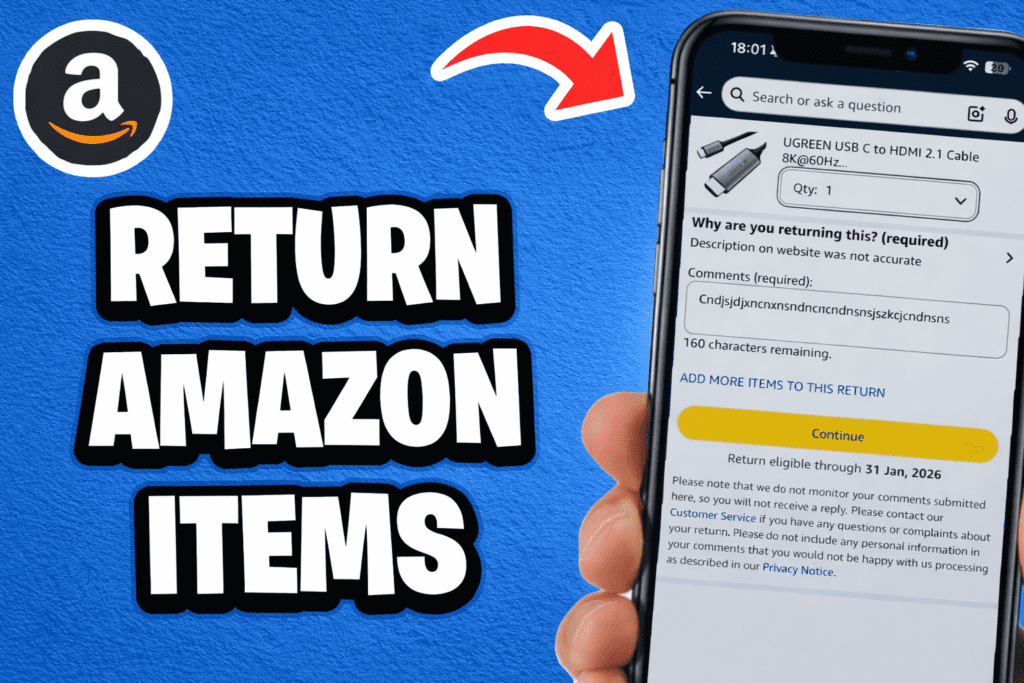
Step-by-Step Guide: How to Return an Amazon Item
Returning an Amazon item is simple when following the correct steps.
Step 1: Go to Your Orders
Log in to your Amazon account and navigate to the Your Orders section.
Step 2: Select the Item
Find the product you want to return.
Click Return or Replace Items.
Step 3: Choose Return Reason
Select the most accurate reason from the drop-down menu.
Step 4: Select Refund or Replacement
Customers can choose:
- Refund
- Replacement
- Repair (for some items)
Step 5: Choose Return Method
Amazon offers several return options depending on location.
Step 6: Print Return Label
Amazon provides a prepaid shipping label for most returns.
Step 7: Ship the Item
Drop the package at the selected location.
Amazon Return Methods
Amazon offers several return options for convenience.
Amazon Locker Returns
Customers can drop off returns at nearby Amazon locker locations.
These are available 24/7 and are ideal for quick returns.
UPS Store Returns
UPS stores provide in-person assistance and label printing.
Kohl’s Store Returns
Some returns can be processed at Kohl’s stores.
Customers may receive shopping discounts.
Scheduled Pickups
Large items may qualify for home pickup.
Refund Timelines on Amazon
Once Amazon receives the returned product, the refund process begins.
Typical refund timelines:
Credit Card — 3-5 business days
Amazon Gift Card — 2-3 hours
Debit Card — Up to 10 days
Bank Account — Up to 10 days
Third-party seller refunds may take slightly longer.
How Buyers Can Track Amazon Refunds
Customers can track refund status through their Amazon account.
Steps:
- Go to Your Orders
- Select the returned item
- Click View Return / Refund Status
Amazon will display refund progress and estimated processing times.
Common Amazon Return Issues
Even though Amazon’s return process is smooth, some issues occasionally arise.
Missing Return Labels
Customers can regenerate the label through the order page.
Delayed Refunds
If refunds take longer than expected, contacting Amazon support is recommended.
Damaged Returns
Customers should provide photos to support refund claims.
Tips for Buyers to Return Amazon Items Smoothly
1️⃣ Always review the product return policy before purchasing.
2️⃣ Keep original packaging whenever possible.
3️⃣ Initiate returns quickly to avoid missing the return window.
4️⃣ Select the most convenient return method.
5️⃣ Provide honest return reasons.
6️⃣ Track the return package using the shipping receipt.
7️⃣ Contact customer service if issues arise.
Tips for Amazon Sellers to Reduce Return Rates
Managing returns effectively is critical for seller success.
Improve Product Descriptions
Clear descriptions reduce customer confusion.
Use High-Quality Images
Accurate visuals help customers understand the product.
Improve Packaging
Proper packaging prevents shipping damage.
Monitor Return Reasons
Analyze customer feedback to identify recurring issues.
Respond Quickly to Customers
Fast responses prevent negative reviews.
Sellers who want to improve listing performance can also benefit from our Amazon SEO guide:
Why Amazon Returns Matter for Long-Term Business Growth
Returns are not just operational issues — they also impact customer experience and brand reputation.
When handled properly, returns can:
- Increase customer trust
- Improve repeat purchases
- Strengthen brand credibility
Sellers who analyze return patterns can also improve product quality and reduce operational costs.
Final Thoughts: Making Amazon Returns Easy for Everyone
Amazon’s return system is one of the key reasons customers trust the platform. The process is designed to make returns convenient while ensuring fair policies for sellers.
For buyers, understanding the return process helps avoid delays and ensures refunds are processed quickly.
For sellers, learning how returns work allows better customer support, improved product listings, and stronger account health.
At EcomRanker, we help brands grow on Amazon by optimizing listings, improving sales performance, and managing account health effectively.
If you want to scale your Amazon business faster, explore our expert resources on:
Amazon sales growth strategies
FAQs
How long does Amazon take to process refunds?
Most refunds are processed within 3–5 business days after the returned item is received.
Can Amazon items be returned without packaging?
Yes, but refunds may be reduced if the product is not returned in original condition.
Who pays for return shipping?
In many cases Amazon provides free return shipping, but some returns may require the buyer to pay.