
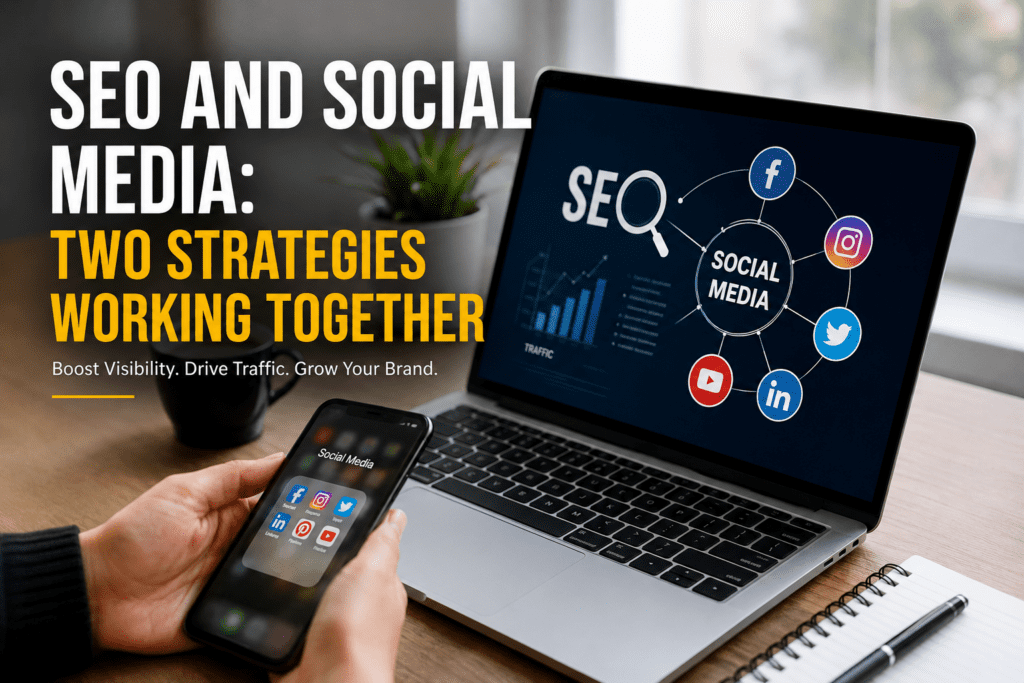
Digital marketing has evolved dramatically over the past decade, and businesses today need a complete online strategy to remain competitive. Two of the most important digital marketing methods are Search Engine Optimization (SEO) and Social Media Marketing. Many companies still treat these strategies separately, but modern digital success depends on combining both together in a smart and strategic way.
SEO focuses on improving website visibility in search engines like Google, helping businesses attract organic traffic from people actively searching for products, services, or information. Social media, on the other hand, helps businesses build relationships, engage audiences, increase brand awareness, and distribute content across multiple platforms.
When SEO and social media work together, businesses gain stronger online visibility, improved authority, higher traffic, increased engagement, and better conversion opportunities. In 2026, successful brands are not choosing between SEO and social media — they are integrating both strategies into one powerful digital marketing system.
What Is SEO?
Search Engine Optimization (SEO) is the process of improving a website so that it ranks higher in search engine results pages (SERPs). SEO helps businesses attract organic traffic from users searching for relevant keywords related to their industry, products, or services. The main goal of SEO is to increase visibility, improve website authority, and generate targeted traffic that can convert into customers.
SEO involves several important areas including keyword research, content optimization, technical improvements, mobile responsiveness, page speed, internal linking, and backlink building. Search engines like Google analyze hundreds of ranking factors to determine which websites deserve top positions in search results. Businesses that invest in SEO benefit from long-term traffic growth, increased credibility, and higher brand trust.
Modern SEO is no longer only about adding keywords to pages. Google now prioritizes helpful content, positive user experience, expertise, authority, and trustworthiness. This means businesses must focus on creating valuable content that genuinely solves user problems while also maintaining a technically optimized website.
What Is Social Media Marketing?
Social Media Marketing (SMM) refers to the use of social media platforms to promote brands, connect with audiences, share content, and drive business growth. Popular platforms such as Facebook, Instagram, LinkedIn, TikTok, YouTube, Pinterest, and X (Twitter) allow businesses to interact directly with customers and create stronger relationships with their audience.
Social media marketing involves publishing content, running advertising campaigns, engaging with followers, responding to comments, sharing videos, creating stories and reels, and building communities around a brand. Unlike SEO, which often focuses on long-term organic growth, social media can generate immediate engagement and visibility.
Today’s consumers spend significant time on social media platforms every day. Businesses that maintain active social profiles increase their chances of reaching potential customers where they already spend their time online. Social media also helps humanize brands by allowing direct communication and real-time interaction with audiences.
The rise of short-form video content, influencer marketing, and creator-driven platforms has made social media one of the most influential marketing channels in the digital world.
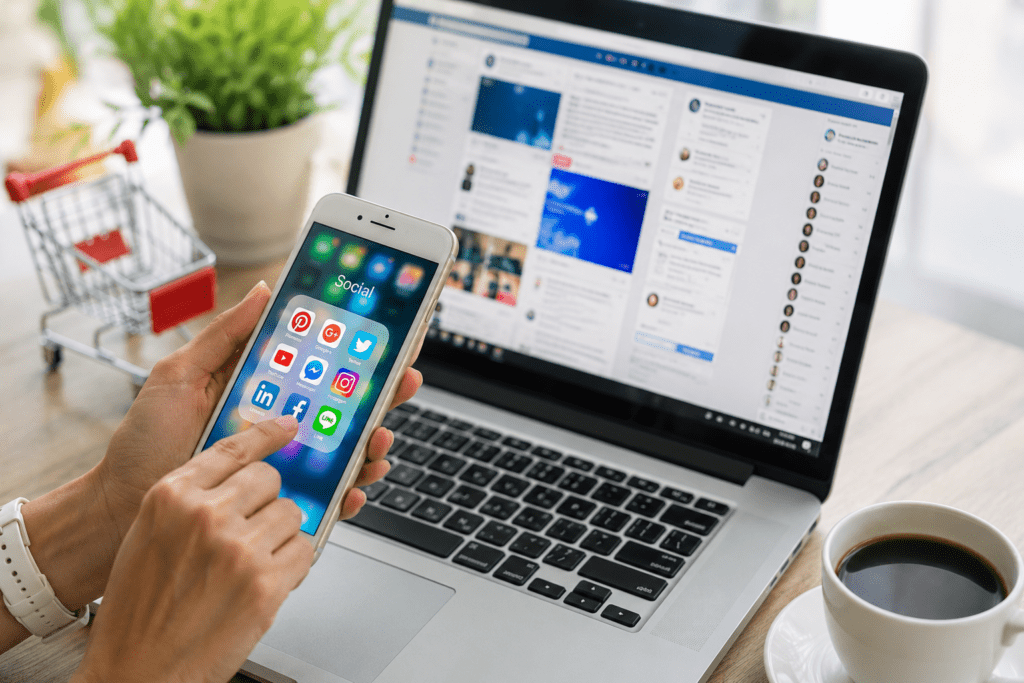
Why SEO And Social Media Should Work Together
SEO and social media are often viewed as different marketing channels, but they are deeply connected. While social media may not directly influence Google rankings through likes or shares, it strongly supports many factors that improve SEO performance.
Social media helps increase content visibility, attract visitors, build brand recognition, and create opportunities for backlinks. SEO, meanwhile, helps businesses create search-focused content that can perform well on social media platforms. Together, they strengthen overall digital marketing performance.
For example, when a business publishes a high-quality blog post optimized for SEO and then shares it across multiple social media channels, the content reaches a larger audience. Increased visibility may result in more shares, backlinks, mentions, and traffic, all of which can positively influence search engine performance.
Brands that integrate SEO and social media effectively create a complete digital ecosystem where search traffic and social engagement continuously support each other.
How Social Media Supports SEO
Social Media Increases Content Visibility
One of the biggest challenges in SEO is getting content discovered. Publishing a blog post alone is not enough because millions of new articles are uploaded online every day. Social media platforms help businesses distribute content quickly to wider audiences.
When companies share blog posts, videos, infographics, or guides on platforms like LinkedIn, Facebook, Instagram, Pinterest, or X (Twitter), they significantly increase exposure. More visibility means more people reading, sharing, and interacting with the content.
This increased engagement can indirectly support SEO by driving traffic to the website and improving brand recognition. The more users engage with content, the higher the chances of earning natural backlinks and mentions from other websites.
Social Media Helps Generate Backlinks
Backlinks remain one of Google’s strongest ranking factors. Although social media links themselves are generally “nofollow,” social platforms help expose content to bloggers, journalists, content creators, and industry influencers who may later link to the content from their own websites.
For instance, a helpful infographic shared on social media may attract attention from industry publications or bloggers who decide to reference it in their own articles. These earned backlinks improve website authority and contribute to higher rankings in search engines.
Social media acts as a content distribution engine that increases the probability of earning valuable backlinks naturally.
Social Media Builds Brand Awareness
Brand awareness plays a major role in digital marketing success. When users repeatedly see a brand on social platforms, they begin to recognize and trust it. This familiarity often leads users to search directly for the brand on Google later.
Branded searches send strong trust signals to search engines. Businesses with higher brand recognition are often viewed as more authoritative and reliable. Consistent visibility across social media platforms helps strengthen a brand’s online presence and reputation.
Strong brand awareness also improves click-through rates in search results because users are more likely to click on familiar brands.
Social Profiles Appear In Google Search Results
Social media profiles themselves often rank in Google search results. When users search for a company name, Google may display Facebook pages, LinkedIn profiles, YouTube channels, Instagram accounts, and Pinterest boards alongside the official website.
This gives businesses more visibility in search results and allows them to control more of the first page on Google. Optimized social profiles with consistent branding, descriptions, and keywords contribute to stronger online authority.
A strong presence across multiple platforms also increases trust among users researching a business online.
Social Media Accelerates Content Indexing
Search engines discover and crawl content faster when it receives attention online. Sharing new blog posts or pages on social media platforms can help search engine bots identify and index content more quickly.
This is especially valuable for new websites, recently published articles, trending topics, or time-sensitive content. Faster indexing allows businesses to appear in search results sooner and capitalize on trending opportunities.
Social engagement creates signals that indicate fresh and active content, which can encourage more frequent crawling by search engines.
How SEO Supports Social Media Marketing
SEO Improves Content Planning
SEO research provides valuable insights into what audiences are searching for online. Keyword research tools reveal user interests, common questions, trending topics, and search intent. Businesses can use this information to create social media content that directly addresses audience needs.
Instead of posting random content, marketers can create strategic social media campaigns based on real search demand. This improves engagement because the content aligns with topics users already care about.
For example, if keyword research shows high search volume for “social media marketing tips” or “SEO trends 2026,” businesses can create related social posts, videos, and infographics around those topics.
SEO Keywords Improve Social Discoverability
Many social media platforms now function like search engines. Users actively search for content on YouTube, TikTok, Pinterest, LinkedIn, and Instagram using keywords and hashtags.
Businesses that include relevant keywords in captions, video titles, profile bios, descriptions, and hashtags improve discoverability on these platforms. SEO keyword research helps marketers understand which phrases users search for most frequently.
Optimized social media content can appear in platform search results and reach larger audiences organically.
SEO Data Helps Create Viral Content
SEO tools provide valuable data about trending topics and high-interest searches. This information helps businesses identify what people are currently interested in and create content around those subjects.
When brands combine SEO insights with engaging social media formats such as reels, videos, carousels, and infographics, they increase the likelihood of creating highly shareable content.
Understanding user intent and audience behavior improves the chances of achieving viral reach and stronger engagement.
SEO Content Can Be Repurposed For Social Media
Long-form SEO content provides endless opportunities for repurposing into social media content. A single blog post can become multiple pieces of content across different platforms.
For example, a detailed SEO guide can be transformed into Instagram carousels, LinkedIn posts, YouTube videos, TikTok clips, Pinterest graphics, Twitter threads, and email newsletters.
This content repurposing strategy maximizes the value of each piece of content while maintaining consistent messaging across channels.
The Role Of Content Marketing In SEO And Social Media
Content marketing serves as the bridge connecting SEO and social media together. Without quality content, neither strategy can perform effectively. Search engines need valuable content to rank, while social media audiences need engaging content to interact with and share.
High-quality content helps businesses establish authority, answer customer questions, solve problems, and build trust with audiences. Educational blogs, tutorials, videos, case studies, webinars, and infographics all contribute to stronger SEO performance and higher social engagement.
Businesses that consistently publish valuable content improve their chances of ranking higher in search engines while simultaneously growing their social media audiences.
Content marketing also supports long-term brand growth by creating evergreen assets that continue generating traffic and engagement over time.
Best SEO And Social Media Strategies For 2026
Create Evergreen Content
Evergreen content remains useful and relevant for long periods of time. Topics such as beginner guides, tutorials, how-to articles, and educational resources continue attracting traffic months or even years after publication.
Evergreen content performs especially well because it generates consistent organic traffic while also remaining shareable on social media. Businesses that invest in evergreen content build long-term digital assets that support both SEO and social growth.
Optimize Every Social Profile
Businesses should fully optimize all social media profiles using consistent branding, descriptions, keywords, contact information, and website links. A professional and optimized profile improves credibility and helps users easily identify the business across platforms.
Search engines also analyze profile consistency across the internet, making optimization important for overall digital authority.
Focus Heavily On Video Marketing
Video content dominates modern digital marketing. Platforms such as YouTube, TikTok, Instagram Reels, and Facebook prioritize video because users engage with it more than static content.
Video marketing improves brand awareness, engagement, watch time, and conversions. YouTube videos can also rank directly on Google, creating additional SEO opportunities.
Businesses that invest in high-quality educational, entertaining, or informative videos gain a competitive advantage in both search and social media environments.
Understand User Intent
Modern digital marketing revolves around user intent. Search engines prioritize content that best satisfies user needs, while social media algorithms reward content that keeps users engaged.
Businesses must understand why users search for certain topics and what type of information they expect. Content that genuinely helps users performs better in both SEO rankings and social engagement metrics.
Build A Strong Personal Brand
People trust people more than logos. Founders, CEOs, marketers, and creators who actively share insights on social media build authority and credibility within their industries.
Strong personal brands increase engagement, shares, backlinks, partnerships, and visibility. Personal branding has become one of the most effective ways to strengthen both SEO and social media performance.
Measuring SEO And Social Media Success
Businesses must track performance regularly to understand what strategies work best. SEO metrics such as organic traffic, keyword rankings, backlinks, click-through rates, and conversions help measure search performance.
Social media metrics such as engagement rate, shares, impressions, reach, follower growth, and referral traffic help evaluate audience interaction and campaign effectiveness.
Analyzing both sets of data together provides a complete understanding of digital marketing performance and helps businesses optimize future strategies.
Common Mistakes Businesses Make
Many businesses fail because they treat SEO and social media as completely separate marketing channels. Without integration, they miss opportunities to maximize content reach and overall performance.
Another common mistake is publishing content without keyword research. Businesses that fail to understand user intent often create content that receives little traffic or engagement.
Inconsistent branding also weakens digital authority. Companies should maintain consistent messaging, visuals, and tone across all platforms to build stronger recognition and trust.
Focusing only on follower counts instead of engagement and conversions is another major mistake. Quality engagement matters far more than vanity metrics.
The Future Of SEO And Social Media
The future of digital marketing will involve even deeper integration between SEO and social media. Artificial intelligence, voice search, visual search, short-form video, and personalized search experiences are changing how users discover content online.
Search engines increasingly value brand authority, expertise, user experience, and engagement — all areas strengthened by social media activity.
As algorithms become smarter, businesses must focus on creating authentic, high-quality, people-first content rather than relying on outdated marketing tactics.
Brands that successfully combine SEO, social media, content marketing, and AI-driven insights will dominate online visibility in the coming years.
AI’s Impact On SEO And Social Media
Artificial Intelligence is transforming how businesses approach digital marketing. AI-powered tools help marketers with keyword research, content creation, audience analysis, personalization, automation, and predictive insights.
However, businesses must avoid relying entirely on AI-generated content without human editing or originality. Google’s Helpful Content system prioritizes useful, authentic, and trustworthy content created for people rather than search engines alone.
The future belongs to brands that combine AI efficiency with human creativity and authenticity.
Local SEO And Social Media
Local businesses benefit significantly from integrating SEO and social media strategies. Posting local content, sharing customer reviews, using location-based hashtags, and engaging with local communities help improve local visibility.
Google values businesses with strong local relevance and engagement. Social media activity can help drive local traffic, improve reputation, and increase customer trust.
Local SEO combined with active social media marketing helps businesses dominate regional search results and attract nearby customers.
E-Commerce SEO And Social Media
For e-commerce brands, SEO and social media work together to increase product visibility and sales. SEO helps product pages rank in Google search results, while social media platforms showcase products visually through videos, reels, influencer collaborations, and user-generated content.
Social media also supports product discovery and impulse purchases by exposing products to new audiences. Meanwhile, SEO drives long-term organic traffic from users actively searching for products.
Together, these strategies improve brand trust, increase website traffic, and boost conversions.
How To Build A Combined SEO And Social Media Strategy
Businesses should begin by conducting thorough keyword research to understand what audiences search for online. These insights should guide both SEO content and social media campaigns.
The next step involves creating valuable content that solves problems, answers questions, and provides useful information. Businesses should optimize content using proper headings, keywords, internal links, meta descriptions, and image optimization techniques.
After publishing content, companies should promote it consistently across social media platforms to increase visibility and engagement. Audience interaction is equally important because replying to comments and building conversations strengthens community trust.
Finally, businesses should regularly analyze both SEO and social media performance data to improve future campaigns and maximize results.
Final Thoughts
SEO and social media are no longer separate strategies operating independently. They are interconnected components of a successful digital marketing system. SEO helps businesses get discovered through search engines, while social media amplifies content reach, builds relationships, and increases brand awareness.
When integrated properly, SEO and social media create a powerful cycle of visibility, engagement, traffic, authority, and conversions. Businesses that combine these strategies effectively gain a major competitive advantage in today’s digital landscape.
In 2026 and beyond, brands that focus on high-quality content, audience engagement, video marketing, AI integration, and user experience will achieve the greatest online success.
Businesses that ignore the relationship between SEO and social media risk falling behind competitors who understand the power of combining both strategies together.
FAQs
1 . Does social media directly affect Google rankings?
Social media does not directly influence Google rankings through likes or shares, but it indirectly supports SEO by increasing content visibility, traffic, backlinks, and brand awareness.
2 . Why is social media important for SEO?
Social media helps distribute content, attract visitors, increase engagement, build authority, and generate backlink opportunities, all of which support SEO performance.
3 . Which social media platforms are best for SEO?
YouTube, LinkedIn, Pinterest, Instagram, and X (Twitter) are especially valuable because they help drive traffic and often appear in search results.
4 . Can social media increase website traffic?
Yes. Sharing valuable content on social platforms can drive significant referral traffic to websites and improve audience reach.
5 . How often should businesses post on social media?
Consistency matters more than frequency. Businesses should maintain a regular posting schedule while focusing on content quality and audience engagement.