
The headline numbers
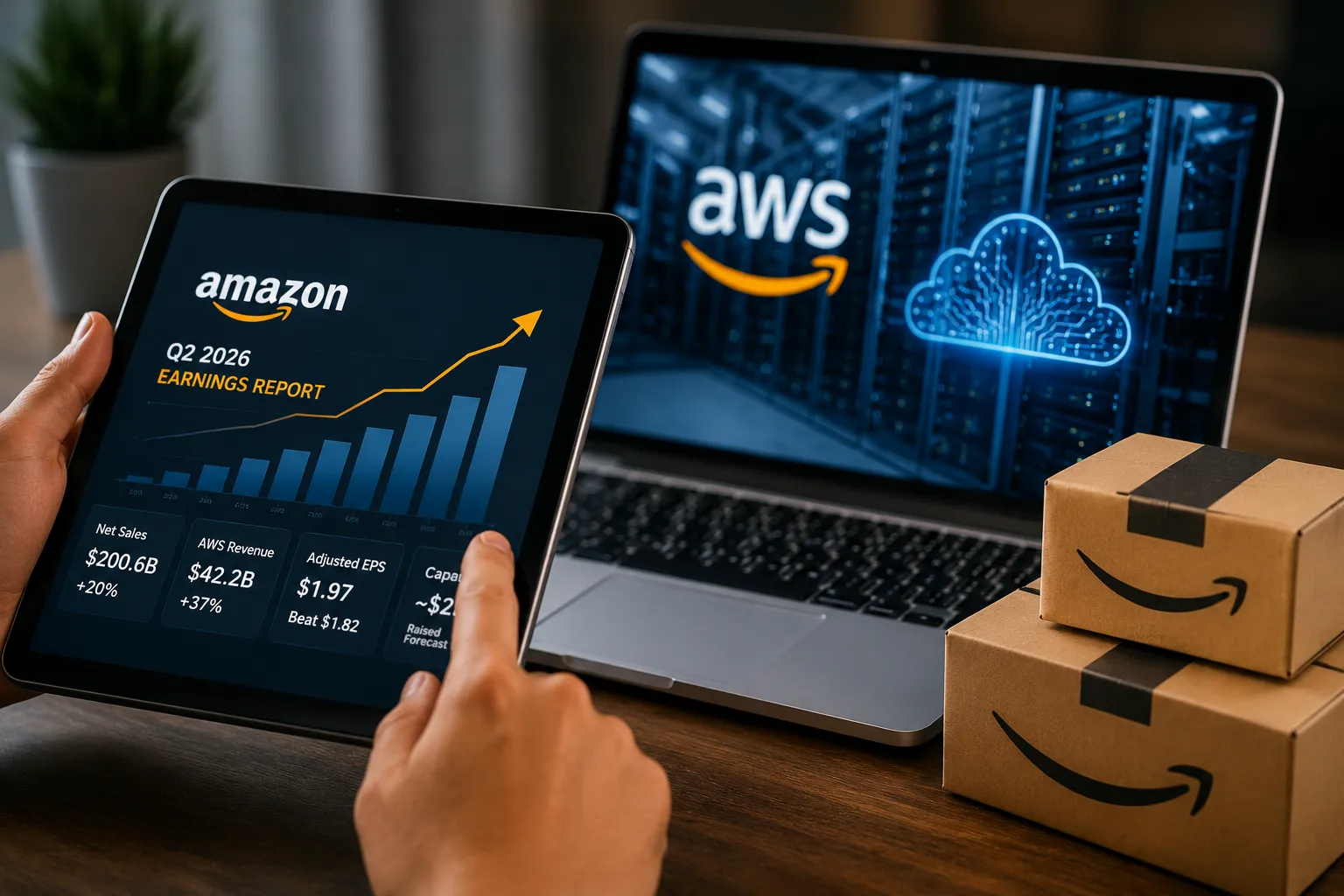
Amazon reported Q2 2026 net sales of $200.6 billion, up 20% year-over-year. AWS revenue grew 37% to $42.2 billion — its fastest growth since 2021 — beating analyst expectations of 31%. Adjusted EPS came in at $1.97 against a $1.82 estimate. CEO Andy Jassy raised the company’s full-year capital expenditure forecast to roughly $220 billion, driven overwhelmingly by AI infrastructure investment. Net income included a one-time $53.4 billion non-operating gain tied to Amazon’s investment in Anthropic.
What the earnings call didn’t connect for sellers
Original Angle: Every write-up of this earnings report treats AWS and retail/marketplace operations as separate stories. They aren’t. Amazon’s fulfillment network, Seller Central infrastructure, and the AI systems now screening listings, suspensions, and ad campaigns all run on the same internal cloud backbone that just posted 37% growth. A capex raise of this size is not just an AI-cloud story — it’s a leading indicator for how much more aggressively Amazon can afford to automate seller-facing enforcement (suspensions, listing suppression, ad approval) in the next 12 months. Sellers who’ve noticed faster, more automated account suspensions in 2026 are seeing the downstream effect of exactly this spend, months before it shows up in a policy announcement.
The practical implication
If infrastructure investment is accelerating AI-driven enforcement, the seller-side response isn’t to wait for a policy update — it’s to tighten documentation and account health proactively now, using tools like Account Health Rating monitoring and a documented Plan of Action framework before a suspension ever lands.