

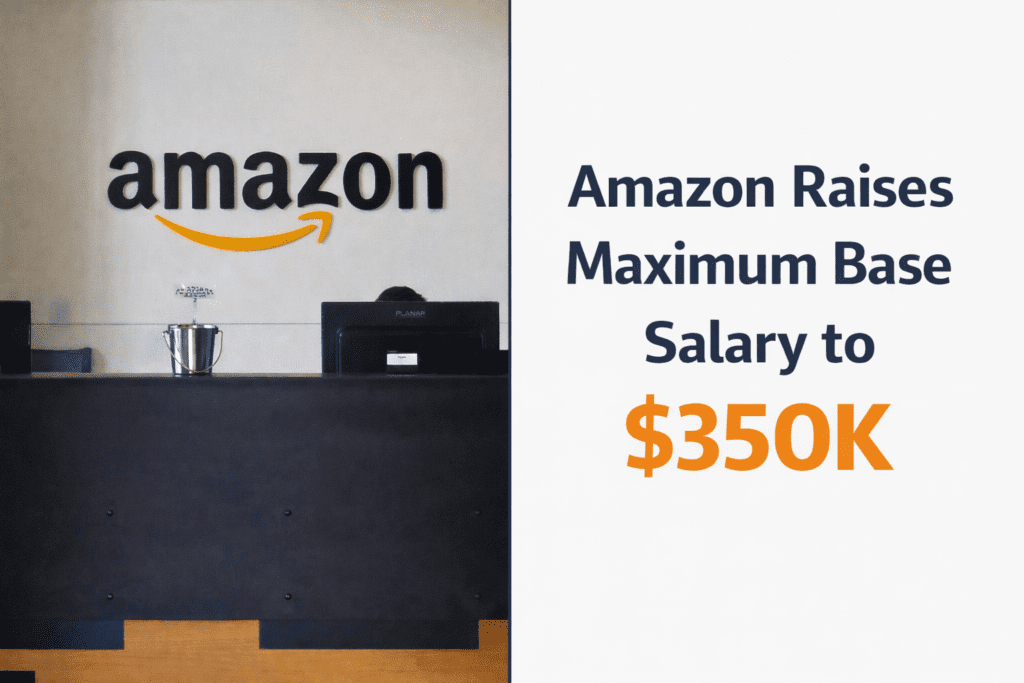
In a move that caught the attention of the global tech industry, Amazon announced a dramatic increase in its maximum base salary—from $160,000 to $350,000.
The decision wasn’t random. It came during one of the most competitive hiring periods in modern tech history, where companies were aggressively competing for skilled engineers, product managers, and technical leaders.
But this change raises an important question:
Can higher salaries truly solve employee retention challenges?
At EcomRanker, where we work closely with Amazon-focused brands and industry professionals, we’ve observed how shifts within Amazon often ripple across the entire eCommerce ecosystem. The salary cap increase is one such shift that reveals deeper trends about talent competition, workplace culture, and the evolving expectations of modern professionals.
In this guide, we’ll explore:
- Why Amazon increased its salary cap
- How competition for talent shaped the decision
- The role of Amazon aggregators in talent migration
- Why compensation alone cannot solve retention problems
- What companies should learn from Amazon’s experience
Why Amazon Raised Its Maximum Base Salary
The decision to double Amazon’s base salary cap came at a time when the global job market—especially in technology—was extremely competitive.
Highly skilled employees had more opportunities than ever before. Remote work enabled professionals to work for companies across the world without relocating, making talent more mobile and selective.
This shift created intense hiring pressure for major technology companies.
Amazon, known for its demanding work culture, was particularly affected.
Increasing the salary cap allowed Amazon to offer more attractive compensation packages and remain competitive with other technology giants.
Amazon’s Competitive Battle for Top Talent
Over the last few years, companies like Google, Microsoft, Meta, and Apple have been aggressively expanding their engineering teams.
At the same time, thousands of startups and venture-backed companies entered the market offering competitive salaries, equity incentives, and flexible work arrangements.
Amazon had to adapt.
By increasing its maximum base salary to $350,000, the company aimed to attract senior talent without relying solely on stock compensation.
This shift also aligned Amazon with compensation structures offered by other tech leaders.
The Rise of Amazon Aggregators and Their Impact
One of the most significant talent disruptions in the Amazon ecosystem has been the rise of Amazon aggregators.
These companies raised billions in venture capital to acquire successful Amazon brands.
Once they acquired these brands, they needed experienced operators to run them.
Where did they find these experts?
Many of them came directly from Amazon.
Companies such as Thrasio, Boosted Commerce, and other brand aggregators actively recruited former Amazon employees.
These professionals already understood:
- Amazon marketplace algorithms
- Supply chain management
- Vendor Central operations
- Advertising optimization
- Listing performance strategies
This created an entirely new talent pipeline.
Amazon employees suddenly had opportunities to work in leadership roles at fast-growing eCommerce companies.
How Remote Work Changed Talent Retention
Remote work changed everything.
Before the pandemic, employees were often limited by geography.
Today, a skilled Amazon specialist can work for companies anywhere in the world.
This has dramatically increased competition for talent.
Professionals now prioritize:
- Flexible work environments
- Work-life balance
- Career development opportunities
- Meaningful company culture
Salary remains important, but it is no longer the only deciding factor.
The Pressure Inside Amazon’s Workplace Culture
Amazon is famous for its performance-driven culture.
While this approach has contributed to Amazon’s incredible growth, it has also received criticism.
Employees have frequently reported:
- Long working hours
- High performance expectations
- Intense internal competition
- Strict productivity metrics
Many professionals accept these challenges initially because of the career opportunities Amazon provides.
However, over time, burnout can become a significant factor.
Increasing salaries helps retain employees temporarily, but it may not solve deeper cultural challenges.
The Problem With Solving Retention Through Salary Alone
Higher salaries are attractive, but they are not always enough.
Employees today seek more than just financial rewards.
They want:
- Growth opportunities
- Meaningful work
- Work-life balance
- Respectful management
Companies that ignore these factors often struggle with long-term retention.
Even with generous compensation packages, talented professionals may leave if they feel overworked or undervalued.
Amazon Worker Strikes and Employee Pushback
Amazon has faced increasing worker activism in recent years.
Warehouse employees and delivery drivers have organized protests and strikes in several locations.
One of the most notable examples occurred during the 2024 holiday season, when workers across multiple U.S. cities organized protests over working conditions.
The primary concerns included:
- Strict productivity quotas
- Workplace safety issues
- Job security concerns
The strikes highlighted a broader challenge.
Even companies with high salaries must still maintain positive working conditions.
Why Company Culture Matters More Than Ever
Modern employees evaluate companies differently than previous generations.
They want more than a paycheck.
They want to feel valued.
Companies that create strong workplace cultures often outperform those that rely solely on financial incentives.
An employee-first culture includes:
- Professional development opportunities
- Flexible work arrangements
- Transparent leadership
- Mental health support
These elements help employees remain engaged and motivated.
What an Employee-First Culture Looks Like
Companies that prioritize employees tend to build stronger, more resilient teams.
Key characteristics of employee-focused organizations include:
Continuous Learning
Employees are encouraged to expand their skills and pursue professional growth.
Autonomy
Teams are trusted to make decisions and innovate without excessive micromanagement.
Work-Life Balance
Employees can maintain healthy boundaries between work and personal life.
Psychological Safety
Workers feel comfortable sharing ideas, feedback, and concerns.
These factors contribute to higher retention and better long-term performance.
Amazon’s Strategy Moving Forward
By increasing its maximum base salary, Amazon demonstrated its willingness to adapt to changing market conditions.
However, long-term retention requires more than compensation adjustments.
Companies must address both financial and cultural factors.
Amazon continues to invest in:
- Employee benefits
- Leadership development programs
- Workplace safety improvements
These efforts aim to balance performance expectations with employee wellbeing.
Lessons Businesses Can Learn From Amazon
The Amazon salary cap increase offers several important lessons for businesses.
Talent Competition Is Increasing
Skilled professionals have more options than ever.
Companies must remain competitive.
Compensation Matters—but Culture Matters More
Salary attracts talent, but culture keeps it.
Employee Experience Drives Retention
Investing in people leads to stronger teams and better long-term results.
How EcomRanker Helps Amazon Businesses Scale
At EcomRanker, we work closely with Amazon brands and sellers to build sustainable growth strategies.
Our services help businesses improve:
- Marketplace performance
- Advertising efficiency
- Listing optimization
- Brand visibility
Explore our services:
You can also read our guides:
These resources help sellers understand how Amazon’s ecosystem works and how to grow effectively.
Final Thoughts
Amazon’s decision to double its maximum base salary reflects the growing competition for talent in the tech industry.
While higher salaries can help attract top professionals, they are only one piece of the puzzle.
Long-term success depends on creating a workplace where employees feel valued, supported, and motivated.
Companies that combine competitive compensation with strong culture will ultimately win the talent war.
Frequently Asked Questions
What exactly changed in Amazon’s maximum base salary?
Amazon increased its maximum base salary from $160,000 to $350,000 to stay competitive in the tech hiring market.
Why did Amazon increase its salary cap?
The change was designed to attract and retain top talent amid increasing competition from other tech companies and startups.
Who benefits from the salary increase?
Primarily senior employees, including engineers, managers, and experienced professionals.
Did Amazon remove stock-based compensation?
No. Amazon still offers stock compensation, but the base salary increase reduces reliance on stock-heavy packages.
Are higher salaries enough to retain employees?
Not always. Workplace culture, career development, and work-life balance also play major roles in employee retention.