
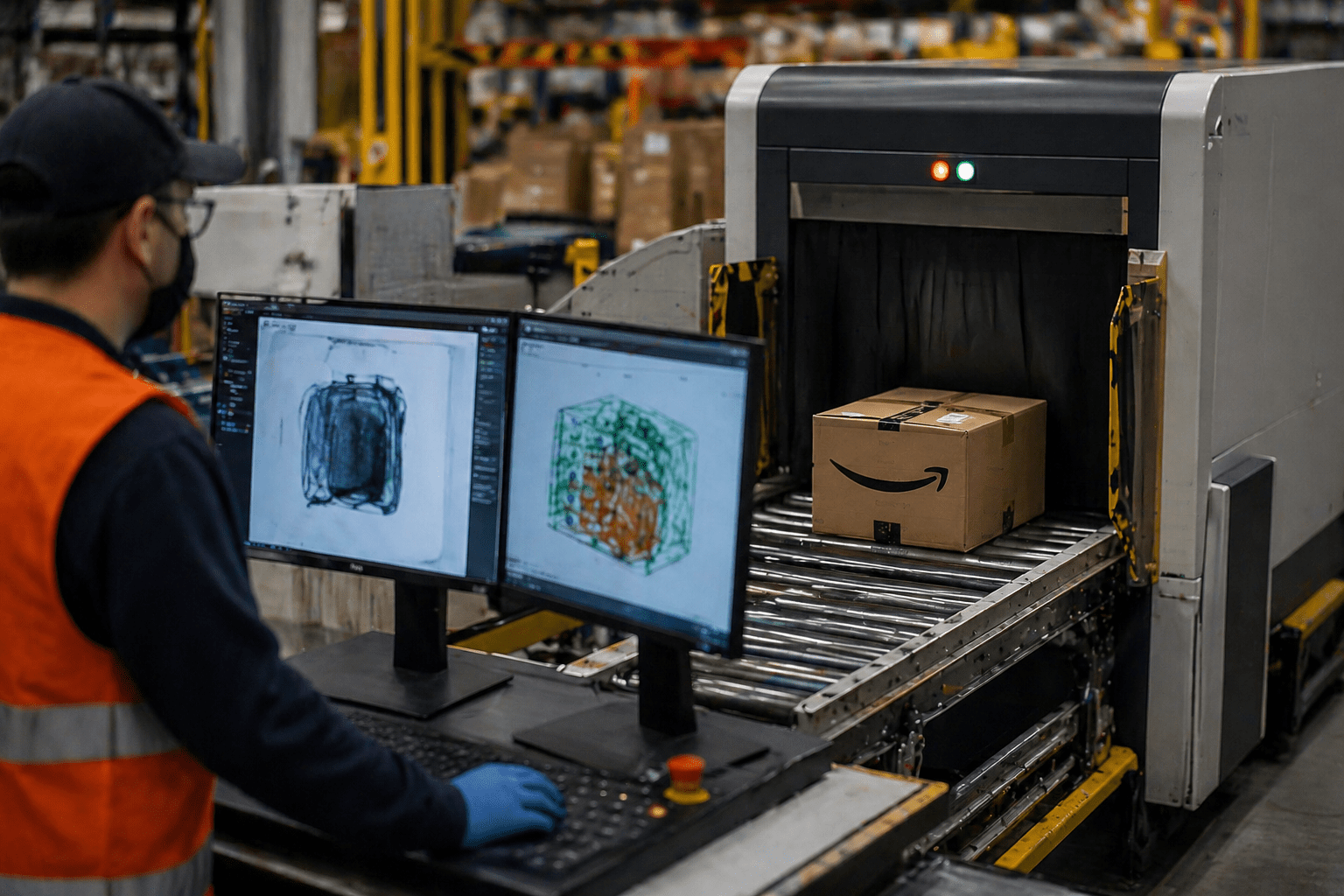
Amazon is increasingly using X-ray scanning technology and machine-learning systems within its fulfilment network to enhance how returned products are inspected and classified, according to recent reports and company disclosures.
The development reflects Amazon’s broader effort to improve return accuracy, product safety, and inventory quality across its logistics operations.
What Amazon Has Confirmed
Amazon has confirmed that it uses advanced imaging technologies, including X-ray scanners, along with machine-learning models in its operations to evaluate returned items.
According to the company, these systems are designed to:
- Analyze the contents of returned packages without opening them
- Identify potential product mismatches or internal damage
- Support decision-making on whether items can be resold, recycled, or disposed of
Amazon has stated that these technologies are part of its ongoing investment in automation and operational efficiency within fulfilment centres.
Scope of the System
The inspection technology is used within Amazon’s logistics and returns processing infrastructure, particularly in facilities handling large volumes of returned goods.
However, Amazon has not issued a formal announcement specifically describing this as a new FBA seller-facing feature or policy update.
Industry Interpretation and Expected Impact
Industry observers suggest that improved inspection systems could help address long-standing seller concerns, including:
- Incorrect or mismatched returns
- Items being returned in damaged or altered condition
- Challenges in verifying product authenticity
Enhanced inspection accuracy may influence how returned items are classified (e.g., sellable vs unsellable), which in turn could affect inventory records.
However, these outcomes are inferred from the technology’s capabilities and have not been explicitly detailed by Amazon as direct seller benefits.
Reimbursements and Seller Claims
Amazon has not announced any changes to reimbursement policies or SAFE-T claim processes in connection with this technology.
While more detailed inspection data could potentially support dispute resolution, any impact on:
- Reimbursement rates
- Claim approvals
- Refund accuracy
remains uncertain and unconfirmed at this stage.
Applicability to FBA and FBM Sellers
The inspection systems are part of Amazon’s internal fulfilment operations, which primarily affect FBA (Fulfilment by Amazon) inventory.
For FBM (Fulfilled by Merchant) sellers:
- Return inspection continues to be managed independently by sellers
- The technology does not directly apply
What Sellers Should Monitor
Experts recommend that sellers focus on data tracking and reconciliation to understand any operational impact over time.
This includes monitoring:
- Inventory adjustments after returns
- Differences between refunded and reimbursed units
- Changes in unsellable inventory rates
Without detailed tracking, any improvements or discrepancies may appear as unexplained fluctuations in margins.
Conclusion
Amazon’s use of X-ray scanning and machine learning highlights its continued investment in automation and quality control within returns processing.
While the technology is expected to improve inspection accuracy, its direct implications for sellers—particularly regarding reimbursements and return outcomes—remain to be seen.
For now, the development represents an operational enhancement rather than a confirmed policy change affecting seller accounts.