
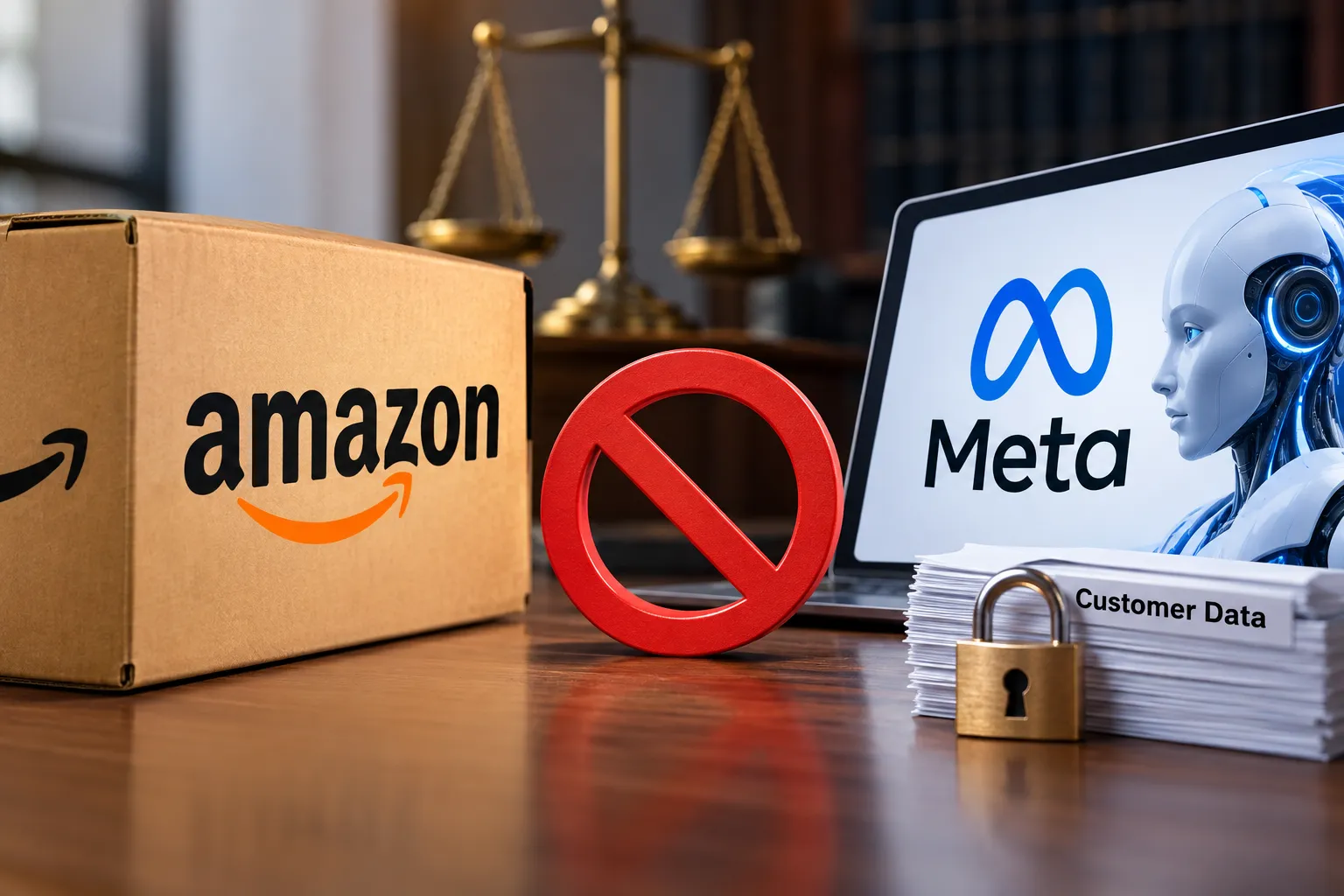
Amazon has blocked Muse, Meta’s autonomous personal AI assistant, from browsing and buying products on Amazon.com for shoppers. Amazon says Meta never consented to the integration or informed Amazon about it. It also says the agent appears to collect and retain customer login credentials.
The block followed failed attempts by Amazon to persuade Meta to voluntarily remove Amazon from Muse’s automated shopping tasks. When Meta didn’t agree, Amazon shut the agent out.
What Happened
By the night of Sunday, September 20, 2026, shoppers who tried to buy products on Amazon through Muse were stopped by a warning message. It stated that continued use by an “unauthorized AI agent violates Amazon’s Conditions of Use,” which customers accept when they create an Amazon account. The purchase couldn’t be completed.
Amazon’s Three Core Complaints
According to a GeekWire report, Amazon’s objections fall into three areas:
- No consent or notice: Amazon says it never agreed to Muse shopping on its platform, and that Meta launched the feature without telling Amazon in advance.
- Hidden identity: Amazon says the agent was designed to browse the site without disclosing that it’s automated software.
- Credential handling: Amazon says Muse appears to capture and store customer credentials. Amazon warns this combination creates serious privacy and security risks.
An Amazon spokesperson said the principle is simple: third-party apps that buy from other businesses on customers’ behalf should be transparent and respect each service provider’s choice about whether to participate.
Meta’s Response on Credential Security
Meta has previously denied that Muse mishandles sensitive user data. The company says the agent has no direct visibility into users’ passwords or banking details. According to Meta, any login details a user enters go into protected storage. That lets the AI use the credentials without reading them, even when a user types them directly into a browser session.
This leaves the two companies giving directly opposing accounts. Amazon says credentials appear to be captured and stored, while Meta says its system is designed so the AI never sees them.
An Awkward Split Between Business Partners
The clash is uncomfortable because Amazon and Meta have been commercial partners for years:
- Since 2023, shoppers have been able to buy Amazon products directly inside their Facebook and Instagram feeds.
- In April 2026, Meta signed a multibillion-dollar contract to run its autonomous AI agents on Amazon’s custom Graviton server chips.
Amazon remains Meta’s partner in social commerce and cloud computing. On AI shopping agents, however, it isn’t willing to share the checkout.
Amazon’s Consistent Stance on Outside AI Agents
This isn’t the first time Amazon has pushed back against outside AI shopping tools. Last year, Amazon sent a cease-and-desist letter to Perplexity, asking it to stop its bots from shopping on Amazon and making clear that Amazon didn’t want to be part of Perplexity’s Comet browser.
The Muse block confirms a clear pattern. Amazon will decide which AI agents can operate on its store and under what terms.
The Bigger Question: Who Owns the Shopper?
At its core, this dispute is about control of the customer relationship. As AI agents start searching, comparing and buying for people, the company whose agent completes the purchase gains a lot of power. It owns the shopper’s attention, data and loyalty.
Amazon has spent decades building that relationship, and it is clearly not willing to let an outside agent sit between it and its customers.
What Amazon Sellers Should Take From This
As someone who has worked with Amazon sellers through more than a decade of platform changes, I see four practical lessons here.
1. Amazon’s own AI is the channel that matters on Amazon.
If Amazon keeps outside agents off its store, AI-assisted shopping on Amazon will run through its own tools, such as the Rufus shopping assistant. Your listings need to perform well there first.
2. Complete, accurate listing data is now an AI ranking factor.
AI assistants recommend products based on clear, structured information. Fill every attribute field, write specific bullet points, answer common buyer questions in your content, and keep your images and A+ Content current.
3. Security and trust are becoming competitive issues.
Amazon is framing this block around protecting customer credentials. Expect it to enforce data security more strictly across its platform. Review which third-party tools have access to your Seller Central account, remove any you no longer use, and make sure two-step verification is turned on.
4. Build presence off Amazon too.
AI agents blocked from Amazon will send shoppers somewhere else. Brands with their own website, a clean product feed and a presence on Meta’s shopping surfaces are best placed to capture that demand.
Expert Take
Amazon isn’t rejecting AI shopping; it’s rejecting AI shopping it doesn’t control or approve. For sellers, the message is simple: optimise for Amazon’s own AI tools inside Amazon, and diversify outside it. The platforms are drawing their lines now, and sellers who adapt early will have an advantage when agentic commerce goes mainstream.
Frequently Asked Questions
1 . Why did Amazon block Meta’s Muse AI?
Amazon says Meta never consented to or informed it about Muse shopping on Amazon.com. It also says the agent browses without identifying itself as automated software and appears to capture and store customer credentials.
2 . When did Amazon start blocking Muse?
Shoppers began seeing Amazon’s block message on the night of Sunday, September 20, 2026.
3 . What message do Muse users see on Amazon?
They see a warning that continued access by an unauthorized AI agent violates Amazon’s Conditions of Use, which customers agree to when they use Amazon.
4 . What has Meta said about the credential allegations?
Meta says Muse has no direct visibility into passwords or banking details. It says login information is kept in protected storage so the AI can use it without reading it.
5 . Are Amazon and Meta business partners?
Yes. Amazon products have been purchasable inside Facebook and Instagram since 2023, and in April 2026 Meta signed a multibillion-dollar deal to run its AI agents on Amazon’s Graviton chips.
6 . Has Amazon blocked other AI agents before?
Yes. Last year, Amazon sent a cease-and-desist letter to Perplexity over its Comet browser’s shopping bots.